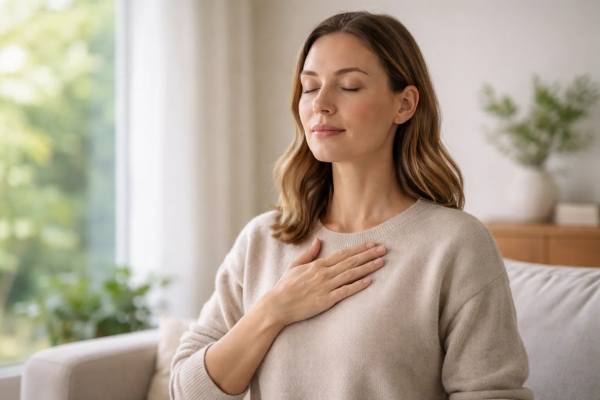
When anxiety rises, breathing often changes before you even notice: it becomes faster, higher in the chest, and more irregular. That shift is not just a symptom—it can also amplify the alarm in your body, making your heart race, your thoughts speed up, and your muscles brace for danger. Deep breathing works because it gives you a direct lever on this loop. By slowing the breath and lengthening the exhale, you can nudge your nervous system toward a calmer setting, often within minutes. For many people, this makes anxiety feel more manageable, improves focus, and lowers the intensity of physical symptoms like tightness, dizziness, and stomach fluttering.
Breathing techniques are not a cure-all, and they are not meant to “erase” emotions. Think of them as a fast, portable way to reduce body-level stress so your mind can think more clearly. With the right method and a little practice, breathing becomes a dependable tool in your anxiety toolkit.
Key Insights You Can Use Today
- Slow, steady breathing can reduce physical anxiety symptoms and make worries feel less urgent.
- A longer exhale often calms faster than “big” inhales, especially during stress.
- Short daily practice tends to work better than only using breathing during a crisis.
- Over-breathing can cause dizziness or tingling, so techniques should feel gentle, not forceful.
- Start with 3 to 5 minutes twice daily and use a 60-second reset during anxious moments.
Table of Contents
- What deep breathing does for anxiety
- How slow breathing changes your body
- Best breathing techniques to try
- How to use breathing during panic
- Daily breathing practice that sticks
- Safety, troubleshooting, and when to get help
What deep breathing does for anxiety
Deep breathing helps anxiety in two main ways: it reduces the body’s stress response, and it interrupts the “symptom spiral” that keeps anxiety going.
When you feel anxious, your body prepares for threat. Breathing gets quicker and shallower, your heart rate increases, your muscles tense, and your attention narrows to what could go wrong. This is useful when danger is real, but it becomes exhausting when your threat system turns on for emails, meetings, or uncertain thoughts. Fast, shallow breathing can also change sensations in the body—lightheadedness, tingling, chest tightness—that many people interpret as “something is wrong,” which increases anxiety further.
Slow, controlled breathing can lower that alarm. People often notice:
- Less chest tightness and air hunger as the breath becomes smoother and less urgent
- A steadier heart rate and less pounding in the chest
- Reduced muscle tension in the jaw, shoulders, and belly
- Clearer thinking because the body is no longer shouting “emergency”
- Better emotional control—not numbness, but more space between feeling and reacting
It is also useful to understand what deep breathing is not. It does not work by forcing calm through sheer effort. In fact, trying to take very large breaths can backfire for some people because it can become a form of over-breathing. The goal is usually slower and softer, not bigger and harder.
Deep breathing also does not need to “eliminate” anxiety to be effective. A realistic target is a drop in intensity: for example, from an 8 out of 10 to a 5. That shift is often enough to help you respond more skillfully—finish the conversation, drive home safely, or choose a next step rather than freezing.
Finally, deep breathing works best when you match the tool to the moment. A quick technique (30 to 90 seconds) can help during spikes. A longer technique (3 to 10 minutes) can help if you are winding down, preparing for sleep, or recovering after stress. With practice, your body starts to recognize these breathing patterns as “safe,” and the calming response tends to happen faster.
How slow breathing changes your body
Breathing is one of the few body systems that is both automatic and controllable. That makes it a unique bridge between your conscious mind and your stress physiology.
A helpful way to understand anxiety breathing is to picture two dials:
- The speed dial (how many breaths per minute)
- The balance dial (inhale versus exhale)
When anxiety is high, speed increases and exhales often shorten. Slow breathing turns the speed down, and a slightly longer exhale helps shift the body toward recovery mode.
Here is what is likely happening under the hood:
Longer exhales support the calming side of the nervous system
The exhale tends to be linked with the body’s “settle” response. When you extend the exhale gently, many people feel a small release—like letting air out of a balloon. This does not mean you can control anxiety perfectly, but it can reduce the intensity of the physical alarm.
Slow breathing improves rhythm in heart and blood pressure signals
Your heart rate naturally changes with breathing. In many people, slow breathing around 5 to 6 breaths per minute creates a strong, steady rhythm that the body reads as regulated. This is one reason paced breathing is often used to support calm focus. You may not feel this as “heart rate variability,” but you can feel it as steadiness: fewer surges, fewer jolts.
Breathing too much can mimic anxiety symptoms
During stress, some people over-breathe without noticing. Over-breathing can reduce carbon dioxide levels in the blood, which may contribute to sensations like dizziness, tingling in fingers, throat tightness, and a feeling of unreality. These sensations can be frightening and are easy to misinterpret as danger. Techniques that emphasize gentle breaths and a longer exhale help reduce the risk of slipping into this pattern.
Nasal and diaphragmatic breathing reduce “effort” signals
Breathing through the nose and letting the belly expand softly can reduce the sense of strain. The diaphragm is your main breathing muscle; when it is engaged, breathing tends to feel more efficient. You do not need dramatic belly movement. Aim for a calm rise and fall, like your abdomen is a floating raft rather than a pumping bellows.
The key takeaway is simple: you are not trying to “breathe perfectly.” You are giving your body a safer rhythm. If you practice when you are already calm, your nervous system learns the pattern. Then, when anxiety rises, the same pattern becomes a familiar path back to steadiness.
Best breathing techniques to try
The best technique is the one you can do consistently and comfortably. If a method feels like a performance or makes you dizzy, it is not the right starting point. Below are reliable options, with clear instructions and the situations they fit best.
1) Extended-exhale breathing
This is a strong “first choice” for anxiety because it reduces the urge to gasp and supports a downshift without forcing huge inhales.
- Inhale through the nose for 3 to 4 seconds
- Exhale through the nose (or softly through pursed lips) for 5 to 7 seconds
- Repeat for 8 to 12 breaths (about 1 to 2 minutes)
Best for: sudden anxiety spikes, irritability, pre-meeting nerves.
Common mistake: making the inhale too large. Keep it gentle.
2) Coherent breathing (steady pace)
This is a balanced practice that many people find grounding for daily training.
- Inhale for 5 seconds
- Exhale for 5 seconds
- Continue for 3 to 10 minutes
Best for: general anxiety, daily practice, winding down after work.
Tip: if 5 and 5 feels too slow, start with 4 and 4.
3) Box breathing (structured and focusing)
Box breathing adds brief pauses, which some people find stabilizing when thoughts race.
- Inhale for 4 seconds
- Hold for 4 seconds
- Exhale for 4 seconds
- Hold for 4 seconds
- Repeat for 4 cycles (about 1 minute), then reassess
Best for: performance anxiety, concentration, spiraling thoughts.
Caution: if breath holds increase panic, skip the holds and use coherent breathing instead.
4) 4-7-8 style breathing (stronger downshift)
This pattern can feel sedating for some people, especially at night, but it can be intense if you are prone to lightheadedness.
- Inhale for 4 seconds
- Exhale for 8 seconds
- Repeat 4 times, then return to normal breathing
Best for: bedtime anxiety, rumination, difficulty settling.
Tip: skip the long hold if it feels uncomfortable; the long exhale is the main feature.
5) The physiological sigh (fast reset)
This is useful when you are “stuck” in a tense breath pattern.
- Take a normal inhale, then a short second sip of air at the top
- Let out a slow, easy exhale
- Do 1 to 3 rounds, then switch to extended-exhale breathing
Best for: acute stress, after an adrenaline surge, before speaking.
Caution: do not repeat rapidly for long periods; it is a reset, not a full practice.
Pick one technique to master first. Variety can come later. Consistency is what turns breathing from “a trick” into a reliable skill.
How to use breathing during panic
During a panic spike, the goal is not to win an argument with your mind. The goal is to reduce the body’s emergency signal enough that the wave can pass. That means the technique must be simple, short, and non-straining.
Here is a practical plan that fits into real life.
The 90-second panic protocol
- Orient your body
Plant your feet, loosen your jaw, and drop your shoulders one notch. If helpful, place one hand lightly on the lower ribs or belly to cue softer breathing. - Choose a low-risk breath pattern
Use extended-exhale breathing: inhale 3 to 4, exhale 5 to 7. Aim for 8 breaths.
If counting feels stressful, use a phrase: “in…two…three” and “out…two…three…four…five.” - Add one grounding cue
While exhaling, name five neutral things you can see or feel (chair, floor, cool air). This prevents your mind from scanning only for danger signs. - Reassess after eight breaths
Ask: “Did the intensity drop even 10 percent?” If yes, do one more round. If no, shorten the inhale and soften the breath further. Sometimes less air helps more than more air.
What to do if breathing makes symptoms worse
Some people become more aware of bodily sensations when they focus on breathing, which can increase panic. If that happens:
- Reduce depth: breathe more shallowly but more slowly
- Emphasize the exhale: keep the inhale easy and the exhale longer
- Switch attention: breathe while focusing on a sound, a visual point, or gentle movement
- Stop counting: use a calm phrase or silent humming on the exhale
Breathing before anxiety peaks
Many people wait until anxiety is at an 8 or 9. You will get better results at a 4 or 5. Signs you can intervene early:
- You start scanning your phone repeatedly
- You are rereading messages and cannot send them
- Your chest feels tight or your breathing becomes higher
- You feel unusually impatient or rushed
A one-minute breathing reset at these moments can prevent the spike from becoming a full cascade.
Breathing is not meant to replace therapy or other supports when needed. But as an in-the-moment tool, it is powerful because it works even when your thoughts are chaotic. You do not need perfect confidence to breathe slowly.
Daily breathing practice that sticks
Using breathing only during anxiety is like only stretching when you pull a muscle. You may still get relief, but the real benefits come when you train your system regularly. Daily practice makes the technique feel familiar, reduces resistance, and often improves how quickly your body responds under stress.
A simple two-week plan
Keep the goal modest. You are building consistency, not proving toughness.
- Morning (3 to 5 minutes): coherent breathing (5 in, 5 out)
- Afternoon (1 minute): extended-exhale breathing for 8 breaths
- Evening (3 to 5 minutes): coherent breathing or 4-7-8 style if it feels soothing
If you miss a session, do not “make up” by forcing longer practice. Return to the next scheduled breath session. Consistency beats intensity.
How to choose timing
Many people do best when they attach practice to an existing habit:
- After brushing teeth
- After turning on the coffee or kettle
- Before opening email
- Right after lunch
- When getting into bed (before screens)
When practice is tied to a cue, it becomes automatic. When it is tied to motivation, it becomes optional.
How to measure progress without obsessing
Breathing practice can become another perfection project if you track it too tightly. A better approach is to track outcomes that matter:
- “How fast did I recover from stress today?”
- “Did I avoid fewer situations because of anxiety?”
- “Did my body feel less tense in the evening?”
- “Was my sleep onset easier?”
You can also notice micro-wins: fewer sighs of frustration, fewer sudden jolts of worry, more patience during mild stress.
Progression after two weeks
If practice feels comfortable, increase one variable at a time:
- Add 2 minutes to one session (up to 10 minutes)
- Practice before a predictable trigger (commute, meeting, bedtime)
- Add a brief body cue, like relaxing the shoulders on every exhale
If you want the practice to support social anxiety or performance anxiety, do a short session right before the event, then a short recovery session afterward. This teaches your body both activation and recovery, which is often the missing skill in chronic anxiety.
The long-term goal is not to live in a calm state. The goal is to move in and out of stress more smoothly—without feeling trapped in it.
Safety, troubleshooting, and when to get help
Deep breathing is generally safe, but it should feel steady and comfortable. If it feels intense, forced, or dizzying, adjust the approach. Many problems come from a single issue: over-breathing. You can fix that by breathing more gently and prioritizing a longer exhale.
Common side effects and quick fixes
- Lightheadedness or tingling: your breaths are likely too large or too fast. Make the inhale smaller, slow down, and extend the exhale.
- Air hunger: try nasal breathing and a softer inhale. Sometimes “less air” reduces the sensation of not getting enough.
- Increased panic when focusing on the body: shift attention outward (sounds, objects) while breathing, or practice with gentle movement like walking slowly.
- Tight throat: relax the jaw, keep lips soft, and exhale through the nose or lightly pursed lips rather than blowing.
Who should be cautious
- People with asthma or COPD: slow breathing can help some people, but breath holds or forceful breathing may trigger symptoms. Keep breathing gentle and stop if you feel wheezy or tight.
- People prone to fainting or severe dizziness: avoid long breath holds and avoid standing while practicing at first.
- People with trauma-related symptoms: some forms of breath focus can trigger distress or dissociation. If you notice numbness, drifting, or fear spikes, shorten practice, keep eyes open, and pair breathing with grounding.
- People with panic disorder: breath holds and “very deep” breaths may increase fear in the beginning. Start with extended-exhale breathing and keep it soft.
When breathing is not enough
Breathing techniques are tools, not a full treatment plan. Consider professional support if:
- Anxiety is frequent and impairing (work, school, relationships, sleep)
- You have panic attacks that feel unmanageable or lead to avoidance
- Anxiety comes with persistent low mood, intrusive thoughts, compulsions, or substance use
- You have physical symptoms that worry you or are new and unexplained
Seek urgent medical care if you have severe chest pain, fainting, severe shortness of breath, or symptoms that could indicate a medical emergency.
If breathing feels hard, that does not mean you failed. It means you need a gentler method or a different entry point. The right breathing practice should feel like a steady hand on the nervous system—supportive, not demanding.
References
- Breathing Practices for Stress and Anxiety Reduction: Conceptual Framework of Implementation Guidelines Based on a Systematic Review of the Published Literature – PMC 2023 (Systematic Review)
- Effect of breathwork on stress and mental health: A meta-analysis of randomised-controlled trials – PMC 2023 (Meta-Analysis)
- Slow breathing for reducing stress: The effect of extending exhale – PMC 2023 (RCT)
- Effects of Slow Breathing Exercises on Cardiac Autonomic Functions in Anxiety Disorder—A Randomised Control Trial – PMC 2024 (RCT)
- Effects of voluntary slow breathing on heart rate and heart rate variability: A systematic review and a meta-analysis – PubMed 2022 (Systematic Review and Meta-Analysis)
Disclaimer
This article is for educational purposes only and does not provide medical or mental health diagnosis, treatment, or individualized advice. Breathing techniques can reduce anxiety symptoms for many people, but responses vary, and some individuals may feel worse if they over-breathe, use breath holds, or have underlying respiratory or panic-related sensitivities. If your anxiety is persistent, worsening, or significantly affects your daily functioning, consider speaking with a qualified healthcare or mental health professional. Seek urgent medical care for severe chest pain, fainting, severe shortness of breath, or any symptoms that may indicate an emergency.
If this guide was helpful, please consider sharing it on Facebook, X (formerly Twitter), or any platform you prefer.