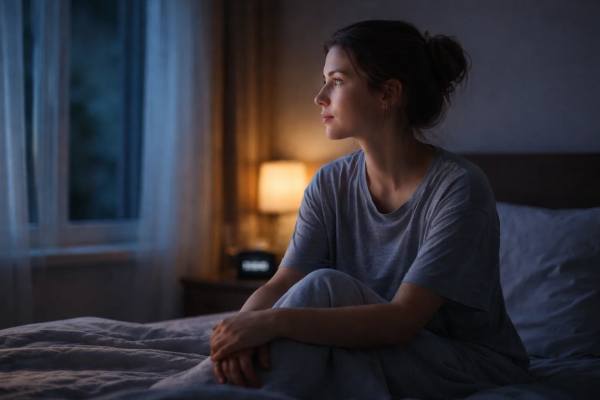
If your brain refuses to “power down” until the early morning hours, you are not alone—and you are not necessarily doing anything wrong. Delayed Sleep Phase Syndrome (often called delayed sleep-wake phase disorder) is a circadian rhythm condition where your internal clock runs late, so sleepiness arrives hours after most people feel ready for bed. The result can look like insomnia on school or work nights, followed by normal, restorative sleep when you can follow your natural schedule. The most encouraging part is that many people can shift their rhythm earlier with the right timing tools—especially morning light, consistent wake times, and carefully planned evening routines. When treated well, people often notice better daytime energy, improved mood stability, and fewer “zombie mornings.” This guide explains what is happening in your body, how clinicians confirm the diagnosis, and how to build a practical plan that respects both biology and real life.
Quick Overview
- A well-timed plan can shift sleep earlier and reduce morning sleep inertia within a few weeks for many people.
- Aligning your schedule with your circadian rhythm often improves daytime alertness, mood, and school or work performance.
- Bright light therapy and melatonin are timing-sensitive and can be risky for some people (for example, eye conditions or bipolar disorder) without medical guidance.
- Consistent wake time plus outdoor light within 60 minutes of waking is a high-impact starting point for many schedules.
- Weekends can undo progress if sleep times drift by more than 1–2 hours compared with weekdays.
Table of Contents
- Delayed sleep phase syndrome explained
- Why your clock runs late
- How delayed sleep phase is diagnosed
- Phase-advance treatments that work
- Daily habits that lock in earlier sleep
- Risks comorbidities and when to get help
Delayed sleep phase syndrome explained
Delayed Sleep Phase Syndrome (DSPS) is best understood as a timing problem, not a sleep ability problem. Your body can sleep, and it can often sleep well—just on a later schedule than your obligations allow. Many clinicians now use the term delayed sleep-wake phase disorder (DSWPD), but people still commonly say DSPS. Both labels point to the same core pattern: a persistent delay in your preferred sleep and wake times, usually by two hours or more, leading to difficulty falling asleep at “normal” bedtimes and difficulty waking for early responsibilities.
A key clue is what happens on days off. If you naturally fall asleep at 2:30–4:00 a.m. and wake around late morning or early afternoon, and you feel relatively refreshed when allowed to follow that pattern, circadian delay becomes more likely. In contrast, many forms of insomnia create poor sleep quality even when the person has time to sleep. With DSPS, sleep can be deep and continuous once it finally starts.
DSPS versus being a night owl
Some people are simply evening types. DSPS is different because it causes functional impairment: chronic lateness, missed classes, workplace consequences, strained relationships, or ongoing sleep deprivation from trying to force an earlier schedule. In other words, it is not just preference—it is a mismatch that creates real costs.
DSPS versus insomnia
DSPS can look like insomnia because the person is awake in bed, frustrated, and “trying” to sleep. The difference is timing. In DSPS, sleepiness often arrives like a switch once the internal clock reaches its biological night. If you regularly cannot fall asleep at 11:00 p.m. but you fall asleep quickly at 3:00 a.m., that pattern favors DSPS. Many people can also have both conditions: circadian delay plus learned arousal, worry about sleep, or unhelpful bedtime habits.
Who it affects most
DSPS is commonly seen in adolescents and young adults, but it can persist into adulthood. It can also appear alongside ADHD, anxiety, depression, and certain lifestyle demands (late-night work, gaming communities, international teams). Importantly, DSPS is not laziness. It is a brain and body rhythm issue that responds best to consistent timing cues.
Why your clock runs late
Falling asleep “too late” is often your circadian system doing exactly what it was trained to do. Your internal clock is anchored by a master pacemaker in the brain that coordinates daily rhythms—sleepiness, alertness, temperature, appetite, and hormone release. Two forces shape when you sleep: sleep pressure (how long you have been awake) and circadian timing (whether your brain believes it is biological night). In delayed sleep phase syndrome, the circadian signal that says “now is night” arrives late.
Late melatonin timing and a delayed biological night
Melatonin is often described as the “darkness hormone.” It does not knock you out like a sedative; it helps signal the timing of night to the brain and body. In many people with DSPS, the onset of melatonin under dim light happens later than average, and the body’s temperature rhythm is also shifted later. That means a typical bedtime may fall in the person’s biological evening, when the brain still supports alertness.
Light is the strongest clock-setter
Light exposure, especially bright light in the evening and night, tends to push the clock later. This includes overhead lighting, screens close to the face, and bright indoor environments. Morning light tends to pull the clock earlier. Many modern schedules unintentionally create the perfect recipe for delay: dim mornings indoors, then bright nights with screens and social stimulation.
Some people with DSPS also appear to be more sensitive to evening light. When the circadian system is “light-reactive,” even normal indoor lighting can have a stronger delaying effect.
Genetics, adolescence, and social jetlag
Circadian preference is partly heritable. You can think of DSPS as the far end of the evening-type spectrum, often interacting with environment. Adolescence adds fuel: many teens naturally shift later during puberty, while school start times stay early. The result is chronic sleep restriction, weekend catch-up sleep, and a phenomenon called “social jetlag,” where the body constantly bounces between two time zones—weekdays and weekends—without ever stabilizing.
Behavioral loops that reinforce delay
Even when biology starts the delay, habits can lock it in:
- Sleeping in to recover after a short night, which reduces morning light exposure and shifts the clock later.
- Napping late in the day, which lowers sleep pressure at night.
- Using the bed for wakeful activities, which teaches the brain that bedtime is an alertness zone.
- Anxiety about sleep, which raises arousal at the exact time you need downshifting.
The takeaway is hopeful: because many of these inputs are adjustable, the clock can often be trained earlier with consistent cues and realistic expectations.
How delayed sleep phase is diagnosed
Diagnosis matters because DSPS is frequently misunderstood. People are often told to “try harder,” “put the phone away,” or “go to bed earlier,” which can increase frustration and self-blame. A good evaluation focuses on pattern recognition, timing data, and ruling out look-alike conditions.
What clinicians look for
A typical clinical picture includes:
- Persistent difficulty falling asleep until very late, often for months or longer.
- Difficulty waking at socially required times, with strong sleep inertia.
- Normal sleep duration and quality when allowed to follow the late schedule.
- Daytime impairment: sleepiness, poor concentration, mood effects, missed obligations, or performance problems.
Many clinicians also ask about weekend patterns. If you shift several hours later on weekends and feel better, that supports a circadian component, even if you feel “insomniac” on weekdays.
Tools that make the pattern visible
The most common assessment tools are practical and low-tech:
- A sleep diary for at least 2 weeks, including weekdays and weekends.
- Actigraphy, a wearable device that estimates sleep and wake patterns based on movement and light exposure.
- Questionnaires about sleepiness, chronotype, and sleep quality.
In more specialized settings, clinicians may assess dim light melatonin onset, a lab-based measure that maps when your biological night begins. This is not required for everyone, but it can be helpful when the diagnosis is unclear or when treatment timing needs precision.
Conditions to rule out
Several issues can mimic or overlap with DSPS:
- Insomnia driven by hyperarousal, worry, pain, or conditioned sleeplessness.
- Obstructive sleep apnea or restless legs syndrome, which fragment sleep and create daytime fatigue.
- Depression and anxiety, which can shift sleep timing and reduce sleep quality.
- Substance effects (caffeine, nicotine, alcohol, cannabis) and certain medications.
- Shift work schedules or irregular work hours.
A careful history is important: if you cannot sleep even when allowed to follow your natural late schedule, DSPS alone may not explain the problem.
When to seek a formal sleep evaluation
Consider specialist support if you have significant daytime sleepiness, safety concerns (drowsy driving), suspected sleep apnea, severe mood symptoms, or repeated failed attempts to shift your schedule. Formal care can also help if you need documentation for school or workplace accommodations.
Phase-advance treatments that work
Treating DSPS is less about “sleep hygiene” and more about circadian engineering. The goal is to move your internal clock earlier (a phase advance) while protecting sleep quality. For many people, the most effective plan combines a consistent wake time, morning light, and evening light reduction. Some also benefit from precisely timed melatonin, behavioral strategies, or structured schedule shifts.
Start with the anchor: a consistent wake time
If you change only one thing, make it your wake time. Waking up at a consistent time—every day, including weekends—creates a stable morning signal. Many people try to fix DSPS by forcing bedtime earlier while still sleeping in when possible. That usually fails because the clock never receives a consistent “morning” marker.
A realistic approach is to choose a wake time you can keep at least 5–6 days per week. If your current wake time varies widely, adjust in steps (for example, 15–30 minutes earlier every few days) rather than making a dramatic jump.
Morning bright light: the strongest phase-advance tool
Light soon after waking helps tell the brain, “Day has begun.” Outdoor light is often the simplest option. If outdoor light is limited, some people use a bright light device.
General timing principles that many plans follow:
- Get bright light exposure within the first hour after waking.
- Stay consistent daily during the shift period.
- Avoid bright light late in the evening, which can undo the advance.
If you use a light device, safety and correct use matter. People with eye conditions, migraine sensitivity, or bipolar disorder should be especially cautious and consider medical guidance.
Melatonin: timing-sensitive and often lower-dose
Melatonin works best in DSPS when it is used as a clock signal, not as a heavy sleep aid. That typically means a lower dose taken earlier in the evening than people expect. Taking it right at bedtime may increase drowsiness but do less to move the clock. Because timing depends on your current rhythm, a clinician can help identify an appropriate window and dose, especially if you take other medications or have mood concerns.
Behavioral strategies that support the shift
Two additions often improve success:
- A wind-down routine that reduces stimulation and anticipatory anxiety.
- A “plan for awakenings,” so you do not panic if you wake early during the adjustment phase.
Some people benefit from a structured therapy approach that targets sleep-related worry and inconsistent behaviors that keep the late schedule stuck.
What progress typically looks like
Circadian change is usually gradual. Many people see meaningful improvement over 2–6 weeks when they keep wake time and light cues consistent. Expect occasional setbacks, especially after late nights, travel, illness, or stressful periods. The goal is not perfection—it is a stable trend toward earlier sleepiness and easier mornings.
Daily habits that lock in earlier sleep
Once you begin shifting your rhythm earlier, maintenance becomes the main challenge. The circadian system is trainable, but it is also responsive; it will drift later again if evening light and late sleep-ins return. The most sustainable plan treats your day as a sequence of cues that either support or sabotage your target sleep time.
Evening light management without making life miserable
You do not need a perfect “no screens” rule to improve DSPS, but you do need a consistent dimming pattern. Helpful options include:
- Lowering overhead lighting 2–3 hours before your planned bedtime.
- Using warm, dim lamps instead of bright ceiling lights.
- Increasing distance from screens and lowering brightness at night.
- Avoiding bright, close-up light in the last hour before bed when possible.
If your evenings are highly stimulating—intense gaming, emotionally charged conversations, competitive work—your nervous system may stay in “activation mode” even if the room is dim. In that case, the content matters as much as the light.
Caffeine, nicotine, and alcohol timing
With DSPS, it is easy to use caffeine to survive mornings and then find it harder to sleep at night. A practical strategy is to set a caffeine cutoff that protects your planned bedtime. Nicotine can also delay sleep and fragment it. Alcohol may make you sleepy at first but often worsens sleep quality later in the night, which can increase the urge to sleep in and perpetuate the cycle.
Exercise and meal timing as clock cues
Movement and meals also signal time to the body. Many people with DSPS do better when they:
- Get some physical activity earlier in the day, even if it is a brisk walk.
- Avoid intense late-night workouts that raise body temperature and arousal close to bedtime.
- Keep meal timing steady, with the last heavy meal ending a few hours before sleep.
You do not need to micromanage this. Consistency matters more than precision.
Weekends: the make-or-break factor
The fastest way to undo a week of progress is a weekend schedule that drifts several hours later. A workable compromise is to keep your wake time within about 1–2 hours of your weekday wake time. If you need extra recovery sleep, consider an earlier bedtime, a short nap earlier in the day, or a slightly later wake time that still stays within your “maintenance window.”
Practical accommodations that reduce harm
If you cannot fully shift your clock right now, you can still reduce damage:
- Cluster demanding tasks later in the morning when you are more alert.
- Use morning light and a fixed wake time even if bedtime is imperfect.
- Discuss flexible start times or remote options if your role allows it.
- For students, explore schedule choices that avoid very early classes when possible.
These adjustments do not replace treatment, but they can protect mental health and performance while you work on the underlying rhythm.
Risks comorbidities and when to get help
DSPS is often minimized because it is “just sleep timing,” yet the downstream effects can be significant. Chronic misalignment between your internal clock and your obligations can create a pattern of repeated sleep deprivation, which can affect mood regulation, attention, appetite signals, and stress resilience.
Common impacts you should take seriously
People with untreated DSPS often report:
- Persistent daytime sleepiness and brain fog, especially in early hours.
- Lower academic or work performance due to morning impairment.
- Irritability and reduced frustration tolerance.
- Increased reliance on caffeine or late-day naps.
- Social strain from missed mornings, lateness, or conflicting schedules.
Safety is a major issue. If you are driving while sleepy, operating machinery, or working in high-stakes environments, you need an honest plan that prioritizes alertness.
Mental health overlap is common
Circadian disruption and mood interact in both directions. Late schedules can reduce morning light exposure, limit social structure, and increase isolation—all of which can worsen depression risk. Anxiety can also amplify the problem by increasing bedtime arousal. Neurodevelopmental patterns such as ADHD can make consistent routines harder, even when motivation is high.
This does not mean DSPS is “all psychological.” It means your treatment plan should consider both circadian timing and emotional regulation. If you notice persistent low mood, loss of interest, panic symptoms, or worsening functioning, additional support can be as important as light and schedule changes.
Special safety notes for melatonin and bright light
Melatonin is widely available, but “more” is not always better, and timing errors can backfire. Bright light can also be activating and may be inappropriate for certain eye conditions or for people with bipolar disorder who are vulnerable to mood elevation. If you are pregnant, trying to conceive, managing a significant medical condition, or taking multiple medications, professional guidance is a wise step.
Red flags that justify prompt evaluation
Seek medical assessment if you have:
- Loud snoring, gasping, or witnessed breathing pauses during sleep.
- Severe daytime sleepiness, especially if you nod off unintentionally.
- Sudden changes in sleep needs, mood elevation, or risky behavior.
- Persistent insomnia symptoms even when you sleep on your preferred schedule.
- Frequent nightmares, unusual movements, or suspected seizures during sleep.
Finally, be cautious with self-judgment. DSPS often improves fastest when you replace blame with measurement: track your sleep pattern, choose one or two high-leverage cues, and make changes that you can repeat consistently.
References
- Light therapy for the treatment of delayed sleep-wake phase disorder in adults: a systematic review – PMC 2021 (Systematic Review)
- Delayed sleep–wake phase disorder and its related sleep behaviors in the young generation – PMC 2023 (Review)
- Delayed sleep wake phase disorder in adolescents: an updated review – PubMed 2024 (Review)
- The Association Between Delayed Sleep-Wake Phase Disorder and Depression Among Young Individuals: A Systematic Review and Meta-Analysis: Association entre le syndrome de retard de phase et la dépression parmi les jeunes : revue systématique et méta-analyse – PMC 2025 (Systematic Review and Meta-analysis)
- Clinical Practice Guideline for the Treatment of Intrinsic Circadian Rhythm Sleep-Wake Disorders: Advanced Sleep-Wake Phase Disorder (ASWPD), Delayed Sleep-Wake Phase Disorder (DSWPD), Non-24-Hour Sleep-Wake Rhythm Disorder (N24SWD), and Irregular Sleep-Wake Rhythm Disorder (ISWRD). An Update for 2015: An American Academy of Sleep Medicine Clinical Practice Guideline – PMC 2015 (Guideline)
Disclaimer
This article is for educational purposes and does not provide medical advice, diagnosis, or treatment. Delayed sleep phase symptoms can overlap with other sleep disorders and with mental health conditions, and the safest plan depends on your medical history, medications, and daily demands. If your sleep schedule causes significant impairment, safety risks, or persistent distress—or if you suspect sleep apnea, severe insomnia, or a mood disorder—seek evaluation from a qualified clinician or a sleep specialist. Do not start or change melatonin use or bright light therapy if you have bipolar disorder, significant eye disease, or other conditions where timing-based interventions may carry added risk without professional guidance.
If this guide helped you understand your sleep pattern, consider sharing it on Facebook, X (formerly Twitter), or any platform you prefer.