Scalp microneedling has moved from “clinic-only” curiosity to a mainstream add-on for people trying to improve thinning at the hairline or crown. The appeal is easy to understand: controlled micro-injuries can nudge growth signaling in the scalp, and they may help topical treatments reach their target more effectively. But the tool you choose matters. A dermaroller and a dermapen can both create microchannels, yet they do so with different mechanics, different levels of control, and very different hygiene realities—especially if you plan to do treatments at home.
This guide compares dermarollers and dermapens in a way that protects both results and safety. You’ll learn how each device affects penetration consistency, comfort, and hair snagging; why “more pressure” is not the same as “better stimulation”; and what clean technique looks like when needles are involved. If you take only one message from this article, let it be this: microneedling can be helpful, but outcomes depend on careful dosing and hygiene far more than hype or aggressive sessions.
Essential Insights
- Both dermarollers and dermapens can support hair regrowth when used consistently and conservatively over months.
- Dermapens typically offer better depth control and less skin “drag,” while dermarollers are cheaper but easier to misuse.
- Hygiene is the deciding factor for many people: reusable rollers are harder to keep truly clean than single-use pen cartridges.
- A safe approach is to start with lower intensity and longer intervals, then adjust based on scalp recovery and irritation.
- Active scalp inflammation, infection, or a history of abnormal scarring are reasons to avoid at-home microneedling.
Table of Contents
- How scalp microneedling helps hair
- Dermaroller versus dermapen mechanics
- Pros and cons for real world use
- Pain downtime and who should avoid it
- Hygiene sterilization and infection risk
- Building a smart routine and tracking results
How scalp microneedling helps hair
Microneedling works on a simple principle: tiny, controlled punctures can stimulate a wound-healing response without creating a large injury. On the scalp, that response may support hair regrowth through a mix of growth-factor signaling, improved follicle microenvironment, and better delivery of topical treatments. It is not a “new follicle creator,” and it does not override genetics, hormones, or scarring conditions—but it can be a meaningful add-on for some people.
What microneedling is trying to change
Hair follicles cycle through growth and rest phases. In common pattern thinning, susceptible follicles gradually produce thinner hairs and spend less time in active growth. Microneedling is used to support follicles by nudging signaling pathways linked to repair and regeneration. In practical terms, users often describe:
- Improved “density look” at the crown over months
- More sturdy regrowth hairs rather than wispy miniaturized hairs
- Better response to topical regimens that previously plateaued
The key word is “over months.” Hair responds slowly, and the scalp needs recovery time between sessions.
Why the scalp environment matters as much as the tool
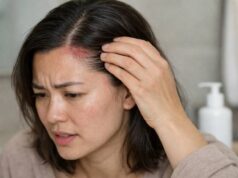
A needle session is only one input. If the scalp is inflamed, coated with heavy buildup, or irritated by products, microneedling can feel harsher and may trigger more redness and flaking afterward. A calm baseline makes results more predictable and reduces side effects.
If you want a framework for what “healthy scalp environment” means—oil balance, inflammation control, and follicle support—see how the scalp environment shapes growth. It can help you decide whether you should focus on calming and cleansing before you ever pick up needles.
What microneedling can and cannot do
Microneedling is best seen as a “multiplier,” not a standalone cure. It may help:
- Enhance response to topical growth treatments
- Improve hair caliber and density measures in some users
- Support areas of early to moderate thinning
It cannot:
- Reverse scarring alopecia by itself
- Fix severe long-standing miniaturization quickly
- Replace medical evaluation when shedding is sudden, patchy, or painful
A realistic expectation is a gradual improvement that becomes noticeable somewhere between 12 and 24 weeks for many people, with continued changes over 6–12 months when the routine is consistent and gentle.
Dermaroller versus dermapen mechanics
Dermarollers and dermapens both create microchannels, but the way they deliver needles into skin is fundamentally different. That difference affects depth accuracy, comfort, and the odds of unintended skin trauma—especially on a curved surface like the scalp where hair can snag and angles change quickly.
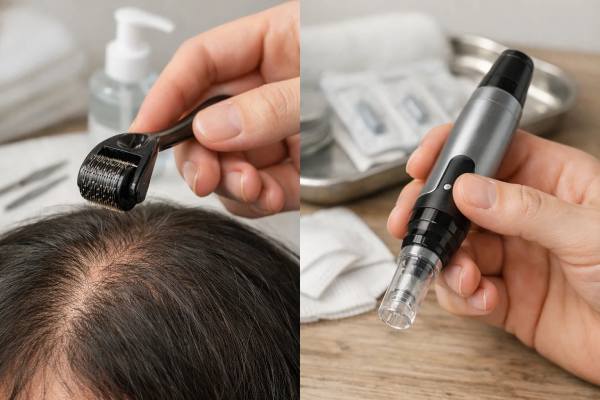
How a dermaroller contacts the scalp
A dermaroller is a cylinder covered in needles. As you roll, needles enter the skin at an angle and then exit at an angle. This creates two practical issues:
- Variable penetration: needle entry depth can be inconsistent when the roller is moving over uneven scalp contours.
- Shear and drag: angled entry and exit can create more “tearing” at the surface if pressure is high or if the roller is reused and dull.
On the scalp, the roller can also catch strands, particularly with longer hair, tight curls, or dense regrowth. That snagging can pull hairs and irritate follicles, which feels like a setback when you are trying to reduce shedding anxiety.
How a dermapen contacts the scalp
A dermapen uses a motor to move needles in a vertical, stamp-like motion. The advantages are mostly about control:
- Adjustable depth: many pens allow precise depth settings.
- More consistent channel formation: the needle path is closer to perpendicular.
- Less surface drag: there is less rolling motion across hair and skin.
The tradeoff is that pens require power, correct cartridge fit, and careful cleaning of the device body, even if the needle cartridge itself is disposable.
Depth control is not just a number on a dial
People often obsess over “what depth is best,” but real-world depth depends on pressure, speed, and scalp thickness. With rollers, depth is also influenced by angle and how firmly you press. With pens, depth settings are more reliable, but you can still overdo intensity if you repeatedly stamp the same area or chase pinpoint bleeding as a “goal” rather than a warning sign.
Why technique differences matter for outcomes
Microneedling is dose-dependent. Too little may not do much. Too much can trigger inflammation that undermines progress. If your scalp tends to react strongly—burning, itch, or prolonged redness—device choice becomes part of skin-barrier management. When irritation is a recurring theme, it helps to understand whether symptoms reflect allergy, irritation, or inflammation from over-treatment. Product allergy versus irritation patterns can also help you troubleshoot when the scalp gets reactive after adding antiseptics, numbing products, or new serums to your routine.
Pros and cons for real world use
Choosing between a dermaroller and a dermapen is rarely about “which is stronger.” It is about which tool you can use consistently, safely, and hygienically. The best device is the one that matches your hair length, coordination, budget, and tolerance for maintenance.
Dermaroller advantages
A dermaroller’s appeal is straightforward:
- Lower upfront cost: rollers are usually cheaper than pens.
- No charging or batteries: simple, portable, and quick.
- Beginner familiarity: many people feel less intimidated by a manual tool.
For some users, a roller can be adequate if they keep sessions conservative and treat the roller as truly single-use or strictly limited-use. The problem is that many people unintentionally drift into risky habits: reusing too long, cleaning inconsistently, or pressing too hard to “feel it working.”
Dermaroller drawbacks
In practice, rollers can be harder on the scalp because of:
- Hair snagging and friction, especially with longer hair
- Less consistent penetration depth across different scalp zones
- Greater risk of micro-tearing if technique is rushed or the roller is dull
These drawbacks do not automatically make rollers “bad,” but they increase the odds that an at-home user will create irritation and then compensate by skipping sessions—leading to inconsistent dosing.
Dermapen advantages
A dermapen tends to fit real-world hair routines better for many people because it can be more controlled:
- Adjustable depth supports gradual, measured escalation
- Less drag makes it easier to treat the crown without pulling hair
- Disposable cartridges simplify the needle hygiene problem
If you are treating a specific area (like crown thinning) rather than the entire scalp, a pen can also be more efficient because you can target zones with less time and less overlap.
Dermapen drawbacks
Pens are not perfect. Consider:
- Higher cost and the ongoing expense of cartridges
- A larger “setup burden” that can reduce consistency
- The temptation to treat too frequently because it feels more comfortable
A pen can lull people into overuse. Comfort is not a license to increase frequency aggressively. Recovery time is part of the treatment.
How topical therapy changes the decision
Many people use microneedling alongside topical growth treatments. If that is your plan, your tool choice should prioritize consistent, safe dosing—because the combination can be more irritating than either alone. For a clear overview of how topical growth therapy works and what it can realistically achieve, how minoxidil supports hair regrowth is a useful companion topic.
The takeaway: rollers can be a budget entry point, but pens often win on control and hygiene—two features that matter more than intensity.
Pain downtime and who should avoid it
Microneedling should feel like controlled discomfort, not a battle. Pain, redness, and tenderness are expected to a degree, but excessive symptoms often signal too much depth, too much pressure, too-frequent sessions, or a scalp that is already inflamed. This section helps you interpret those signals and identify situations where at-home microneedling is not a good idea.
What “normal” aftercare feels like
Most people experience a short window of:
- Redness and warmth
- Mild swelling or tightness
- Tenderness when touching the scalp
- Temporary sensitivity to strong shampoos or fragrances
These effects should steadily calm, not intensify. If redness persists for days, if the scalp becomes increasingly itchy, or if you see crusting or pustules, assume something has gone wrong—often hygiene, technique, or product irritation.
What increases pain and irritation
Several factors reliably raise discomfort:
- Higher depths or higher pressure than your scalp can tolerate
- Passing the device repeatedly over the same zone
- Treating immediately after harsh chemical services or sunburn
- Combining microneedling with multiple new actives at once
It also matters how you part the hair. If you are forcing needles through dense hair without clear scalp contact, you may apply more pressure than intended, increasing trauma while reducing precision.
Who should not do at-home scalp microneedling
At-home microneedling is best avoided if you have:
- Active scalp infection, open sores, or weeping lesions
- Severe dandruff flare or uncontrolled inflammatory scalp disease
- A history of keloids or abnormal scarring
- Bleeding disorders or use of blood thinners without medical clearance
- Immunosuppression or conditions that impair wound healing
Pregnancy and certain medical conditions also warrant clinician guidance before any procedure that intentionally breaks the skin barrier.
When to seek medical guidance sooner
Stop and get evaluated if you develop:
- Increasing pain, swelling, or spreading redness
- Pus-filled bumps, fever, or tender lymph nodes
- Sudden patchy hair loss, thick scale, or significant shedding
- Persistent burning that does not resolve within a day or two
If you want a practical checklist for when hair and scalp changes should be evaluated rather than self-managed, when to see a dermatologist for hair loss can help you make that decision without delay.
The safest mindset is: microneedling is optional, but an injured or infected scalp can set you back. Treat “too much” as a real risk, not a badge of seriousness.
Hygiene sterilization and infection risk
Hygiene is the non-negotiable part of microneedling. If you cannot maintain clean technique and appropriate device handling, the risk-to-reward ratio shifts quickly—especially for at-home use. The scalp has oil, sweat, and hair products, and needles create micro-openings that temporarily lower the barrier to bacteria and irritation.
Why rollers are harder to keep safe than they look
The biggest hygiene challenge with dermarollers is that their design makes thorough cleaning difficult. Needles can trap residue: oils, dead skin, and product films. Over time, that buildup can harbor microbes and dull the needles, which increases micro-tearing. Even if you disinfect, a reused roller is still a reused sharp device—and the standard for “clean enough” is higher when you are puncturing skin.
If you are choosing a roller, treat it as limited-use and be strict about storage. Bathroom counters and damp cases are not safe storage environments.
Why pens reduce one hygiene problem but not all of them
Dermapens often use disposable needle cartridges, which significantly reduces cross-session contamination risk. However, the device body still contacts the scalp and can pick up oils and residue. The pen should be wiped down appropriately and stored in a clean, dry place.
Disposable does not mean carefree. It means one part of the hygiene chain is easier to manage.
Common hygiene mistakes that create real risk
These patterns are responsible for most avoidable complications:
- Sharing devices between people (even family members)
- Reusing cartridges or rollers beyond their intended use
- Treating over active bumps, pimples, or scratched areas
- Using harsh household disinfectants that corrode needles
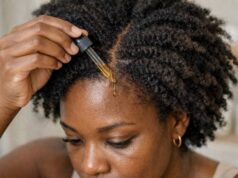
- Applying irritating products immediately after needling “because channels are open”
One subtle mistake is applying heavy oils or fragranced serums right after microneedling. Even if those products are normally tolerated, the disrupted barrier can react strongly.
What infection risk can look like on the scalp
Infections do not always appear dramatic at first. Early clues include:
- Increasing tenderness in one zone rather than generalized soreness
- New pustules or “acne-like” bumps that are painful
- Crusting, oozing, or a hot, swollen patch
- Worsening itch paired with redness that spreads
If you suspect follicle infection or recurrent bumps, stop microneedling and address the scalp condition first. scalp folliculitis treatment options can help you recognize typical patterns and understand why “more cleansing” is not always the answer.
Hygiene as the deciding factor
If you are choosing between tools and you are not confident you can maintain strict hygiene with a reusable roller, a pen with single-use cartridges is often the safer choice. The goal is not to be fearless—it is to reduce preventable complications.
Building a smart routine and tracking results
Microneedling is easiest to evaluate when you treat it like a controlled experiment: stable baseline, consistent dosing, and simple tracking. This protects you from one of the biggest problems in hair care—changing too many variables at once and then not knowing what helped or harmed.
Set your baseline before you start
Take three consistent photos:
- Hairline and temples (front and both sides)
- Part line and crown (top-down)
- One “daily life” photo in normal indoor lighting
Repeat every 4 weeks. Hair change is slow, and photos reduce anxiety-driven misinterpretation.
Choose conservative dosing first
A reasonable starting philosophy is “lower intensity, longer consistency.” Many people do better by starting gently and spacing sessions enough to let the scalp fully recover. Overly frequent sessions are a common cause of chronic irritation, which can undermine scalp comfort and make you quit.
Your ideal interval depends on your scalp sensitivity, device type, and whether you are using other active treatments. If you are already using a potent topical routine, microneedling can increase the need for recovery time, not decrease it.
Plan the topical timing, especially with minoxidil
People often ask whether they should apply minoxidil immediately after needling. The more important question is how your scalp reacts. Applying strong actives too soon can increase burning, dermatitis, and “false shedding” from irritation. If you are adjusting your minoxidil routine around microneedling, common minoxidil routine mistakes can help you avoid the two extremes: over-application on a disrupted barrier and stopping so often that results never stabilize.
Protect the scalp in the 48 hours after a session
Your barrier is more reactive right after treatment. Practical protective steps include:
- Avoiding heavy sweat, swimming pools, and direct sun on the scalp
- Skipping fragranced products and harsh exfoliants
- Using gentle cleansing and minimizing aggressive brushing
- Avoiding tight hats and high-tension hairstyles
If you cannot avoid sweaty training, consider scheduling sessions so recovery days align with your workout plan rather than fighting your lifestyle.
Know what success looks like
Success is usually a combination of:
- Less visible scalp show-through in consistent photos
- More uniform “fill-in” at the crown or frontal zone
- Improved hair caliber and styling ease
The first changes are often subtle. Consistency over 24 weeks is more informative than intensity over 2 weeks.
References
- Microneedling and Its Use in Hair Loss Disorders: A Systematic Review – PMC 2021 (Systematic Review)
- Evaluating the efficacy and safety of combined microneedling therapy versus topical Minoxidil in androgenetic alopecia: a systematic review and meta-analysis – PMC 2025 (Systematic Review and Meta-Analysis)
- Effectiveness and safety of the combination therapy of micro-needling and minoxidil in androgenetic alopecia of Indonesian men: a randomized controlled trial – PMC 2024 (RCT)
- A Systematic Review Examining the Potential Adverse Effects of Microneedling – PMC 2021 (Systematic Review)
- Clinical Efficacy and Mechanisms of Microneedling Alone or Combined With Drugs in the Treatment of Androgenetic Alopecia – PMC 2026
Disclaimer
This article is for educational purposes only and does not replace medical advice, diagnosis, or treatment. Scalp microneedling intentionally disrupts the skin barrier and can cause irritation, infection, scarring, or worsening inflammation when performed incorrectly or on unsuitable scalp conditions. If you have scalp pain, oozing, pustules, rapidly worsening redness, fever, sudden patchy hair loss, or a history of abnormal scarring, seek evaluation from a qualified healthcare professional or dermatologist before attempting microneedling. Do not share microneedling devices, and do not use them over active infection, open wounds, or inflamed scalp disease.
If this guide clarified your decision, consider sharing it on Facebook, X (formerly Twitter), or your preferred platforms so others can choose safer tools, cleaner technique, and more realistic expectations.