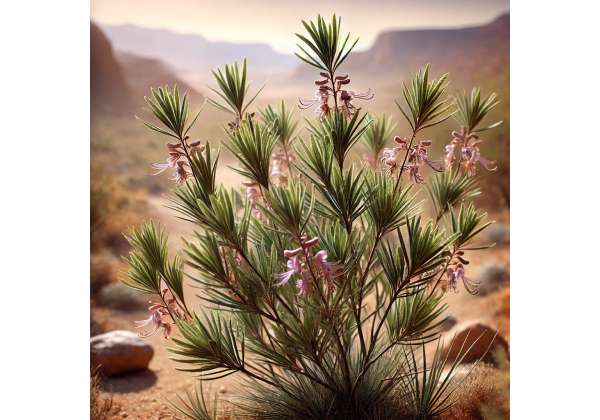
Desert willow (Chilopsis linearis) is a flowering shrub or small tree native to the American Southwest and northern Mexico, celebrated for its trumpet-shaped blooms and its resilience in dry washes. Despite the name, it is not a true willow; it belongs to the trumpet vine family (Bignoniaceae). For herbal readers, desert willow is most interesting for its long-standing traditional use of the flowers, leaves, and bark as soothing preparations—especially teas for rough coughs and topical poultices for minor skin problems. These uses point to a gentle but practical theme: calming irritated tissues and supporting the body’s surface defenses.
Desert willow chemistry has not been studied as deeply as many mainstream herbs, and modern clinical research is limited. Still, plant compounds commonly reported in this species and its family—phenolic acids, glycosides, flavonoids, and tannin-like astringents—fit its folk reputation for antimicrobial, anti-inflammatory, and tissue-toning effects. The key is to approach desert willow as a traditional, supportive botanical: choose the right plant part, prepare it correctly, use conservative doses, and prioritize safety.
Quick Facts to Know
- Traditional use centers on flower, leaf, and bark teas for cough comfort and topical poultices for minor skin issues.
- Start low: 1–2 g dried flowers or leaf per cup, 1–2 cups daily for up to 7–10 days.
- Avoid confusing it with true willow products; desert willow does not have the same salicylate profile.
- Avoid medicinal use if pregnant, breastfeeding, or managing kidney disease unless guided by a clinician.
Table of Contents
- What is desert willow
- Key ingredients and properties
- Traditional benefits and modern clues
- Topical uses for skin
- How to use desert willow
- Dosage and timing
- Safety, interactions, and evidence
What is desert willow
Desert willow (Chilopsis linearis) is a drought-tolerant shrub or small tree with narrow, willow-like leaves and showy, tubular flowers. It is sometimes called flowering willow, willowleaf catalpa, or desert catalpa—nicknames that reflect its appearance, not its botanical relationships. True willows are in the genus Salix; desert willow is in the Bignoniaceae family, alongside ornamental trumpet vines and catalpas.
From a practical standpoint, the plant’s habitat explains a lot about how people have used it. Desert willow thrives along arroyos, washes, and riverbanks where water is intermittent but reliable beneath the surface. Plants that grow in these settings often develop strong protective chemistry—bitter or astringent compounds that discourage browsing, help resist microbes, and reduce stress. Those same compounds are frequently the ones humans notice as “medicinal.”
Parts used in traditional practice
- Flowers: Often brewed into a mild tea for coughs and throat irritation, and sometimes used in topical applications.
- Leaves: Used in teas and washes, typically when a slightly more astringent effect is desired.
- Bark (including inner bark in some traditions): Used more cautiously, often as a stronger decoction or topical preparation.
How it is typically positioned as an herb
Desert willow is not a high-volume, standardized supplement in modern commerce. Instead, it sits in the category of regional traditional botanicals—plants used locally and thoughtfully. That means two things for the reader:
- Quality control and correct identification matter more than usual.
- Dosage and safety guidelines are conservative because the evidence base is smaller.
A key identification and safety reminder
Because desert willow is often grown ornamentally, the biggest real-world risk is not the plant itself but the environment it grew in. Trees near roads, treated lawns, or heavily sprayed landscapes can carry residues and pollutants. If you plan to use desert willow medicinally, source it from clean land and avoid any plant that may have been treated with pesticides or systemic chemicals.
Key ingredients and properties
Desert willow is best understood through two overlapping lenses: the plant’s phenolic and glycosidic compounds (often linked to antimicrobial and anti-inflammatory activity in many herbs) and its astringent, tissue-toning constituents (often experienced as drying or tightening). Research on Chilopsis linearis is not as extensive as for many commercial herbs, but available analyses and botanical summaries repeatedly point to certain chemical themes that match its folk use.
Phenolic acids and related antioxidants
Phenolic acids are common plant defense molecules. In many herbs, they contribute to:
- antioxidant activity (helping buffer oxidative stress)
- inflammation modulation (influencing the signaling that drives redness and swelling)
- support for tissue resilience (useful when the goal is soothing irritated surfaces)
In practical terms, a phenolic-rich tea is rarely “strong” in an immediate, drug-like way. Instead, it tends to feel supportive over days—especially when paired with rest, hydration, and reduced irritation triggers.
Glycosides and other bitter protective compounds
Many desert-adapted plants use glycosides as part of their chemical defense. These compounds can taste bitter or medicinal, and they often show up in traditional use as:
- antimicrobial support (especially topical or rinse-style use)
- astringent or toning effects
- “cooling” or calming sensations for irritated tissues, depending on preparation
Because glycosides are a broad category with varied effects, it is wise to keep doses modest unless you are working with a trained clinician.
Flavonoids and tannin-like astringents
Flavonoids are widely distributed in flowering plants and can contribute to antioxidant and anti-inflammatory effects. Tannin-like astringents—whether true tannins or compounds with a similar mouthfeel—help explain why desert willow has been used for:
- minor skin issues (as washes or poultices)
- oral and gum comfort (as diluted rinses)
- “weeping” or irritated surfaces that benefit from gentle tightening and drying
If you tend toward dryness or eczema-like sensitivity, strong astringents can sometimes make symptoms feel tighter or more reactive. Preparation strength matters.
Seed oils and fatty acids
Desert willow seeds contain oils with notable fatty acid profiles. This is scientifically interesting, but it does not automatically translate into a common or recommended practice of eating the seeds medicinally. Instead, seed oil research mainly supports the broader point that desert willow contains biologically active lipid compounds—one more clue that the plant’s chemistry is complex and worth handling with respect.
Traditional benefits and modern clues
Most interest in desert willow as an herb comes from traditional and regional practice rather than from large modern clinical trials. That does not make the plant irrelevant; it simply changes how you should interpret benefits. The most responsible approach is to treat traditional use as a “map” of likely applications—then apply modern safety standards, realistic expectations, and careful self-monitoring.
Cough and throat comfort
Desert willow flowers are widely described in ethnobotanical notes as a soothing tea for coughs. The experience is typically gentle: warm liquid, mild aromatic character, and a comforting ritual that supports hydration and throat moisture. If desert willow helps, it is usually by easing irritation rather than by acting as a strong expectorant.
For readers comparing options, desert willow’s traditional niche overlaps with other supportive cough herbs. If you want a more established, widely used respiratory soother, mullein leaf benefits for cough support can be a helpful point of comparison, especially for dry, tickly cough patterns.
First-aid style topical use
Traditional use also includes poultices and washes from leaves, flowers, or bark for minor scrapes and skin irritation. This aligns with a plant profile that is mildly astringent and potentially antimicrobial on the surface. In modern terms, think of this use as “skin comfort and cleanliness support” rather than a substitute for proper wound care.
Yeast and fungal concerns
Some traditional references mention desert willow for yeast-related discomfort and athlete’s foot–type issues. This is plausible given the presence of phenolics and astringent compounds that can discourage microbial overgrowth on the surface. Still, fungal infections can be persistent and sometimes require proven antifungal treatment. Desert willow, if used, fits best as an adjunct approach—supporting hygiene and comfort while you use appropriate therapy.
Metabolic and cardiovascular claims
You may see claims that desert willow flower tea supports antioxidant status, cardiovascular health, or glucose metabolism. Consider these as preliminary and non-specific. Antioxidant activity is common in many plants and does not guarantee a measurable clinical effect. If you have diabetes or cardiovascular disease, desert willow should not replace medical care, and concentrated use should be discussed with your clinician.
A realistic way to frame benefits
Desert willow is best viewed as a regional supportive botanical for short-term discomforts—especially irritated throat and minor skin issues—rather than as a primary treatment for chronic disease. If you choose it, focus on correct preparation, conservative dosing, and clear “stop rules” if symptoms worsen.
Topical uses for skin
Topical desert willow use is often where tradition feels most straightforward: apply the plant externally to support comfort, cleanliness, and mild astringency. This can make sense for minor issues, but it also requires careful hygiene. Fresh plant material is not sterile, and applying it to broken skin is not risk-free.
Best-fit topical situations
Desert willow may be a reasonable choice for:
- minor scrapes where the skin is intact or only superficially broken
- mild redness from friction or heat
- insect bites that feel hot or itchy
- sweaty-skin irritation where a gentle drying effect feels helpful
Avoid using it for deep wounds, burns with blistering, spreading redness, pus, severe pain, or any sign of systemic illness.
Simple topical preparations
1) Cooled infusion wash (gentle, low risk)
- Brew a mild tea from flowers or leaves.
- Let it cool completely.
- Use as a rinse or compress for 10–15 minutes, then pat dry.
2) Poultice (stronger contact, higher hygiene demands)
- Wash fresh leaves or flowers thoroughly with clean water.
- Crush in clean hands or a sanitized mortar until moist.
- Apply to intact skin or very minor scrapes using sterile gauze as a barrier layer.
- Leave on 10–20 minutes, then remove and rinse.
If you are prone to dermatitis, do a small patch test first. Astringent plants can irritate already-compromised skin barriers.
Combining with proven skin soothers
Many people pair an astringent wash with a barrier-supporting moisturizer afterward. If you are exploring classic herbal skin options with stronger modern familiarity, calendula uses for skin comfort is often better tolerated for sensitive or dryness-prone skin than strongly astringent herbs.
Common mistakes to avoid
- Using a very strong bark decoction directly on reactive skin
- Applying fresh plant matter to wounds that need medical evaluation
- Reusing the same tea batch for multiple days (microbes can grow)
- Assuming “natural” means “non-allergenic”
Topical use should feel soothing. If it burns, stings sharply, or increases redness, stop and rinse with clean water.
How to use desert willow
Because desert willow is not a standardized supplement, how you use it matters as much as what you use. The guiding principle is simple: start with the gentlest preparation that matches your goal, then adjust cautiously. Flowers tend to be milder; leaves and bark tend to be more astringent and “medicinal” tasting.
1) Flower tea for throat and cough comfort
A practical method:
- Add 1–2 g dried flowers (or a small pinch to a teaspoon, loosely packed) to 250 mL hot water.
- Cover and steep 10–15 minutes, then strain.
- Sip warm, slowly.
Many people take it plain. If taste is too astringent, consider blending with a gentle, food-like tea base (such as mild mint) rather than forcing a stronger dose.
2) Leaf infusion for a more astringent profile
Leaves can be used similarly to flowers but often taste more medicinal. Leaf tea is sometimes chosen when the goal is:
- a stronger drying or toning feel
- a wash for sweaty-skin irritation
- a rinse-style preparation (used and discarded)
If you are testing tolerance, use a smaller amount than you would with flowers.
3) Bark decoction for traditional-style use
Bark is typically prepared as a decoction:
- Simmer a small amount in water on low heat for 10–20 minutes, then strain.
This is the preparation most likely to be too strong for casual use. If you do not have experience with bark decoctions, consider working with an herbal clinician.
4) Rinse and compress methods
A cooled infusion (flower or leaf) can be used as:
- a throat gargle (spit out) for mild irritation
- a skin compress for heat and redness
- a foot rinse as a supportive hygiene step for sweaty, odor-prone feet
Sourcing and preparation standards
- Use only plant material harvested from clean land with no pesticide exposure.
- Dry and store herbs properly to prevent mold.
- Make fresh tea daily for topical use; discard leftovers.
For many people, the most useful way to use desert willow is as a short-term, ritual-style support—comforting, simple, and conservative.
Dosage and timing
Desert willow dosing is best approached conservatively because species-specific clinical dosing standards are not well established. The ranges below reflect a cautious, traditional-style approach for adults using properly identified, clean plant material. If you are pregnant, breastfeeding, older, medically complex, or taking prescription medications, speak with a qualified clinician first.
Tea dosing ranges (adult, short-term use)
Flowers (milder)
- Dose: 1–2 g dried flowers per cup (250 mL)
- Frequency: 1–2 cups daily
- Timing: as needed for throat comfort, often in the evening
- Duration: 3–10 days, then reassess
Leaves (more astringent)
- Dose: 1 g dried leaves per cup to start
- Frequency: 1 cup daily initially, increasing to 2 cups only if well tolerated
- Timing: earlier in the day if it increases urination or feels drying
- Duration: 3–7 days, then pause
Bark (stronger, higher caution)
- Dose: small, clinician-guided amounts are preferred
- Frequency: typically once daily if used
- Duration: short, symptom-focused use only
Topical dosing
- Compress: 10–15 minutes, 1–2 times daily for up to 3 days
- Rinse: once daily as needed, using freshly prepared tea
How to adjust based on your goal
- For cough comfort, the best “dose” is often consistency: one warm cup daily for a few days while prioritizing hydration and rest.
- For topical use, strength is less important than hygiene and frequency.
- If you notice dryness, constipation, or tightness in the throat, reduce dose or switch from leaves or bark to flowers.
When to stop and seek help
Stop self-treatment and seek medical evaluation if you have:
- fever, shortness of breath, or chest pain
- cough lasting more than 2–3 weeks
- worsening skin redness, spreading warmth, pus, or severe pain
- urinary pain with fever, back pain, or blood in urine
If you are looking for more established guidance on herbs that can increase urination and require careful timing and hydration, dandelion safety and use considerations offers a useful framework for thinking about “fluid-shifting” botanicals.
Safety, interactions, and evidence
Safety is the section where desert willow deserves the most respect. Not because it is known to be highly toxic, but because the modern evidence base for medicinal dosing is limited and the plant is easily misused through overly strong preparations, poor sourcing, or confusion with unrelated “willow” products.
General safety profile
In small, tea-like amounts—especially flower tea—desert willow is generally considered a low-intensity traditional remedy. However, safety depends on:
- correct identification
- clean sourcing (no pesticides or roadside contaminants)
- conservative dosing
- short-term use rather than chronic daily intake
Possible side effects
Side effects are not well quantified, but the most plausible issues include:
- stomach upset or nausea (more likely with stronger leaf or bark preparations)
- dryness or constipation-like effects (from astringency in sensitive individuals)
- headache or lightheadedness if you become dehydrated
- skin irritation with topical use, especially if the tea is too strong
Stop immediately if you develop hives, wheezing, facial swelling, or severe rash.
Who should avoid it
Avoid medicinal use (beyond incidental, food-like exposure) if you are:
- pregnant or breastfeeding
- managing moderate to severe kidney disease
- allergic to strongly fragrant or astringent botanicals
- using multiple medications that affect fluid balance, blood pressure, or blood sugar, unless your clinician approves
Potential interactions
Because desert willow may be used in ways that influence fluids and irritation, use caution if you take:
- prescription diuretics
- lithium
- glucose-lowering medications (if you are considering concentrated preparations)
If you are on anticoagulants or have complex medical conditions, introduce any new herb cautiously and one at a time.
What the evidence actually supports
- Strongest support: traditional use documentation for cough tea and topical applications, plus chemical themes (phenolic acids and glycosides) consistent with antimicrobial and anti-inflammatory potential.
- Moderate support: broader research on plant phenolics and iridoid-related compounds showing antioxidant and inflammation-modulating activity, which provides plausibility but not proof for desert willow-specific outcomes.
- Weakest support: precise dosing standards, long-term safety, and clinical effectiveness for chronic conditions.
A fair conclusion is that desert willow may be useful as a short-term, conservative traditional support—especially for throat comfort and minor topical needs—while the most important “evidence-based” practice is careful sourcing, modest dosing, and clear escalation to medical care when symptoms are significant.
References
- Chilopsis linearis 2022 (Government Resource)
- Health Benefits of the Diverse Volatile Oils in Native Plants of Ancient Ironwood-Giant Cactus Forests of the Sonoran Desert: An Adaptation to Climate Change? 2022 (Review)
- Bis-Iridoids: Occurrence, Chemophenetic Evaluation and Biological Activities—A Review 2024 (Review)
- DESERT WILLOW Chilopsis linearis (Cav.) Sweet Plant Guide 2014 (Plant Guide)
Disclaimer
This article is for educational purposes only and does not provide medical advice, diagnosis, or treatment. Herbal products and wild-harvested plants can cause side effects, allergic reactions, and interactions with medications. Desert willow is not a standardized supplement, and medicinal dosing guidance is limited; use conservative amounts, avoid contaminated sources, and consult a qualified healthcare professional if you are pregnant, breastfeeding, have kidney disease, take diuretics or lithium, manage diabetes with medication, or have persistent or severe symptoms. Seek urgent medical care for trouble breathing, facial swelling, severe rash, high fever, chest pain, or rapidly worsening illness.
If you found this guide helpful, please share it on Facebook, X (formerly Twitter), or your preferred platform so others can learn safer, more informed ways to use traditional botanicals.