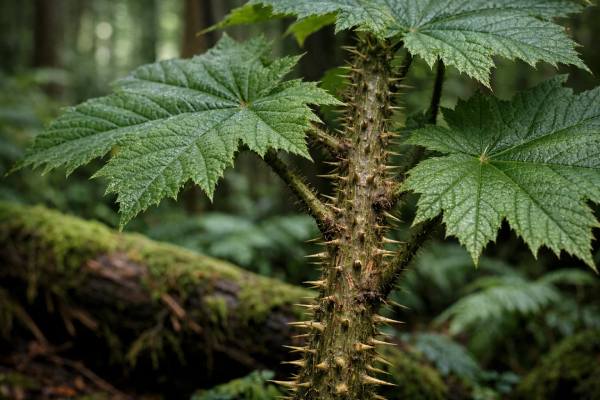
Devil’s club is a striking, thorny shrub native to the damp forests of the Pacific Northwest. For many Indigenous communities, it has long been valued as a plant used in ceremonial and everyday traditions, often prepared as teas, washes, and topical applications from the inner bark, stem bark, and sometimes the root bark. Today, interest in devil’s club focuses on its potential anti-inflammatory, antioxidant, antimicrobial, and metabolic-support properties—largely linked to a unique mix of plant compounds such as polyacetylenes (polyynes), phenolic acids, and other secondary metabolites.
At the same time, modern evidence is uneven: much of what we know comes from lab and animal research, not large human trials. That gap matters when you are deciding whether to use devil’s club, how to dose it, and who should avoid it. This guide walks through what devil’s club is, what it contains, what it may help with, practical ways people use it, and the safety steps that keep the conversation grounded.
Essential Insights
- May support joint comfort and inflammatory balance when used consistently for 2–6 weeks.
- Traditional preparations are commonly taken as tea or tincture for short-term use, not as a daily forever supplement.
- Typical adult range: 1–2 g dried inner bark per cup as tea, up to 1–3 cups daily, or 2–4 mL tincture up to 3 times daily.
- Avoid combining with diabetes medications without clinical guidance due to possible additive blood-sugar effects.
- Avoid in pregnancy, breastfeeding, and for people with bleeding disorders or upcoming surgery unless a clinician approves.
Table of Contents
- What is devil’s club?
- Key ingredients in devil’s club
- Does it help with pain and inflammation
- Blood sugar and immune support
- How to use devil’s club
- How much to take per day
- Safety, interactions, and evidence
What is devil’s club?
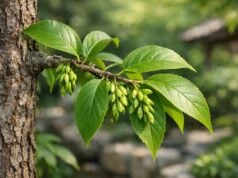
Devil’s club (Oplopanax horridus) is an understory shrub in the Araliaceae family—the same broad plant family as ginseng. It grows in cool, wet habitats and is instantly recognizable by its tall canes, large maple-like leaves, and dense spines along the stems. Those spines are not a small detail: they are sharp enough to puncture skin, so harvesting and handling require thick gloves and careful technique.
Traditional use varies by community and region, but a common theme is the use of the inner bark (the greenish layer beneath the rough outer bark) and stem bark in teas, decoctions, and washes. In many traditions, devil’s club is not treated as a casual “daily supplement.” Instead, it is used with intention—often for a defined purpose and time period, and sometimes alongside ceremonial practices. In everyday wellness contexts, it is most often discussed for support related to joint discomfort, respiratory issues, and metabolic concerns.
It is also important to address name confusion. “Devil’s club” is sometimes informally mixed up with “devil’s walking stick,” which can refer to other spiny plants. Misidentification can create real safety risks, especially when people harvest wild plants without training. If you do not have strong botanical confidence, buying from a reputable supplier is safer than self-harvesting.
From a sustainability standpoint, devil’s club grows slowly in certain environments, and overharvesting can damage local populations. If you live where it grows, follow local regulations, avoid protected areas, and consider sourcing from growers or ethical wildcrafters rather than stripping bark from wild stands.
Finally, devil’s club is sometimes compared with ginseng because of the shared plant family and overlapping “tonic” reputation. For a clearer sense of what is similar and what is different, the comparison to American ginseng uses and safety can be a helpful reference point. Devil’s club is not “ginseng,” but the family resemblance helps explain why people often discuss them in similar wellness categories.
Key ingredients in devil’s club
Devil’s club contains several classes of plant chemicals, and understanding them helps explain why the herb shows interesting effects in lab research—while also clarifying why results can vary from one product to another.
Polyacetylenes and polyynes
The best-known actives in devil’s club are polyacetylenes (often called polyynes). Compounds in this family—such as falcarinol, falcarindiol, and related “oplopan-” polyynes—are studied for their biological activity in inflammation pathways, metabolic signaling, and cell-cycle behavior in laboratory models. In plain terms, these compounds can interact with signaling systems that influence inflammatory tone and cellular stress responses. That does not automatically translate to a clinical benefit in humans, but it does explain why devil’s club is often discussed in joint and metabolic contexts.
Phenolic acids and antioxidant compounds
Leaf and bark preparations can contain phenolic acids (for example, chlorogenic acid and related compounds). These are widely distributed in plants and often contribute to antioxidant activity in vitro. Antioxidant activity can be useful as a “supporting mechanism” concept, but it is not the same as proving that a supplement prevents disease. Still, it helps explain why some traditional preparations are used as washes or topical applications in addition to teas.
Lignans, glycosides, and terpenoids
Devil’s club has also been reported to contain lignan-type compounds and glycosides, plus various terpenoids and volatile compounds depending on the plant part and extraction method. These compounds can influence aroma, taste, and biological activity. They also contribute to a key practical reality: devil’s club is not one uniform substance. The stem bark, root bark, and leaf can differ meaningfully in chemistry, and alcohol extracts can pull different compounds than water-based teas.
Why “ingredients” depend on preparation
Two variables matter more than many people realize:
- Plant part: inner bark and stem bark are most traditional; root bark is common in modern products; leaves are used less often internally.
- Extraction: hot water tends to emphasize more water-soluble constituents; alcohol tends to concentrate more lipophilic compounds, including certain polyynes.
For consumers, this means a tea, tincture, and capsule are not interchangeable. If one form works for you (or irritates your stomach), that result may not predict what another form will do. Consistency—using one form, from one reputable source, for a defined period—makes it easier to evaluate your response.
Does it help with pain and inflammation
The most common modern reason people explore devil’s club is for joint and muscle comfort—especially when discomfort is linked with stiffness, overuse, or inflammatory flare patterns. Traditional use includes applications for “arthritis-like” concerns, and the chemistry of devil’s club offers plausible mechanisms. Still, it is important to separate three layers: traditional practice, lab evidence, and clinical proof.
What people usually mean by “it helps”
In real-world use, “help” typically looks like one or more of the following:
- Reduced morning stiffness or “warming up” faster
- A modest decrease in ache intensity after daily use
- Better tolerance for light movement or physical therapy
- Less reliance on frequent as-needed remedies (for some people)
These are subjective outcomes, and they tend to change slowly. If devil’s club is going to be useful for joint comfort, many people notice effects over 2–6 weeks, not overnight. Fast relief is more typical of topical counterirritants or conventional anti-inflammatory medications.
How it may work
Based on what is known about polyynes and related compounds, devil’s club may influence inflammatory signaling pathways and oxidative stress responses. Some compounds found in Araliaceae plants have also been studied for interactions with metabolic and immune signaling that can indirectly affect inflammatory tone. In practical terms, that “indirect” pathway matters: joint discomfort is not only about joints; it is also shaped by sleep, stress, blood sugar swings, and systemic inflammation.
Who it may fit best
Devil’s club is more likely to be a reasonable experiment for:
- Adults seeking gentle support alongside movement, weight management, or physiotherapy
- People who cannot tolerate certain common supplements and want an alternative trial
- Those who prefer teas or tinctures and respond well to them
It may be less suitable for people who need rapid, predictable symptom control, or for those with multiple medications where interaction risk is higher.
Comparing with more studied options
If your primary goal is joint comfort and inflammatory balance, devil’s club sits in the “promising but not well-proven” category. Some people prefer starting with options that have broader clinical research. One commonly compared botanical is boswellia for joint support, which has a deeper modern evidence base for certain inflammation-related complaints. That does not mean boswellia is always better—it means the decision can be guided by how much evidence you want behind your first choice.
Blood sugar and immune support
Devil’s club is also widely discussed for metabolic support—especially blood sugar balance—and for seasonal or immune-related wellness. These areas overlap more than many people expect: blood sugar swings can amplify inflammatory signaling, and inflammatory stress can worsen glucose control. Still, the key question is not whether the plant has interesting compounds; it is whether the form you take can produce a reliable, safe effect.
Blood sugar and metabolic signaling
Traditional use includes preparations for “diabetes-like” concerns. Modern research suggests that some devil’s club constituents may interact with metabolic pathways (including signaling linked to fat and glucose metabolism). A practical way to interpret this is: devil’s club may have the potential to support metabolic balance, but it is not a replacement for diabetes care, and it is not a proven stand-alone treatment.
If you are exploring devil’s club for metabolic support, two safety themes matter:
- Additive effects: If you already take glucose-lowering medications or insulin, adding another agent that could influence blood sugar may increase hypoglycemia risk.
- Monitoring: The most responsible approach is treating devil’s club as a short trial and monitoring fasting and post-meal readings (if you track them), rather than “taking it and hoping.”
Immune and respiratory traditions
Devil’s club has a long history of use in respiratory contexts, such as coughs or seasonal illness support, often as a tea or decoction. In modern terms, this is sometimes interpreted as antimicrobial or immune-modulating potential. Some studies on plant polyynes and phenolics suggest activity against certain microbes in vitro, but that does not automatically translate to meaningful effects in the human body.
For immune support, devil’s club is best understood as a traditional wellness herb rather than a first-line, evidence-strong immune supplement. People who want a more research-forward immune botanical often look at options such as echinacea for short-term immune support, which has more human research in specific respiratory contexts.
What “immune support” can realistically mean
A realistic, responsible expectation is not “preventing infection,” but supporting comfort and resilience during seasonal stress—sleep, hydration, and nutrition still do the heavy lifting. If you try devil’s club in this context, consider it as a short-term tea or tincture used during a defined window, and discontinue if you notice stomach upset, dizziness, or unusual symptoms.
How to use devil’s club
Because devil’s club is not standardized across products, “how to use it” starts with choosing a form that matches your goal and your tolerance.
Common forms
- Tea or infusion: Usually made from dried inner bark or stem bark. This is often the gentlest starting point because dosing is flexible and you can stop easily if it does not agree with you.
- Decoction: A stronger preparation made by simmering bark rather than steeping it. Decoctions can extract more from tough plant material, but they can also be harsher on the stomach in some people.
- Tincture: Alcohol-based extracts concentrate different compounds than water, often including more lipophilic constituents. Tinctures can be convenient for dose consistency.
- Capsules or powders: These vary widely in quality and may not clearly state plant part or extraction ratio. They can also make it easier to “overdo it” because the bitter taste and intensity cues are removed.
- Topical wash, compress, or salve: Traditional use includes topical application for localized discomfort or skin-focused goals. Topicals reduce systemic exposure, but they can still cause irritation in sensitive skin.
Practical preparation tips
For tea, many people start light and adjust:
- Use a measured amount of dried bark
- Steep in hot water with a lid to preserve aromatic compounds
- Start with one cup daily for several days before increasing
For decoctions, keep it simple:
- Simmer gently rather than boiling aggressively
- Strain carefully to avoid splinters
- Consider shorter simmer times if you are prone to nausea
How to choose a product
Look for transparency:
- Plant part used (inner bark, stem bark, root bark, leaf)
- Origin and handling practices
- Extraction ratio for tinctures (for example, 1:5) and alcohol percentage
- Third-party testing when available (identity and contaminants)
A note on taste and tolerance
Devil’s club is typically bitter and aromatic. Bitterness is not a guarantee of quality, but it can be a useful signal that you are working with a robust botanical. If you need to mask taste, a small amount of honey or combining with warm spices is common—just remember that sweeteners can matter if your goal involves blood sugar.
How much to take per day
There is no universally established clinical dose for devil’s club. Most guidance is based on traditional practice, small studies, and common herbalist conventions rather than large human trials. The safest way to use these ranges is to treat them as starting points for short-term trials, not as a lifelong daily prescription.
Typical tea range (inner bark or stem bark)
A commonly used adult approach is:
- 1–2 g dried bark per cup of hot water
- Steep 10–15 minutes (longer steeping increases intensity)
- 1–3 cups daily
If you are new to devil’s club, start at the low end (one cup daily) for 3–5 days. If you tolerate it well and want a stronger trial, increase slowly.
Typical decoction range
Decoctions are often stronger than infusions:
- 2–4 g dried bark simmered in water
- Simmer 10–20 minutes, then strain
- Often taken as 1 cup once or twice daily
If you are prone to reflux, nausea, or loose stools, a decoction may be too intense. In that case, a lighter tea or a low-dose tincture can be easier.
Typical tincture range
Tinctures vary by strength, so check the label. A common range for adult use is:
- 1:5 tincture (40–60% alcohol): 2–4 mL, up to 3 times daily
If you are sensitive, start with 1 mL once daily, then increase gradually. Because tinctures may concentrate different compounds than tea, your experience may differ even at “equivalent” doses.
Timing and duration
For joint comfort or inflammatory balance, a reasonable trial window is often 2–6 weeks. For seasonal wellness, people often use it short-term (days to 2 weeks).
If you do not notice any benefit after a thoughtful trial—consistent form, consistent dose, consistent timing—it may not be the right herb for your body or your goal.
When to stop or scale back
Reduce the dose or discontinue if you notice:
- Stomach pain, persistent nausea, or worsening reflux
- Dizziness, shakiness, sweating, or unusual fatigue (possible low blood sugar)
- Rash, itching, or swelling
- Any symptom that feels “new and clearly linked” to starting the herb
Safety, interactions, and evidence
Devil’s club is often framed as a traditional plant with promising chemistry—and that can be true while still requiring real caution. Safety is not only about “is it toxic,” but also about interactions, product quality, and whether the expected benefit matches the evidence.
Common side effects
Reported issues tend to be gastrointestinal:
- Bitter-herb stomach upset
- Nausea or loose stools at higher doses
- Occasional headache or lightheadedness
Topical use can trigger irritation in sensitive skin, especially if the preparation is concentrated or combined with other actives.
Who should avoid devil’s club
Avoid unless a qualified clinician advises otherwise if you are:
- Pregnant or breastfeeding
- Managing diabetes with medications or insulin (higher hypoglycemia risk without monitoring)
- Preparing for surgery or using anticoagulant or antiplatelet medications (caution is reasonable given limited interaction data)
- Living with complex autoimmune conditions where immune modulation could matter
- Allergic to plants in the Araliaceae family or prone to strong reactions to botanicals
Children should not use devil’s club internally unless guided by a clinician trained in pediatric herbal safety.
Medication interactions to treat seriously
Because devil’s club is discussed for metabolic effects, the most practical interaction concern is additive blood sugar lowering when combined with diabetes medications. If you choose to try it, do it with monitoring and a plan for what you will do if readings drop.
For other medication classes (blood pressure medications, anti-inflammatories, antidepressants), the interaction data is not robust. The safest posture is conservative: if you take multiple daily medications, ask a clinician or pharmacist to review the combination.
What the evidence actually supports
- Strongest evidence category: traditional use history and laboratory studies showing bioactivity of specific compounds.
- Moderate evidence category: small-scale experimental research suggesting anti-inflammatory, antioxidant, antimicrobial, and metabolic pathway effects.
- Weakest evidence category: high-quality human trials demonstrating clear, reliable outcomes.
This means devil’s club is best approached as a cautious, time-limited experiment rather than a guaranteed solution. If it helps, it should complement foundational strategies—sleep, movement, nutrition, and evidence-based care—not replace them.
Quality and contamination risks
As with many botanicals, the largest real-world risk can be the product, not the plant:
- Misidentified species
- Unknown plant part (root bark vs stem bark)
- Contaminants from poor processing
- Wide potency variation between batches
Choosing transparent suppliers and using conservative doses reduces these risks.
References
- Herbals and Plants in the Treatment of Pancreatic Cancer: A Systematic Review of Experimental and Clinical Studies 2022 (Systematic Review)
- Active Biomolecules from Vegetable Extracts with Antitumoral Activity against Pancreas Cancer: A Systematic Review (2011-2021) 2022 (Systematic Review)
- Pathways Affected by Falcarinol-Type Polyacetylenes and Implications for Their Anti-Inflammatory Function and Potential in Cancer Chemoprevention 2023 (Review)
- Approaches to Extracting Bioactive Compounds from Bark of Various Plants: A Brief Review 2025 (Review)
- Polyacetylenes from Oplopanax horridus and Panax ginseng: Relationship between Structure and PPARγ Activation 2020 (Research Article)
Disclaimer
This article is for educational purposes only and does not provide medical advice, diagnosis, or treatment. Herbal products can cause side effects and interact with medications, and product quality varies widely. If you are pregnant, breastfeeding, have a medical condition (especially diabetes), or take prescription medications, consult a qualified healthcare professional before using devil’s club. Seek urgent medical care for severe allergic reactions, fainting, or symptoms of dangerously low blood sugar.
If you found this guide useful, consider sharing it on Facebook, X (formerly Twitter), or your favorite platform to help others make safer, better-informed choices.