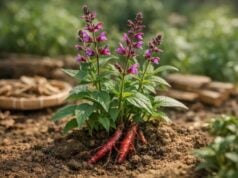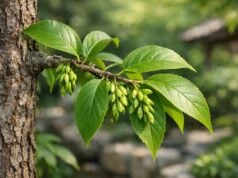
Dewberry is a common name for several low-growing Rubus species—close relatives of blackberry and raspberry—that produce sweet-tart, dark berries in spring and early summer. In many regions, people meet dewberry first as a wild edible: trailing canes with thorns, pale blossoms, and berries that stain fingertips purple. Yet dewberry has a longer story than foraging alone. Traditional herbal use has included the fruit for gentle nourishment and the leaves (and sometimes roots) for their astringent, tissue-toning qualities—especially in teas and rinses used for digestive upset or mouth and throat irritation.
What makes dewberry medicinally interesting is not a single “miracle compound,” but a practical combination: fiber for digestive steadiness, anthocyanins for antioxidant support, and tannins in the leaves that can help tighten and soothe irritated tissue when used appropriately. Modern clinical research rarely isolates dewberry specifically, so the most evidence-based way to view it is as a nutrient-dense Rubus berry with traditional leaf uses that require dosage discipline. Used thoughtfully, dewberry can be both food and gentle herbal support.
Key Takeaways for Dewberry
- Regular dewberry intake can support cardiometabolic health mainly through fiber and anthocyanin-rich polyphenols.
- For leaf tea, use 1–2 g dried leaves per cup, up to 1–3 cups daily for short-term use.
- Leaf preparations can be overly drying and may worsen constipation if taken too strong or too long.
- Avoid medicinal leaf use if pregnant or breastfeeding, or if you take diuretics or lithium without clinician guidance.
Table of Contents
- What is dewberry and how is it different?
- Key ingredients and medicinal properties
- Dewberry benefits for heart and metabolism
- Does dewberry help digestion and immunity?
- How to use dewberry in food and herbal preps
- Dewberry dosage and timing
- Safety, interactions, and what the evidence says
What is dewberry and how is it different?
“Dewberry” is not one single plant. It’s a common name used for multiple Rubus species that share a similar growth habit: low, trailing canes that sprawl across the ground rather than standing upright like many blackberry brambles. In North America, common dewberries include Southern dewberry (Rubus trivialis), Northern dewberry (Rubus flagellaris), and regional relatives that vary by habitat. In Europe and other regions, the term may be used loosely for trailing or low-growing blackberry relatives.
From a reader’s standpoint, dewberry sits in the practical overlap between “wild berry” and “traditional Rubus herb.” The fruit is used like other berries—fresh, cooked, or preserved. The leaves are sometimes used as astringent teas or rinses, similar to other bramble leaves.
Key differences from blackberry and raspberry
- Growth form: Dewberry canes often trail and root where they touch the ground, creating mats. Many blackberries are more upright or arching.
- Fruit timing: Dewberries often ripen earlier than many blackberries in the same region, sometimes by weeks.
- Taste and texture: Dewberries can be slightly more tart, and seeds may feel more noticeable depending on species and ripeness.
- Traditional leaf use: Leaves across many Rubus species contain tannins and flavonoids, but potency varies with species, season, and drying method.
Why this matters for “health benefits”
When you see “dewberry benefits” online, many claims are really describing Rubus berries in general: anthocyanins, fiber, vitamin C, and plant polyphenols. That’s not inherently wrong—it’s just important to be honest about specificity. Dewberry is best treated as a member of a well-studied genus rather than a uniquely researched herb.
A note about identification and clean sourcing
Foraged dewberries can be wonderful, but brambles often grow along roadsides, fence lines, and disturbed soil—places where pollutants, herbicides, and pet waste can be concerns. If you forage, prioritize clean areas, wash thoroughly, and avoid harvesting leaves from plants that may have been sprayed.
If you want a broader primer on the berry family traits dewberry shares, it can help to compare it with blackberry nutrition and herbal uses, since both are Rubus fruits with overlapping leaf traditions.
Key ingredients and medicinal properties
Dewberry’s health value comes from two “packages” that behave differently in the body: the fruit (nutrient and polyphenol rich) and the leaves (tannin-rich and more astringent). Understanding this split helps you choose the right form for your goal.
Fruit compounds that drive most benefits
Anthocyanins and other polyphenols
The deep purple-black color of ripe dewberries signals anthocyanins, a class of flavonoids associated with antioxidant and inflammation-modulating effects. Dewberry also shares other Rubus polyphenols such as ellagic-acid–related compounds (often discussed as ellagitannins in Rubus fruits), plus smaller amounts of flavonols and phenolic acids. In practical terms, these compounds are most meaningful when the fruit is consumed regularly as part of a plant-forward diet rather than treated like a one-time “detox.”
Fiber (soluble and insoluble)
Berries are often underestimated as a fiber source because they feel light. Dewberries contain fiber that supports bowel regularity, satiety, and post-meal blood sugar steadiness—especially when eaten whole rather than as juice. Seed content also contributes: those tiny seeds add bulk and can have a gentle “sweeping” effect through the gut for some people.
Vitamins and minerals
Like many berries, dewberries provide vitamin C, vitamin K (variable by species and ripeness), manganese, and small amounts of folate and potassium. These nutrients support connective tissue maintenance, immune function, and energy metabolism, but the bigger story is still the synergy between fiber and polyphenols.
Leaf constituents that change how the herb feels
Tannins (astringents)
Dewberry leaves contain tannins that can “tighten” tissues, which is why leaf tea is traditionally used for loose stools, mouth irritation, and weepy or inflamed surfaces (as a rinse). The same property can also be overly drying if taken in large amounts or for too long.
Flavonoids and supporting polyphenols
Leaves often contain high levels of plant polyphenols, sometimes even higher than the fruit. This helps explain why leaf infusions are frequently described as “stronger” and more medicinal tasting than the berries themselves.
Medicinal properties you can realistically expect
When you keep claims grounded, dewberry is best described as having:
- Antioxidant support from anthocyanins and other polyphenols (primarily the fruit)
- Digestive steadiness from fiber (fruit) and short-term astringency (leaf tea)
- Mild soothing and toning effects for irritated mucosa when used as a rinse (leaf tea)
- Potential cardiometabolic support when eaten regularly in the context of a balanced diet (fruit)
A helpful rule is to treat dewberry fruit as a food with meaningful benefits and dewberry leaf as an herb that should be used with intention, timing, and dose limits.
Dewberry benefits for heart and metabolism
When people ask whether dewberry “helps with heart health” or “supports blood sugar,” the most honest answer is that dewberry is unlikely to act like a medication—yet it can contribute to cardiometabolic resilience over time, especially if it replaces more processed snacks.
How dewberry can support cardiovascular health
1) Anthocyanins and vascular function
Anthocyanin-rich foods are associated with improvements in markers tied to vascular health—such as endothelial function and lipid profiles—in some research contexts. Dewberry fits this pattern because it shares the same pigment chemistry seen in other dark berries. The effect is typically modest, but meaningful when consistent: a small shift in inflammation tone and oxidative stress can add up when paired with exercise, sleep, and a generally nutrient-dense diet.
2) Fiber and cholesterol management
Whole berries provide fiber that can support healthier LDL levels by influencing bile acid recycling and feeding beneficial gut microbes that produce short-chain fatty acids. The takeaway is simple: eat the fruit whole, and aim for regularity rather than a single “superdose.”
3) Mineral support without overpromising
Manganese and vitamin C support normal connective tissue maintenance and antioxidant enzyme systems. These are foundational, not flashy, but they matter for long-term maintenance of blood vessels and metabolic pathways.
Metabolic support: blood sugar and appetite
Dewberries can be useful for people trying to stabilize appetite and post-meal energy because they are:
- relatively low in calories for the volume
- naturally sweet with fiber that slows absorption
- easy to pair with protein or yogurt for a more balanced snack
If you tend to snack on refined sweets, swapping to dewberries may improve cravings simply because your glucose curve becomes smoother.
What forms matter most
- Best: fresh or frozen whole dewberries
- Good: lightly cooked berries (compotes) with minimal added sugar
- Less ideal: juices and sweetened syrups, where fiber is reduced and sugar rises
If you are building a heart-supportive approach, it can also help to compare food-based strategies with classic cardiometabolic botanicals such as hawthorn cardiovascular support, which is used in a more targeted herbal way than berries.
Practical expectation-setting
Dewberry is most likely to help when you use it as part of a pattern: a half-cup to a cup of berries several times per week, alongside overall diet improvements. If you have diabetes, high triglycerides, or established cardiovascular disease, dewberry can be a supportive food—but it should not replace prescribed therapy or monitoring.
Does dewberry help digestion and immunity?
Digestive and immune benefits are the most common reasons people turn to berries. Dewberry’s strengths here are straightforward: fiber for the gut, polyphenols that interact with the microbiome, and traditional leaf preparations that can be used in short bursts for specific symptoms.
Digestive support from fruit
Regularity and stool quality
The fiber in dewberries supports bowel regularity for many people. Because berry seeds add bulk, some people notice improved stool form. Others—especially those with irritable bowel patterns—may find seeds irritating if eaten in large quantities. If that’s you, start with smaller servings and consider gently cooked berries, which can be easier on sensitive guts.
Gut microbiome support
Polyphenols don’t just act as antioxidants in the bloodstream; they also interact with gut microbes. Many berry polyphenols are transformed by gut bacteria into metabolites that may influence inflammation and metabolic signaling. In real life, this looks like a “slow build” benefit: people often feel the biggest difference after consistent intake for several weeks.
Immune support: what is realistic
Dewberry won’t “boost immunity” in an instant, but it contributes to immune readiness through:
- vitamin C (supporting immune cell function and tissue repair)
- polyphenols that support healthy inflammation signaling
- hydration support when eaten as high-water-content fruit
A practical immune routine is not heroic dosing—it is regular fruit intake paired with sleep, protein adequacy, and stress management.
Leaf tea for targeted digestive needs
Dewberry leaf tea is traditionally used for loose stools because tannins can reduce the “leaky, irritated” feel in the gut lining and help tighten stool. The key is to treat this as short-term symptom support, not a daily tonic:
- use a mild infusion first
- reassess after 24–48 hours
- stop if constipation develops
If you are using dewberries mainly for fiber goals, it may help to compare them with dedicated fiber tools such as psyllium husk for digestive support, which can be more predictable for constipation management but requires careful hydration.
Throat and mouth comfort
Some people use cooled leaf tea as a rinse for mild mouth irritation. This use is better suited to “minor discomfort” rather than infections or severe ulcers. If symptoms persist, medical or dental evaluation matters.
How to use dewberry in food and herbal preps
Dewberry is unusually versatile because you can use it as a seasonal food, preserve it for year-round benefit, and (with care) use leaves as a traditional astringent herb. The “right” method depends on your goal and sensitivity.
Using the fruit
Fresh (best for overall benefit)
Fresh dewberries are ideal because you get fiber, water, and delicate polyphenols with minimal processing. A simple serving strategy:
- add to yogurt with nuts for a balanced snack
- fold into oatmeal after cooking
- toss into salads with a savory vinaigrette to reduce added sugar
Frozen (best off-season option)
Freezing preserves many beneficial compounds well. Frozen berries work in smoothies and compotes. If smoothies irritate your digestion, try a warm compote instead.
Preserved (useful, but watch sugar)
Jam, syrup, and cobblers are delicious, but added sugar can overshadow metabolic benefits. If you preserve dewberries:
- aim for low-sugar freezer jam
- use chia-based thickening when possible
- keep portions modest and treat it as dessert, not “medicine”
Using the leaves
Dewberry leaf preparations are best approached like other tannin-rich bramble leaves: useful when specific symptoms fit, but not ideal as an everyday beverage.
Leaf infusion (tea)
- Place dried leaf in a cup (start small).
- Add hot water, cover, and steep 10–15 minutes.
- Strain and sip slowly.
Taste can be drying and slightly bitter. If you want a gentler infusion, shorten the steep time.
Rinse and compress
A cooled infusion can be used as:
- a mouth rinse (spit out) for mild irritation
- a compress for minor weepy skin irritation when hygiene is excellent
Common mistakes and how to avoid them
- Over-steeping leaves: strong tannin extraction can cause constipation or stomach discomfort.
- Using leaves long-term: tannins can reduce mineral absorption when used heavily over time.
- Confusing plant identity: many brambles look alike; if unsure, avoid harvesting leaves for medicinal use.
- Assuming “wild” means “clean”: harvest away from sprayed areas and wash fruit thoroughly.
If you’re looking for a close nutritional cousin to compare flavor and anthocyanin density, bilberry health benefits and uses can provide helpful context about what dark berry polyphenols tend to do in the body.
Dewberry dosage and timing
Because dewberry can be used as both food and herb, “dosage” needs two sets of guidelines: one for fruit intake (food-like and flexible) and one for leaf preparations (more medicinal and time-limited). The ranges below are conservative, adult-oriented starting points for generally healthy people.
Fruit dosage (food use)
Fresh or frozen dewberries
- Typical range: 70–150 g daily (about 1/2 to 1 cup)
- Frequency: 3–7 days per week, depending on season and preference
- Timing: with meals or as a snack paired with protein for better satiety
- Duration: long-term food use is generally appropriate
If you are using dewberry for metabolic goals, consistency matters more than large servings. A half-cup most days is often more useful than two cups once a week.
Dried or freeze-dried berry powder (if used)
- Typical range: 5–10 g daily, mixed into yogurt or oatmeal
- Tip: increase water intake, since powders are concentrated and can feel “drying” in the gut
Leaf tea dosage (traditional herbal use)
Mild infusion
- Typical range: 1–2 g dried leaves per cup
- Frequency: 1–3 cups daily, short-term
- Timing: after meals for digestive support, or as needed for mouth rinse use (spit out)
- Duration: 2–7 days, then stop and reassess
If your goal is diarrhea support, aim for the lowest effective dose and taper off quickly once stool normalizes. Overuse is more likely to cause constipation than to provide extra benefit.
Root or stronger preparations
Some traditional practices use root or bark-like parts of Rubus plants in stronger decoctions. Because dosing standards for dewberry-specific root preparations are not well established, it is safest to avoid high-concentration root use unless guided by a qualified clinician trained in herbal medicine.
How to personalize timing
- For appetite support: eat dewberries earlier in the day or as an afternoon snack with protein.
- For digestion: eat fruit with meals; avoid large berry portions late at night if you’re prone to reflux.
- For leaf tea: take earlier in the day if it feels drying, and stop if constipation appears.
As with most food-based botanicals, the best dosage is the one you can keep steady without side effects.
Safety, interactions, and what the evidence says
Dewberry fruit is generally safe as a food for most people, but leaf-based preparations deserve more care. The biggest safety wins come from clean sourcing, reasonable dosing, and knowing when to stop self-treatment.
General safety profile
Fruit (food use)
For most people, dewberry fruit is well tolerated. The most common issues are digestive:
- bloating or loose stool if you suddenly increase fiber
- seed irritation in sensitive guts
- reflux discomfort if eaten in very large portions late at night
Leaf tea (medicinal use)
Leaf infusions are more likely to cause side effects because tannins are active and dose-dependent:
- constipation or dry stools
- nausea or stomach tightness if brewed too strong
- reduced appetite in some people due to astringency
Who should avoid it or use extra caution
- Pregnant or breastfeeding people: avoid medicinal leaf use unless cleared by a clinician; Rubus leaf traditions vary, and safety evidence is not strong enough to generalize across species.
- People with chronic constipation: leaf tea can worsen symptoms.
- Kidney disease or complex fluid-balance conditions: avoid experimenting with strong herbal preparations without supervision.
- Allergy-prone individuals: berry allergies are uncommon but possible; stop if you notice hives, swelling, or breathing changes.
Medication interactions
Dewberry fruit is unlikely to create major interactions, but consider these practical points:
- Diabetes medications: berries can modestly support post-meal glucose control; monitor if you significantly change berry intake patterns.
- Blood pressure medications: improved diet quality can change blood pressure over time; track readings if you make major dietary shifts.
- Warfarin or vitamin K–sensitive anticoagulants: berries contain some vitamin K (variable); consistency is usually more important than avoidance.
Leaf teas are also best introduced cautiously if you take multiple prescriptions, since tannins can influence gut absorption of some compounds when taken at the same time. If you use leaf tea, consider spacing it away from medications by 2 hours.
What the evidence actually supports
Research is strongest for berries and anthocyanin-rich foods in general, not for dewberry-specific interventions. The most defensible conclusions are:
- Regular berry intake can improve certain cardiometabolic risk markers in some populations, especially when using whole berries or concentrated berry products as part of a broader diet pattern.
- Anthocyanins are biologically active and associated with improvements in lipid and glucose-related markers in some controlled trials, though effects vary by dose, duration, and baseline health.
- Evidence for Rubus leaf preparations is less consistent and often tradition-driven; safety data in special populations (especially pregnancy) remains limited.
A clear, practical takeaway is that dewberry is best used as a nutrient-dense food, with leaf tea reserved for short-term, symptom-matched use.
References
- Review of the Report on the Nutritional and Health-Promoting Values of Species of the Rubus L. Genus | MDPI 2024 (Review)
- The health benefits of anthocyanins: an umbrella review of systematic reviews and meta-analyses of observational studies and controlled clinical trials – PubMed 2022 (Systematic Review)
- Effects of Anthocyanin-rich Berries on the Risk of Metabolic Syndrome: A Systematic Review and Meta-analysis – PMC 2022 (Systematic Review and Meta-analysis)
- Raspberry Leaves and Extracts-Molecular Mechanism of Action and Its Effectiveness on Human Cervical Ripening and the Induction of Labor – PMC 2023 (Review)
- Exploring the Antioxidant Potential of Blackberry and Raspberry Leaves: Phytochemical Analysis, Scavenging Activity, and In Vitro Polyphenol Bioaccessibility – PMC 2023 (Original Research)
Disclaimer
This article is for educational purposes only and does not provide medical advice, diagnosis, or treatment. Foods and herbs can cause side effects, allergic reactions, and interactions with medications or medical conditions. Dewberry fruit is generally used as food, but dewberry leaf preparations can be astringent and may worsen constipation or stomach irritation if used too strongly or for too long. If you are pregnant, breastfeeding, managing kidney disease, taking diuretics or lithium, using anticoagulants, or taking medications for blood sugar or blood pressure, consult a qualified healthcare professional before using dewberry medicinally. Seek urgent medical care for trouble breathing, facial swelling, severe rash, high fever, blood in stool or urine, chest pain, or rapidly worsening symptoms.
If you found this guide helpful, please share it on Facebook, X (formerly Twitter), or your preferred platform so others can make safer, more informed choices about herbs and wild foods.