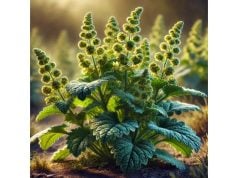
Dewdrop, better known to many gardeners as skeleton flower, is one of those plants that attracts attention for its appearance first and its research potential second. Its white petals can turn glass-like when wet, but the more relevant question for health readers is whether it has real medicinal value. The short answer is: there is early promise, but the evidence is still limited and mostly laboratory-based.
Current interest in Diphylleia grayi focuses on antioxidant activity and skin-related effects in extract testing, especially for cosmetic use. At the same time, the broader Diphylleia genus is linked to lignans such as diphyllin and podophyllotoxin-related compounds, which are biologically active and require caution. That combination makes Dewdrop a plant worth understanding carefully: intriguing, potentially useful in topical formulation research, but not a proven self-treatment herb for home use.
Core Points
- Early lab research suggests Diphylleia grayi extract may support antioxidant, tyrosinase-inhibiting, and collagenase-inhibiting effects in skin assays.
- No validated human oral dose exists for Dewdrop, and it should not be used as a DIY internal remedy.
- Experimental cosmetic assays used extract concentrations in the 0.625 to 10 mg/mL range, which does not translate directly to home dosing.
- People who are pregnant or breastfeeding, children, and anyone with cancer treatment, neuropathy, or liver disease should avoid medicinal use.
Table of Contents
- What is Dewdrop and what is in it
- Does Dewdrop help the skin
- Medicinal properties and how they work
- How to use Dewdrop safely
- How much and when to use
- Side effects, interactions, and who should avoid
- What the evidence actually says
What is Dewdrop and what is in it
Dewdrop (Diphylleia grayi) is a woodland plant often grown as an ornamental, especially in cool, shaded gardens. It is best known for its dramatic petals, which can become translucent after rain and turn white again as they dry. That visual trait is why many people encounter it first as a “skeleton flower” rather than as an herb. From a medicinal standpoint, it is not a mainstream traditional remedy like chamomile, ginger, or peppermint, and this matters because many people assume any striking plant must also be a well-established healing herb.
What makes Dewdrop scientifically interesting is its place in a group of plants associated with lignans, a family of natural compounds with strong biological activity. Reviews of podophyllotoxin-related compounds and related plants identify the Diphylleia genus as a source of compounds such as diphyllin and other podophyllotoxin-like lignans. In compiled phytochemical summaries, Diphylleia grayi has been listed with compounds including picropodophyllin, deoxypodophyllotoxin, diphyllin, and podophyllotoxin-type molecules. These names matter because they are not mild kitchen-herb chemicals. They belong to a class studied for anticancer drug development and other potent cellular effects.
That does not mean Dewdrop is a ready-made medicinal product. It means the plant contains or is associated with compounds that deserve respect. Potent plant chemistry can be helpful in the lab and still be inappropriate for casual use.
A practical way to think about Dewdrop is this:
- As a garden plant: It is valued for appearance and seasonal interest.
- As a research plant: It is relevant because of bioactive lignans in the genus.
- As a consumer herb: It is not yet standardized, well-dosed, or supported by human clinical evidence.
Another important point is that “key ingredients” for Dewdrop are not standardized in commercial supplements. Unlike herbs that have common marker compounds and established extract ratios, Dewdrop products are rare and not consistently labeled. That means two products sold under a similar name could differ a lot in potency, purity, or even species identity.
So, when people search for Dewdrop benefits and medicinal properties, the right starting point is not hype. It is chemical context: this is a biologically active plant genus with real research value, but limited human-use guidance and no accepted self-care dosing framework.
Does Dewdrop help the skin
The strongest direct evidence for Diphylleia grayi so far is not about oral use, digestion, immunity, or mood. It is about skin-related cosmetic assays in a laboratory setting. In one published study on Diphylleia grayi extract as a cosmetic ingredient, researchers tested the extract in standard skin and antioxidant models and found several promising results.
The study reported that the extract did not reduce viability in normal skin cell models even at high tested concentrations in the experiment, which is an encouraging sign for early cosmetic screening. The same study also found meaningful antioxidant effects in common lab tests:
- DPPH radical scavenging activity
- ABTS radical scavenging activity
- Reduction of intracellular reactive oxygen species
- Tyrosinase inhibition
- L-DOPA oxidation inhibition
- Collagenase inhibition
In practical skincare language, those findings point toward three cosmetic goals:
- Antioxidant support
Oxidative stress is a major driver of visible skin aging. Compounds that reduce free-radical activity in lab assays may help protect formulas designed for environmental stress support. - Brightening support
Tyrosinase is a key enzyme in melanin formation. Ingredients that inhibit tyrosinase are often explored for reducing uneven tone or post-inflammatory dark marks. The study’s “whitening” language reflects standard cosmetic testing terminology, not a medical treatment claim. - Anti-wrinkle support
Collagenase breaks down collagen. Inhibiting collagenase in a lab model may be relevant to anti-aging product development, at least as an early screening signal.
That said, the best interpretation is promising but preliminary. These are not human clinical outcomes. A lab result does not automatically mean a cream will improve wrinkles in real users, and it definitely does not prove oral health benefits. Skin penetration, formula stability, pH, preservation system, and long-term irritation risk all affect what happens in actual use.
There is also a common mistake worth avoiding: assuming “natural” means “gentle.” Dewdrop belongs to a chemically active genus. Even if a study shows encouraging skin assay results, it does not make homemade extracts safe, stable, or properly preserved for face application.
If you are interested in Dewdrop for skincare, the most reasonable conclusion is this: it is a research-stage botanical with cosmetic potential, especially for antioxidant and enzyme-targeted applications, but it is not yet a standard consumer ingredient with strong clinical proof. The benefits are plausible in formulation science, not yet confirmed in routine dermatology use.
Medicinal properties and how they work
When people ask about Dewdrop medicinal properties, it helps to separate species-specific findings from genus-level chemistry. For Diphylleia grayi itself, the direct published evidence is still narrow and mostly cosmetic-lab oriented. But the wider Diphylleia and podophyllotoxin-related literature gives useful clues about how compounds from this group behave biologically.
The key mechanistic theme is lignans. These are plant compounds that can influence cell signaling, oxidative stress, and in some cases cell division. In the podophyllotoxin-related family, some compounds are known for strong cytotoxic or antimitotic effects. That is one reason these plants are studied in medicinal chemistry and oncology research rather than promoted as everyday tea herbs.
Here is the practical mechanism map for Dewdrop-related interest:
1. Antioxidant activity
The Diphylleia grayi cosmetic study suggests antioxidant effects through free-radical scavenging and reduced intracellular oxidative stress in skin cells. This is relevant to topical product development because oxidative stress contributes to visible aging and inflammation-like skin stress responses.
2. Enzyme modulation for pigmentation
Tyrosinase and L-DOPA oxidation assays are commonly used to screen brightening ingredients. Inhibiting these pathways may reduce melanin formation in a controlled lab setting. This is why the extract is discussed as a possible cosmetic “brightening” ingredient.
3. Collagenase inhibition
Collagenase contributes to collagen breakdown. Inhibiting collagenase in vitro can be a useful early indicator for anti-aging product candidates, although human skin outcomes require much stronger testing.
4. Cytotoxic and anticancer relevance at the compound level
Broader reviews on diphyllin and podophyllotoxin-related lignans show why caution is essential. Compounds like diphyllin are studied for effects on cellular acidification pathways, including vacuolar ATPase (V-ATPase), and for antitumor and immunomodulatory potential. Podophyllotoxin-related compounds have also been used as the chemical backbone for important anticancer drugs after structural modification.
This is a major point of clarity: “medicinal potential” does not equal “safe herbal use.” In fact, many of the most pharmacologically interesting plant compounds require strict dosing, purification, and medical oversight because they can affect healthy cells as well as harmful ones.
So the best way to describe Dewdrop’s medicinal properties is:
- Topical cosmetic potential: early evidence, mostly antioxidant and enzyme-related
- Pharmacologic relevance: plausible through lignan chemistry in the genus
- Clinical herbal evidence: currently weak or absent for direct consumer use
This balanced view prevents two common extremes: dismissing the plant completely, or overpromising benefits based on early lab chemistry. Dewdrop is scientifically interesting, but its medicinal story is still being built.
How to use Dewdrop safely
For most readers, the safest and most accurate answer is simple: Dewdrop is not a do-it-yourself medicinal herb. It is better treated as a specialty botanical with emerging research value, especially in cosmetic science, rather than a plant to brew, tincture, or swallow at home.
Because there is no widely accepted human dosing framework for Diphylleia grayi, “how to use it” should be guided by risk reduction. That means avoiding internal use and focusing on controlled applications only when the product source is credible.
Best current use cases
1. As a botanical cosmetic ingredient in finished products
If a reputable formulator includes Diphylleia grayi extract in a finished skincare product, that is the most realistic consumer route. In this setting, the extract is more likely to be:
- Properly identified
- Processed under cleaner conditions
- Stabilized in a preserved formula
- Used at a concentration the formulator has tested for compatibility
Even then, patch testing matters.
2. As a research ingredient in professional formulation work
For cosmetic chemists or trained herbal product developers, Dewdrop may be explored as a niche antioxidant or enzyme-targeted ingredient. This should be done with documentation, batch records, and safety testing, not informal kitchen extraction.
3. As an ornamental and educational plant
This may sound outside the “uses” category, but it is important. Dewdrop’s best-established use remains ornamental. It is a valuable plant for botanical collections and educational discussions about how visually unique species can also become leads for material science and phytochemical research.
Uses to avoid
- Homemade tea or decoction
- Alcohol tinctures for internal use
- Capsules made from dried rhizome or root
- Raw plant poultices on broken skin
- DIY skin serums without preservation testing
These methods carry too much uncertainty around compound concentration, contamination, and irritation risk. Also, the Diphylleia genus is linked to potent lignans, so guessing the dose is a poor strategy.
If you still choose a topical product
Use a conservative routine:
- Patch test on a small area for 24 to 48 hours.
- Do not combine with strong acids, retinoids, or exfoliants on the first use.
- Start with every other day, not twice daily.
- Stop if you notice burning, rash, peeling, or numbness.
In short, Dewdrop can be “used” today mainly as a specialized topical botanical in formulated products, not as a traditional internal remedy. Safety and standardization should lead the decision, not curiosity alone.
How much and when to use
This is the most important section for real-world safety because many herb articles give a dose even when no validated dose exists. For Dewdrop (Diphylleia grayi), there is no established human oral dosage range based on clinical trials. There is also no widely recognized monograph giving safe daily intake, duration, or timing.
So if you are looking for a standard answer like “500 mg twice daily,” Dewdrop does not have one.
What we do know about amounts
The best published species-specific dosing information comes from laboratory testing, not human treatment. In the cosmetic study on Diphylleia grayi extract, the researchers tested concentrations up to 10 mg/mL and reported that skin cell viability was not reduced in their assay at that top tested concentration. The same paper also reported concentration-dependent antioxidant effects and enzyme-related effects within the tested range.
From the figures and assay descriptions, the tested concentrations included a range such as:
- 0.625 mg/mL
- 1.25 mg/mL
- 2.5 mg/mL
- 5 mg/mL
- 10 mg/mL
These numbers are useful for understanding research intensity, but they are not oral doses, and they do not automatically translate to a safe percentage in a consumer cream.
Practical dosage guidance for consumers
Because human dosing is not established, the safest guidance is category-based:
Oral use
- Recommended dose: None established
- Best practice: Avoid self-dosing orally
Topical use in a finished product
- Follow the manufacturer’s directions exactly.
- Start once daily or every other day.
- Use a pea-sized amount for facial products unless the label states otherwise.
- Stop immediately if irritation develops.
DIY extraction
- Not recommended, because you cannot verify concentration or safety.
Timing and duration
There is no evidence-based Dewdrop schedule such as “take for 8 weeks” or “use at night only.” For topical products, timing should follow the formula type:
- Serum or essence: usually after cleansing
- Cream: usually after lighter layers
- Spot product: only on targeted areas if the label allows
If the product is marketed for brightening, daytime sunscreen is essential. Otherwise, any brightening routine can increase the risk of uneven results.
The most honest dosage summary is this: Dewdrop has a research concentration range for lab assays, but no validated human medicinal dose. If a product is used at all, it should be a professionally made topical formula, introduced slowly, and monitored for tolerance.
Side effects, interactions, and who should avoid
Dewdrop safety is where readers should be most cautious. The issue is not that Diphylleia grayi has been proven dangerous in routine consumer use. The issue is that human safety data are limited, while the broader chemical family linked to Diphylleia includes compounds with known potent and sometimes toxic effects.
That means the correct safety stance is precautionary, not casual.
Possible side effects with topical exposure
If Dewdrop extract appears in skincare products, the most likely side effects are the same ones seen with many active botanical extracts:
- Redness
- Stinging
- Itching
- Contact irritation
- Dryness or peeling
- Delayed rash in sensitive skin
These risks rise when the product is combined with exfoliating acids, retinoids, benzoyl peroxide, or strong vitamin C formulas.
Why oral use raises more concern
Podophyllotoxin-related compounds are well known in pharmacology for strong biological activity. Reviews of this compound class describe narrow therapeutic windows and systemic toxicity concerns for certain members of the group, especially with improper exposure. Reported toxic effects in the podophyllotoxin literature include:
- Gastrointestinal toxicity
- Neurotoxicity
- Bone marrow suppression
- Liver-related stress in severe exposure cases
This does not prove that all Dewdrop preparations will cause these effects. It does mean there is enough class-level concern that oral self-experimentation is a poor idea.
Potential interactions
Direct interaction studies for Diphylleia grayi are lacking, so most interaction advice is conservative:
- Cancer therapy: Avoid unsupervised use due to overlap with cytotoxic and antimitotic research pathways.
- Immunotherapy or immunosuppressants: Use caution because diphyllin-related compounds are being studied for immunomodulatory activity.
- Topical actives: Use caution with retinoids, acids, and depigmenting agents because irritation can stack.
Who should avoid Dewdrop medicinal use
The safest “avoid” list includes:
- Pregnant or breastfeeding people
- Children and teenagers
- Anyone with liver disease or unexplained neuropathy
- People actively receiving chemotherapy or radiation
- People with a history of severe skin allergies
- Anyone planning to ingest the plant or use homemade extracts
If you already use a product containing Dewdrop extract and you tolerate it well, that is different from using the raw plant medicinally. Finished products are not the same as homemade preparations, and even finished products should be patch tested.
The bottom line: Dewdrop may be promising as a research botanical, but its safety profile for consumer medicinal use is not established well enough to justify oral use or informal dosing.
What the evidence actually says
The evidence for Dewdrop is interesting, but it is still early. If you want the most accurate take, think of Diphylleia grayi as a plant with high research curiosity and low clinical certainty.
What is supported
There is species-specific evidence that Diphylleia grayi extract shows useful activity in laboratory cosmetic assays, including antioxidant behavior, tyrosinase-related effects, and collagenase inhibition. Those findings support the idea that the plant may have value as a cosmetic ingredient candidate.
There is also strong support from broader lignan and podophyllotoxin literature that the Diphylleia genus belongs to a chemically important group of plants. Reviews identify Diphylleia species as sources of diphyllin and podophyllotoxin-related lignans, and more recent work on Diphylleia sinensis continues to find new lignans with measurable cytotoxic activity in cancer cell models. That strengthens the case that this genus is pharmacologically relevant.
What is not supported yet
This is where many online articles go too far. For Dewdrop itself, current evidence does not support confident claims such as:
- “Treats cancer”
- “Detoxifies the body”
- “Boosts immunity” in humans
- “Reverses aging”
- “Safe daily supplement”
Those are not backed by human clinical trials for Diphylleia grayi. Most of the evidence is:
- In vitro (cell or enzyme assays)
- Compound-focused (diphyllin, podophyllotoxin family)
- Genus-level rather than Dewdrop-specific
- Preclinical rather than patient-based
How to read claims about Dewdrop
Use this filter when you see bold claims online:
- Is the claim about Dewdrop specifically or about a related species?
Many articles blend Diphylleia species together. - Is the evidence from humans or only lab assays?
Lab promise is not the same as proven health benefit. - Is the product standardized?
If the label does not list extraction method, concentration, or species verification, the quality is unclear. - Does the article mention safety limits and who should avoid it?
If not, the article is probably overselling.
Realistic conclusion
Dewdrop deserves attention as a botanical research candidate, especially in skincare and lignan chemistry. It does not yet deserve a place in everyday self-medication. For now, the evidence supports cautious interest, topical formulation research, and more studies, not broad therapeutic claims.
That is still valuable. Many excellent medicines and cosmetic ingredients begin exactly this way: a striking plant, a few strong lab signals, and careful research that takes time to mature.
References
- Evaluation Biological Activities of Diphylleia grayi Extract as a Natural Cosmetic Ingredient 2020 (Research Article)
- Podophyllotoxin: History, Recent Advances and Future Prospects 2021 (Review)
- Chemistry and Biological Activities of Naturally Occurring and Structurally Modified Podophyllotoxins 2022 (Review)
- Cytotoxic lignans from the roots and rhizomes of Diphylleia sinensis, a China’s endemic plant species 2024 (Research Article)
- Antitumor and immunomodulatory activities of diphyllin and its derivatives 2025 (Review)
Disclaimer
This article is for educational purposes only and does not replace medical advice, diagnosis, or treatment. Dewdrop (Diphylleia grayi) is not a well-established medicinal herb for self-care, and human dosing data are limited. Do not ingest the plant or use homemade extracts for medical purposes. If you are pregnant, breastfeeding, have a medical condition, or take prescription medicines, speak with a licensed clinician or pharmacist before using any product that contains Diphylleia extracts.
If you found this article useful, please share it on Facebook, X, or your preferred platform to help others find balanced, safety-first herbal information.