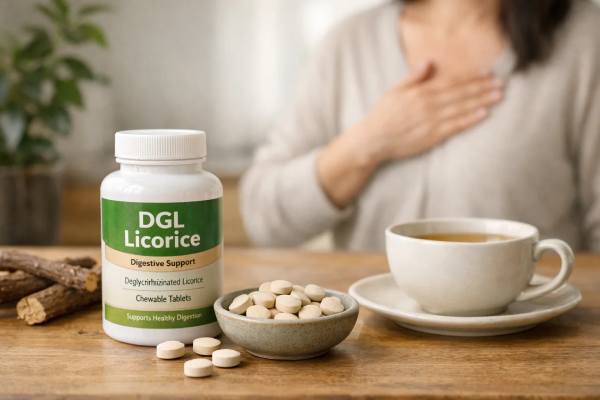
Heartburn can feel deceptively simple—burning behind the breastbone after a meal—yet the causes range from classic acid reflux to sensitive esophageal nerves that overreact to normal amounts of acid. Deglycyrrhizinated licorice (DGL) is a popular nonprescription option because it is intended to support the protective lining of the upper digestive tract rather than suppress stomach acid. Many people use it as a “before meals” routine to reduce irritation, especially when symptoms flare with stress, irregular eating, or specific foods. DGL also matters because it is processed to remove most glycyrrhizin, the compound in regular licorice that can raise blood pressure and lower potassium in susceptible people. Still, DGL is not a cure-all, and its benefits depend on the type of heartburn you have, how you take it, and what else is contributing to symptoms. This article explains when DGL is worth trying, how to dose it safely, and who should avoid it.
Quick Overview
- DGL may soothe heartburn by supporting mucus and tissue defenses rather than lowering stomach acid.
- The best results are usually with consistent pre-meal use during short trials, not random “as needed” dosing.
- Product quality and residual glycyrrhizin matter, especially for people with blood pressure or potassium concerns.
- A 2–4 week trial with symptom tracking helps you decide if DGL is a keeper or a distraction.
Table of Contents
- What DGL licorice is
- How DGL may ease heartburn
- What the research suggests
- Dosing and how to take it
- Who should avoid DGL
- Building a reflux plan with DGL
What DGL licorice is
Licorice comes from the root of Glycyrrhiza species. Traditional licorice contains glycyrrhizin, a sweet-tasting compound that can affect hormone-like pathways in the kidneys. In high enough amounts, or in sensitive people, glycyrrhizin can lead to fluid retention, higher blood pressure, and low potassium. DGL is licorice that has been processed to remove most of that glycyrrhizin, with the goal of keeping the soothing, mucosa-supporting components while reducing the mineral-balance risks.
DGL is usually sold in forms meant to coat the upper digestive tract:
- Chewable tablets or lozenges: commonly used for heartburn because they mix with saliva and contact the throat and esophagus on the way down.
- Powders or granules: sometimes added to water, though the taste can be strong.
- Capsules: convenient, but may be less effective for people who benefit from “topical” contact in the mouth and throat.
It helps to separate DGL from two look-alikes:
- Licorice candy: often contains little true licorice, and when it does, it can include glycyrrhizin plus a lot of sugar. It is not a reliable or safe “treatment.”
- Standard licorice root supplements: these may be appropriate for other goals under supervision, but they are the versions most associated with blood pressure and potassium effects.
One practical point: “deglycyrrhizinated” does not always mean “glycyrrhizin-free.” Processing reduces it, but the remaining amount can vary by product. That is why DGL is typically viewed as lower-risk than regular licorice, not automatically risk-free for everyone.
Finally, DGL is best framed as a tool for symptom support, not a diagnostic shortcut. If heartburn is new, worsening, or paired with alarm symptoms, you still need a proper evaluation. The goal is to use DGL intelligently, not to delay care.
How DGL may ease heartburn
Heartburn happens when stomach contents irritate the esophagus. Acid is a major irritant, but it is not the only one. Pepsin (a digestive enzyme), bile reflux in some cases, and heightened nerve sensitivity can all contribute. That is why “acid blockers for everyone” is an incomplete strategy—and why a lining-support approach like DGL can feel helpful for certain people.
Support for the mucosal barrier
Your upper digestive tract relies on protective defenses: mucus, bicarbonate, blood flow to the tissue, and rapid repair when cells are irritated. DGL is often described as a demulcent-like support—something that may help tissues tolerate irritation better. Mechanistically, licorice-derived compounds have been associated with:
- increased mucus production and improved surface protection
- anti-inflammatory signaling that may reduce local irritation
- support for tissue repair processes after repeated exposure
This “barrier support” model fits people whose heartburn feels raw and reactive, especially during stressful periods when symptoms spike despite modest meals.
It does not primarily lower acid
DGL is not a proton pump inhibitor and not an alginate raft. You should not expect it to shut down acid production or instantly neutralize acid like an antacid. Instead, the best case is that it reduces how much reflux hurts and may shorten how long symptoms linger after meals.
That distinction matters for expectations:
- If you have classic reflux triggered by large late meals, alcohol, or lying down soon after eating, DGL might help as an add-on, but lifestyle timing and proven therapies usually do more.
- If your symptoms are closer to “functional heartburn” (burning without clear acid correlation), a mucosal and nerve-calming strategy may be a better fit, and DGL might be one piece of that.
Why chewing can matter
Many people find chewable DGL more useful than capsules. Chewing mixes it with saliva, encourages slower swallowing, and increases contact with the throat and esophagus. That does not guarantee success, but it aligns with how people commonly use DGL for upper digestive irritation.
In practice, DGL tends to help most when it is used as prevention around predictable triggers, not as a last-minute rescue after symptoms are already intense.
What the research suggests
The evidence for DGL and licorice extracts in reflux is promising in places and thin in others. A useful way to interpret the research is to separate three questions: whether licorice-derived products can improve reflux symptoms, whether DGL specifically is the active ingredient, and how strong the studies are compared with standard treatments.
Symptom improvement has been reported
Recent clinical research on deglycyrrhizinated licorice extracts has reported improvements in reflux-related symptoms such as heartburn and regurgitation over several weeks. In at least one randomized, placebo-controlled trial design, participants taking a deglycyrrhizinated licorice extract experienced earlier symptom relief and improved quality-of-life scores compared with placebo, with effects emerging within the first few weeks of use.
It is important to read that correctly: the trial supports the idea that a specific, standardized licorice extract can help a defined group of people with reflux-related symptoms. It does not automatically mean every DGL product on a store shelf will perform the same way.
Broader reviews place DGL in the “adjunct” category
When researchers review natural products for reflux, licorice and DGL often appear as options that may support symptom reduction, potentially through mucosal protection and anti-inflammatory effects. These reviews tend to emphasize two realities:
- Study methods vary (different extracts, doses, symptom scales, and inclusion criteria).
- Many trials are short (weeks, not months) and may not capture long-term outcomes or relapse patterns.
This is why DGL is usually best positioned as an adjunct—something you try alongside core reflux habits and appropriate medical evaluation, rather than a replacement for effective therapies when those are clearly indicated.
What DGL cannot prove on its own
Even when DGL helps symptoms, it does not tell you what is happening in the esophagus. Heartburn can come from:
- acid reflux with mucosal injury
- non-erosive reflux disease
- hypersensitivity to normal reflux events
- functional heartburn without clear reflux correlation
- throat symptoms driven by non-acid irritants
So DGL success is meaningful for comfort, but it is not a substitute for evaluation when symptoms are frequent, severe, or paired with alarm signs. Think of DGL as a symptom-support option with plausible mechanisms and emerging clinical support—not as a definitive treatment strategy.
Dosing and how to take it
DGL dosing is more about timing and consistency than chasing a single perfect milligram number. Labels vary widely, and different extracts list different activity markers. Still, you can approach dosing in a structured, safe, and interpretable way.
Common dosing patterns in real-world use
Many chewable DGL products are taken:
- 15–20 minutes before meals, and sometimes before bedtime if nighttime symptoms are common
- 1–2 chewable tablets per dose, often up to three times daily
Because labels differ, the best anchor is this: follow the product’s labeled dose without exceeding it, and choose a consistent schedule so you can judge effect.
If you prefer capsules, consider that some people get less benefit because capsules may reduce contact with the throat and esophagus. Capsules can still be a reasonable choice if your symptoms are mainly lower in the chest and meal-triggered.
A practical trial that gives you a clear answer
A good DGL trial is short enough to avoid endless experimenting, but long enough to see a pattern:
- Pick a goal: for example, reduce post-meal burning frequency or reduce nighttime breakthrough symptoms.
- Choose a time window: 2 to 4 weeks is a common trial length for supplements used for reflux comfort.
- Use it consistently: pre-meal dosing is usually more informative than random “as needed” dosing.
- Track two numbers: (a) how many days you have symptoms, and (b) your average symptom intensity (0–10).
- Stop and reassess: if symptoms return quickly when you stop, that suggests DGL may be contributing.
If you see no meaningful change by the end of a consistent trial, it is reasonable to move on rather than doubling down.
How to combine with other options
DGL is often paired with lifestyle measures and, when appropriate, medical therapy. A few practical rules keep combinations safer and more logical:
- If you use antacids, separate them from other supplements and medications by at least 1–2 hours when possible, because antacids can affect absorption.
- If you are on prescription reflux therapy, treat DGL as supportive rather than as a replacement unless your clinician agrees.
- If a product contains added herbs (peppermint, strong bitters), be cautious: some additives can worsen reflux in certain people.
Most importantly, do not use DGL as a reason to ignore meal timing, portion size, or sleep positioning. Those basics often determine whether any supplement feels like it is “working.”
Who should avoid DGL
DGL is designed to reduce the risks associated with glycyrrhizin, but avoidance and caution still matter. The two main reasons are (1) residual glycyrrhizin variability and (2) the possibility that your symptoms signal a condition that needs medical evaluation rather than supplementation.
People who should avoid DGL unless advised
Consider avoiding DGL, or using it only under clinician guidance, if you have:
- Uncontrolled high blood pressure or a history of low potassium
- Kidney disease, heart failure, or significant liver disease
- A history of arrhythmias or you take medications where potassium shifts are dangerous
- Pregnancy or breastfeeding, because safety data for consistent use is limited and product quality varies
- A history of significant reactions to licorice-containing products
Even though DGL is “deglycyrrhizinated,” some products may still contain enough glycyrrhizin to matter for sensitive individuals, especially with high-dose or long-duration use.
Medication situations that warrant extra caution
Be especially careful if you use medications that affect fluids, blood pressure, or potassium, such as:
- diuretics (“water pills”)
- corticosteroids
- certain blood pressure medications
- digoxin and other rhythm-sensitive therapies
This does not guarantee a problem, but it increases the value of clinician input and monitoring.
When heartburn is not a supplement problem
Avoid self-treating with DGL alone if you have alarm symptoms or a major shift in your pattern, including:
- difficulty swallowing, food sticking, or pain with swallowing
- unintentional weight loss
- vomiting blood, black stools, or persistent anemia
- chest pain that is new, severe, or exertional
- recurrent vomiting, dehydration, or progressive symptoms despite careful habits
These situations deserve evaluation because the stakes are higher than “finding the right supplement.” DGL can be supportive later, but it should not be the first or only step when warning signs are present.
Short duration is a safety strategy
Even in generally healthy adults, it is sensible to use DGL in time-limited trials rather than indefinite daily use. If it helps, you can shift toward targeted use around predictable triggers. If it does not help, you reduce the risk of long-term supplement drift without clear benefit.
Building a reflux plan with DGL
The most satisfying outcomes happen when DGL is used inside a broader reflux plan. That plan clarifies what you are treating, reduces preventable triggers, and sets clear thresholds for stepping up care.
Start with the highest-impact habits
DGL tends to work better when you also reduce the “mechanical drivers” of reflux:
- Finish larger meals at least 3 hours before lying down
- Reduce portion size at dinner, even if you keep the same foods
- Identify your top two triggers (common ones include late alcohol, mint, rich meals, and acidic sauces)
- Consider left-side sleeping or elevating the head of the bed if nighttime symptoms dominate
- Avoid tight waist compression after meals
These changes make reflux less aggressive, which gives mucosal-support strategies like DGL a fairer test.
Match DGL to the right symptom type
DGL is often a better fit for:
- burning that flares with stress or irregular eating
- throat irritation and hoarseness that worsen after meals
- reflux-like discomfort that persists despite modest acid exposure
- people who want a non-acid-suppressing option to try alongside core habits
It may be a weaker fit for:
- severe nighttime reflux with choking or aspiration-like episodes
- frequent symptoms that require daily rescue dosing to function
- symptoms dominated by regurgitation volume rather than burning
In those cases, evaluation and targeted therapy are usually higher yield.
How to integrate with medical care
If symptoms happen more than twice weekly, disrupt sleep, or persist for weeks despite reasonable changes, plan an evaluation. A clinician can help clarify whether you are dealing with erosive reflux, non-erosive reflux, hypersensitivity, or functional heartburn, and can guide therapy accordingly.
If you already use prescription therapy and want to add DGL, set a simple decision rule:
- Use DGL consistently for 2 to 4 weeks with symptom tracking.
- If you improve, keep DGL as an adjunct and focus on maintaining habits.
- If you do not improve, do not keep escalating supplements. Reassess diagnosis, triggers, and treatment strategy.
What success looks like
A realistic DGL “win” is not necessarily total symptom elimination. It might be:
- fewer flare days per week
- lower peak burning intensity
- less throat irritation after meals
- less reliance on rescue antacids
If your heartburn is becoming a constant background symptom, treat that as a sign to step up evaluation rather than to keep layering supplements.
References
- ACG Clinical Guideline: Guidelines for the Diagnosis and Management of Gastroesophageal Reflux Disease – PMC 2022 (Guideline)
- Efficacy and Safety of GutGard® in Managing Gastroesophageal Reflux-Related Symptoms: A Phase III, Single-Centre, Double-Blind, Randomized Placebo-Controlled Trial – PMC 2025 (RCT)
- Natural Products in the Management of Gastroesophageal Reflux Disease: Mechanisms, Efficacy, and Future Directions – PMC 2025 (Review)
- Frontiers | Clinical Risk Factors of Licorice-Induced Pseudoaldosteronism Based on Glycyrrhizin-Metabolite Concentrations: A Narrative Review 2021 (Review)
Disclaimer
This article is for educational purposes only and does not provide medical advice, diagnosis, or treatment. Heartburn can have multiple causes, and persistent reflux symptoms can sometimes signal complications that require medical evaluation. Do not rely on DGL licorice to manage alarm symptoms such as difficulty swallowing, unintentional weight loss, vomiting blood, black stools, severe chest pain, recurrent vomiting, or signs of dehydration. DGL products vary in composition, and some people—especially those with high blood pressure, kidney or heart disease, low potassium risk, or complex medication regimens—should seek professional guidance before using licorice-derived supplements.
If you found this article helpful, consider sharing it on Facebook, X (formerly Twitter), or any platform you prefer.