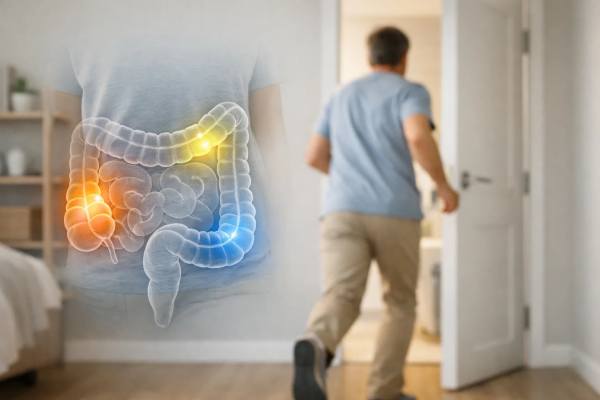
Diarrhea with urgency can shrink your world quickly. When you are scanning every outing for the nearest restroom, it is hard to focus on anything else. The challenge is that urgency has several “look-alike” causes: IBS with diarrhea (IBS-D), bile acid diarrhea, and microscopic colitis can all create sudden, watery stools and an uncomfortable sense that you cannot wait. Yet they differ in why they happen, how they behave over time, and which treatments are most effective. Getting the label right matters because the most helpful therapy for one condition may do little for another. This guide explains how each condition typically presents, which clues help separate them, and what a smart diagnostic workup looks like. You will also find practical next steps you can use now—without over-restricting your diet or delaying evaluation when warning signs are present.
Essential Insights
- Recognizing pattern clues can reduce trial-and-error and speed the right diagnosis.
- Bile acid diarrhea and microscopic colitis are commonly mistaken for IBS-D, especially when routine tests look normal.
- Persistent watery urgency with nighttime stools or weight loss should be evaluated rather than managed with diet alone.
- Track stool frequency, urgency severity, and nocturnal symptoms for 14 days to make clinical evaluation more efficient.
Table of Contents
- How urgency happens in the colon
- IBS-D patterns that fit urgency
- Bile acid diarrhea clues and triggers
- Microscopic colitis signs you can miss
- A symptom cheat sheet comparison
- Tests that clarify the diagnosis
- Treatment paths and next steps
How urgency happens in the colon
Urgency is more than “needing to go soon.” It is a strong, sometimes sudden signal from the rectum and colon that a bowel movement must happen now. That signal becomes louder when stool is watery, when the colon is contracting too strongly, or when inflammation makes the gut hypersensitive.
Three drivers of urgency
Most urgency can be traced to one or more of these mechanisms:
- Too much fluid in the colon: Watery stool stretches the rectum less predictably and can overwhelm the colon’s ability to absorb water. When stool is very liquid, the “hold time” shrinks.
- Overactive motility: The colon may contract more strongly or more often, pushing contents forward quickly. This is common in gut-brain interaction disorders such as IBS-D and can also happen when bile acids irritate the colon.
- Heightened sensitivity: If the colon or rectum is inflamed—or simply more reactive—normal amounts of stool can feel urgent. This can occur in microscopic colitis, but it can also occur in IBS-D through nerve sensitivity rather than visible inflammation.
Why meals can trigger immediate urgency
Eating activates the gastrocolic reflex: nerves and hormones increase colon activity after meals. In many people, this is mild. In people with IBS-D, it can be strong enough that breakfast or lunch becomes a predictable trigger. In bile acid diarrhea, a meal—especially a fattier one—can deliver more bile acids into the colon, adding irritation on top of the normal reflex.
Urgency, leakage, and what it means
Fecal incontinence (leakage) can occur in any of these conditions, especially when stool is watery. Leakage does not automatically mean a structural problem, but it does raise the urgency of evaluation because it suggests stool consistency and rectal control are being pushed beyond their limits. If leakage is new, frequent, or accompanied by weakness, numbness, or severe back pain, that deserves prompt medical attention.
A useful mindset: urgency is a symptom, not a diagnosis
Many people try to treat urgency with only anti-diarrhea medication. That can help some cases, but it can also delay the right diagnosis when watery urgency is being driven by bile acids or microscopic inflammation. A better approach is to ask: Is urgency happening because the gut is moving too fast, secreting too much water, reacting to bile acids, or inflamed in a way that requires targeted therapy? The next sections break down how IBS-D, bile acid diarrhea, and microscopic colitis each create urgency—and how their patterns tend to differ in real life.
IBS-D patterns that fit urgency
IBS-D is one of the most common causes of diarrhea with urgency, especially in people whose symptoms fluctuate with stress, meals, and daily routine. IBS-D is defined by recurring abdominal pain linked to bowel changes, but many people experience urgency as the symptom that most disrupts work, commuting, and social plans.
How IBS-D urgency typically behaves
IBS-D often has a “situational” feel:
- urgency peaks after meals (especially breakfast and lunch)
- symptoms worsen during stressful periods, poor sleep, or travel
- stool frequency can vary widely from day to day
- stools may be loose in the morning and improve later, or flare in short bursts
A key feature is that symptoms often wax and wane. People may have “good weeks” and “bad weeks,” even with a similar diet. That variability is not imagined—gut-brain signaling can shift motility and sensitivity quickly.
Pain matters in IBS-D
Abdominal pain or cramping is usually present and is often relieved by a bowel movement. Some people describe discomfort rather than sharp pain, but the relationship between bowel movements and abdominal symptoms is an important clue. If diarrhea is frequent but there is little to no abdominal pain over time, clinicians may consider functional diarrhea or other causes more strongly.
Common triggers and amplifiers
IBS-D urgency is commonly amplified by:
- large meals and rapid eating
- caffeine and alcohol
- high fermentable carbohydrate meals (often experienced as bloating plus urgency)
- anxiety, anticipation, and “bathroom vigilance”
- menstrual cycle changes in some individuals
It is also common for people to “eat less to avoid urgency,” which can backfire by increasing gut sensitivity and making meals feel riskier.
What makes IBS-D less likely
IBS-D is less likely to be the full explanation when you have:
- nighttime diarrhea that wakes you from sleep
- unintentional weight loss, anemia, or fever
- persistent watery diarrhea that does not fluctuate
- new symptoms beginning later in adulthood with no prior pattern
These features do not rule out IBS-D entirely, but they raise the priority of checking for bile acid diarrhea, microscopic colitis, and other organic causes.
Why IBS-D is often diagnosed before the others
IBS-D is common, and basic labs and imaging can be normal. That can lead to an understandable “IBS default” diagnosis when diarrhea and urgency are present. The risk is missing treatable look-alikes. If urgency is severe, watery, and persistent—or if it is paired with nocturnal stools or new incontinence—make sure the evaluation considers bile acid diarrhea and microscopic colitis rather than assuming everything fits IBS-D.
Bile acid diarrhea clues and triggers
Bile acid diarrhea happens when bile acids reach the colon in higher-than-normal amounts. Bile acids are essential for digesting fat, but in the colon they act like irritants: they pull water into the bowel and stimulate motility. The result is often watery diarrhea with urgency that can look exactly like IBS-D—until you notice the clues.
When bile acids get “out of place”
Bile acids are usually reabsorbed in the end of the small intestine and recycled. Problems arise when:
- reabsorption is reduced (for example, after ileal disease or surgery)
- bile acid production is increased beyond what can be reclaimed
- bile acids move too quickly through the small intestine
Some people develop bile acid diarrhea after gallbladder removal, while others have no obvious trigger and still respond strongly to bile acid–targeted treatment.
Classic symptom pattern
Bile acid diarrhea often presents as:
- watery stools with strong urgency
- frequent morning diarrhea, sometimes continuing through the day
- symptoms that worsen after meals, especially fattier meals
- episodes of “barely made it” urgency or occasional leakage
Many people report that stools are consistently watery rather than alternating between normal and loose. The steadiness of symptoms can be a subtle but important clue.
Why it is commonly mistaken for IBS-D
Bile acid diarrhea can include cramping and discomfort, and routine blood work can be normal. If no one asks about fat-trigger patterns, post-surgical history, or the distinctly watery quality of stools, it can be labeled as IBS-D for years. The practical cost is time: bile acid diarrhea can improve significantly with the right therapy, but it often requires a clinician to consider it explicitly.
How it is tested and sometimes treated empirically
Testing options vary by region and clinical setting. Depending on availability, clinicians may consider:
- specialized bile acid retention testing
- blood markers that reflect bile acid production
- stool bile acid measurements over a defined period
In some cases, if the pattern strongly fits and testing is hard to access, a clinician may recommend a supervised trial of a bile acid–binding medication. A clear improvement can be diagnostically meaningful, but it should be done thoughtfully because these medications can cause constipation, bloating, and medication-binding interactions.
Food and lifestyle levers
Because bile acids are released in response to fat, some people get partial relief by distributing fat intake more evenly and avoiding very high-fat meals. That does not replace medical evaluation, but it can reduce symptom spikes and improve day-to-day control while you pursue testing and treatment.
Microscopic colitis signs you can miss
Microscopic colitis is an inflammatory condition of the colon that typically causes chronic watery diarrhea and urgency. The “microscopic” part matters: the colon can look normal during colonoscopy, and the diagnosis is made by biopsies under a microscope. That normal-looking scope is one reason people are told they have IBS-D when they actually have microscopic colitis.
How it usually presents
A typical pattern includes:
- chronic watery diarrhea lasting weeks to months
- urgency and, in some cases, fecal incontinence
- nighttime stools or waking to use the bathroom
- fatigue from fluid loss and disrupted sleep
Some people also experience abdominal pain, weight loss, or reduced appetite. The combination of watery diarrhea plus nocturnal symptoms is especially important, because it suggests an organic driver rather than a purely reflex-based pattern.
Who is more likely to develop it
Microscopic colitis is often identified in middle-aged and older adults and is more common in women. Risk can be influenced by smoking history and certain medications in some people. The medication link is complex: associations have been reported with agents such as acid-suppressing drugs, anti-inflammatory pain medicines, and some antidepressants, but the relationship is not always straightforward. The practical takeaway is not to fear medications, but to review them carefully if chronic watery diarrhea and urgency develop.
Why symptoms can overlap with bile acid diarrhea
Microscopic colitis and bile acid diarrhea can coexist. Both can create watery urgency and post-meal flares, and both can respond to specific therapies. If microscopic colitis is diagnosed and treated but watery urgency persists, clinicians may consider whether bile acids are also contributing.
How diagnosis is made
Diagnosis requires colonoscopy with biopsies taken from multiple areas of the colon, even if the lining looks normal. This is a key point for patients: a “normal colonoscopy” without biopsies does not fully exclude microscopic colitis. If urgency is severe, watery, and persistent—especially with nighttime diarrhea—ask whether biopsies were taken and whether microscopic colitis was considered.
Course and prognosis
Many people respond well to targeted anti-inflammatory therapy, but relapse can occur, especially when treatment is stopped abruptly or if triggers persist. Long-term management may involve medication strategies, symptom control tools, and periodic reassessment of contributing factors such as ongoing medication exposures or overlapping bile acid diarrhea.
A symptom cheat sheet comparison
Because IBS-D, bile acid diarrhea, and microscopic colitis overlap, it helps to compare them using a few high-yield questions. None of these clues is perfect alone, but the pattern they form can be surprisingly diagnostic.
Question 1: Is abdominal pain a central feature?
- More consistent with IBS-D: Pain or cramping is frequent and often improves after a bowel movement. Symptoms fluctuate with stress and routine changes.
- Possible in bile acid diarrhea: Cramping can occur, but pain is often less central than watery urgency.
- Variable in microscopic colitis: Some people have pain, but watery diarrhea, urgency, and fatigue may dominate.
Question 2: Do you wake from sleep to have diarrhea?
- Less typical for IBS-D: Not impossible, but true nighttime diarrhea is a red flag that pushes evaluation further.
- Can occur in bile acid diarrhea: Especially when diarrhea is severe and watery.
- Common in microscopic colitis: Nighttime stools are a classic clue and should prompt biopsy-based evaluation.
Question 3: How watery and persistent is the stool?
- IBS-D: Often varies—some days are looser, others closer to normal.
- Bile acid diarrhea: Often consistently watery with intense urgency, especially after meals.
- Microscopic colitis: Characteristically watery and persistent over weeks, sometimes with sudden flares.
Question 4: What triggers your worst days?
- IBS-D: Stress, large meals, rapid eating, certain fermentable carbohydrates, caffeine.
- Bile acid diarrhea: Fatty meals and larger meals are common amplifiers; urgency may surge after eating.
- Microscopic colitis: Triggers can be less obvious; symptoms may feel relentless rather than tied to specific foods.
Question 5: Are there systemic clues?
Consider evaluation sooner if you have:
- weight loss, fever, anemia symptoms, or marked fatigue
- new onset later in adulthood with no prior pattern
- new fecal incontinence or rapidly worsening urgency
Two example patterns that illustrate the difference
- Pattern A: Loose stools most mornings, urgency after breakfast, cramping relieved by a bowel movement, symptoms worse during stressful months, and better during vacations. This leans toward IBS-D, while still warranting basic screening if symptoms are persistent.
- Pattern B: Sudden watery urgency throughout the day, frequent nighttime stools, fatigue, and minimal day-to-day variability. This pattern leans toward microscopic colitis or bile acid diarrhea and deserves a focused diagnostic workup rather than extended diet restriction.
Use this cheat sheet to guide your next steps, not to self-diagnose. The goal is to show up to care with a clearer description of your pattern, which often leads to faster testing and more effective treatment.
Tests that clarify the diagnosis
A good diagnostic strategy balances two priorities: ruling out dangerous causes and identifying treatable look-alikes that are often missed. For urgency with watery diarrhea, clinicians usually start with the least invasive, highest-yield tests and escalate based on age, symptom duration, and red flags.
Step 1: Basic screening that prevents missed diagnoses
Common first steps include:
- blood tests to check anemia, inflammation clues, kidney function, and electrolytes
- screening for celiac disease in appropriate patients, especially when diarrhea is chronic
- stool testing if infection is plausible (recent travel, outbreaks, fever, blood, or severe illness)
- markers that help distinguish inflammatory conditions from functional patterns in some cases
These tests do not diagnose IBS-D directly, but they help confirm whether it is safe to treat IBS-like symptoms without missing inflammation or malabsorption.
Step 2: When to consider bile acid diarrhea testing
Clinicians consider bile acid diarrhea testing when:
- stool is persistently watery with strong urgency
- symptoms worsen after meals, especially fattier meals
- IBS-D treatments have not helped as expected
- there is a history of ileal disease, bowel surgery, or gallbladder removal
Testing choices depend on availability. In some settings, clinicians may use blood markers or stool bile acid testing, while in others they may use specialized retention testing. When access is limited, a supervised therapeutic trial may be considered, but it should be done carefully to avoid constipation and to account for medication interactions.
Step 3: When colonoscopy and biopsies are important
Colonoscopy is often recommended when you have:
- red flags such as blood, anemia, weight loss, or nighttime diarrhea
- persistent watery diarrhea lasting several weeks
- new onset in older adulthood
- severe urgency or incontinence affecting quality of life
For suspected microscopic colitis, biopsies are essential, even if the colon looks normal. If you had a colonoscopy but biopsies were not taken, microscopic colitis may not have been fully evaluated.
Step 4: What clinicians look for in the history
A detailed history is not a formality—it is diagnostic. Clinicians often focus on:
- timing: post-meal flares, morning clustering, nighttime stools
- stool character: watery versus greasy, presence of blood or mucus
- medication review: acid suppressors, anti-inflammatory pain medicines, antidepressants, diabetes medications, magnesium, and supplements
- dehydration risk: dizziness, low urine output, weakness
The best preparation you can bring is a short 14-day log of stool frequency, urgency severity, and nocturnal symptoms. That single page can make your evaluation faster and more accurate than any one dietary guess.
Treatment paths and next steps
Treatment works best when it matches the mechanism. While there is some overlap—hydration, symptom control, and meal structure help nearly everyone—the main therapies for IBS-D, bile acid diarrhea, and microscopic colitis differ in meaningful ways.
IBS-D: combining gut-targeted and nervous-system strategies
IBS-D management often uses layered tools rather than a single cure:
- Meal structure: smaller, more regular meals can reduce post-meal urgency. Rapid eating and large portions often intensify the gastrocolic reflex.
- Targeted carbohydrate strategy: a time-limited, structured approach to fermentable carbohydrates can reduce urgency and bloating in selected patients.
- Soluble fiber: gradual introduction can improve stool form in many people, but dosing needs to be slow to avoid gas.
- Medication options: clinicians may use anti-diarrhea medications, gut-directed antibiotics in selected cases, or other IBS-targeted therapies based on symptoms and risk profile.
- Gut-brain support: stress physiology influences motility. Practical tools such as sleep stabilization, therapy-based approaches, and relaxation training can reduce urgency intensity for many people.
Bile acid diarrhea: binding and reducing bile acid exposure
Bile acid diarrhea often responds to bile acid–binding medications. Key points that improve success:
- start low and titrate to avoid constipation
- take other medications at separate times to reduce binding interactions
- monitor for bloating and adjust dose rather than abandoning therapy prematurely
- consider moderate fat distribution across meals instead of very high-fat single meals
If urgency improves dramatically with bile acid–focused therapy, that is a strong sign you are treating the right mechanism.
Microscopic colitis: anti-inflammatory therapy plus trigger review
Microscopic colitis treatment commonly includes:
- reviewing medications and exposures that may contribute, without stopping essential medications abruptly
- targeted anti-inflammatory therapy that is effective for many patients with moderate to severe watery diarrhea
- symptom control tools such as anti-diarrhea agents or bismuth compounds in selected cases, especially for milder symptoms
- maintenance planning when relapse occurs after stopping therapy
Because relapse is possible, follow-up is important when symptoms return, especially if urgency or nighttime stools recur.
A practical next-step plan you can use now
- Track stool frequency, urgency severity, and nighttime stools for 14 days.
- Note top triggers: meals, fat-heavy foods, caffeine, alcohol, and stress spikes.
- Avoid broad, long-term elimination diets unless you are guided by a clinician or dietitian.
- Seek evaluation promptly for blood in stool, fever, weight loss, anemia symptoms, dehydration signs, or nighttime diarrhea.
If urgency is changing your life—canceling plans, avoiding food, or causing incontinence—that is enough reason to pursue a focused evaluation. The goal is not just fewer bathroom trips. The goal is confidence that you are treating the true driver of your symptoms.
References
- ACG Clinical Guideline: Management of Irritable Bowel Syndrome – PubMed 2021 (Guideline)
- Bile Acid Diarrhea: From Molecular Mechanisms to Clinical Diagnosis and Treatment in the Era of Precision Medicine – PMC 2024 (Review)
- European guidelines on microscopic colitis: United European Gastroenterology and European Microscopic Colitis Group statements and recommendations – PubMed 2021 (Guideline)
- Update on the epidemiology and management of microscopic colitis – PMC 2024 (Review)
Disclaimer
This article is for educational purposes only and does not provide medical advice, diagnosis, or treatment. Diarrhea with urgency can be caused by functional disorders, infections, medication effects, inflammation, and malabsorption conditions that require different evaluations and therapies. Seek urgent medical care for severe abdominal pain, fever, blood in stool, black stools, persistent vomiting, signs of dehydration (dizziness, fainting, confusion, minimal urination), rapid worsening weakness, or new bowel control loss. If diarrhea is persistent, occurs at night, is associated with weight loss or anemia symptoms, or significantly disrupts daily life, consult a qualified healthcare professional for individualized assessment and appropriate testing.
If you found this article helpful, please consider sharing it on Facebook, X (formerly Twitter), or any platform you prefer.