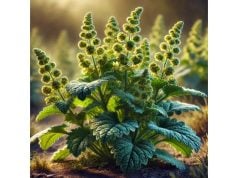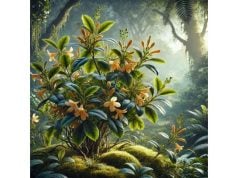
Diervilla, often called bush honeysuckle, is a small North American shrub genus with a surprisingly rich traditional-use history and a much thinner modern clinical evidence base. That contrast is exactly why it deserves a careful look. These plants are hardy, rhizome-forming shrubs in the honeysuckle family, and current botanical work recognizes three species in the genus. Most herb discussions focus on northern bush honeysuckle (Diervilla lonicera), which appears in older ethnobotanical and herbal listings as a diuretic, gargle, and eye-wash plant. At the same time, modern research on Diervilla itself is still limited, so many “medicinal” claims remain traditional rather than clinically confirmed. In practical terms, Diervilla is best approached as a heritage herb with interesting pharmacology questions, not a proven first-line treatment. This guide explains what is known, what is inferred, and what should be handled cautiously.
Key Insights
- Diervilla is mainly a traditional-use herb, and modern human clinical evidence for health effects is still limited.
- Traditional listings describe diuretic and topical soothing uses, but these uses are not the same as proven medical efficacy.
- No validated oral dose range in mg/day has been established for Diervilla in modern clinical research.
- Stop use and seek medical advice if nausea, vomiting, or unusual symptoms occur.
- People who are pregnant, breastfeeding, giving it to children, or managing kidney disease should avoid self-use unless a qualified clinician advises it.
Table of Contents
- What is Diervilla and what makes it unique
- Diervilla key ingredients and medicinal properties
- Does Diervilla help with anything
- How to use Diervilla in practice
- How much Diervilla per day
- Diervilla side effects and who should avoid it
- What the evidence says today
What is Diervilla and what makes it unique
Diervilla is a small genus in the honeysuckle family (Caprifoliaceae), and current botanical references recognize three accepted species: D. lonicera, D. rivularis, and D. sessilifolia. Recent taxonomic work has been especially useful here because older plant lists sometimes blurred the species boundaries or treated populations differently. Newer integrative taxonomy helps separate them using morphology and distribution, which matters if you are trying to identify the correct plant for horticultural, ecological, or historical herbal use.
Most medicinal and ethnobotanical notes in English-language herb databases are tied to Diervilla lonicera (northern bush honeysuckle), not to the entire genus equally. That is an important distinction. People often read “Diervilla” and assume every species has the same history of use and chemistry, but the evidence is not strong enough to make that assumption confidently. When older herb sources describe leaf, bark, or root uses, they are usually referring to D. lonicera or to historical “bush honeysuckle” naming conventions rather than to a genus-wide standard.
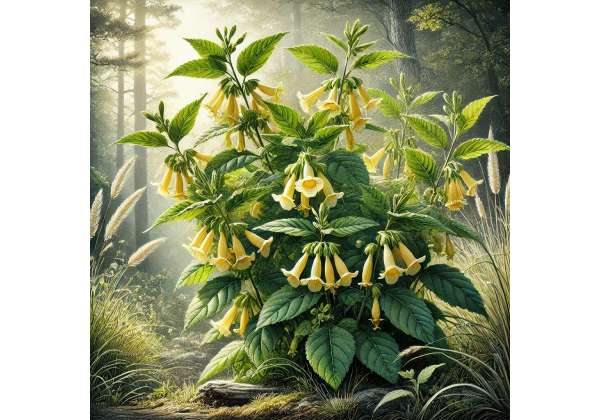
As a plant, northern bush honeysuckle is a low deciduous shrub that commonly reaches about 2 to 4 feet (roughly 0.6 to 1.2 m). It spreads by rhizomes, which means it can form patches or colonies. It also grows well in relatively tough sites, including dry to mesic, rocky, or sandy soils, and it can rebound after fire by sprouting from protected rhizomes. Those traits explain why it is valued as a landscape and restoration shrub even outside herbal contexts. In other words, Diervilla is not just “a medicinal plant”; it is also a resilient ecological species with real habitat value.
Another distinctive point is pollination biology. Northern bush honeysuckle is insect-pollinated, and bumblebees are noted as important pollinators in some regional observations. It is also self-incompatible, meaning seed set depends on cross-pollination from other clonal patches. This makes Diervilla an interesting example of a plant that spreads vegetatively but still depends on pollinators for sexual reproduction.
For readers interested in health uses, the practical takeaway is simple: identify the species first, and assume that most traditional claims refer to D. lonicera unless a source explicitly says otherwise. That avoids a lot of confusion later.
Diervilla key ingredients and medicinal properties
This is the point where many herb articles become too confident. With Diervilla, the honest answer is that the plant’s Diervilla-specific “key ingredients” are not as well mapped in modern clinical-style literature as the compounds in more widely studied herbs. You can find good information on Diervilla taxonomy, ecology, and horticulture, plus traditional medicinal listings, but far less on standardized extracts, human pharmacokinetics, or modern therapeutic markers for Diervilla itself. That gap should shape how the herb is discussed.
What can be said with more confidence is the broader family and phytochemical context. Diervilla belongs to Caprifoliaceae, and related honeysuckle-family plants are known to contain bioactive secondary metabolites. In the wider herbal research landscape, compounds such as iridoids have drawn attention for antioxidant, anti-inflammatory, and antimicrobial potential in plant-based studies. However, a plausible mechanism is not the same as a proven health outcome. Even if a compound class looks promising, that does not automatically prove that Diervilla preparations are safe or effective for self-treatment.
Traditional Diervilla listings, especially for D. lonicera, describe medicinal “properties” in functional herbal terms: diuretic, laxative, ophthalmic use, gargle use, and in some listings galactagogue use. These are historical or traditional descriptors, not laboratory-confirmed active-constituent profiles. In other words, the sources describe what people used the plant for, not which isolated molecules were proven responsible.
A practical way to interpret Diervilla’s medicinal properties is to think in layers:
- Traditional-use layer: historical herbal descriptions of leaves, roots, and bark.
- Phytochemical hypothesis layer: likely relevance of plant secondary metabolites seen more broadly in honeysuckle-family research.
- Clinical evidence layer: currently very thin for Diervilla itself.
This layered view helps prevent two common mistakes: dismissing the herb entirely because it lacks trials, or treating it like a proven medicine because it has a long traditional history.
So, if you are looking for “key ingredients,” the strongest statement today is not a neat list of branded compounds. It is this: Diervilla is a traditional North American bush honeysuckle with plausible phytochemical activity based on family-level plant chemistry, but no well-established Diervilla-specific active-marker standard is used clinically at this time. That is a realistic, evidence-aligned foundation for the rest of the discussion.
Does Diervilla help with anything
The most responsible answer is that Diervilla may help in the ways traditional herbal practice describes, but those uses are not strongly confirmed by modern human trials. In traditional herb-style listings for Diervilla lonicera, leaves, roots, and bark are described with uses such as diuretic support, gargle use, and eye-wash applications. These uses tell us what has been attempted or passed down, not what has been clinically proven safe and effective in a modern dosing framework.
If someone asks about “benefits,” it helps to separate likely goals into realistic categories:
- Traditional urinary support goals: Diuretic use appears repeatedly in historical summaries.
- Traditional throat or mouth comfort: Gargle use is commonly listed.
- Traditional topical or eye-area use: Cooled infusions or washes are mentioned in older contexts, but this is the category where modern safety standards matter most.
The eye-related point is especially important. Eye use is one of those traditions that sounds simple but can carry real risk if sterility, concentration, and contamination are not controlled. A historical mention does not equal modern ophthalmic safety. That is a good example of why old uses should be interpreted carefully.
There is also an indirect “health advantage” worth mentioning, even though it is not a medicinal effect in the usual sense: Diervilla is a useful pollinator shrub. In garden or restoration settings, planting Diervilla can support insect activity and biodiversity, which many people reasonably include in a broader health-and-wellness lifestyle. That is not the same thing as taking it internally, but it is still a meaningful advantage of the plant.
What Diervilla does not currently offer is a strong evidence base for treating common medical conditions like infections, kidney problems, eye disease, or digestive disorders. The absence of human dosing standards and clinical outcome data means it should not replace proven care. If someone has a urinary infection, persistent swelling, or eye symptoms, Diervilla is not an appropriate first-line self-treatment.
So yes, Diervilla “helps” in the sense that it has traditional herbal uses and ecological value. But no, it is not yet a clinically established herbal medicine with standardized outcomes. That balanced view is the safest and most useful way to approach it.
How to use Diervilla in practice
Because Diervilla is not a mainstream clinical herb, “how to use it” is less about standardized products and more about careful decision-making. Most practical use information comes from traditional herb listings that mention plant parts, such as leaves, roots, and bark, and preparation styles such as infusions, decoctions, gargles, or washes. What is usually missing is the level of detail modern users expect: extraction ratios, quantified active compounds, shelf-life data, and dose-response evidence. That means the best approach is conservative from the start.
If you are considering Diervilla at all, use this sequence:
- Confirm plant identity. Make sure the shrub is actually Diervilla and not another plant called “honeysuckle.”
- Know which species you have. Traditional medicinal references most often point to D. lonicera.
- Decide your goal. Are you exploring heritage herbal practice, or trying to self-treat a medical problem?
- Avoid high-risk self-use. Internal use, eye use, or concentrated extracts should not be improvised.
- Talk to a qualified clinician or trained herbal practitioner, especially if you take medications or have kidney, pregnancy, or eye-related concerns.
That stepwise approach is more useful than a recipe when the evidence is limited.
In garden settings, Diervilla is often more practical as a wellness-adjacent plant than as a self-made medicine. It is a hardy shrub, spreads by rhizomes, and handles difficult sites well, so it fits pollinator gardens, woodland edges, and low-maintenance landscapes. That can be a smart way to engage with the plant safely: appreciate its ecology and traditional history without jumping straight into internal use.
If someone still wants to explore traditional-style preparation under guidance, the main principle is simplicity and traceability:
- Use clearly identified plant material.
- Avoid mixed formulas unless a clinician has a clear reason.
- Do not use eye-area preparations without professional oversight.
- Keep a symptom log and stop early if anything feels wrong.
This is one herb where “more” is not better, and “traditional” is not the same as “risk-free.” Diervilla can fit into practice, but it belongs in a cautious, informed lane rather than a DIY experimentation lane.
How much Diervilla per day
There is no validated, standardized Diervilla dose range for modern clinical use, and that is the most important dosing fact to understand. In many herb articles, this section lists a clean number in mg or mL. For Diervilla, the available sources do not provide a clinically established oral dose with the kind of evidence needed for safe general guidance. Traditional listings describe preparation types and herbal actions, but not a modern, evidence-based dosing protocol.
That does not mean historical use never existed. It means the dosage information is not standardized in a way that supports confident self-treatment today. This is especially relevant because some traditional listings also include a caution that the leaves may contain a narcotic principle associated with nausea. When a plant has uncertain benefit strength and a plausible adverse-effect signal, dosing should become more conservative, not less.
A practical, safety-first way to think about Diervilla dosing is:
- No established therapeutic mg/day range: there is currently no validated clinical standard.
- No routine self-prescribing: especially for concentrated extracts, tinctures, or prolonged internal use.
- If a clinician recommends use: dosing should be individualized to the form, plant part, your health status, and the reason for use.
Timing and duration also matter. Herbs used for traditional soothing or diuretic purposes are often taken for short periods, but with Diervilla there is not enough evidence to define a safe standard course. That means duration should be short, monitored, and professionally guided if used at all. Long-term use is especially hard to justify when the evidence base is thin.
Common variables that would normally affect dose include body size, hydration status, kidney function, medications, and whether the plant is being used as a tea, decoction, or extract. The problem is that Diervilla-specific data are too limited to translate those variables into a reliable public dosing chart.
So if you came here specifically for a number, the safest evidence-based answer is: there is no clinically established Diervilla daily dose. The next-best answer is to avoid self-dosing and use a qualified clinician’s judgment if you are exploring traditional use. That may sound less satisfying than a dose chart, but it is far more accurate and safer.
Diervilla side effects and who should avoid it
Safety is the most important part of the Diervilla conversation because the evidence gaps increase uncertainty. One recurring caution in traditional herbal-style sources is the report that Diervilla leaves may contain a narcotic principle that can induce nausea. Whether that wording reflects older terminology, variable plant chemistry, or inconsistent documentation, it is enough to treat gastrointestinal symptoms and unusual sedation-like effects as warning signs. If symptoms occur, stop use and seek medical advice.
Potential side effects and risks to watch for include:
- Nausea or stomach upset
- Vomiting or worsening digestive discomfort
- Unexpected dizziness or feeling unwell
- Irritation from topical or wash preparations
- Contamination risk in homemade preparations, especially around the eyes
The eye-use issue deserves special emphasis. Traditional sources mention cooled infusions used as an eye-wash, but modern safety standards for ophthalmic use are much stricter than historical household practice. Sterility, particulate contamination, and concentration all matter. For that reason, self-prepared Diervilla eye use is not a good idea without professional medical guidance.
Who should avoid Diervilla unless specifically advised by a qualified clinician:
- Pregnant people: no reliable safety or dosing data
- Breastfeeding people: historical galactagogue references exist, but that is not the same as proven safety
- Children: no established pediatric dosing or safety profile
- People with kidney disease or on diuretics: traditional diuretic use may create unpredictable overlap
- People on multiple medications: unknown interaction potential is a real concern
Drug-interaction research for Diervilla is limited, so the safest assumption is that interactions are possible but under-documented. This is especially true for diuretics, blood pressure medications, sedating drugs, or any medicine where hydration and kidney handling matter. Even if Diervilla turns out to be mild, “mild” does not mean “interaction-free.”
Finally, never use Diervilla as a substitute for care when symptoms could signal a serious problem. Swelling, painful urination, eye pain, fever, or persistent sore throat may need a medical diagnosis. Herbs can have a place, but safety comes first, and with Diervilla that means cautious use, short duration if used at all, and a low threshold for professional help.
What the evidence says today
The evidence picture for Diervilla becomes clear once you sort the sources by type. We have strong botanical and taxonomic information, useful ecological data, and traditional-use listings. What we do not have is a robust clinical literature showing standardized extracts, dose-finding studies, randomized human trials, or well-characterized safety pharmacology for Diervilla species. That is why the herb is best described as traditionally used rather than clinically established.
Here is the current evidence stack in practical terms:
- Strongest: plant identity, species boundaries, habitat, and growth behavior
- Moderate: traditional medicinal descriptions and herbal-use categories
- Weak for medicine: human efficacy, dosing, interactions, and long-term safety
That imbalance is not unusual for regional heritage herbs, but it should change how people interpret “benefits.” A benefit claim supported by tradition and repeated use may be interesting and worth further research, yet it is still not the same as a benefit proven in a clinical setting.
The most useful modern pharmacology context comes from broader plant-iridoid research rather than from Diervilla-specific trials. Reviews of iridoids describe promising bioactivities and potential health relevance, but they also make clear that clinical validation is still a major step. For Diervilla, this means the science supports curiosity and cautious hypothesis-building more than treatment claims. It is fair to say the plant may contain interesting bioactive potential by family association; it is not fair to claim it reliably treats disease.
So what is the evidence-based bottom line for readers?
- Diervilla is a legitimate genus with well-defined species and good ecological value.
- Diervilla lonicera has documented traditional medicinal uses in herbal databases.
- Modern clinical evidence is not yet strong enough to support routine self-treatment.
- Safety and dosing remain the main limiting factors.
That may sound cautious, but it is actually a useful result. It tells you where Diervilla fits today: a plant with real botanical interest, real traditional relevance, and real research gaps. If future studies clarify its chemistry and safety, recommendations may improve. Until then, the best approach is respect for the tradition, respect for the uncertainty, and careful decision-making.
References
- Using integrative taxonomy to clarify species boundaries in Diervilla (Caprifoliaceae) 2025 (Taxonomy Study)
- Diervilla J.Mill. | Plants of the World Online | Kew Science 2026 (Database Entry)
- Diervilla lonicera 1991 (Fire Ecology Profile)
- Diervilla lonicera Bush Honeysuckle, Northern bush honeysuckle PFAF Plant Database 2010 (Herbal Database)
- Plant iridoids: Chemistry, dietary sources and potential health benefits 2025 (Review)
Disclaimer
This article is for educational purposes only and is not medical advice. Diervilla has traditional herbal uses, but modern clinical evidence, standardized dosing, and interaction data are limited. Do not use it to diagnose, treat, or replace care for infections, kidney problems, eye conditions, or other medical issues. If you are pregnant, breastfeeding, taking prescription medications, or managing a chronic condition, speak with a qualified healthcare professional before using any Diervilla preparation. Seek urgent medical care for severe symptoms such as eye pain, trouble breathing, persistent vomiting, or signs of infection.
If you found this guide useful, please share it on Facebook, X, or your preferred platform to help more readers find accurate, safety-first herbal information.