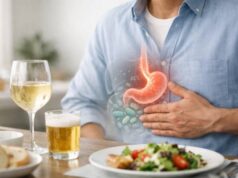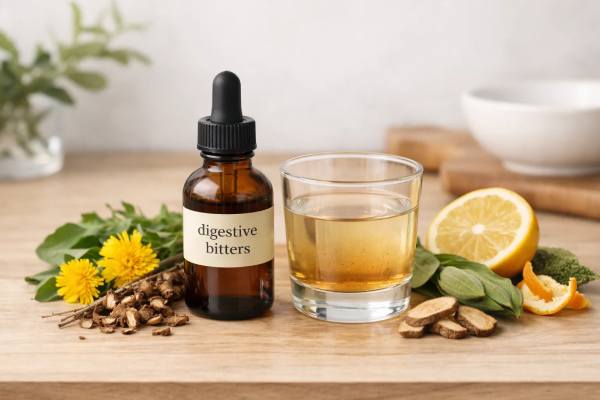
Digestive bitters have a long history: a few drops of intensely bitter herbs taken before meals, often as a tincture, with the promise of less bloating, smoother digestion, and fewer “heavy after eating” moments. The appeal is understandable—bitterness is a powerful sensory signal, and the body’s digestive system is designed to respond to signals even before food arrives in the stomach. Modern research adds an intriguing twist: bitter taste receptors are not limited to the tongue, and bitter compounds can influence gut hormones and motility in ways that might matter for symptoms like fullness, belching, and upper-abdominal discomfort. Still, the big question is practical: do over-the-counter digestive bitters reliably help real-world bloating and indigestion, and are they safe for most people? This guide walks through what bitters are, what evidence exists (and what does not), who should avoid them, and how to use them thoughtfully if you decide to try.
Quick Overview
- Digestive bitters may reduce post-meal heaviness for some people, especially when symptoms relate to slow stomach emptying or impaired “digestive readiness.”
- Evidence is stronger for certain multi-herb digestive formulas than for traditional “bitters drops” as a category, and results vary by symptom pattern.
- Bitters are not low-risk for everyone: reflux, ulcers, gallbladder disease, pregnancy, and alcohol sensitivity are common reasons to avoid or use caution.
- A practical trial is usually short and structured: small doses 10–15 minutes before meals for 1–2 weeks while tracking specific symptoms.
Table of Contents
- What digestive bitters are
- How bitters might affect digestion
- What the evidence says for symptoms
- Who should avoid bitters
- How to use bitters safely
- Better options and when to get help
What digestive bitters are
Digestive bitters are preparations made from bitter-tasting plants (or isolated bitter compounds) intended to support digestion. Most commonly, they come as liquid extracts—often alcohol-based tinctures—taken shortly before eating. Some products are simple (one or two herbs), while others are complex blends designed to target several digestion-related pathways at once.
“Bitters” can mean different things depending on context, and that matters when you’re evaluating claims:
- Traditional herbal bitters: Classic bitter herbs such as gentian, wormwood, dandelion root, artichoke leaf, orange peel, and others. These are often positioned as a pre-meal “digestive primer.”
- Digestive herbal blends: Multi-herb formulas that may include bitter herbs plus carminatives (herbs that can ease gas), calming herbs, or antispasmodics. These are sometimes marketed for functional dyspepsia, bloating, or upper-GI discomfort.
- Bitter “shots” and aperitifs: Some are closer to beverages than supplements. They may overlap with cocktail bitters or aperitif traditions, but dosing, alcohol content, and ingredient clarity vary widely.
- Alcohol-free bitters: Typically glycerin-based extracts. They avoid ethanol but may taste less intensely bitter and can be higher in sugars, which matters for some people.
A key distinction: bitterness is a sensory property, not a guarantee of an effect. Two products can taste equally bitter while containing different active compounds, different doses, and very different safety profiles. In other words, “it’s bitter” is not the same as “it’s tested.”
What people usually mean by “bloating and indigestion”
Most people reach for bitters when they feel some mix of:
- Post-meal fullness or heaviness
- Upper abdominal pressure or discomfort
- Early satiety (getting full quickly)
- Belching, nausea, or slow-to-settle stomach
- A sense that food “sits there” too long
True lower-abdominal bloating (tight waistband by evening, visible distention, lots of gas) can overlap with upper symptoms, but it often has different drivers—fermentation, constipation, pelvic floor mechanics, or food intolerances—so bitters may not be the best match.
How bitters might affect digestion
The strongest “why it could work” argument for digestive bitters is that digestion is not only chemical—it is also neurohormonal. The body prepares for food through smell, taste, chewing, and expectation. Bitter taste is particularly potent because, biologically, it has often signaled “be cautious,” and that caution response can activate reflexes that change secretions and gut movement.
Two ways bitters may act
It helps to think of bitters through two lenses:
- Signal effect (the bitter taste itself):
Bitter flavor can trigger the cephalic phase of digestion—salivation, swallowing readiness, and vagal signaling that “a meal is coming.” For some people, this may translate into less abrupt fullness or a smoother transition into eating, especially if they tend to eat quickly, skip meals, or eat under stress. - Payload effect (the compounds in the herbs):
Bitter herbs contain diverse phytochemicals. Some may influence gastric motility, inflammation, smooth muscle tone, or gut-brain signaling. Multi-herb blends often combine bitter herbs with carminatives and antispasmodics to target both “stuck” sensations and cramping.
Bitter receptors are not just on the tongue
Bitter taste receptors have been identified along the gastrointestinal tract. This does not mean every bitter supplement improves symptoms, but it supports a plausible pathway: bitter compounds can interact with gut receptors and may influence gut hormones involved in appetite, motility, and sensation. The practical takeaway is subtle: bitters may affect timing and sensation more than they “fix” a structural problem.
Why results vary so much
Even if bitters influence digestion in controlled settings, symptom relief depends on the driver of your symptoms. For example:
- If your “bloating” is mostly post-meal fullness and early satiety, bitters might help—especially if a formula supports motility or gastric accommodation.
- If your discomfort is mostly burning reflux, bitters could aggravate symptoms by increasing gastric activity or triggering more sensitivity.
- If your bloating is mostly gas and distention later in the day, bitters may not address the root cause (fermentation, constipation, or food triggers).
This mismatch is the main reason bitters can feel “miraculous” for one person and useless (or irritating) for another.
What the evidence says for symptoms
When people search “digestive bitters for bloating,” they’re usually hoping for a clear yes-or-no answer. The most honest answer is: evidence is mixed, and it depends heavily on what you mean by bitters.
Where evidence is stronger: specific herbal formulas
Clinical research tends to focus on defined herbal medicines—especially multi-herb blends used for functional dyspepsia (upper-GI symptoms such as postprandial fullness, early satiety, epigastric discomfort, and nausea). Some of these formulas include bitter components and are studied more like medications than like culinary bitters.
Across trials, the most consistent improvements are often reported in:
- Overall dyspepsia symptom scores
- Fullness and early satiety
- Epigastric discomfort and nausea in some groups
- Gas-related tolerance in certain subgroups
These findings are encouraging, but they reflect specific products and dosing schedules, not every bottle labeled “digestive bitters.”
Where evidence is weaker: “bitters drops” as a general practice
The classic “a few drops of gentian in water before meals” tradition is harder to evaluate because products vary and modern trials are limited. That does not mean it cannot help—only that we cannot confidently predict:
- Which herb or dose is optimal
- Which symptom patterns respond best
- How much is placebo/ritual versus pharmacologic effect
- Who is more likely to experience side effects
In real life, many people try bitters and report modest benefits in the first week, especially when they pair the habit with slower eating and smaller portions. That combo makes sense: you’re improving both the signal (pre-meal cue) and the mechanics (pace and volume).
What “bloating” outcomes usually mean in studies
Research often measures “bloating” as part of a symptom cluster rather than as visible abdominal distention. If your primary issue is lower-abdominal swelling by evening, the evidence from upper-GI dyspepsia trials may not translate well. In that scenario, bitters may still help indirectly (for example, if less post-meal heaviness changes eating patterns), but they are not a first-line strategy.
A grounded expectation
If bitters help, it is usually noticeable as less heaviness, fewer belches, easier appetite regulation, or quicker “settling” after meals—not as an overnight transformation. If symptoms are unchanged after a structured 1–2 week trial, it’s reasonable to stop and redirect toward better-matched approaches.
Who should avoid bitters
Digestive bitters are often marketed as gentle, but “natural” is not the same as risk-free—especially when herbs are concentrated into extracts. The two biggest categories of concern are symptom mismatch (bitters making the wrong problem worse) and medical safety (conditions or medications that make bitters inappropriate).
Use caution or avoid if you have reflux or ulcer risk
If your main complaint is burning behind the breastbone, sour regurgitation, or frequent nighttime reflux, bitters may backfire. Some people feel more stomach activity and more reflux sensitivity when they use bitter tinctures, especially alcohol-based products.
Avoid self-treating with bitters if you have:
- Known peptic ulcer disease
- Significant reflux with frequent symptoms
- Unexplained vomiting, black stools, or anemia symptoms
Avoid with gallbladder and bile-duct problems unless cleared
Many bitter herbs are traditionally described as “bile-supporting.” If you have gallstones, a history of biliary colic, or known bile-duct obstruction, stimulating bile flow could worsen pain or trigger symptoms. If you suspect gallbladder issues (right upper abdominal pain after fatty meals, pain radiating to the shoulder, nausea), seek evaluation rather than experimenting.
Pregnancy, breastfeeding, and children
Because products vary widely and many bitters are alcohol-based, bitters are generally not a good self-experiment in pregnancy or breastfeeding without professional guidance. The same caution applies to children: even small ethanol doses can be inappropriate, and dosing is not standardized.
Medication interactions and health conditions
You should be extra cautious if you take multiple medications or have liver disease. Potential issues include:
- Alcohol content: problematic for liver disease, alcohol use disorder recovery, certain medications, and people who are alcohol-sensitive.
- Herb-drug interactions: depending on the botanical, some herbs may affect blood clotting, blood pressure, or drug metabolism.
- Allergy risk: people with pollen or plant-family allergies may react to certain extracts.
- Liver injury reports with specific products: while uncommon, isolated reports exist for certain herbal blends. This is a reminder to treat supplements like real pharmacology—especially if you develop jaundice, dark urine, severe fatigue, or right-upper abdominal pain.
Symptoms that should not be “managed” with bitters
Seek medical care rather than using bitters if you have:
- Unintended weight loss
- Progressive trouble eating or frequent vomiting
- Difficulty swallowing
- Blood in stool, black stools, or vomiting blood
- Persistent severe pain or pain that wakes you at night
- New symptoms after age 50 that are not clearly explained
These are situations where testing matters more than experimenting.
How to use bitters safely
If you decide to try digestive bitters, the best approach is structured and conservative. The goal is not to “take more” but to find out whether a small, consistent dose improves specific symptoms without creating new ones.
Choose a product you can evaluate
Look for transparency and practicality:
- A clear list of botanicals and extract type (tincture, glycerite, capsule)
- A defined serving size (drops or milliliters)
- Avoid “proprietary blend” labels that hide doses if you are sensitive or on medications
- If alcohol is a problem, choose an alcohol-free option—but be aware it may taste less bitter and may include sweeteners
If you’ve never used bitters, consider starting with a simpler formula rather than a long ingredient list. Fewer variables make it easier to identify what helps or harms.
A practical trial protocol
A reasonable self-trial looks like this:
- Start low: follow the label, but begin at the lowest suggested dose. Many people start with a small amount in water.
- Time it: take bitters 10–15 minutes before meals, not after. The pre-meal timing is part of the theory.
- Pick one meal first: test with lunch or dinner for 3–4 days before adding more doses.
- Run it for 1–2 weeks: enough time to notice a pattern, short enough to stop if it is not helping.
- Track the right outcomes: choose 2–3 symptoms and rate them daily (0–10). Examples: post-meal fullness, belching, nausea, and how long it takes to feel “settled.”
If you get meaningful improvement, you can consider continuing. If symptoms worsen or nothing changes, stop.
Common mistakes that make bitters look ineffective
- Taking them after a heavy meal, expecting immediate relief
- Using bitters while continuing habits that drive symptoms (large late meals, eating rapidly, carbonated beverages)
- Expecting bitters to solve lower-abdominal distention when constipation or food triggers are the main cause
- Combining multiple new supplements at once, making it impossible to know what is doing what
Signs you should stop immediately
Discontinue and seek advice if you develop:
- Worsening heartburn or burning pain
- Hives, swelling, wheezing, or other allergic symptoms
- Persistent nausea, vomiting, or significant abdominal pain
- Jaundice, dark urine, pale stools, or severe fatigue
A careful approach respects two truths at once: bitters may help some people, and they are not harmless for everyone.
Better options and when to get help
Bitters are one tool. If they are not a good fit—or if you want evidence-backed options first—there are several approaches that often work better for common bloating and indigestion patterns.
Match the strategy to the symptom pattern
If symptoms are mainly upper-GI heaviness and early satiety:
- Smaller meals with adequate protein and fewer large fat-heavy portions
- A calm, consistent meal schedule (skipping meals can amplify “overfull” reactions later)
- A short, gentle walk after eating to support motility
- Reviewing medications that can slow digestion or reduce saliva
If symptoms are mainly gas and lower-abdominal bloating:
- Address constipation first (hydration, soluble fiber adjustments, stool consistency goals)
- Consider whether specific carbohydrates are triggering fermentation (onions, garlic, certain fruits, sugar alcohols)
- Reduce carbonated drinks and eating speed
- Look at meal composition: “healthy” foods can still be high-fermentable for certain people
If symptoms are mainly burning, sour taste, and reflux:
- Avoid pre-meal bitters unless guided; focus on reflux-aligned habits instead (meal timing, portion size, trigger foods)
- Consider medical evaluation if symptoms are frequent or longstanding
When a clinician should be involved
Self-care is reasonable for mild, stable symptoms. Medical evaluation is the better next step when symptoms are persistent, progressive, or disruptive. In particular, get assessed if you have:
- Symptoms most days for more than 2–4 weeks
- Unintended weight loss, anemia symptoms, or poor appetite
- Vomiting, trouble swallowing, or pain with swallowing
- A family history of upper-GI cancer, or new symptoms later in adulthood
- Signs of gallbladder disease (right-sided upper abdominal pain after fatty meals)
A clinician can help differentiate functional dyspepsia from reflux disease, evaluate for infection or inflammation, and decide whether testing is appropriate.
A simple decision rule
- If your symptoms are mild and clearly meal-related, a structured 1–2 week trial of a well-labeled product may be reasonable.
- If your symptoms are frequent, worsening, or paired with red flags, skip experimentation and prioritize evaluation.
Bitters can be a useful experiment when used thoughtfully, but they should never become a substitute for diagnosing a problem that needs targeted treatment.
References
- Non‐Chinese herbal medicines for functional dyspepsia 2023 (Systematic Review)
- Efficacy and Safety of STW 5-II for Functional Dyspepsia Treatment: A Patient Data-Based Meta-Analysis 2024 (Meta-Analysis)
- A Review of the Mechanisms of Action of the Herbal Medicine, STW 5‐II, Underlying Its Efficacy in Disorders of Gut–Brain Interaction 2025 (Review)
- Bitter taste receptors along the gastrointestinal tract: comparison between humans and rodents 2023 (Review)
- British Society of Gastroenterology guidelines on the management of functional dyspepsia 2022 (Guideline)
Disclaimer
This article is for educational purposes and does not replace personalized medical advice, diagnosis, or treatment. Digestive symptoms such as bloating and indigestion have many possible causes, and supplements—including herbal bitters—can cause side effects or interact with medications and medical conditions. Seek urgent care for severe or persistent abdominal pain, vomiting blood, black stools, trouble swallowing, dehydration, fainting, or signs of allergic reaction. If symptoms are frequent, worsening, or associated with unintended weight loss or anemia symptoms, schedule evaluation with a qualified healthcare professional.
If this article was useful, please share it on Facebook, X (formerly Twitter), or any platform you prefer so others can make safer, more informed choices about digestive bitters.