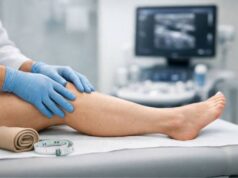
Diminished peripheral pulses means a pulse in the arms or legs feels weaker than expected—or weaker on one side than the other—when checked by hand or with a small Doppler device. It is not a diagnosis by itself. It is a clue that blood flow may be reduced, the pulse wave may be harder to detect, or the circulation is under stress. Sometimes the explanation is simple, like cold skin or swelling. Other times it signals a serious problem such as peripheral artery disease or sudden blockage of an artery. Because the possibilities range from harmless to urgent, the most helpful approach is to combine the pulse finding with symptoms, risk factors, and targeted testing. This article explains what the sign means, what commonly causes it, how clinicians confirm the reason, and what treatment and day-to-day management typically involve.
Table of Contents
- What diminished peripheral pulses mean
- Common causes and risk factors
- Symptoms and warning patterns
- How clinicians confirm the problem
- Treatment options based on the cause
- Self-care, prevention, and when to seek help
What diminished peripheral pulses mean
Peripheral pulses are the “pressure waves” you can feel where an artery runs close to the skin. Common sites include the wrist (radial), groin (femoral), behind the knee (popliteal), inside the ankle (posterior tibial), and top of the foot (dorsalis pedis). A diminished pulse can mean less blood is getting through, but it can also mean the pulse is simply harder to feel.
How clinicians describe pulse strength
Clinicians often grade pulses on a simple scale:
- 0: not detectable
- 1+: weak or thready
- 2+: normal
- 3+: strong
- 4+: bounding
The most important detail is not the exact number. It is the pattern:
- One side weaker than the other (asymmetry)
- Upper body normal but legs weak
- All pulses weak (more global problem)
- Pulses that change with position or temperature
Why a “weak pulse” is not always blocked arteries
Several common factors can make pulses feel faint even when arteries are open:
- Cold skin or a cold room (arteries narrow temporarily)
- Swelling, obesity, or thickened skin (harder to palpate)
- Dehydration or low blood volume (lower pulse pressure)
- Very low blood pressure from illness or medication effects
- Incorrect technique (pressing too hard can flatten the artery)
This is why clinicians often recheck pulses after warming the limb, changing hand position, comparing both sides, and sometimes using a Doppler.
What “diminished” suggests anatomically
When diminished pulses reflect a true flow problem, it usually involves one of these mechanisms:
- Narrowing from plaque buildup (peripheral artery disease)
- Sudden blockage from a clot or embolus
- Injury to an artery after trauma or a procedure
- Inflammation of blood vessels (vasculitis)
- Compression of an artery (rare, but possible in certain anatomic syndromes)
A practical takeaway: diminished pulses are a signal to look for context—symptoms, skin changes, and risk factors—then confirm with objective testing when appropriate.
Common causes and risk factors
Diminished peripheral pulses most often come from reduced blood flow to a limb, especially the legs. The causes can be grouped into chronic conditions that develop over years and urgent conditions that develop over minutes to days.
Common chronic causes
- Peripheral artery disease (PAD): gradual narrowing of leg arteries from atherosclerosis (plaque buildup in arteries). This is the most common medical cause of chronically weak leg pulses in adults.
- Diabetes-related vascular disease: diabetes accelerates plaque buildup and can also affect smaller vessels, making foot circulation more fragile.
- Chronic kidney disease: increases vascular calcification, which can change pulse quality and raise PAD risk.
- Long-standing smoking: strongly linked to PAD and poor wound healing.
- Prior radiation therapy to the pelvis or groin: can scar and narrow arteries over time.
- Prior vascular surgery or stenting: scar tissue or re-narrowing can reduce pulse strength downstream.
Urgent or sudden causes
- Acute limb ischemia: sudden loss of blood flow, often from an embolus (a traveling clot) or local thrombosis (a clot forming in place). This is an emergency because tissue can be permanently damaged within hours.
- Aortic dissection or large-artery tear: can reduce pulses in one arm or one leg depending on which branch vessels are affected.
- Trauma or compartment swelling: fractures, dislocations, or severe swelling can injure or compress an artery.
- Severe shock: widespread low blood pressure from infection, bleeding, or heart failure can make all pulses weak.
Risk factors that raise the odds of true arterial disease
The strongest predictors for PAD and related circulation problems include:
- Age over 50 with a history of smoking or diabetes
- High blood pressure, high LDL cholesterol, or known coronary artery disease
- Diabetes for 10+ years, especially with neuropathy or foot ulcers
- Chronic kidney disease
- Family history of early cardiovascular disease
- Sedentary lifestyle combined with metabolic risk factors
A useful mental shortcut: if a person has weak leg pulses plus classic vascular risk factors, PAD moves higher on the list. If pulses became weak suddenly with pain, coldness, or numbness, an acute blockage must be considered first.
Symptoms and warning patterns
Diminished pulses may be found during a routine exam, but symptoms often provide the “why.” Some symptoms point to chronic narrowing, while others signal an urgent threat to the limb.
Symptoms that fit chronic reduced flow
- Claudication: cramping, tightness, or aching in the calf, thigh, or buttock that appears with walking and improves with rest.
- Slower walking speed or reduced endurance: people often describe “my legs run out of gas.”
- Cold feet compared with the rest of the body.
- Skin and hair changes: shiny skin, less hair on the legs, thickened toenails.
- Wounds that heal slowly, especially on toes or pressure points.
- Erectile dysfunction in men can sometimes accompany pelvic arterial disease.
These symptoms often progress gradually, and many people unconsciously adapt by walking less.
Symptoms that suggest severe or limb-threatening disease
- Rest pain: burning or aching in the foot at night, improved by dangling the leg off the bed.
- Color changes: a pale foot when elevated, redness when hanging down.
- Ulcers, blackened toes, or gangrene-like changes.
- Increasing pain with minimal activity or at rest.
These patterns suggest markedly reduced perfusion and need timely medical assessment.
Red-flag pattern for acute limb ischemia
A sudden arterial blockage is classically described by the “6 Ps”:
- Pain (often sudden and severe)
- Pallor (pale skin)
- Pulselessness (absent or markedly weak pulses)
- Paresthesia (numbness or tingling)
- Paralysis (weakness, trouble moving)
- Poikilothermia (cold limb)
Not everyone has all six. Even one or two, especially with a sudden change from normal, should be treated as urgent.
Upper-extremity clues and asymmetry
A weaker pulse in one arm can reflect subclavian artery narrowing, prior arterial injury, or (rarely) structural problems such as thoracic outlet compression. A key associated clue is a noticeable blood pressure difference between arms. Clinicians take this seriously because it can affect blood pressure interpretation and sometimes signals broader vascular disease.
A practical takeaway: symptoms tell you whether the pulse finding is likely chronic and stable or sudden and time-sensitive. Sudden symptoms plus a newly weak pulse deserves emergency evaluation.
How clinicians confirm the problem
Confirming diminished peripheral pulses usually follows a stepwise approach: repeat the exam carefully, then measure circulation objectively. The goal is to identify whether blood flow is truly reduced, where the problem is, and how severe it may be.
Focused physical exam that adds high value
Clinicians typically:
- Compare right vs left pulses at the same level (for example, both dorsalis pedis).
- Check pulses “upstream” and “downstream” to localize narrowing (femoral vs foot pulses).
- Inspect skin temperature, capillary refill, and color changes with elevation.
- Listen for bruits (whooshing sounds) over major arteries.
- Check for nonvascular reasons pulses feel faint (swelling, thick skin, cold exposure).
Because palpation can miss disease—especially in diabetes or obesity—clinicians often add simple bedside tools.
Ankle-brachial index and toe pressures
The ankle-brachial index (ABI) compares blood pressure at the ankle to the arm. It is a common first-line test for suspected PAD. In plain terms, it asks: “Is ankle pressure much lower than arm pressure?”
Important nuances:
- ABI can be falsely normal or high in people with calcified, stiff arteries (common in diabetes and kidney disease).
- Toe-brachial index or toe pressures can help when ABI is unreliable, because toe arteries calcify less often.
- A “normal” test is reassuring, but it is interpreted alongside symptoms and exam.
Doppler and ultrasound imaging
A handheld Doppler can detect flow when a pulse is hard to feel. Duplex ultrasound goes further by showing blood flow patterns and measuring narrowing. It is often the next step when ABI is abnormal or when symptoms are concerning.
CT or MR angiography and catheter angiography
If revascularization (restoring blood flow) is being considered, clinicians may order CT angiography or MR angiography to map vessels. Catheter angiography can diagnose and treat at the same time in selected cases.
When lab tests matter
Blood tests do not diagnose arterial narrowing directly, but they help evaluate contributing conditions and safety:
- Kidney function before contrast imaging
- Diabetes control and lipid profile to guide risk reduction
- Inflammatory markers when vasculitis is suspected
- Coagulation studies when unusual clotting is possible
A good work-up ends with a clear statement: is there a true circulation problem, how urgent is it, and what is the most effective next step.
Treatment options based on the cause
Treatment depends on what is driving the weak pulses. Some causes require immediate restoration of blood flow. Others focus on improving walking ability, preventing complications, and lowering long-term cardiovascular risk.
If acute limb ischemia is suspected
This is time-sensitive. Typical management may include:
- Rapid vascular evaluation and imaging when needed
- Anticoagulation (blood-thinning medication) unless contraindicated
- Urgent revascularization, such as catheter-based clot removal or surgery
- Treatment of the trigger (for example, atrial fibrillation causing an embolus)
The priorities are limb salvage and preventing systemic complications. Delays can lead to permanent nerve and muscle injury.
For chronic PAD causing diminished leg pulses
Most people benefit from a combined plan:
- Smoking cessation support (often the highest-impact step)
- Antiplatelet therapy to reduce clot-related events when indicated
- High-intensity statin therapy for plaque stabilization when appropriate
- Blood pressure and diabetes optimization
- Supervised exercise therapy: structured walking programs often improve symptoms more than people expect, typically over 8–12 weeks
- Symptom medication for claudication in selected patients (for example, cilostazol when appropriate and not contraindicated)
If symptoms remain limiting or ulcers develop, revascularization may be considered:
- Endovascular therapy (angioplasty, stenting)
- Surgical bypass in selected patterns of disease
When the cause is systemic low flow
If all pulses are weak due to shock, dehydration, or severe heart failure, treatment targets the underlying issue:
- Fluids or blood products when volume is low
- Treating infection, bleeding, or heart pump failure
- Adjusting medications that may be lowering blood pressure excessively
In these cases, pulses often strengthen as circulation stabilizes.
When vasospasm or inflammation is involved
Vasospasm-related pulse changes (for example, cold-induced spasm) focus on avoiding triggers and using vasodilating therapy when appropriate. Vasculitis may require immunosuppressive treatment guided by specialists, along with careful monitoring for organ involvement.
A practical expectation: restoring “normal” pulses is not always the immediate goal. The true goals are adequate tissue perfusion, symptom improvement, wound healing, and prevention of heart attack, stroke, and limb loss.
Self-care, prevention, and when to seek help
You cannot reliably judge pulse strength on yourself, and a “hard-to-feel pulse” does not automatically mean blocked arteries. Still, there are practical steps that reduce risk and help you act quickly if a real circulation problem is developing.
Daily habits that protect circulation
If you have vascular risk factors—or known PAD—focus on the fundamentals:
- Do not smoke or vape nicotine. If quitting is hard, use structured support and evidence-based aids.
- Aim for regular walking. Many improve by walking until moderate discomfort, resting, and repeating for a total of 30–45 minutes, at least 3–5 days per week, as tolerated.
- Keep blood pressure, cholesterol, and diabetes controlled with a plan you can follow consistently.
- Protect your feet: well-fitting shoes, daily skin checks, moisturizing dry skin (avoid between toes), and prompt care for blisters or cracks.
- Keep warm in cold environments; cold can worsen vasoconstriction and symptoms.
Practical “what to watch” checklist
Contact a clinician promptly for:
- New leg pain with walking that was not present before
- A sore on the foot or toe that is not healing within 1–2 weeks
- Increasing nighttime foot pain, especially if relieved by dangling the leg
- One foot becoming persistently colder or paler than the other
If you have diabetes or neuropathy, take small changes seriously because pain signals can be muted.
When to seek urgent or emergency care
Seek urgent evaluation the same day—often in an emergency setting—if you notice:
- Sudden severe leg or arm pain with coldness or numbness
- A limb that turns very pale, blue, or mottled
- Sudden weakness in the limb or inability to move toes/fingers normally
- A pulse that was previously present and now seems absent, especially with symptoms
- Chest pain, severe shortness of breath, fainting, or stroke-like symptoms
These can signal acute limb ischemia or another serious vascular event.
How to make medical visits more effective
Bring details that speed good decisions:
- When symptoms started and whether onset was sudden or gradual
- Walking distance before pain begins
- A list of medications, including over-the-counter decongestants or stimulants
- Smoking history and diabetes history
- Prior vascular procedures, radiation exposure, or blood clot history
Prevention is not only about the limb. PAD and related vascular disease often reflect whole-body atherosclerosis. Managing risk factors protects the heart and brain as well.
References
- 2024 ACC/AHA/AACVPR/APMA/ABC/SCAI/SVM/SVN/SVS/SIR/VESS Guideline for the Management of Lower Extremity Peripheral Artery Disease: A Report of the American College of Cardiology/American Heart Association Joint Committee on Clinical Practice Guidelines 2024 (Guideline)
- 2024 ESC Guidelines for the management of peripheral arterial and aortic diseases 2024 (Guideline)
- A systematic review and meta-analysis of the diagnostic accuracy of point-of-care tests used to establish the presence of peripheral arterial disease in people with diabetes 2021 (Systematic Review)
- Peripheral Artery Disease Diagnosed by Pulse Palpation as a Predictor of Coronary Artery Disease in Patients with Chronic Kidney Disease 2023 (Observational Study)
Disclaimer
This article is for educational purposes only and does not provide medical advice, diagnosis, or treatment. Diminished peripheral pulses can be caused by conditions ranging from temporary, harmless factors to limb- or life-threatening vascular emergencies. If you develop sudden limb pain, coldness, numbness, weakness, marked color change, chest pain, severe shortness of breath, fainting, or stroke-like symptoms, seek emergency care. For individualized guidance—especially if you have diabetes, kidney disease, known vascular disease, or non-healing wounds—consult a licensed clinician.
If this article helped you, please share it on Facebook, X (formerly Twitter), or any platform you prefer, and follow us on social media. Your support by sharing helps our team continue producing high-quality, reliable health content.