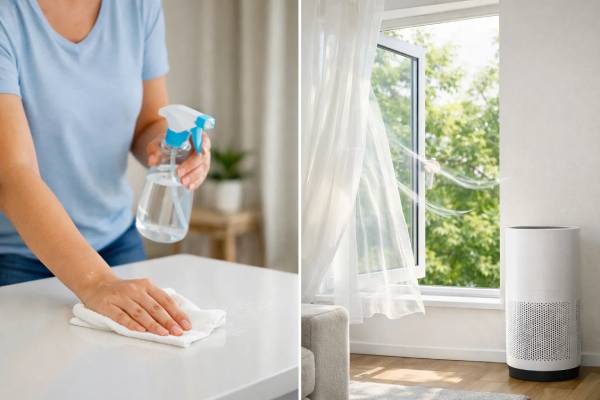
If you’ve ever tried to keep a household, classroom, or workplace healthy during respiratory virus season, you’ve probably faced the same question: should you focus on disinfecting surfaces or improving ventilation? Disinfecting feels concrete—you can wipe a handle, spray a counter, and see the job done. Ventilation can feel abstract, yet it acts on the air we all share, where many respiratory viruses spread most efficiently. The most practical answer is not “one or the other,” but a clear priority order: cleaner air usually delivers the bigger reduction in spread, while targeted surface hygiene is still worth doing in specific situations.
In the sections ahead, you’ll learn how viruses move indoors, what each strategy can realistically prevent, and how to build a plan that fits your space, budget, and daily routines—without wasting effort on low-impact steps.
Quick Overview for Smarter Prevention
- Prioritizing ventilation and filtration reduces exposure to virus-laden particles that build up in shared indoor air.
- Targeted cleaning and disinfection lowers risk from high-touch surfaces, especially when someone is actively sick.
- Overusing disinfectants can irritate lungs and skin, and mixing products (like bleach and ammonia) can be dangerous.
- A simple, repeatable routine beats occasional deep-cleaning or complicated “perfect” air goals.
- Aim for a practical clean-air target (often described as 5 or more air changes per hour) using outdoor air, filtration, or both.
Table of Contents
- How respiratory viruses spread indoors
- What disinfection can and cannot do
- How ventilation and filtration cut risk
- Choosing priorities for your setting
- Quick ways to boost ventilation
- Practical disinfection that makes sense
- A layered plan that people follow
How respiratory viruses spread indoors
When people talk about “catching something in the air,” they’re usually describing the most common indoor reality: infected people release virus-containing particles when they breathe, talk, cough, sneeze, sing, or laugh. Those particles come in a range of sizes. Larger droplets tend to fall faster and matter most at close range. Smaller particles can stay suspended longer, drift with air currents, and build up in a room—especially when many people share the space for long periods.
Shared air is the core problem indoors
Outdoors, virus particles disperse quickly. Indoors, they can accumulate. Think of it like secondhand smoke: you don’t need to be nose-to-nose with the smoker to inhale smoke in a poorly ventilated room. Respiratory particles behave similarly, especially when people are talking for long stretches, the room is crowded, or windows stay shut.
This is why two situations can feel very different:
- Close, brief contact: Standing near a contagious person can be risky even with decent ventilation, because the concentration is highest right near the source.
- Long, shared indoor time: Spending an hour in a stuffy room with multiple people can raise risk even if you never get close to anyone, because exposure adds up.
Surfaces play a role, but usually a smaller one
Respiratory viruses can land on surfaces—phone screens, doorknobs, faucet handles, shared keyboards—and in some cases remain detectable for hours or longer. The bigger question is whether enough live virus transfers from surface to fingers and then to eyes, nose, or mouth to cause infection. That pathway is possible, but it competes with a much more direct route: inhalation of particles from the air.
You can use a practical mental model:
- Air route: fast, efficient, and amplified by time indoors.
- Surface route: possible, but tends to be reduced by normal handwashing, routine cleaning, and avoiding face-touching.
Why this matters for prevention choices
Disinfection targets what’s on surfaces. Ventilation targets what’s in the air. If the dominant risk in your setting is shared indoor air—crowded rooms, long gatherings, people talking a lot—then air-focused strategies typically deliver more prevention for the effort. Surface hygiene still matters, but it’s most valuable when it’s targeted: high-touch spots, shared items, bathrooms, and times when someone is actively ill.
What disinfection can and cannot do
Disinfecting has a clear purpose: it uses a chemical product to kill germs on a surface. That can be helpful, but it’s easy to overestimate what disinfection accomplishes against respiratory viruses—or to use it in ways that add new problems.
Cleaning and disinfecting are not the same
A useful distinction:
- Cleaning removes dirt and a large portion of germs through soap or detergent, water, and friction.
- Disinfecting aims to kill remaining germs on the surface using a chemical product, typically after cleaning.
For respiratory viruses, cleaning alone often gets you most of the benefit on everyday surfaces because it reduces contamination and helps prevent hand transfer. Disinfection can add an extra margin when risk is high, such as when someone is sick and frequently touching shared objects.
Where disinfection actually helps
Disinfection is most defensible when one or more of these are true:
- Someone is actively ill in the space and using common areas (kitchen, bathroom, shared electronics).
- Multiple people touch the same items repeatedly (shared keyboards, check-in tablets, gym equipment, classroom manipulatives).
- The surface is likely to be contaminated with respiratory secretions (tissues, bedside tables, bathroom counters).
- There are high-risk individuals present (older adults, immunocompromised people) and you want an extra layer of caution.
It’s also useful after a sick person’s “high-contact day” ends—when you can focus on the objects they handled rather than trying to disinfect everything everywhere.
Where disinfection is often overused
Disinfecting every wall, floor, or low-touch surface is usually a poor use of time and chemicals. If people rarely touch it, it rarely drives spread. Similarly, wiping every grocery box, mail package, or shoe sole is unlikely to provide meaningful protection in most everyday situations. Those habits can create a false sense of safety that distracts from higher-impact measures like staying home when sick and improving indoor air.
Disinfection has real downsides
Overuse can:
- Irritate lungs, especially in people with asthma or sensitive airways.
- Trigger headaches, nausea, or skin irritation.
- Increase accidental exposures, particularly around children and pets.
- Create dangerous fumes if products are mixed (for example, bleach with ammonia-containing cleaners).
There’s also a “behavioral downside”: if disinfecting feels like the main solution, people may stay in poorly ventilated rooms longer, thinking surfaces are the key risk.
Used well, disinfection is targeted, time-limited, and focused on high-touch areas—supporting prevention rather than replacing it.
How ventilation and filtration cut risk
Ventilation and filtration reduce risk by lowering the concentration of airborne particles that can carry respiratory viruses. Instead of trying to block every exposure, they reduce what’s available to inhale in the first place—especially important when people are sharing a space for extended periods.
Ventilation is dilution and removal
Ventilation replaces indoor air with outdoor air and/or moves indoor air through systems that remove particles. The key idea is simple: the more “clean air” you deliver to a room, the faster airborne contaminants are diluted and removed.
A common way to talk about this is air changes per hour (ACH)—how many times the equivalent of the room’s air volume is replaced or cleaned in an hour. In many practical discussions, a target of around 5 or more ACH of clean air is used as a helpful goal when feasible. The term “clean air” matters: it can come from outdoor air, mechanical ventilation, filtration, or a combination.
Filtration can act like ventilation
If a building cannot bring in much outdoor air (weather, noise, energy costs, HVAC limits), filtration can step in. High-efficiency filters in HVAC systems and portable air cleaners remove particles from indoor air, effectively increasing “clean air delivery.” In real rooms, that means you can often improve protection without construction—by running the system longer, using higher-grade filters the system can handle, or adding portable air cleaners sized to the room.
Ventilation benefits show up in daily life
People often describe a well-ventilated space as less “stuffy.” That feeling isn’t just comfort—it’s a sign that exhaled air, odors, and indoor pollutants are not accumulating as much. Because exhaled breath is the vehicle for many respiratory viruses, anything that reduces the buildup of shared breath reduces exposure.
A practical way to think about it:
- Disinfection reduces what gets on your hands.
- Ventilation and filtration reduce what gets into your lungs.
Since lungs are a primary entry route for respiratory infections, cleaner air often gives a larger risk reduction, especially in settings with long indoor time.
Ventilation is not a magic shield
Even excellent ventilation does not erase risk at close range. If you are face-to-face with someone who is contagious, concentration is highest near the source. That is why ventilation works best as part of a layered approach: it lowers background room risk, while other steps (staying home when sick, masking in high-risk periods, spacing when possible) reduce close-range exposure.
Still, if you must choose where to invest effort for most indoor settings, improving ventilation and filtration usually moves the needle more than trying to disinfect every surface.
Choosing priorities for your setting
The most useful question is not “Which is better?” but “What is my highest-risk pathway here?” Your answer changes based on crowding, duration, behaviors (talking, singing, exercise), and whether someone is actively sick in the space.
High shared-air settings favor ventilation
Ventilation and filtration deserve top billing when any of these are true:
- People share the room for 30 minutes or more, especially repeatedly (classrooms, offices, waiting rooms).
- The space is crowded or voices are raised (restaurants, bars, gyms, parties).
- People are breathing hard (exercise classes, sports practices).
- Windows are usually closed and air feels stale.
In these cases, the “background air” risk can be the main driver. A portable air cleaner, upgraded HVAC filtration, or simply opening windows at key times can reduce exposure meaningfully—often more than adding another round of disinfecting.
High-touch settings still need surface strategy
Disinfection rises in priority when surfaces are touched by many people in quick succession:
- Shared devices and touchscreens
- Door handles, elevator buttons, railings
- Shared toys or classroom objects that kids handle frequently
- Gym equipment grips and mats
- Breakroom coffee machines, fridge handles, microwave buttons
Even then, a realistic approach is to focus on the highest-touch items and pair it with hand hygiene. You do not need to disinfect every square meter to reduce contact risk.
Homes with a sick person need both, but not equally
At home, the biggest risk often comes from close contact and shared indoor air—especially if you spend hours in the same rooms. If one person is sick:
- Ventilation matters: it reduces buildup of exhaled particles in shared spaces.
- Targeted disinfection matters: bathroom surfaces, bedside items, remotes, and shared electronics.
- Behavior matters most: spacing, separate sleeping if possible, and staying out of shared rooms when symptomatic.
A simple priority ladder
If you want a practical “order of operations” for most everyday indoor spaces:
- Keep sick people from sharing indoor air when possible (stay home, separate rooms).
- Improve clean air (ventilation and filtration).
- Support safer close contact (spacing, masking when needed, shorter indoor time).
- Use targeted surface cleaning and disinfection for high-touch areas and sick-room zones.
This approach reduces effort spent on low-impact tasks and directs time toward the pathways most likely to spread respiratory viruses.
Quick ways to boost ventilation
You don’t need a major renovation to make indoor air safer. The goal is to increase clean air delivery in ways your household, classroom, or workplace can actually maintain.
Use “quick wins” first
Start with changes that are easy to repeat:
- Open windows strategically: Even cracking two windows on opposite sides of a room can create cross-ventilation. If only one window is available, opening it a bit can still help.
- Use fans to support airflow: A fan can help move indoor air toward an open window. If you use a window fan, position it to exhaust air outward when feasible, which helps pull fresh air in.
- Run existing HVAC longer: Many systems can be set to “on” rather than “auto,” increasing filtration time even if outdoor-air intake is limited.
- Keep doors open when appropriate: This can help a small room share air cleaning with a larger space that has better ventilation—unless you are trying to isolate a sick person, in which case you may want the opposite.
Upgrade filtration safely
If your HVAC system uses filters, you may be able to improve particle removal by using a higher-efficiency filter (often labeled with a MERV rating). The safest approach is to:
- Check the system’s recommended filter range.
- Upgrade within that range.
- Replace filters on schedule, and sooner if they visibly load with dust.
If the system struggles (reduced airflow, noisy operation), revert to the prior filter and add portable filtration instead.
Add portable air cleaning where people gather
Portable HEPA air cleaners can be effective in bedrooms, classrooms, and offices—especially in spaces where you can’t open windows. For best results:
- Size the device to the room volume, not just floor area.
- Place it where air can circulate freely (not blocked by furniture).
- Run it consistently during occupancy, not just for a short burst.
Some people use DIY fan-and-filter boxes as a budget option. If you do, prioritize stability, safe placement, and supervision around children and pets.
Measure what you can, but keep it simple
Carbon dioxide (CO2) monitors are sometimes used as a rough indicator of ventilation in occupied spaces because CO2 rises when exhaled air accumulates. A monitor can help you learn which rooms get stuffy fastest and which window-and-fan strategies work best. It does not measure virus directly, but it can guide practical improvements.
Don’t create new hazards
Avoid air-cleaning devices that intentionally produce ozone or strong reactive chemicals. If you can smell “fresh ozone” indoors, that’s a warning sign, not a benefit. Also remember: any time you use strong cleaning chemicals, you should ventilate the area well to reduce inhalation irritation.
The best ventilation plan is the one you can keep doing on busy days—because consistent clean air beats occasional, dramatic interventions.
Practical disinfection that makes sense
Surface hygiene is still part of a smart respiratory virus strategy—just not the centerpiece in most settings. The goal is to reduce hand-to-face transfer from the most likely contaminated, most frequently touched surfaces, especially during illness.
Focus on the right surfaces
Prioritize disinfection for:
- Doorknobs and handles (including fridge and microwave handles)
- Light switches
- Faucet handles and toilet flush levers
- Phone screens, remotes, keyboards, and game controllers
- Shared pens, touchscreens, and desk surfaces in high-use areas
If you’re deciding between wiping a bookshelf and wiping a phone screen, the phone screen wins almost every time.
Timing matters more than intensity
A realistic routine often beats an exhausting deep-clean:
- When no one is sick: Regular cleaning of high-touch surfaces is usually enough, plus handwashing before eating and after public outings.
- When someone is sick at home: Disinfect high-touch surfaces daily in shared spaces, and focus on the sick person’s immediate zone (bedside table, bathroom surfaces, commonly handled objects).
- After the peak illness period: A final pass on high-touch surfaces and laundering of bedding can be reasonable—without turning the home into a chemical workspace.
Technique: the parts people skip
Disinfection works best when you don’t skip the basics:
- Clean first if the surface is dirty; grime can block disinfectants.
- Use enough product to keep the surface visibly wet for the required time.
- Let it air-dry if the label instructs; wiping too soon can reduce effectiveness.
- Use gloves if you have sensitive skin, and wash hands after.
If you use wipes, remember that one wipe can dry out quickly. Using a single small wipe for an entire kitchen often gives a false sense of coverage.
Safety rules that protect your lungs
- Never mix cleaning products.
- Use disinfection in a well-ventilated space.
- Store products out of reach of children.
- If strong smells trigger coughing or wheezing, switch to milder options and emphasize cleaning with soap and water plus good hand hygiene.
When cleaning alone is the smarter choice
If a surface is low-touch or you can’t ventilate well while using disinfectants, cleaning with soap or detergent may be the better balance. For many households, especially those with asthma, chronic cough, or small children, reducing chemical irritation is part of keeping respiratory health stable.
In short: disinfect deliberately, not compulsively. Put most of your effort into the surfaces hands touch repeatedly, and support that work with routine handwashing.
A layered plan that people follow
The most effective prevention plan is not the one with the longest checklist—it’s the one that matches how respiratory viruses spread and that people can stick to when they’re tired, busy, or already feeling sick. Ventilation and disinfection both belong, but they play different roles.
If you can only do three things
For many homes and everyday indoor spaces, the biggest practical gains come from:
- Keep contagious people out of shared indoor air when possible (stay home, postpone gatherings, isolate in a separate room).
- Increase clean air (open windows, run HVAC continuously during occupancy, add a properly sized portable air cleaner).
- Target hand and surface hygiene (wash hands before eating, and clean/disinfect the highest-touch items during illness).
This trio addresses the dominant routes: inhalation first, then hands and surfaces.
Make it routine, not dramatic
Plans fail when they require perfection. Consider a simple schedule:
- Morning: open windows briefly, run air cleaner, wipe high-touch items if someone is sick.
- Midday: a second ventilation “flush” or a check that filtration is running.
- Evening: focus on the sick person’s bathroom and shared electronics, then rest.
Short, repeatable steps reduce decision fatigue and prevent the “all-or-nothing” pattern that leads to doing nothing after a few exhausting days.
Use “risk signals” to adjust your effort
Increase emphasis on ventilation and layering when:
- People will be indoors together for a long time.
- The room is crowded or voices are raised.
- Someone is coughing frequently or has fever.
- You have high-risk individuals present.
Increase emphasis on disinfection when:
- Many hands touch the same objects repeatedly.
- Someone is actively sick and using shared spaces.
- Children are sharing toys or frequently touching faces.
Don’t let cleaning substitute for cleaner air
A polished countertop does not prevent inhalation in a poorly ventilated room. If you are short on time, use that time to open windows, run filtration, and reduce crowding rather than adding another round of wiping low-touch surfaces.
Think beyond viruses
Cleaner air can support health in broader ways: fewer headaches from stale indoor air, better sleep quality in bedrooms, reduced exposure to allergens and irritants, and often better overall comfort. Meanwhile, reasonable cleaning reduces not only viruses but also everyday bacteria and grime that make a space feel harder to manage.
Disinfecting and ventilating are not equals in how they reduce respiratory virus spread. Ventilation and filtration usually address the dominant route, and targeted disinfection supports it—especially during active illness. Put your effort where it pays off most, and you’ll get a plan that’s both safer and sustainable.
References
- How Much Ventilation Is Enough? | Ventilation | CDC 2024 (Guidance)
- Roadmap to improve and ensure good indoor ventilation in the context of COVID-19 2021 (Guidance)
- Cleaning and Disinfecting | Water, Sanitation, and Environmentally Related Hygiene (WASH) | CDC 2025 (Guidance)
- SARS-CoV-2 and the role of fomite transmission: a systematic review – PMC 2021 (Systematic Review)
- Reducing Transmission of Airborne Respiratory Pathogens: A New Beginning as the COVID-19 Emergency Ends – PMC 2024 (Review)
Disclaimer
This article is for general educational purposes and does not replace medical advice, diagnosis, or treatment. Guidance about infection prevention can differ by setting (home, schools, workplaces, healthcare) and by individual risk factors. If you have asthma, chronic lung disease, chemical sensitivities, or you are caring for infants, older adults, pregnant people, or immunocompromised individuals, consider speaking with a licensed clinician or qualified indoor air professional for tailored recommendations. Seek urgent medical care for severe or worsening breathing problems, chest pain, confusion, or other emergency symptoms.
If this article helped you clarify what matters most, please consider sharing it on Facebook, X (formerly Twitter), or any platform you prefer.