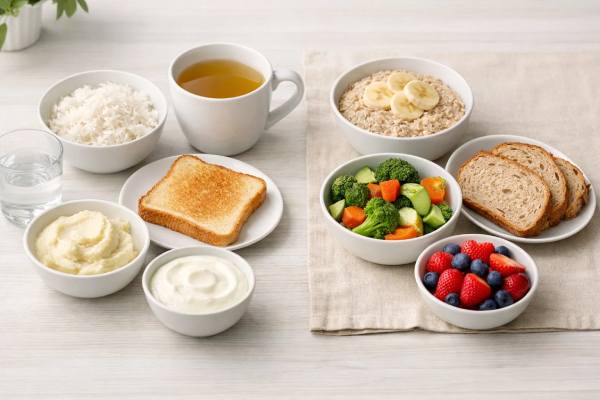
When diverticulitis flares, eating can feel like a gamble: one meal seems fine, the next triggers cramping, pressure, or nausea. Diet will not “cure” diverticulitis on its own, but it can meaningfully change how you feel while the inflammation settles—and it can support recovery once the acute phase passes. The challenge is that advice online is often too rigid (clear liquids for everyone) or too vague (just “eat healthy”). Most people do best with a phased approach that matches symptoms and medical guidance: gentle hydration and low-residue choices during peak pain, a gradual return to easy low-fiber foods as appetite returns, and then a steady rebuild toward a fiber-forward pattern that supports bowel regularity long term. This guide lays out what to eat during a flare, how to advance your diet safely, which foods are myths versus evidence-based, and how to set up your “after” diet to reduce future problems.
Core Points
- Short-term low-fiber eating can reduce discomfort during a flare, but staying low-fiber too long can worsen constipation and slow recovery.
- A symptom-guided step-up plan (clear liquids → low fiber → gradual fiber) is often more practical than strict rules.
- Seek prompt medical care for high fever, worsening pain, vomiting, inability to hydrate, or new bleeding.
- After improvement, aim to rebuild fiber gradually over 2–4 weeks, increasing only when stools and pain are stable.
Table of Contents
- Understand a diverticulitis flare
- Clear liquids and first 48 hours
- Low fiber foods as pain improves
- Transition back to fiber after flare
- Foods myths and common questions
- Long term eating to reduce recurrence
Understand a diverticulitis flare
Diverticulitis is inflammation (and sometimes infection) involving small pouches in the colon wall called diverticula. Many adults have diverticula without symptoms (diverticulosis). A flare begins when one or more pouches become inflamed, often causing steady lower-left abdominal pain, tenderness, fever, nausea, constipation, diarrhea, or bloating. The diet question comes up because, during a flare, the colon can be sensitive to stretch and pressure—large meals, bulky stools, and certain textures may amplify discomfort even though they are not the original cause.
What diet can and cannot do
Diet is supportive care. It can:
- Reduce mechanical irritation (less stool bulk and less “work” for the colon) when symptoms are intense
- Help you stay hydrated when appetite is low
- Prevent constipation, which can worsen pressure and pain for some people
- Make it easier to reintroduce fiber without triggering a rebound of cramping or bloating
Diet cannot:
- Replace medical evaluation when symptoms are severe or worsening
- Treat complications such as abscess, perforation, or obstruction
- “Flush out” diverticula or guarantee prevention of future flares
When food choices should take a back seat to urgent care
Do not rely on diet alone if you have any of the following:
- Persistent fever (especially with escalating pain)
- Repeated vomiting or inability to keep fluids down
- Severe abdominal tenderness, rigid abdomen, fainting, or confusion
- New rectal bleeding or black stools
- Symptoms that worsen steadily over 24–48 hours
- Immune suppression, advanced age, or significant medical complexity
These situations often require imaging, prescription therapy, or hospital-level monitoring.
A practical framework: comfort first, then progression
Instead of asking “What foods are allowed?”, ask three questions:
- Can I hydrate without nausea?
- Does eating increase pain within 1–2 hours?
- Are my stools moving, or am I trending toward constipation?
Your answers determine your phase. Many people do best with a short period of very gentle intake during peak symptoms, then a quick pivot toward nourishment once pain and fever improve. The key is to avoid getting stuck in a restrictive pattern long after the acute flare has passed.
Clear liquids and first 48 hours
During the most painful part of a flare, some clinicians recommend a brief clear-liquid or mostly-liquid phase. The purpose is not “colon rest” in a strict sense; it is symptom management—keeping intake easy when nausea is present and reducing stool bulk temporarily. Not everyone needs this step. If you can tolerate soft low-fiber foods without worsening pain, you may be able to skip straight to the next phase.
When a clear-liquid phase makes sense
This approach is most useful when you have:
- Significant nausea or reduced appetite
- Pain that spikes after eating
- Fever or fatigue that makes chewing and digestion feel overwhelming
- A recent diagnosis and you are waiting for medical instructions
Clear liquids are typically used for a short window—often 24–48 hours—unless a clinician directs otherwise.
What counts as clear liquids
Choose options that provide fluid and some electrolytes:
- Water, ice chips, oral rehydration solution
- Broth (chicken, beef, vegetable)
- Diluted juice without pulp (if tolerated)
- Plain gelatin
- Weak tea
- Clear sports drinks (often easier when appetite is absent)
If you are prone to diarrhea, very sugary drinks can worsen stool urgency. In that case, prioritize broth, oral rehydration solutions, and water.
How to structure a day without under-hydrating
A simple target is to sip regularly and aim for pale-yellow urine. If you need a concrete structure, try:
- 1 cup fluid every 1–2 hours while awake
- Add an electrolyte-containing drink or broth 1–2 times per day
If you have heart, kidney, or liver disease, your fluid targets may differ—follow your clinician’s advice.
Signs you should advance your diet
Move toward low-fiber foods when:
- Pain is clearly improving
- Nausea is settling
- You can drink comfortably
- Fever is resolving (or absent)
A common mistake is staying on clear liquids too long. Beyond a day or two, people often become weak, constipated (from low intake), or overly sensitive to eating again. If symptoms do not improve within 48 hours, or if they worsen at any point, contact a clinician rather than tightening restrictions further.
Low fiber foods as pain improves
As the sharpest symptoms ease, most people transition to a low-fiber (low-residue) pattern for a short period. The goal is to provide calories and protein without adding bulky stool. Think “soft, simple, and easy to digest,” not “no food” and not “only white toast forever.”
Foods that are usually well tolerated
Many people do well with:
- Refined grains: white rice, pasta, cream of wheat, plain crackers
- Soft proteins: eggs, fish, tofu, tender poultry, smooth nut-free spreads if tolerated
- Dairy if tolerated: yogurt, kefir, mild cheese (skip if it worsens symptoms)
- Cooked and peeled produce in small portions: applesauce, canned peaches, well-cooked carrots
- Soups: strained or smooth soups, then soups with soft noodles or rice as you improve
Keep portions modest. Large meals can trigger pressure even when the food choice is “safe.”
Foods to pause temporarily
For a few days, it often helps to avoid:
- Raw vegetables and big salads
- Beans and lentils
- Whole grains and bran cereals
- High-seed or very fibrous fruits (berries with lots of seeds, dried fruit)
- Nuts and popcorn if they feel scratchy while the colon is tender
- Very spicy, greasy, or deep-fried foods if they trigger cramping
This is not a lifetime list. It is a short bridge back to normal eating.
A simple “two-day bridge” meal plan
Use this as a template and adjust portions to appetite:
- Breakfast: scrambled eggs and white toast, or yogurt and a banana (if tolerated)
- Lunch: broth-based soup with noodles or rice; side of applesauce
- Snack: crackers, gelatin, or a small smoothie made with strained ingredients
- Dinner: baked fish or tender chicken, mashed potatoes, and well-cooked carrots
- Fluids: water and broth; limit alcohol entirely during recovery
If constipation is developing, do not respond by cutting food further. Instead, increase fluids, add gentle movement (short walks), and discuss stool-softening strategies with your clinician if needed.
How long to stay low fiber
For uncomplicated flares, many people remain low fiber for a few days until pain is minimal and stools are stable. If you feel better but stay low fiber for weeks, constipation and bloating can rebound—and the return to fiber can feel harder than it needs to. The next section explains how to rebuild fiber with less drama.
Transition back to fiber after flare
After a flare, the long-term goal is usually a fiber-forward pattern that supports regular, soft stools and overall colon health. The trick is timing: too much fiber too soon can increase gas and cramping, but too little fiber for too long can increase constipation and pressure. A gradual “fiber ladder” is often the most comfortable approach.
When to start increasing fiber
Most people can begin a slow fiber increase when:
- Abdominal pain is mild and not escalating
- Fever is gone (if you had one)
- You can eat regular meals without significant nausea
- Bowel movements are occurring without severe straining
If you are unsure, use a conservative pace and follow your clinician’s specific guidance.
A practical fiber ladder
Aim to increase fiber in small steps every few days:
- Add cooked soluble-fiber foods first
Oats, oatmeal, soft cooked vegetables, peeled fruits, and soups with blended vegetables often feel gentler than raw salads or bran. - Increase portion size before adding new categories
For example, increase cooked vegetables from 1/4 cup to 1/2 cup before adding beans. - Add higher-fiber items later
Whole grains, legumes, and raw vegetables often come last because they can produce more gas during transition.
A helpful pace is adding one “fiber step” every 3–4 days as long as stools remain soft and pain does not return.
What to aim for long term
Many adults do well in the 25–30 grams per day range, but your best target is the amount that supports:
- Soft, easy-to-pass stools
- Minimal straining
- Manageable gas and bloating
- Stable appetite and energy
If you jump from very low fiber to high fiber overnight, you may get bloating that feels like a setback. That does not mean fiber is wrong—it often means the ramp was too steep.
Fluids and fiber belong together
As you increase fiber, increase fluids as well. A simple sign you are on track is a stool that is formed but not hard, and urination that remains light yellow. If you tend toward constipation, add gentle movement after meals and discuss whether a fiber supplement is appropriate for you. Some people tolerate soluble fiber supplements better than large amounts of raw produce early on.
Foods myths and common questions
Diverticulitis advice is full of old rules that sound logical but do not always match modern evidence. At the same time, your personal tolerance matters. The goal is to separate “not necessary for everyone” from “still reasonable during a tender flare.”
Do nuts seeds and popcorn cause flares
For many years, people were advised to avoid nuts, seeds, corn, and popcorn. Current evidence does not support the idea that these foods universally trigger diverticulitis. Many people can eat them without increasing risk. That said, during an active flare—when the colon is tender—some people prefer to avoid scratchy or bulky textures for comfort. The distinction is important:
- During a flare: avoid what hurts. Texture matters.
- After recovery: you do not automatically need lifelong avoidance. Reintroduce and judge by your symptoms.
Should I avoid all fiber during a flare
Not necessarily. If your symptoms are mild and you can tolerate soft foods, you may not need strict clear liquids or extremely low fiber. However, high-fiber meals (big salads, bran cereal, beans) can worsen discomfort for some people during the acute phase. A short low-fiber period can be a useful tool—just avoid staying there longer than necessary.
What about coffee alcohol and spicy foods
These do not cause diverticulitis, but they can worsen symptoms:
- Alcohol can increase dehydration and irritate the gut; avoid during recovery.
- Coffee can stimulate bowel activity and worsen urgency for some people; consider reducing if diarrhea is present.
- Spicy foods can amplify pain perception when the gut is inflamed; reintroduce later if you enjoy them.
Do probiotics help
Probiotics are not a replacement for medical treatment, and results vary. Some people feel better using fermented foods after the acute phase, while others notice more gas. If you try probiotics, do so after symptoms improve and choose one change at a time so you can interpret the result.
Is dairy safe
Dairy is not a standard diverticulitis trigger. The practical question is tolerance. During recovery, yogurt and other soft dairy foods can be an easy protein source—unless you are lactose intolerant or dairy worsens bloating.
A useful rule for all these questions is “comfort during the flare, nourishment during recovery, and pattern-based health long term.”
Long term eating to reduce recurrence
Once you are past the flare, the most protective diet pattern is usually not a single “diverticulitis food list.” It is a repeatable way of eating that supports regular stooling, metabolic health, and lower chronic inflammation. Recurrence can still happen, but long-term habits can reduce strain on the colon and improve overall digestive resilience.
Focus on diet patterns more than single foods
A practical long-term template emphasizes:
- Vegetables and fruits you tolerate (raw and cooked)
- Whole grains in portions that keep stools soft
- Legumes as tolerated (introduced gradually if you are sensitive)
- Nuts and seeds if tolerated and enjoyable
- Lean proteins and fish
- Healthy fats in moderate amounts (olive oil, avocado)
Rather than chasing perfection, aim for consistency: most meals built from minimally processed foods, with enough fiber to prevent hard stools and straining.
Limit the patterns linked with higher risk
Many clinicians encourage reducing:
- Frequent red and processed meats
- Highly processed snack foods and refined sweets
- Very low-fiber eating as a default pattern
- Alcohol in excess
You do not need to eliminate everything. The goal is to move your baseline toward higher diet quality.
Prevent constipation without overcorrecting
Constipation can increase pressure and discomfort, and the fear of triggering symptoms can lead people to under-eat fiber. Build a plan that keeps stools moving:
- Aim for a regular breakfast and consistent meal timing
- Use a fiber ladder rather than sudden large increases
- Hydrate steadily across the day
- Walk daily, even if only 10–20 minutes
If you rely on laxatives frequently, discuss safer long-term strategies with your clinician.
A simple high-fiber day example
- Breakfast: oatmeal with sliced banana and a spoon of ground flax (if tolerated)
- Lunch: grain bowl with cooked vegetables and a protein
- Snack: yogurt or fruit and a handful of nuts (if tolerated)
- Dinner: roasted vegetables, a whole grain, and fish or poultry
- Fluids: water throughout the day, more if you increase fiber
Finally, remember that diet is one piece of prevention. Body weight, smoking status, physical activity, and medication choices can matter too. The best plan is the one you can sustain without fear around food.
References
- AGA Clinical Practice Update on Medical Management of Colonic Diverticulitis: Expert Review 2021 (Guideline) ([PMC][1])
- Diagnosis and Management of Acute Left-Sided Colonic Diverticulitis: A Clinical Guideline From the American College of Physicians 2022 (Guideline) ([PubMed][2])
- Dietary Risk Factors: Fiber and Beyond 2024 (Review) ([PMC][3])
- Diet and risk of incident diverticulitis in women: A prospective cohort study 2025 (Cohort Study) ([PMC][4])
- Are Nuts Safe in Diverticulosis? A Mixed-Methods Systematic Review of Available Evidence 2025 (Systematic Review) ([PMC][5])
Disclaimer
This article is for educational purposes and does not replace personalized medical advice, diagnosis, or treatment. Diverticulitis can range from mild, uncomplicated inflammation to serious complications that require urgent care. Seek prompt medical attention for high fever, worsening or severe abdominal pain, repeated vomiting, inability to keep fluids down, fainting, new rectal bleeding, black stools, or confusion. If you are pregnant, immunocompromised, older, or have significant medical conditions, contact a qualified clinician early when symptoms arise. Dietary strategies can support comfort and recovery, but they should not delay evaluation when symptoms are severe, persistent, or escalating.
If this guide helped you feel more prepared, please share it on Facebook, X (formerly Twitter), or any platform you prefer so others can make safer, more confident choices during a diverticulitis flare and recovery.