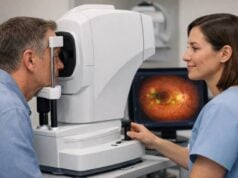
Seeing two images instead of one can be unsettling, especially when it begins suddenly or makes daily tasks—reading, walking down stairs, driving—feel risky. Double vision (diplopia) is not a diagnosis by itself; it is a clue that your eyes, eye muscles, nerves, or brain are not aligning or focusing images the way they should. The encouraging reality is that many causes are treatable, and a few simple observations can quickly narrow the possibilities. The urgent reality is that some patterns of diplopia signal medical emergencies, such as stroke, aneurysm-related nerve pressure, or dangerous eye conditions. This guide explains the most common causes, the at-home checks that help you describe symptoms accurately, and the clinical tests used to pinpoint the source—so you can act quickly when it matters and avoid unnecessary worry when it does not.
Quick Overview
- Separating monocular from binocular double vision is the fastest way to narrow causes and next steps.
- Many cases come from benign alignment issues or refractive problems, but sudden onset can be serious.
- Headache, a droopy eyelid, a new enlarged pupil, weakness, or severe eye pain need urgent evaluation.
- A simple cover test and a careful symptom timeline make medical visits more efficient and accurate.
- Temporary relief with patching or blurring one lens can improve safety while you seek care.
Table of Contents
- What double vision really means
- Monocular vs binocular diplopia
- Common causes by pattern and age
- When double vision is an emergency
- Tests and exams clinicians use
- Treatments and safe short-term relief
What double vision really means
Double vision happens when your brain receives two images that it cannot combine into a single clear picture. The split can be horizontal (side-by-side), vertical (one above the other), diagonal, or even “shadowed” and faint. The exact pattern matters because it often points toward a specific muscle, nerve, or focusing problem.
Diplopia is usually grouped into two broad categories:
- Misalignment diplopia: The eyes are not pointing to the same target. Each eye sends a slightly different image location, and the brain cannot fuse them. This is often called binocular diplopia and typically disappears when either eye is covered.
- Optical or focusing diplopia: The image within one eye is distorted or split before it reaches the brain. This is often called monocular diplopia and usually persists even when the other eye is covered.
A few details can immediately improve the accuracy of your description:
- Onset: sudden (minutes to hours), subacute (days), or gradual (weeks to months).
- Timing: constant vs intermittent; worse at the end of the day; worse at distance or near.
- Direction of separation: horizontal, vertical, diagonal.
- Triggers: fatigue, reading, screens, bright light, turning the head, looking up or down.
- Associated symptoms: headache, eye pain, droopy eyelid (ptosis), nausea, dizziness, weakness, numbness, speech difficulty.
Many people assume diplopia always means a “brain problem.” In fact, a large share of cases come from eye alignment changes that are uncomfortable but not life-threatening, such as a decompensated phoria (a previously controlled tendency for eyes to drift) or age-related connective tissue changes that shift eye muscle balance. On the other hand, a small but important set of causes require fast action—especially when double vision starts suddenly or comes with neurological signs.
The practical goal is not to self-diagnose. It is to recognize the pattern you are experiencing so you can choose the right level of urgency and help clinicians localize the problem efficiently.
Monocular vs binocular diplopia
The single most useful at-home check for double vision is also the simplest: cover one eye.
Step 1: Cover one eye, then the other
- If double vision goes away when either eye is covered, it is usually binocular diplopia (alignment-related).
- If double vision persists when one eye is covered (you still see two images with just that eye), it is usually monocular diplopia (optical/focusing issue in that eye).
This split is powerful because it changes what doctors look for first.
If it’s monocular
Monocular diplopia is often caused by something that disrupts the clarity or shape of the eye’s optical system. Common examples include:
- Dry eye or tear film instability: fluctuating blur, “ghosting,” often worse with screens or wind.
- Astigmatism or shifting prescription: shadowing that improves with pinhole viewing or updated refraction.
- Cataract: glare and multiple images, often worse at night.
- Corneal shape problems (such as keratoconus): progressive ghosting, halos, and reduced best-corrected vision.
- Macular problems: distortions in central vision that do not behave like typical blur.
Monocular diplopia is often uncomfortable, but it is less likely to be caused by a neurological emergency. Still, it deserves evaluation—especially if it is new, one-sided, or accompanied by pain or sudden vision loss.
If it’s binocular
Binocular diplopia points to a mismatch in eye alignment. The cause might be in:
- Eye muscles (mechanical restriction, inflammation, trauma)
- Nerves controlling eye movement (cranial nerve palsies)
- Neuromuscular junction (such as myasthenia gravis)
- Brainstem pathways coordinating eye movements (stroke, demyelination)
- Longstanding alignment tendencies that “decompensate” under fatigue or illness
A second useful check is whether diplopia is worse at distance or near:
- Worse at distance can suggest certain outward movement weaknesses or divergence issues.
- Worse at near can suggest convergence insufficiency (often associated with reading fatigue).
Finally, note whether closing one eye gives immediate relief. If it does, you can use temporary strategies—patching or blurring one lens—to improve safety while you arrange appropriate care.
Common causes by pattern and age
Once diplopia is identified as monocular or binocular, clinicians think in patterns: the direction of the split, which gaze positions worsen it, and the person’s age and medical risk factors. Below are common causes, organized in a way that mirrors how evaluation typically unfolds.
Common causes of binocular diplopia
Cranial nerve palsies (III, IV, VI):
These nerves control most eye movements. A palsy can appear suddenly and create double vision that worsens in specific directions of gaze.
- Sixth nerve palsy (abducens) often causes horizontal diplopia worse when looking toward the affected side.
- Fourth nerve palsy (trochlear) often causes vertical or diagonal diplopia, commonly worse when looking down (for example, reading or stairs).
- Third nerve palsy (oculomotor) may cause diplopia with a droopy eyelid and sometimes an abnormal pupil. Certain third nerve patterns are medical emergencies.
Decompensated phoria or long-standing strabismus:
Some people have a subtle eye drift that the brain has compensated for over years. Illness, fatigue, poor sleep, heavy screen work, or aging can reduce that compensation, and double vision appears—often intermittent at first.
Myasthenia gravis (ocular form):
A classic clue is variability: diplopia changes hour to hour, often worse later in the day, and may come with fluctuating eyelid droop. The eye movement pattern can mimic almost anything, which is why it is often tested when symptoms are inconsistent.
Thyroid eye disease:
Inflamed or stiff eye muscles can restrict movement, leading to diplopia that is position-dependent and sometimes painful. The eyes may feel gritty, appear prominent, or be associated with thyroid symptoms—though eye symptoms can appear even when thyroid blood tests are stable.
Orbital causes and trauma:
A blow to the orbit can trap a muscle, causing restricted upgaze or downgaze and diplopia that is often sudden and obvious.
Common causes of monocular diplopia
- Dry eye and tear film breakup
- Uncorrected astigmatism or changes in prescription
- Cataract
- Corneal irregularity (including keratoconus)
- Less commonly, retinal or macular distortion
Age and risk factor clues
- Children and teens: intermittent alignment issues, convergence insufficiency, refractive changes.
- Adults 20–50: myasthenia, thyroid eye disease, trauma, migraine-related visual disturbances.
- Older adults: microvascular nerve palsies (often linked to diabetes, hypertension), age-related alignment changes, cataract-related monocular symptoms.
Pattern recognition is not about guessing; it is about choosing the right tests and urgency. Sudden binocular diplopia, especially with neurological symptoms, is the scenario where speed matters most.
When double vision is an emergency
Double vision can be benign, but certain combinations of symptoms raise concern for conditions that threaten vision, brain function, or both. If you remember one rule, make it this: sudden binocular double vision deserves prompt medical attention, and specific red flags make it urgent.
Seek emergency care now if double vision comes with:
- Sudden weakness, numbness, facial droop, trouble speaking, or imbalance (possible stroke)
- A severe new headache, especially “worst headache,” or headache with vomiting
- A new enlarged pupil, noticeable pupil asymmetry, or a droopy eyelid with severe headache (possible serious nerve compression)
- Severe eye pain, especially with nausea, halos, or a very red eye (can signal acute eye emergencies)
- Double vision after head injury, even if you feel otherwise “okay”
- Fever, neck stiffness, confusion, or rapidly worsening symptoms
These signs are not meant to scare you; they are meant to prevent delay when minutes matter.
Urgent (same day or very soon) evaluation is also appropriate when:
- Diplopia starts suddenly, even without other symptoms
- There is persistent vision reduction, not just double images
- The eye appears prominent, movement is painful, or the eyelids are swollen
- You have new ptosis (drooping eyelid) or noticeable eye movement limitation
- You are over 50 with new headache, scalp tenderness, jaw pain while chewing, or unexplained fatigue (a pattern that can overlap with conditions affecting blood flow to the eye and brain)
Why speed matters
The dangerous causes of diplopia tend to share two features:
- They can progress quickly, and the window for best outcomes is early.
- They are not reliably distinguishable by comfort level. Some serious conditions are surprisingly painless.
What you can do immediately while seeking care
- Do not drive if diplopia is present. Depth perception and lane judgment become unreliable, even if you “feel fine.”
- Make vision single for safety: cover one eye with a patch or temporarily blur one lens (for example, with removable tape) to reduce confusion and nausea. This does not typically worsen the underlying condition; it simply prevents the brain from juggling two images.
- Write down key details: exact start time, whether it resolves with covering one eye, and whether headache, ptosis, pupil changes, or weakness appeared.
If your symptoms fit the emergency patterns above, the safest choice is immediate evaluation. If they do not, timely assessment is still important—because diplopia is often treatable, and early clarity reduces both risk and anxiety.
Tests and exams clinicians use
Clinicians evaluate diplopia like a localization puzzle: they gather a few high-yield clues, then choose targeted tests rather than ordering everything at once. Understanding the process helps you participate and communicate more clearly.
1) History that narrows the map
Expect questions about:
- Monocular vs binocular (cover test result)
- Direction of separation (horizontal/vertical/diagonal)
- What makes it worse (distance vs near; upgaze vs downgaze; fatigue)
- Onset and progression (sudden, episodic, or gradual)
- Associated symptoms (pain, headache, ptosis, dizziness, weakness, recent infection, trauma)
2) Eye movement and alignment exam
A careful motility exam often provides the strongest localization.
Common in-office checks include:
- Versions and ductions: tracking a target in multiple directions to see if a muscle is weak or restricted.
- Cover-uncover and alternate cover tests: detecting misalignment and measuring its size.
- Near point of convergence: identifying convergence insufficiency that worsens with reading.
- Head posture observation: a new head tilt or turn can be a compensation for specific muscle imbalance.
Clinicians also look for signs that suggest certain causes:
- Ptosis or fatigability (raises concern for myasthenia)
- Pupil asymmetry or abnormal pupil reactions (can suggest nerve compression patterns)
- Proptosis (eye prominence) or eyelid retraction (can suggest orbital thyroid-related disease)
- Nystagmus or coordination changes (can suggest brainstem or cerebellar involvement)
3) Visual system checks
To rule out monocular causes and assess overall eye health, clinicians commonly evaluate:
- Visual acuity (each eye separately)
- Refraction (does correcting focus reduce the doubling?)
- Corneal surface and tear film quality
- Lens clarity (cataract evaluation)
- Retinal and optic nerve examination
4) Targeted lab and imaging tests
Not everyone needs imaging, but it is common when diplopia is acute or when neurological signs are present. Depending on the pattern, clinicians may use:
- MRI or CT of the brain and orbits to assess nerves, brainstem pathways, inflammation, tumors, or orbital disease
- Vascular imaging (such as CTA or MRA) when aneurysm or vascular causes are a concern
- Blood tests when specific conditions are suspected, such as thyroid dysfunction or inflammatory disease
- Tests for myasthenia gravis if symptoms fluctuate or fatigability is present
A well-structured exam often reduces unnecessary testing. The most helpful thing you can bring is a clear description of the pattern and a timeline—because that information determines whether the next step is refraction, dry eye treatment, urgent imaging, or specialist referral.
Treatments and safe short-term relief
Diplopia treatment has two goals: protect function and safety now, and treat the underlying cause so single vision returns or becomes manageable. The best approach depends on whether the diplopia is monocular or binocular, and whether it is stable, improving, or progressive.
Short-term safety and symptom relief
If double vision is active, immediate symptom relief often matters for walking, reading, and preventing falls.
Common short-term options include:
- Occlusion (patching): covering one eye eliminates the second image. Some people prefer a patch; others prefer lightly blurring one lens so they can still see light and maintain a more natural appearance.
- Temporary stick-on prism: a thin flexible prism can be placed on glasses to shift images closer together. This is often used when the deviation is expected to change (for example, early in recovery).
- Activity modification: avoid driving; use handrails on stairs; reduce visually demanding tasks until evaluation is complete.
These measures are not “the cure,” but they can make life safer while the diagnostic workup proceeds.
Treating monocular diplopia
Management targets the optical source:
- Dry eye treatment (tear support, eyelid care, environment changes) when ghosting fluctuates
- Updated refraction for astigmatism or prescription shifts
- Cataract management when lens opacity is driving glare and multiple images
- Corneal evaluation when irregularity is suspected, especially if best-corrected vision is declining
Treating binocular diplopia
Treatment can be temporary or long-term:
- Observation with support: some causes improve over weeks to months, and clinicians may monitor for stability before permanent corrections.
- Prism glasses: helpful for small to moderate stable deviations, especially when symptoms are consistent.
- Vision therapy or targeted exercises: useful for certain near-work problems, such as convergence insufficiency, when appropriately prescribed.
- Medical treatment of underlying disease: for example, addressing thyroid-related inflammation or neuromuscular causes.
- Surgery or botulinum toxin in selected cases: considered when misalignment is stable and function remains impaired despite conservative options.
A practical recovery mindset
Diplopia often improves when the root cause is addressed, but it can take time for the visual system to recalibrate. A helpful way to measure progress is not just “Is it gone?” but:
- Is it less frequent?
- Is it limited to extreme gaze positions?
- Is it less intense and easier to ignore?
- Is the area of single vision expanding?
If symptoms are worsening, changing rapidly, or associated with red-flag signs (severe headache, pupil change, weakness, severe pain), treat it as urgent. Otherwise, a structured evaluation and a safety-first plan usually lead to a clear pathway forward.
References
- Diplopia: Diagnosis and management – PMC 2022 (Review)
- Magnetic Resonance Imaging in Diplopia: Neural Pathway, Imaging, and Clinical Correlation – PMC 2022 (Review)
- Diplopia – StatPearls – NCBI Bookshelf 2024 (Clinical Review)
- Double vision – NHS 2024 (Guidance)
Disclaimer
This article is for educational purposes only and does not provide medical advice, diagnosis, or treatment. Double vision can result from minor, treatable eye conditions as well as urgent problems involving the eyes, nerves, blood vessels, or brain. Seek emergency care for sudden double vision with severe headache, new weakness or numbness, trouble speaking, a new enlarged pupil, significant eyelid droop, severe eye pain, or symptoms after head injury. For persistent or recurrent diplopia—even if it comes and goes—schedule an evaluation with a qualified eye care professional to identify the cause and the safest treatment plan.
If you found this article helpful, please consider sharing it on Facebook, X (formerly Twitter), or any platform you prefer. Your support helps our team continue producing high-quality, reader-focused health content.