Night driving demands more from your eyes than most people realize. In low light, your pupils widen, contrast drops, and your brain has less visual detail to work with—right as modern headlights deliver intense, sharply focused beams. If you feel dazzled, slow to recover after oncoming cars, or anxious on wet roads, you are experiencing a real visual phenomenon, not a personal weakness. The reassuring part is that glare discomfort and “starburst” effects often improve with practical changes: cleaning the windshield correctly, fine-tuning mirrors, choosing the right lenses, and treating dryness that destabilizes the tear film. The important part is knowing when glare is a sign of an eye condition such as cataract, uncorrected astigmatism, or dry eye disease—and when it warrants prompt evaluation. This guide explains the most common reasons headlights look blinding and offers clear, evidence-informed steps to drive more comfortably and safely.
Top Highlights
- Reducing glare is often a combined fix: cleaner glass, better mirror settings, and the right prescription can noticeably improve comfort.
- Dry eye can amplify glare and halos by making the tear film uneven, especially after long screen days or in car heating.
- Yellow “night driving” glasses can reduce the light you need to see and are not a reliable solution for glare.
- New severe glare with pain, sudden vision loss, or one-sided symptoms needs urgent medical attention.
- Try a two-week plan: clean the inside windshield, lower dashboard brightness, and use a consistent eye and driving routine every night drive.
Table of Contents
- Why headlights feel so bright at night
- What your eyes do in low light
- Eye conditions that make glare worse
- Quick self-checks to spot the cause
- Driving techniques to reduce glare right now
- Fixes at home and what eye doctors test
Why headlights feel so bright at night
Headlights often feel blinding at night because your visual system is working with less “reserve.” In daylight, your pupils are smaller and your retina has plenty of light to create crisp contrast. At night, you operate in low and mixed lighting, where small changes in brightness can feel dramatic. When an oncoming vehicle appears, it is not just bright—it is bright against a dark background, which makes the contrast jump.
Several modern road factors add to the sense of glare:
- Whiter light and sharp cutoff beams: Many newer headlights have a cooler, whiter appearance than older halogen bulbs. Even when the measured brightness is within legal limits, whiter light can feel harsher because it scatters more inside the eye and produces stronger perceived glare.
- Higher vehicles: SUVs and trucks often place headlights closer to eye level for drivers in smaller cars, which increases dazzle—especially on hills and uneven roads.
- Misalignment and retrofits: Headlights that are tilted slightly upward, or aftermarket bulbs installed in housings not designed for them, can throw light into other drivers’ eyes instead of onto the road.
- Wet roads and reflective surfaces: Rain creates a mirror-like layer that reflects headlight beams toward you. Road signs, lane markers, and even a dirty windshield can multiply this effect.
- A “dirty optics” problem: Microscopic dust and film on your windshield (especially on the inside) scatter light into a haze. This is one of the most fixable causes of “everything looks smeared.”
It also helps to know there are two different glare experiences:
- Discomfort glare: the “ouch” sensation that makes you squint or want to look away.
- Disability glare: the kind that actually reduces your ability to see contrast and detail for a moment, making pedestrians, lane edges, or hazards harder to detect.
Many drivers mainly notice discomfort, but disability glare is the one that can change safety. If you find that oncoming headlights don’t just feel bright—they actually erase the road scene for seconds—your next step is to reduce optical scatter (windshield and eye surface) and evaluate for conditions that increase stray light inside the eye.
What your eyes do in low light
Your eyes are built for night vision, but “night vision” is a tradeoff. In darkness, the body prioritizes sensitivity over sharp detail. Understanding those tradeoffs explains why glare can feel so disruptive.
1) Your pupils dilate, which increases light scatter
In low light, pupils enlarge to let more light in. A wider pupil also means more peripheral light rays enter the eye, and those rays are more likely to scatter. Scatter creates a veil of stray light that lowers contrast—like looking through a thin fog.
2) Contrast sensitivity drops before visual acuity does
Most driver’s license checks emphasize visual acuity (reading letters). Night driving depends heavily on contrast sensitivity—your ability to detect objects that are only slightly darker or lighter than the background. Glare reduces contrast sensitivity further. This is why you can “see the sign letters” in a clinic but still struggle to see a pedestrian in dark clothing near bright headlights.
3) Your retina shifts into a different operating mode
In low light, rod photoreceptors contribute more, and they are very sensitive but less precise. This can make you more vulnerable to being “washed out” by a bright source and slower to recover afterward.
4) The tear film becomes a key optical surface
The tear film is the first refracting surface of the eye. When it is smooth, it improves clarity. When it breaks up (common with car heating, long screen days, and reduced blinking), it becomes uneven and produces halos, starbursts, and fluctuating blur—effects that are most obvious at night.
5) Recovery time matters
After exposure to bright headlights, some people recover quickly, while others feel temporarily “stunned” by the light. Recovery can slow with age, fatigue, and ocular surface problems. If you notice that your vision takes longer to stabilize after each oncoming car, that clue is worth discussing at an eye exam.
Night driving isn’t only about brighter headlights. It is about a visual system operating closer to its limits. Small improvements—cleaner glass, better lubrication of the eye surface, and optimal focus—can feel disproportionately helpful at night because they restore contrast and reduce scatter when you need it most.
Eye conditions that make glare worse
If headlights seem increasingly blinding, the cause may be environmental—but it can also be your eyes signaling a change in the optical system. The most common medical contributors do not always reduce daytime vision, which is why night glare is often an early symptom.
Cataracts (early lens clouding)
Cataracts scatter light inside the eye. Many people first notice them as:
- Halos around headlights and streetlights
- A “starburst” effect
- Trouble with oncoming glare, even when daytime vision feels acceptable
- A sense that headlights “bloom” into a haze
Importantly, cataract-related glare can be out of proportion to what a standard eye chart shows.
Uncorrected astigmatism or an outdated prescription
Astigmatism bends light unevenly, creating streaks or flares around point lights. Clues include:
- Starbursts that look like spikes or lines
- A sharper effect in one eye
- Improvement when you squint (temporary pinhole effect)
- Better comfort right after an updated prescription, then gradual return of symptoms if the prescription is still not optimal for night
Dry eye disease and tear film instability
Dry eye often causes:
- Fluctuating blur that changes from minute to minute
- “Smearing” of lights that improves after several slow blinks
- Burning or gritty sensation that is worse with heater air, long drives, or screen-heavy days
Dryness can amplify glare because an uneven tear film acts like a rough optical surface.
Corneal irregularity (including post-surgery changes)
Some corneal shapes scatter light more, producing halos and glare. People who have had refractive surgery may notice night halos, especially early on, but persistent or worsening symptoms deserve assessment—particularly if dryness is also present.
Large pupils, migraine sensitivity, and certain medications
Some individuals naturally have larger pupils in dim light and perceive halos more strongly. Migraine and light sensitivity can make glare feel painful or disorienting. Certain medications can worsen dryness or alter pupil behavior, indirectly affecting glare.
When glare points to something urgent
Severe eye pain with halos, a very red eye, nausea, or sudden vision reduction is not typical “night glare.” That pattern can signal an acute eye emergency and needs immediate evaluation.
A practical mindset: if night glare is new, worsening, or limiting your driving confidence, treat it as a symptom worth investigating. Many causes are manageable, and the right intervention often improves both comfort and safety.
Quick self-checks to spot the cause
You cannot diagnose yourself at home, but a few quick checks can help you describe the problem clearly—and that often speeds up the right fix.
1) Cover one eye, then the other
- If glare, halos, or doubling is much worse in one eye, it often points to an optical issue in that eye (tear film, cornea, lens, or prescription).
- If the experience feels similar in both eyes, it may be environmental, dryness affecting both eyes, or a bilateral change such as early cataracts.
2) Blink test for tear film instability
Try this when you notice smearing around lights:
- Do 5 slow, complete blinks.
- If the halos briefly shrink or clarity improves, dryness or tear film breakup is likely contributing.
3) “Fresh windshield” comparison
On a dry evening, compare:
- A route driven right after cleaning the inside windshield, versus
- The same route with the usual glass condition
If glare drops noticeably after cleaning, your main issue may be light scatter from interior film rather than a change in your eyes.
4) Pattern recognition: halos vs starbursts vs haze
Use words that match what you actually see:
- Halos: rings around lights
- Starbursts: spikes or rays radiating from lights (often astigmatism-related)
- Haze or bloom: a glowing cloud that reduces detail (often scatter from cataract, tear film, or dirty glass)
5) Timing clues
- Worse after long workdays, screens, or late-night drives suggests fatigue and dryness.
- Worse in winter with heater air suggests evaporation-related dryness.
- Worse in rain suggests reflective glare plus scatter from glass film or wiper streaking.
- Gradually worsening over months can suggest prescription drift or early cataract changes.
6) Safety check: does glare erase the road scene?
If you experience moments where the road edges, pedestrians, or lane lines disappear after oncoming headlights, treat that as meaningful disability glare. It does not automatically mean danger, but it should raise your priority for an eye exam and a driving-safety plan.
Bring these observations to a clinician. A short, specific description—“worse in left eye, improves after blinking, starbursts rather than rings, worse after heater use”—often leads to a faster, more targeted solution than a general “night driving is hard.”
Driving techniques to reduce glare right now
If you need practical relief tonight, focus on techniques that reduce dazzle without compromising your ability to see hazards.
Use your gaze strategically
- Do not stare into oncoming headlights. Shift your focus slightly to the right edge of your lane (for example, the right lane line) until the vehicle passes. This reduces discomfort and helps maintain lane position.
- Keep your eyes moving. A fixed stare can intensify glare perception and delay recovery.
Optimize mirrors to reduce rear glare
- Use the rearview mirror’s night setting if your car has it.
- Adjust side mirrors to reduce direct reflections from vehicles behind you. A small outward adjustment can move glare out of your central line of sight while still monitoring traffic.
Control your own cabin lighting
- Dim the dashboard and infotainment screen to the lowest comfortable level. A bright dashboard constricts your pupils less than you might expect, but it competes with outside contrast and can worsen perceived glare.
- Avoid using bright interior lights while driving.
Manage speed and spacing
- Increase following distance. More spacing gives you more time to react when visibility is temporarily reduced by glare.
- On unfamiliar roads, slow down slightly earlier than you think you need to—especially in rain, where reflections multiply.
Use high beams correctly
- Use high beams only when appropriate and switch them off for oncoming traffic and when following another car closely. Proper use improves your own visibility without contributing to another driver’s glare load.
- If you drive in areas with frequent hills and dips, expect more transient glare and keep speed conservative.
Plan routes that reduce glare demand
- Prefer well-lit routes with clear lane markings when possible.
- If you are sensitive to glare, avoid routes with heavy oncoming traffic, undivided highways, or poorly marked rural roads at peak night hours.
Temporary safety relief if glare is severe
If you are awaiting an eye appointment and glare is significantly impairing you, consider whether you should avoid night driving temporarily. If you must travel, reducing exposure time and choosing safer routes is often wiser than trying to “tough it out.”
These strategies do not fix the underlying optics, but they reduce the probability that a moment of glare becomes a missed hazard. Combine them with the at-home fixes in the next section for the most noticeable improvement.
Fixes at home and what eye doctors test
The most reliable improvements usually come from addressing two sources of scatter: the glass in front of you and the optics of your eye. Start with fixes that are low-cost and high-yield.
At-home and in-car fixes that often help quickly
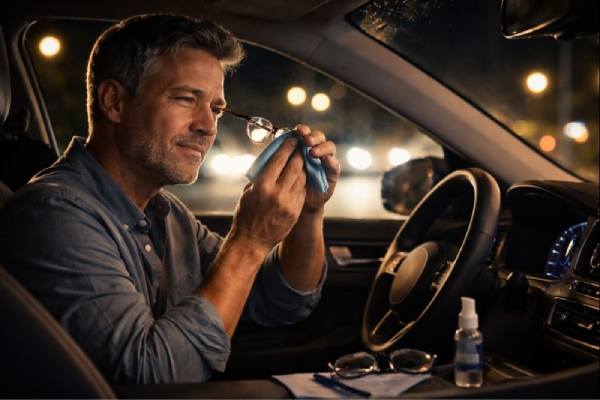
- Clean the inside windshield correctly: Interior film is a major glare amplifier. Use a clean microfiber cloth and an appropriate glass cleaner, wiping in a consistent pattern. Repeat until the cloth no longer drags or leaves streaks.
- Replace worn wiper blades and top up washer fluid: Wiper streaks act like tiny light prisms.
- Check headlight clarity and aim: Cloudy headlight covers reduce your own visibility, encouraging more strain. Misaligned headlights (yours or others’) increase glare interactions on the road.
- Keep glasses spotless: Night glare can be magnified by lens smudges. Clean lenses with proper lens solution and microfiber, not a shirt hem.
- Choose lens features that reduce reflections: Anti-reflective coatings can reduce internal reflections from dashboard lights and oncoming glare, improving comfort for many drivers.
- Be cautious with “night driving” tinted lenses: Yellow or darkened lenses reduce overall light reaching your eyes at night. That can make you feel less dazzled while also reducing your ability to detect hazards. If you try them and your world looks dimmer, treat that as a warning sign rather than a benefit.
- Treat dryness before a drive when appropriate: If your eyes feel dry, consider using clinician-approved lubricating drops before starting the drive, and avoid direct heater vents toward the face.
What an eye doctor evaluates when glare is the main complaint
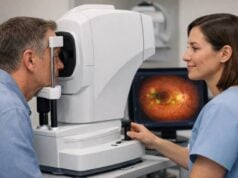
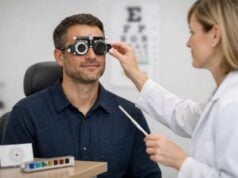
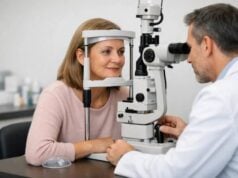
A good assessment goes beyond reading letters on a chart:
- Refraction and astigmatism check: even small changes can reduce starbursts and halos.
- Ocular surface evaluation: tear film stability and eyelid gland function can explain fluctuating glare.
- Lens clarity assessment: early cataract changes can produce disproportionate night glare.
- Contrast sensitivity and glare testing (in some settings): these tests can better match your real-world experience than standard acuity.
- Pupil and retinal evaluation: to rule out less common causes of abnormal glare and reduced night function.
When to schedule the appointment soon
- Night driving glare is new or steadily worsening over weeks to months
- You avoid night driving because you do not feel safe
- Halos are accompanied by persistent blur, headaches, or eye discomfort
- One eye is clearly worse than the other
When to seek urgent care
Severe eye pain, a very red eye, sudden vision reduction, nausea with halos, or rapid one-sided change requires urgent evaluation rather than routine scheduling.
Night driving should not feel like a test of endurance. When you combine proper glass care, a glare-smart driving approach, and a targeted eye evaluation, most people regain clearer, calmer night vision—or at least a predictable plan for staying safe.
References
- Visual Function and Driving Performance Under Different Lighting Conditions in Older Drivers: Preliminary Results From an Observational Study – PMC 2024 (Observational Study)
- Disability glare and nighttime driving performance among commercial drivers in Ghana – PMC 2021 (Clinical Study)
- Does intraocular straylight predict night driving visual performance? Correlations between straylight levels and contrast sensitivity, halo size, and hazard recognition distance with and without glare – PubMed 2022 (Clinical Study)
- Relationship between tear film stability, dry eye symptoms, and night driving vision among Malaysian adults – PMC 2025 (Clinical Study)
Disclaimer
This article is for educational purposes only and does not provide medical advice, diagnosis, or treatment. Night driving glare can be caused by treatable issues such as dry eye, refractive error, or cataracts, but it can also be associated with urgent eye conditions. Seek urgent medical care for severe eye pain, a very red eye, sudden vision loss or sudden major blur, nausea with halos, or rapidly worsening one-sided symptoms. If glare or halos persist, worsen, or make driving feel unsafe, schedule an eye exam with a qualified eye care professional to identify the cause and the safest next steps.
If you found this article helpful, please consider sharing it on Facebook, X (formerly Twitter), or any platform you prefer. Your support helps our team continue producing high-quality, reader-focused health content.