Dry, frizzy hair is rarely a single problem with a single fix. Most of the time, it is a predictable result of how water moves in and out of your hair, how the cuticle lies (or lifts), and how much friction your routine adds between wash days. The good news is that frizz is not a personality trait your hair is “stuck with.” When you understand the triggers—humidity swings, heat styling, chemical wear, hard water, buildup, and even well-meaning overconditioning—you can design a moisture routine that creates smoother hair on purpose, not by luck.
This article breaks down the real causes of dryness and frizz, then turns them into a simple system: cleanse without stripping, condition for slip, hydrate with the right layers, and seal and protect so moisture lasts. You will also learn how to choose products by ingredient function instead of marketing claims, and how to spot when frizz is actually breakage or buildup in disguise.
Top Highlights
- A smoother cuticle usually reduces frizz more than adding heavier products.
- Lasting moisture comes from layering water-based hydration and then sealing strategically, not from oils alone.
- Product buildup and hard water can make hair feel dry even when it is coated.
- Overuse of protein and heavy masks can increase stiffness and frizz in some hair types.
- A consistent routine for 2–4 weeks reveals what your hair actually responds to better than frequent product switching.
Table of Contents
- What frizz and dryness really are
- The main causes behind dry frizz
- Damage patterns that mimic dryness
- A moisture routine that lasts
- Product tips and ingredient shortcuts
- Buildup clarifying and reset days
- Drying styling and weather protection
What frizz and dryness really are
Frizz is often described as “hair that won’t behave,” but the mechanism is usually simple: the hair shaft is swelling and contracting unevenly, and the cuticle is not lying flat enough to keep strands aligned. Dryness is not only about “needing oil.” Dryness is more accurately a combination of low water retention, rough surface texture, and high friction. When those show up together, hair can look dull, feel coarse, and expand into frizz with the smallest weather change.
Frizz is often a cuticle problem
The cuticle is the outer layer of the hair shaft. When cuticle scales lie flatter, hair reflects light better and strands slide past each other with less tangling. When cuticles lift—from chemical processing, heat, UV exposure, rough towel drying, or frequent clarifying—hair catches, snags, and “puffs.” That puffiness is frizz. It is not always a sign you lack moisture; it can be a sign you lack surface smoothness.
Water movement matters more than most people realize
Hair constantly exchanges water with the environment. In humid air, hair absorbs water and swells. In dry air or heated indoor air, it loses water and contracts. When that movement is extreme, the strand becomes harder to style consistently. Some people experience “wet frizz” (frizz while hair is still damp), which often points to raised cuticles and uneven product distribution rather than a simple need for more leave-in.
Porosity is the missing translator
Porosity describes how readily hair absorbs and releases water. Higher porosity hair tends to absorb water quickly and lose it quickly, which makes it more prone to frizz and roughness. Lower porosity hair can resist water entry, which can lead to product sitting on top and feeling coated, even while the hair still feels dry later. If you want a practical way to identify porosity patterns and adjust product weight and layering, low versus high porosity care can help you stop guessing.
“Dry” can mean three different things
Before you change products, identify which “dry” you are dealing with:
- Hair feels dry because it is under-conditioned and tangly (needs slip and emollients).
- Hair feels dry because it is dehydrated and loses moisture fast (needs hydration plus sealing).
- Hair feels dry because it is coated with buildup or minerals (needs a reset, not more layers).
Once you name the type, the solution becomes much more predictable.
The main causes behind dry frizz
Most dry, frizzy hair comes from a small set of repeat offenders. The trick is recognizing which ones are active in your routine right now. Frizz is often blamed on “my hair type,” but it is usually a response to environment, friction, and chemical and mechanical wear. When you reduce those stressors, frizz often decreases without needing heavier products.
Humidity swings and indoor heating
Frizz is strongly tied to humidity changes. In high humidity, hair can swell as it absorbs water. In low humidity (or heated indoor air), it loses water quickly, which can make ends feel brittle and flyaway. If you live in a climate with big seasonal shifts, your summer and winter routines may need different product weights. A “one routine forever” approach often fails simply because the environment changed.
Hard water and mineral film
Hard water can leave a mineral layer on hair that increases roughness and reduces slip. That film can make conditioner feel less effective, hair feel perpetually dry, and frizz worse after drying. People often respond by adding more oils and creams, which can make hair feel heavier without actually improving smoothness. If you suspect minerals are part of your pattern, hard water mineral buildup and hair changes can help you understand the signs and why a gentle reset can outperform “more moisture.”
Heat styling and hot tools
Heat can flatten cuticles in the short term (so hair looks smoother right after styling), while damaging the fiber over time if temperatures are high or repeated frequently. When damage accumulates, the hair can become both rough and less responsive to styling. The result is the frustrating loop: “I need more heat because my hair is frizzy,” which increases damage and creates more frizz later.
Frequent friction and handling
Friction is an underestimated cause of frizz. Rough towel drying, brushing without slip, detangling aggressively, sleeping with hair loose on a high-friction surface, and constant restyling all raise cuticles and create micro-breaks along the shaft. Even “healthy” hair can look frizzy if it is being handled roughly every day.
Shampoo mismatch and over-clarifying
A shampoo that is too strong for your hair can increase dryness, tangling, and static. The solution is not always “wash less.” Often it is “wash with a cleanser that matches your scalp and hair.” If you need to clarify to remove buildup, that is useful, but clarifying too often can leave hair rough and increase frizz unless you follow with targeted conditioning.
Damage patterns that mimic dryness
A common reason “moisture routines” fail is that the hair is not primarily dry—it is damaged. Damage changes how hair holds water, how it responds to conditioners, and how easily it snaps. When the fiber is compromised, you can add excellent products and still feel like nothing is working, because the underlying structure is no longer behaving like intact hair.
Chemical wear creates porosity and roughness
Bleach, high-lift color, relaxers, and many straightening services lift the cuticle and can disrupt internal structure. High-porosity damage often shows up as hair that absorbs water instantly in the shower, then feels dry again quickly after it dries. Another clue is hair that feels stretchy when wet, then rough when dry. That pattern is not solved by more oil; it needs a gentler routine plus targeted reinforcement and trims when ends are compromised.
If you are trying to improve the “feel” and strength of damaged lengths, bond-focused repair strategies can be useful when they are matched to the type of damage and used consistently. bond repair for damaged hair explains why some treatments help elasticity and breakage while others mainly provide surface smoothing.
Heat damage can look like chronic dryness
Heat damage is not only “dryness.” It can create weak points that tangle and snap, especially near the crown and around the face where styling is frequent. Hair may feel rough no matter how much you condition because damaged sections have raised cuticles and poor cohesion. If you see many shorter pieces and flyaways, especially after styling, suspect breakage.
Protein imbalance is real
Protein can improve strength and reduce breakage for some people, but it can also create stiffness if used too often or if the hair does not need it. Signs of too much strengthening include hair that feels rigid, straw-like, and more prone to snapping rather than stretching slightly. The fix is not to quit conditioning. It is to rebalance with softness and slip, and then reintroduce strengthening less often if needed.
Split ends and micro-splits amplify frizz
Split ends do not only affect the last inch of hair. Splits can travel upward and create “rough zones” that catch on other strands. That leads to tangles, then breakage, then more frizz. If frizz is concentrated at the ends and grows worse between trims, you may be dealing with structural wear, not a lack of moisture.
When “dryness” is actually breakage
Breakage creates a halo of shorter hairs that stand up and look like frizz. If you notice uneven lengths, more snapping during detangling, or many short pieces on clothing, prioritize friction reduction and gentler handling. A moisture routine should make detangling easier. If it does not, think damage and mechanics.
A moisture routine that lasts
A good moisture routine is a system, not a single hero product. The most reliable routines follow a simple logic: cleanse without stripping, condition for slip, hydrate where needed, then seal and protect so your work lasts. The details change by hair type, but the sequence stays surprisingly consistent.
Step 1: Cleanse with the least force that works
If your shampoo leaves hair squeaky, tangled, or rough at the ends, the cleanser is likely too strong for your lengths or you are using it too aggressively. Focus shampoo on the scalp and let the runoff cleanse the mids and ends. Lukewarm water and a shorter scrub time often reduce frizz more than switching to a new leave-in.
Step 2: Condition for slip, not just softness
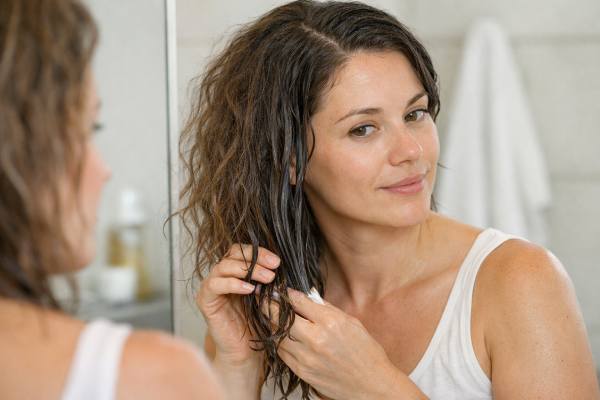
Conditioner should reduce friction. Apply it mid-length to ends and give it time to coat the strand before detangling. For many people, the biggest “frizz win” is simply detangling with enough slip that you do not rough up the cuticle in the process.
Step 3: Add deep conditioning strategically
Deep conditioning is most useful when hair is tangly, dull, or rough even after regular conditioning. A practical schedule is once weekly or every other week, depending on damage. Look for the result you can feel: hair detangles faster, dries smoother, and has less static. If your deep conditioner makes hair feel heavy but not smoother, you may need a different texture or a better rinse, not more layers.
Step 4: Hydrate then seal
Many people try to seal dryness without adding hydration first. A better approach is:
- Apply a water-based leave-in or lightweight cream to damp hair.
- Then add a small amount of oil or serum to the ends to reduce water loss and friction.
The seal should be thin. If you feel greasy but still frizzy, you probably sealed over dehydration or buildup.
Step 5: Protect from heat when you use it
If you use a blow dryer or hot tools, heat protection is part of moisture retention. Heat can strip surface lipids and increase roughness over time, even if hair looks smooth right after styling. For a clearer explanation of what heat protectants actually do and how to use them effectively, how heat protectants work can help you match product type to your styling habits without overloading the hair.
Product tips and ingredient shortcuts
When hair is dry and frizzy, product marketing often encourages you to chase “hydration” without explaining what the formula is doing. A more reliable method is choosing products by function: water-binding, lubrication, film formation, and strengthening. You do not need every category at once, but you do need the right combination for your hair’s current condition.
Humectants: helpful or chaotic depending on weather
Humectants attract water. In moderate humidity, they can make hair feel softer and more flexible. In very high humidity, they can contribute to swelling and frizz. In very low humidity, they may pull water out of the hair if there is not enough moisture available in the air. If your hair frizzes more in humid weather, you may do better with lighter humectants and more sealing on the outer layer, rather than a humectant-heavy stack.
Emollients and conditioners: the “slip” category
Emollients and conditioning agents reduce friction. They help detangling, reduce static, and support smoother drying. If your frizz is largely from tangling and roughness, this category often matters more than adding heavy oils.
Film formers: the frizz-control backbone
Many frizz-control products work by forming a thin film on the strand that smooths cuticle lift and reduces moisture swings. This is where silicones, certain polymers, and conditioning blends can shine. The goal is not “coat the hair until it feels plastic.” The goal is a light, flexible layer that improves slip and protects against humidity.
Silicones are often misunderstood. Used well, they can reduce friction, improve shine, and protect hair from heat and mechanical wear. Used poorly, they can build up and make hair feel heavy. If you want a balanced, practical view of when silicones help and how to avoid buildup, silicones and protective hair product use can help you decide without fear-based rules.
Proteins: support strength, but dose matters
Proteins and amino-acid blends can support strength and reduce breakage, especially in chemically treated hair. But too much can increase stiffness and make hair feel drier. A useful approach is cycling: use protein-based treatments occasionally, then return to softness-focused conditioning.
Texture matching beats brand loyalty
If you feel stuck, focus on product texture and layering:
- Fine hair often needs lighter leave-ins and smaller amounts of sealant.
- Coarse or highly porous hair often tolerates richer creams and more sealing at the ends.
- If your hair feels coated but frizzy, reduce layers and improve cleansing and application technique.
Products work best when they are used in amounts your hair can actually absorb and distribute.
Buildup clarifying and reset days
One of the most surprising causes of “dry hair” is buildup. When hair is coated with product residue, minerals, or environmental grime, it can feel rough and look dull. Conditioner may seem less effective, and you may respond by adding more product—making the coating thicker. A reset strategy breaks that loop and often improves frizz quickly.
How buildup creates the dry feeling
Buildup can make hair feel dry by:
- Increasing friction (hair catches instead of sliding)
- Blocking even distribution of conditioner and leave-in
- Making hair dry unevenly, which increases frizz
- Forcing you into stronger shampoos and harsher scrubbing
If your hair feels “waxy,” takes longer to get fully wet, or looks dull no matter what you apply, buildup should be on your shortlist.
Clarifying is a tool, not a routine identity
Clarifying shampoos remove residue more aggressively. They can be extremely helpful when used correctly, but overuse can leave hair rough and increase tangling. A practical strategy is clarifying on a schedule that matches your product use and water quality, then following immediately with conditioning that restores slip.
If you want a structured way to decide when to clarify and how often, clarifying shampoo timing and frequency provides a useful framework that prevents the common mistake of “clarify whenever hair feels dry.”
A simple reset day plan
A reset day can look like this:
- Clarify once, focusing on the scalp and areas that feel coated.
- Apply a rich conditioner or mask to mid-lengths and ends.
- Detangle gently with slip, then rinse thoroughly.
- Apply a lighter leave-in than usual, then seal only the ends.
The goal is to remove what blocks softness, then rebuild lubrication without immediately re-coating the hair.
Signs you clarified too aggressively
If hair becomes squeaky, tangly, or stiff right after clarifying, you likely need either a gentler clarifier, a longer conditioning step, or less frequent resets. A clarifying step should make hair feel cleaner and more responsive to conditioner, not fragile.
When “reset” should include your tools
Brushes, combs, and pillowcases can hold product residue and oils. If you are constantly fighting frizz, cleaning your hair tools and reducing friction during sleep can be surprisingly impactful. Small mechanical changes often enhance the effect of any product routine you choose.
Drying styling and weather protection
Many frizz routines fail because they focus on what you apply and ignore what you do. Drying and styling habits can either lock in smoothness or undo your entire wash day within minutes. The goal is to reduce friction while hair is most vulnerable (wet and swelling), then protect the strand from humidity swings and mechanical wear.
Wet hair is fragile hair
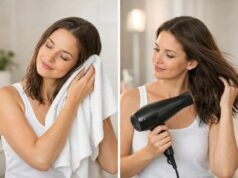
When hair is wet, it swells and becomes more elastic. That can be helpful for styling, but it also means hair is easier to stretch, snag, and break. Rough towel drying, aggressive detangling, and repeated brushing while wet can lift cuticles and create lasting frizz. A safer pattern is to blot or squeeze water out, then detangle only with slip, working from ends upward.
Air drying versus blow drying is not one-size-fits-all
Some people find air drying increases frizz, while others find it reduces heat damage and improves curl definition. The outcome depends on your hair’s porosity, density, and how you handle hair while it dries. Air drying can create more frizz if hair is frequently touched while drying, if the cuticle stays lifted for longer, or if hair dries with uneven product distribution. Blow drying can be smoother if done with controlled heat and directional airflow, but it can worsen dryness if heat is too high or held too close.
If you want a detailed comparison of how these methods affect damage risk and surface roughness, air drying versus blow drying damage factors can help you choose based on your hair’s behavior rather than blanket advice.
Set your style, then stop touching it
A powerful frizz strategy is reducing manipulation. Once you apply your leave-in and styling product, let the hair set. Touching, scrunching repeatedly, or constantly re-parting can disrupt clumps and raise frizz. This is especially true in humid weather, where repeated handling encourages swelling and separation.
Night protection is frizz prevention
If you wake up frizzy, the cause may be friction and compression during sleep. Loose hair rubbing against a rough surface can lift cuticles and create tangles that lead to next-day breakage. Protective styles that reduce friction, combined with low-friction sleep protection, often improve frizz more than adding a new serum.
When frizz signals you should change strategy
If frizz suddenly worsens despite the same routine, consider what changed: weather, water quality, styling frequency, or a new product ingredient. Adjust one variable at a time and give it two weeks. Consistency is how you turn frizz control from a lucky day into a reliable outcome.
References
- On Hair Care Physicochemistry: From Structure and Degradation to Novel Biobased Conditioning Agents 2023 (Review)
- Thermal Induced Changes in Cuticle and Cortex to Chemically Treated Hair 2025
- With or without Silicones? A Comprehensive Review of Their Role in Hair Care 2025 (Review)
- The exposome impact on hair health: etiology, pathogenesis and clinical features ‒ Part I 2024 (Review)
- UV and visible light exposure to hair leads to widespread changes in the hair lipidome 2022
Disclaimer
This article is for educational purposes only and does not provide medical advice, diagnosis, or treatment. Hair dryness and frizz are often related to grooming habits, product choice, and environmental factors, but hair and scalp symptoms can also reflect medical conditions, allergic reactions, or inflammatory scalp disease. Seek care from a qualified healthcare professional if you develop scalp pain, swelling, oozing, persistent burning or itching, patchy hair loss, or sudden heavy shedding. Stop using any product that causes hives, blistering, or worsening irritation.
If this guide helped you build a routine that feels more predictable, consider sharing it on Facebook, X (formerly Twitter), or your preferred platforms so others can reduce frizz with safer habits and smarter product choices.