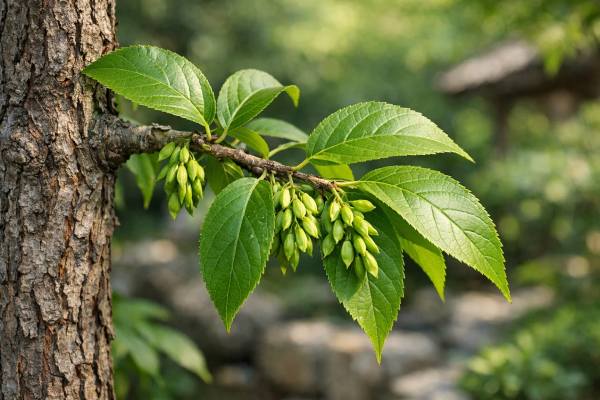
Du Zhong, known botanically as Eucommia ulmoides, is a traditional East Asian botanical valued for steady, supportive effects rather than dramatic “quick fixes.” The bark (often called Eucommiae Cortex) and the leaf (Eucommiae Folium) are used in different ways, but both are best known for helping maintain healthy blood pressure, supporting connective tissue, and promoting resilience as the body ages. Modern interest focuses on its unique mix of iridoid glycosides, lignans, and polyphenols—compounds linked to antioxidant activity, vascular tone, and tissue repair signaling.
What makes Du Zhong especially practical is its versatility: it can be taken as a tea, decoction, capsule, or standardized extract, depending on your goal and tolerance. At the same time, it deserves a thoughtful approach. Because it may gently lower blood pressure and influence metabolic markers, it is not a “more is better” herb. This guide walks you through what it is, what’s inside, realistic benefits, how to use it, and how to stay safe.
Quick Highlights for Du Zhong
- May support healthy blood pressure and circulation as part of a broader lifestyle plan.
- Traditionally used to strengthen tendons and bones, which can translate to steadier joint comfort.
- Typical supplemental range is about 500 mg to 1,500 mg per day of a standardized extract.
- Can amplify blood-pressure-lowering effects when combined with antihypertensive drugs.
- Avoid during pregnancy and breastfeeding, and use extra caution with low blood pressure or multiple heart medications.
Table of Contents
- What is Du Zhong
- Key ingredients and actions
- Does it help blood pressure and circulation
- Bone, joint, and tendon support
- Metabolic, liver, and inflammation support
- How to use Du Zhong
- Dosage, safety, and evidence
What is Du Zhong
Du Zhong is the common name for Eucommia ulmoides, a hardy tree native to China and cultivated across East Asia. It is unusual in botanical terms: Eucommia is the only species in its family, and it produces a distinctive elastic compound in its tissues (sometimes discussed as “Eucommia rubber”). In traditional practice, Du Zhong is often grouped with tonics that “strengthen the root,” meaning they are used to support structural integrity—back, knees, tendons—and to promote steadiness rather than stimulation.
Two plant parts are used most often:
- Bark (Eucommiae Cortex): Traditionally emphasized for musculoskeletal support and “strengthening” patterns (low back, knees, generalized weakness).
- Leaf (Eucommiae Folium): Frequently used in teas and modern products, with more attention on metabolic and cardiovascular support.
In real-world terms, Du Zhong tends to fit people looking for gradual improvements: steadier blood pressure readings, better tolerance for activity, less “creaky” feeling in joints, or a supportive bridge during lifestyle changes. It is not typically used as an acute pain reliever or a fast sleep aid. Think of it more like a background support—something that helps systems run a little smoother over weeks, not hours.
Du Zhong is also a good example of an herb where quality and identity matter. The market includes whole bark slices, leaf teas, concentrated extracts, and multi-herb blends. These products can differ widely in their chemical profile. If you are using Du Zhong for a specific goal (like blood pressure support), consistency matters more than tradition alone: standardized extracts and clearly labeled plant parts reduce guesswork.
Finally, Du Zhong is not a substitute for medical care. When people use it successfully, it is usually as an adjunct—paired with sleep, movement, nutrition, and appropriate treatment. That mindset will help you evaluate it realistically and safely.
Key ingredients and actions
Du Zhong’s effects are best understood as a “compound synergy” story: multiple ingredient families nudge inflammation, vascular function, and tissue maintenance in the same direction. While specific percentages vary by plant part and extraction method, several compound groups show up repeatedly.
Iridoid glycosides
These are often described as signature compounds in Eucommia. Examples include aucubin and geniposidic acid. Iridoids are studied for antioxidant and anti-inflammatory signaling, and they may help explain why Du Zhong is often described as “steadying” rather than stimulating. In practical use, this may show up as better tolerance to stressors—such as metabolic strain or age-related wear—rather than an immediate sensation.
Lignans
The bark is known for lignans such as pinoresinol diglucoside, compounds investigated for effects on vascular tone and signaling pathways linked to blood pressure regulation. Lignans also show antioxidant behavior, which matters because oxidative stress and endothelial function are tightly connected.
Phenolic acids and flavonoids
The leaf tends to be richer in polyphenols such as chlorogenic acid and flavonoids (including quercetin-like compounds). These are often associated with metabolic support, antioxidant capacity, and vascular function. If you want a deeper look at how one common flavonoid is typically used and dosed, see quercetin dosing and safety guidance.
Polysaccharides and other supportive constituents
Like many tonic herbs, Du Zhong contains polysaccharides that are studied for immune and gut-related effects. While this research is still developing, it helps explain why some people report broader “resilience” benefits, such as fewer energy dips when under pressure.
How these actions translate into real outcomes
Rather than targeting one symptom, Du Zhong’s ingredients tend to influence underlying contributors:
- Endothelial support and vascular relaxation (important for healthy blood pressure).
- Inflammation modulation (relevant to joints and metabolic health).
- Connective tissue signaling (relevant to tendons, ligaments, and bone turnover).
A practical takeaway: the “best” Du Zhong product depends on your goal. Leaf-heavy products may feel more appropriate for metabolic and daily wellness routines, while bark extracts are often chosen for structural and blood-pressure-focused protocols.
Does it help blood pressure and circulation
Blood pressure support is one of the most common reasons people try Du Zhong, and it is also where the human evidence is most relevant. The key idea is not that Du Zhong “forces” blood pressure down, but that it may support the systems that keep blood pressure stable: vascular tone, endothelial function, stress signaling, and oxidative balance.
How Du Zhong may support healthier readings
Several mechanisms are discussed in modern research and traditional use patterns:
- Vascular relaxation support: Compounds in Du Zhong may help the blood vessel lining function more smoothly, which can support healthier resistance and flow.
- Oxidative stress balance: Oxidative stress can impair endothelial signaling. Antioxidant-active compounds may help restore a healthier environment for vascular function.
- Stress-response modulation: For some people, blood pressure is highly stress reactive. Du Zhong’s “tonic” profile may be helpful in that context, especially alongside sleep and breathing practices.
What this looks like in practice
If Du Zhong helps, the changes are often subtle:
- A few points lower on average readings over time.
- Less “spiky” blood pressure patterns (for example, fewer high peaks during stress).
- Improved comfort with light activity, especially if blood pressure and stiffness are linked.
How to use it intelligently for circulation goals
- Start with measurement, not guesswork. Track blood pressure for 1–2 weeks before you start (same time of day, same cuff, similar conditions).
- Add Du Zhong as a single change. If you change diet, exercise, and supplements all at once, you will not know what helped.
- Watch for “too low” signs. Lightheadedness, unusual fatigue, or headaches after standing may mean you need a lower dose or better timing.
If you are building a broader cardiovascular-support plan, you may also be interested in hawthorn support for cardiovascular tone, which is often used in complementary routines.
Most importantly: if you are on antihypertensive medication, treat Du Zhong like a meaningful variable. It may be compatible, but it is not something to “stack” casually.
Bone, joint, and tendon support
Du Zhong’s reputation for strengthening the “back and knees” is not just a poetic tradition—it points to a consistent theme: support for connective tissue. This includes tendons and ligaments (which stabilize joints) and bone tissue (which constantly remodels in response to stress, nutrients, hormones, and inflammation).
Why connective tissue support matters
Many people think joint discomfort is only “cartilage.” In reality, joint comfort depends on:
- Tendon and ligament integrity
- Muscle tone around the joint
- Inflammatory balance
- Bone quality and alignment
- Recovery capacity after load (exercise, repetitive work, aging)
Du Zhong fits this broader picture because it is often used to support the systems that maintain structure over time.
Plausible benefit areas
- Activity-related stiffness: People who feel tight or achy after walking, standing, or lifting may find Du Zhong useful as a background support.
- Age-related “wear” patterns: When tissue recovery slows with age, gentler tonics can be part of a longer-term strategy.
- Tendon resilience: Some users choose Du Zhong during training blocks, especially when tendons feel “overworked.”
How to pair it with smart fundamentals
Du Zhong works best when paired with the basics that connective tissue requires:
- Progressive loading: Tendons respond to gradual increases in demand, not sudden spikes.
- Protein and collagen building blocks: Collagen formation requires adequate amino acids and vitamin C. Some people combine a tendon-support routine with collagen peptides for joint and tendon support.
- Inflammation-aware recovery: Sleep, hydration, and gentle mobility can amplify results more than increasing the supplement dose.
What to expect realistically
Connective tissue changes are slow. If Du Zhong helps, you might notice:
- Easier warm-ups
- Less stiffness after rest
- A smoother return to activity after breaks
If you need rapid symptom relief, Du Zhong may feel underwhelming. But for long-game support—especially when combined with strength work and recovery habits—it can be a sensible choice.
Metabolic, liver, and inflammation support
Beyond blood pressure and joints, Du Zhong is often explored for broader metabolic support—particularly when people are trying to improve weight-related markers, blood sugar patterns, or inflammation that shows up as fatigue and stiffness. The leaf form is especially popular here because it is commonly used as a tea and tends to feature more polyphenols.
Metabolic support: what it may help with
Du Zhong is not a replacement for nutrition or medication, but it may support:
- Healthier glucose handling: Some people use it during dietary changes to help smooth post-meal energy swings.
- Lipid and oxidative balance: Antioxidant-active compounds may be relevant for people working on cholesterol and triglyceride patterns.
- Appetite and cravings (indirectly): When stress and inflammation are better controlled, cravings can become easier to manage.
Inflammation and daily comfort
Low-grade inflammation is a common “background issue” that influences how you feel day to day. Du Zhong is often described as helping people feel more resilient—less reactive to stressors such as poor sleep, heavy meals, or overtraining. In practical terms, that might look like:
- Less heaviness after eating
- Less stiffness in the morning
- Better tolerance to routine activity
Liver support: keep expectations grounded
You will sometimes see Du Zhong described as “liver supportive.” In traditional frameworks, this can refer to functional patterns that overlap with modern stress physiology and inflammation. In modern terms, it is more accurate to say Du Zhong may support metabolic pathways that influence liver workload, rather than acting as a detox “cleanser.”
Smart combinations
If metabolic goals are central for you, consider keeping your stack simple and evidence-aware. For example, some people choose Du Zhong alongside well-studied options like berberine for glucose and lipids, but this should be done cautiously, especially if you already take medication that affects blood sugar or blood pressure.
The best way to judge metabolic benefits is measurement: fasting glucose trends, post-meal responses (if you track them), waist circumference, and how you feel after meals over 4–8 weeks.
How to use Du Zhong
Du Zhong is flexible, but choosing the right form and routine matters. The “best” method depends on your goal, your tolerance, and how consistent you can realistically be.
Common forms
- Leaf tea: A gentle option for daily routines and metabolic support. Flavor is mild and slightly earthy.
- Bark decoction: Traditional preparation that uses simmering to extract constituents from tougher plant material. Often chosen for structural support.
- Capsules or tablets: Convenient, consistent dosing; often preferred for blood pressure goals because you can track dose precisely.
- Tinctures: Faster to take and easier to adjust dose, though taste and alcohol content may be limiting for some.
Simple preparation examples
- Leaf tea (daily routine): Steep the leaf in hot water, covered, for 10–15 minutes. This is a good “entry-level” approach.
- Bark decoction (traditional method): Simmer bark in water for 20–40 minutes, then strain. Decoctions are stronger and more variable—use a consistent process if you want consistent results.
- Extract (structured plan): Take a standardized extract at the same time daily and track your response (blood pressure, energy, sleep, digestion).
Timing tips
- For blood pressure support, many people do well with morning dosing and, if needed, a second dose earlier in the day.
- For joint and tendon goals, consistency matters more than timing. Pairing it with a meal often improves tolerance.
- If you are sensitive to supplements, start with food-like forms (tea) before moving to extracts.
Blends and pairings
Du Zhong can be used alone, but it is often paired with other gentle herbs in teas. If you enjoy functional blends, you may like the approach used in ginger tea routines for digestion and inflammation—not because ginger is identical, but because it shows how timing and preparation influence real-world results.
As with any herb, keep the routine simple enough that you can follow it for several weeks. Du Zhong tends to reward consistency more than intensity.
Dosage, safety, and evidence
Du Zhong dosing depends on the form (tea vs extract), the plant part (leaf vs bark), and your goal. A safe, effective approach is to start low, track your response, and increase only if needed.
Typical dosage ranges (practical, supplement-focused)
- Standardized extracts: Many human protocols fall roughly in the 500 mg to 1,500 mg per day range, often split into 1–3 doses.
- Tea preparations: Tea is typically gentler and may be used daily; exact amounts vary by product strength and steep time.
- Structured protocols: For blood pressure, more structured daily dosing (rather than “as needed”) tends to make evaluation easier.
How long to try it
- For blood pressure and metabolic goals: give it 4–8 weeks with consistent measurement.
- For joint and tendon support: consider 8–12 weeks, since connective tissue changes more slowly.
Safety and common side effects
Du Zhong is generally considered well tolerated in typical amounts, but side effects can occur:
- Mild digestive upset (bloating, nausea)
- Headache or lightheadedness (often related to lowered blood pressure)
- Rare allergic reactions (stop immediately if you develop swelling, rash, or breathing issues)
Interactions and who should avoid it
Use extra caution or avoid Du Zhong if you are in these groups:
- Pregnancy and breastfeeding: Traditional use exists, but modern safety data are limited; avoid unless supervised by a qualified clinician.
- Low blood pressure or frequent dizziness: Du Zhong may worsen these symptoms.
- On antihypertensive drugs: Combining can push blood pressure too low; monitor carefully and involve your clinician.
- On glucose-lowering medications: If you notice shakiness, sweating, or unusual fatigue, reassess dose and timing.
What the evidence actually says
Du Zhong has promising mechanistic research and a growing set of human studies, especially around blood pressure. Still, the evidence base is not as large as mainstream therapies, and not all studies are large or long-term. The most responsible conclusion is this: Du Zhong can be a supportive adjunct for cardiovascular and structural goals, but it should not be treated as a stand-alone treatment for hypertension, diabetes, or chronic pain. The best results come from pairing it with fundamentals—nutrition, movement, stress reduction—and using measurements to decide whether it is helping you personally.
References
- Efficacy of Quanduzhong capsules in regulating blood pressure circadian rhythm in essential hypertension: a multicenter, randomized, add-on controlled clinical trial 2025 (RCT). ([PMC][1])
- An Exploratory Single-Arm Clinical Trial on Eucommia Ulmoides Leaf Extract Effects on Blood Pressure, Oxidative Stress, and Atrial Natriuretic Peptide (ANP) in Individuals With and Without Chronic Kidney Disease 2025 (Clinical Study). ([PubMed][2])
- Eucommia ulmoides Oliv. and its bioactive compounds: therapeutic potential in bone diseases 2025 (Review). ([PubMed][3])
- Potential therapeutic effects and applications of Eucommiae Folium in secondary hypertension 2022 (Review). ([PubMed][4])
- A clinical trial testing the safety and efficacy of a standardized Eucommia ulmoides Oliver bark extract to treat hypertension 2011 (RCT). ([PubMed][5])
Disclaimer
This article is for educational purposes only and does not provide medical advice, diagnosis, or treatment. Herbal products can affect blood pressure, blood sugar, and medication response, and quality varies across brands and preparations. If you are pregnant, breastfeeding, managing a chronic condition, or taking prescription medicines—especially for blood pressure or diabetes—talk with a qualified healthcare professional before using Du Zhong. Stop use and seek medical help if you experience allergic symptoms, severe dizziness, or other concerning reactions.
If this guide helped you, consider sharing it with friends or family on Facebook, X (formerly Twitter), or your favorite platform.