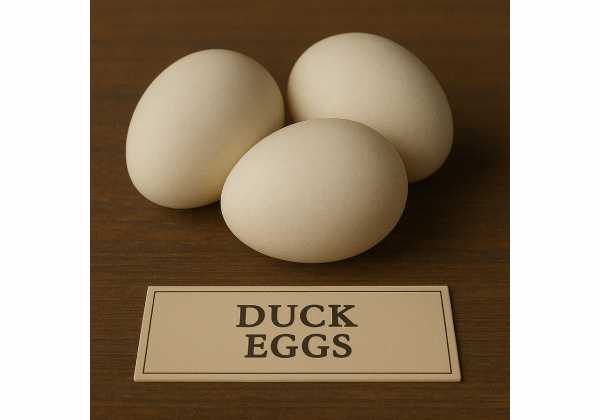
Duck eggs are a richly flavored, nutrient-dense alternative to chicken eggs. Larger yolks and a higher fat-to-protein ratio give them a custardy texture, deep color, and extra richness that bakers prize for tall cakes, plush brioche, and velvety custards. A single duck egg typically weighs about 70 g, delivering more vitamin B12, choline, iron, and fat than a standard chicken egg of the same weight. The shells are thicker, which can translate into a slightly longer shelf life when stored properly. In global cuisines, duck eggs shine in classic preparations—from simple sunny-side-up breakfasts to salted duck eggs, tea eggs, and luxurious pasta doughs. Like all eggs, they must be handled safely and cooked thoroughly to avoid foodborne illness. People with egg allergy, and some individuals at higher cardiovascular risk, may need personalized guidance on portion sizes and preparation methods. This guide brings together practical cooking advice, rigorous nutrition tables per 100 g, evidence-based benefits, clear safety tips, and sensible serving suggestions to help you enjoy duck eggs with confidence.
At a Glance
- Duck eggs provide concentrated vitamin B12 and choline plus complete protein per 100 g.
- Handle and cook thoroughly; raw or undercooked eggs can carry pathogens.
- Typical serving: 1 egg (≈70 g), enjoyed 3–7 times weekly within a balanced diet.
- Limit or avoid if you have an egg allergy or have been advised to restrict dietary cholesterol and saturated fat.
Table of Contents
- Duck Eggs: What They Are and How They Compare
- Duck Eggs Nutrition Profile (per 100 g)
- Evidence-Based Health Benefits
- Risks, Allergies and Interactions
- Selecting, Quality, Sustainability and Storage
- Preparation, Cooking and Nutrient Retention
- Portions, Comparisons and FAQs
Duck Eggs: What They Are and How They Compare
Duck eggs come from domestic ducks (most commonly Pekin and Khaki Campbell) and are larger than chicken eggs—often 60–80 g each, with a proportionally bigger, richer yolk. The yolk’s higher lipid content (including phospholipids) gives duck eggs their signature golden color and custard-like mouthfeel. Whites are slightly more viscous and albumen-rich, which boosts volume and structure in baking. In practical terms, one duck egg can replace 1½ chicken eggs in many recipes; however, because the yolk is larger, the dough or batter may be richer and more tender. Bakers exploit this for lofty sponge cakes, glossy meringues (using separated whites), and silky ice creams and custards.
Nutritionally, duck eggs are more concentrated. Per 100 g, they deliver more vitamin B12, choline, iron, and fat than chicken eggs of the same weight. That means you get notable nutrient advantages—especially for B12 (important for red blood cell formation and nervous system function) and choline (vital for cell membranes and methylation)—in a compact serving. The trade-offs: higher total fat and dietary cholesterol. For most healthy people, current evidence indicates eggs can fit within heart-smart eating patterns, but those with specific medical conditions should tailor intake (see sections on benefits and risks).
Culturally, duck eggs are culinary mainstays across Asia and parts of Europe. Salted duck eggs—cured in brine or packed in salt—have a firm, oily yolk with savory depth; tea eggs are simmered with spices for fracture-patterned whites; and fresh duck eggs are prized for ramen, pasta, and rich pastries. Home cooks also appreciate their relatively sturdy shells and membranes, which can reduce cracking during boiling and sometimes extend quality when refrigerated.
Flavor-wise, fresh duck eggs taste like “egg, amplified.” Expect a slightly fuller, more buttery profile; farmers’ feed (for example, foraged greens or supplemental grains) can subtly influence aroma and color. Texture is where they truly excel: a poached duck egg yields a voluptuous yolk that cloaks vegetables, grains, and toast; fried, it anchors a meal; baked into custards, it sets luxuriously.
For shopping and substitution: if a recipe calls for two large chicken eggs, one large duck egg may suffice when richness is desired (custards, cakes), but it’s safer to measure by weight in precision baking. Because duck eggs emulsify well, they’re excellent in sauces (hollandaise, mayo), though food safety requires pasteurized options when serving uncooked or lightly cooked preparations (details below). In short, duck eggs offer an elevated, nutrient-dense twist on familiar egg cookery—worth exploring when you want more color, creaminess, and structure.
Duck Eggs Nutrition Profile (per 100 g)
Serving context: Values below reflect whole, raw duck egg, per 100 g. One typical duck egg weighs ~70 g; scale accordingly. Percent Daily Values (%DV) use current U.S. labeling DVs for adults.
Macros and Electrolytes (per 100 g)
| Nutrient | Amount | %DV |
|---|---|---|
| Energy | 185 kcal | — |
| Water | ~71.6 g | — |
| Protein | 12.9 g | 26% |
| Total fat | 13.7 g | 18% |
| Saturated fat | 3.7 g | 18% |
| Carbohydrate | 1.4 g | 1% |
| Total sugars | ~0.9 g | — |
| Fiber | 0 g | 0% |
| Sodium | 146 mg | 6% |
| Potassium | 222 mg | 5% |
Fats and Fatty Acids (per 100 g)
(values vary with feed; figures below reflect typical composition)
| Component | Amount |
|---|---|
| Monounsaturated fat | ~6.5 g |
| Polyunsaturated fat | ~1.2 g |
| Omega-6 (linoleic acid, total) | ~0.39 g |
| Omega-3 (total) | ~0.07 g |
| Cholesterol* | ~884 mg |
- No established %DV for cholesterol on current labels.
Protein and Amino Acids (per 100 g)
| Amino Acid (selected) | Amount |
|---|---|
| Leucine | ~1.10 g |
| Lysine | ~0.95 g |
| Methionine | ~0.58 g |
| Tryptophan | ~0.26 g |
Duck egg protein is “complete,” providing all essential amino acids.
Vitamins (per 100 g)
| Vitamin | Amount | %DV |
|---|---|---|
| Vitamin A (RAE) | ~194 µg | 22% |
| Riboflavin (B2) | ~0.40 mg | 31% |
| Pantothenic acid (B5) | ~1.86 mg | 37% |
| Vitamin B6 | ~0.26 mg | 15% |
| Folate (DFE) | ~80 µg | 20% |
| Vitamin B12 | ~5.4 µg | 226% |
| Vitamin D | ~1.7 µg | 9% |
| Vitamin E | ~0.9 mg | 6% |
| Lutein + zeaxanthin | ~0.46 mg | — |
Minerals (per 100 g)
| Mineral | Amount | %DV |
|---|---|---|
| Iron | ~3.9 mg | 21% |
| Zinc | ~1.4 mg | 13% |
| Selenium | ~36 µg | 66% |
| Phosphorus | ~220 mg | 18% |
| Calcium | ~64 mg | 5% |
| Magnesium | ~17 mg | 4% |
Allergens & Intolerance Markers
Duck eggs contain the same major egg allergens found in chicken eggs (notably ovomucoid and ovalbumin). Heat can reduce—but not eliminate—allergenic proteins.
Additives & Fortification
Fresh shell eggs are not fortified. Salted duck eggs (a cured product) are very high in sodium; check labels and portion sizes.
Glycemic & Acid–Base Metrics
Available carbohydrate is minimal (≈1.4 g/100 g); effectively negligible glycemic impact within typical servings.
Notes: Nutrient levels shift with cooking method (water loss, fat oxidation) and animal diet. Percentages are rounded; actual values vary by producer and season.
Evidence-Based Health Benefits
1) Dense micronutrients in a small serving
Per 100 g, duck eggs deliver standout levels of vitamin B12 (~226% DV) and selenium (~66% DV), alongside choline (~48% DV) and riboflavin (~31% DV). B12 supports red blood cell formation and neurologic function; selenium is integral to antioxidant enzymes (glutathione peroxidases and thioredoxin reductases); choline contributes to cell-membrane integrity and methylation; riboflavin supports energy metabolism. For individuals whose diets are light on ruminant meats or fortified foods, duck eggs can efficiently bridge common gaps.
2) High-quality protein with excellent functionality
At ~13 g protein per 100 g, duck eggs provide all essential amino acids in digestible, bioavailable forms. In the kitchen, albumen proteins (ovalbumin, ovotransferrin) whip and set reliably, creating structure in baked goods and airy foams. For home cooks, the functional quality means you can use fewer eggs to achieve similar texture—often one duck egg for every 1½ chicken eggs—without sacrificing lift or tenderness.
3) Eye- and brain-supportive nutrients
The yolk concentrates lutein and zeaxanthin (≈0.46 mg/100 g) and choline, nutrients associated with visual function and cognition across the lifespan. While leafy greens are top lutein sources, the lipid matrix of egg yolk aids carotenoid absorption—especially when eggs are cooked with vegetables or whole grains.
4) Compatible with heart-healthy patterns when prepared wisely
Modern evidence indicates moderate egg intake can fit within dietary patterns that emphasize vegetables, whole grains, legumes, fish, and unsaturated fats. For most people, dietary cholesterol from eggs has a smaller effect on blood LDL than the saturated and trans fats present elsewhere in the diet. Practical takeaway: pair duck eggs with vegetables, legumes, and whole grains; cook with olive oil instead of butter; and avoid processed meats at the same meal.
5) Culinary versatility that promotes diet quality
From protein-rich breakfasts to nutrient-dense snacks (hard-boiled) and balanced dinners (poached duck eggs over bitter greens and farro), duck eggs can make it easier to hit daily protein and micronutrient targets. Their robust flavor also stands up to vegetable-heavy dishes—think asparagus with lemon, herby salads, or a grain bowl—nudging meals toward better overall quality.
How to translate benefits into daily habits
- Make vegetables the base: serve a poached duck egg over a big bowl of sautéed greens and mushrooms.
- Swap in heart-healthy fats: use extra-virgin olive oil or avocado oil for frying; skip butter if you’re watching saturated fat.
- Use one egg strategically: in carbonara-style sauces, a single duck yolk can emulsify and enrich 2–3 portions of pasta.
- For on-the-go protein: hard-boil 4–6 duck eggs, label the cook date, and refrigerate for the week.
Expect variability: Fatty-acid profiles and micronutrients vary with the duck’s diet and season; pasture access and omega-3–enriched feeds can shift yolk composition. Choose producers who disclose feed practices if specific fatty-acid targets matter to you.
Risks, Allergies and Interactions
Foodborne illness (raw and undercooked eggs)
Like other shell eggs, duck eggs can harbor pathogens on the shell or, rarely, within the egg. To reduce risk, buy refrigerated eggs, keep them at ≤4 °C (≤40 °F), avoid raw or undercooked preparations, and use pasteurized eggs for dishes that remain uncooked (for example, homemade mayo, caesar dressing). Cook egg dishes until the whites and yolks are firm or, for mixed dishes, to 71 °C (160 °F). Refrigerate leftovers promptly and discard eggs left out for >2 hours (>1 hour above 32 °C / 90 °F).
Dietary cholesterol and saturated fat
Duck eggs are high in dietary cholesterol and contain ~3.7 g saturated fat per 100 g. For most healthy adults, cholesterol in foods has less impact on LDL cholesterol than saturated fat; the overall meal pattern matters more. However, individuals with familial hypercholesterolemia, established atherosclerotic cardiovascular disease, type 2 diabetes, or those advised to limit cholesterol should discuss personalized limits with a clinician or registered dietitian. Sensible options include using duck eggs less frequently, combining them with lean proteins or legumes, and choosing cooking methods that add minimal saturated fat.
Allergy and cross-reactivity
Egg allergy usually targets proteins in the white (ovomucoid, ovalbumin, ovotransferrin), though yolk proteins can also sensitize. Many people allergic to hen’s eggs react to other avian eggs, including duck and quail. Cross-reactivity is common but not universal; a minority may react to one species and not another. If you have an egg allergy, avoid duck eggs unless tolerance is confirmed under medical supervision (often via supervised oral food challenges).
Biotin and raw whites
Raw egg whites contain avidin, a protein that binds biotin and can reduce its absorption. Cooking denatures avidin, eliminating this concern. Occasional exposure is unlikely to cause deficiency, but frequent consumption of raw egg whites is not advisable.
Salted duck eggs (sodium caution)
Cured or salted duck eggs are high in sodium. If you have high blood pressure, kidney disease, or need to limit sodium, enjoy them sparingly and build the rest of the meal from low-sodium foods (steamed greens, unsalted rice, fresh fruit).
Medication and condition notes
- Immunocompromised, pregnant, very young, or older adults: use pasteurized eggs for uncooked recipes and avoid runny yolks.
- Gout: purines are low compared with meats; eggs are generally acceptable, but portion control and overall diet matter.
- Biotin lab tests: high-dose biotin supplements can skew certain lab results; this is unrelated to eggs themselves but worth noting if you supplement.
Bottom line: Store and cook duck eggs safely, tailor portions to your health status, and avoid raw whites. When in doubt, speak with a healthcare professional for individualized guidance.
Selecting, Quality, Sustainability and Storage
How to choose good-quality duck eggs
- Look for clean, intact shells with no hairline cracks. Duck eggs may be off-white to pale green or blue; color does not affect taste or nutrition.
- Grade and size: Not all regions grade duck eggs like chicken eggs. If size is variable, weigh eggs for baking or use volume measures (e.g., 50 g per standard chicken egg).
- Freshness checks at home: The “float test” (egg in water) is a rough indicator; fresher eggs lie flat due to a smaller air cell. Always rely on smell and appearance when cracking—discard eggs with off-odors.
- Pasteurized options: For recipes that include undercooked eggs, seek in-shell pasteurized duck eggs or use pasteurized liquid egg products if available in your area.
Storage and handling
- Refrigerate at ≤4 °C (≤40 °F) as soon as possible after purchase. Store in the original carton to reduce moisture loss and protect from refrigerator odors.
- Shelf life: For best quality, use within 3 weeks of purchase; hard-cooked duck eggs keep up to 1 week refrigerated. Label with the purchase or cook date.
- Avoid temperature swings: Keep eggs in the main refrigerator body, not the door.
- Freezing: Do not freeze whole eggs in shell. To freeze, beat yolks and whites together in a clean container; freeze up to 1 year. Egg whites can be frozen separately; thaw overnight in the refrigerator.
Sustainability considerations
- Local sourcing: Buying from nearby farms reduces transport emissions and often improves freshness. Ask about feed (pasture access, non-GMO, omega-3 enrichment) and animal welfare practices.
- Food waste reduction: Choose the quantity you will use in a week. Hard-boil a batch to extend usability for snacks and salads.
- Packaging: Recyclable or compostable cartons are preferable; reuse cartons only if clean and from a trusted source to avoid cross-contamination.
Salted duck eggs: If you enjoy them, consider lower-sodium styles or use half an egg as a flavoring (crumbled over congee or chopped into salads), balancing the meal with unsalted staples.
Buying tips for special uses
- Baking: Seek fresher eggs (higher “Haugh units”) for stable foams.
- Poaching: Very fresh eggs hold shape better, yielding a compact, glossy white around a runny yolk.
- Custards and pâte à choux: Weigh eggs and adjust liquid to hit target batter consistency; duck yolks are richer and can thicken faster.
With mindful sourcing and storage, duck eggs can be a reliable, sustainable staple in your rotation.
Preparation, Cooking and Nutrient Retention
Food safety first
- Cook until whites and yolks are firm; for mixed egg dishes (frittatas, casseroles), reach 71 °C (160 °F) measured at the center.
- For any recipe served raw or softly set (mayonnaise, hollandaise, tiramisu, caesar dressing), use pasteurized eggs or pasteurized egg products.
- Keep prepared egg dishes hot (≥60 °C / 140 °F) or cold (≤4 °C / 40 °F), and refrigerate leftovers within 2 hours (1 hour in hot weather).
Maximizing nutrition while preserving texture
- Gentle heat preserves vitamins: Water-soluble B vitamins can decline with prolonged high heat. Poaching, soft-boiling, or low-heat scrambling can retain more B vitamins than high-temperature frying.
- Pair with plants and healthy fats: Cooking eggs with vegetables and a small amount of olive oil can enhance carotenoid absorption from both yolk and produce.
- Avoid overcooking: Overcooked yolks turn gray-green (iron–sulfur reaction) and become chalky; aim for set but creamy.
Technique guide
- Soft-boiled (jammy yolk): Bring water to a rolling boil. Lower refrigerated duck eggs gently, reduce to a lively simmer, and cook 7–8 minutes (for large duck eggs). Chill briefly in ice water to stop carryover.
- Hard-boiled: Simmer 10–12 minutes depending on size and yolk doneness. Cool promptly in ice water to ease peeling and reduce the green ring.
- Poached: Simmer water with a splash of vinegar. Crack eggs into a cup, swirl the water, slide in, and cook 3–4 minutes for a set white and runny yolk.
- Fried: Use a nonstick pan over medium heat with a thin film of oil. Cover to set the top without over-browning the bottom.
- Custards and ice creams: Temper yolks with hot milk, then cook gently to 82–84 °C (180–183 °F), stirring constantly, until the mixture coats the back of a spoon. Strain and chill.
- Baking substitutions: Replace 2 large chicken eggs with 1 large duck egg plus 1 chicken egg white for moisture and structure in cakes; adjust based on batter feel.
Retention in real life
- Protein quality is maintained across common methods (boiled, poached, fried).
- Fat-soluble vitamins (A, D, E, K) are stable with typical cooking; water-soluble ones (riboflavin, B6, folate) are somewhat sensitive to prolonged heat or dilution in cooking water.
- Lutein/zeaxanthin remain available and may be better utilized when eaten with greens and a bit of oil.
Taste and texture upgrades
- Season with acids (lemon, vinegar) and fresh herbs to counter richness.
- Add sautéed brassicas, tomatoes, or mushrooms for fiber and polyphenols; the combination boosts overall meal quality without overshadowing the yolk’s creaminess.
Portions, Comparisons and FAQs
Portion guidance
A practical serving is 1 duck egg (≈70 g). For most healthy adults, enjoying duck eggs 3–7 times per week can fit into varied, heart-healthy eating patterns—especially when meals emphasize vegetables, legumes, whole grains, and unsaturated fats. Individuals with high LDL cholesterol, diabetes, familial hypercholesterolemia, or established cardiovascular disease should consult personalized advice; sometimes that means fewer yolks per week, using more whites, and keeping saturated fat low at the same meal.
Duck eggs vs. chicken eggs (per 100 g, typical values)
- Calories: ~185 (duck) vs. ~143 (chicken)
- Protein: ~12.9 g (duck) vs. ~12.6 g (chicken)
- Fat: ~13.7 g (duck) vs. ~9.5 g (chicken)
- Vitamin B12: much higher in duck eggs
- Iron and selenium: generally higher in duck eggs
Bottom line: duck eggs are richer and more micronutrient-dense, but also higher in fat and cholesterol per equal weight.
What about salted duck eggs?
They’re delicious but very high in sodium. Use as a condiment: crumble ½ salted egg over congee, toss chopped yolk through steamed greens, or fold bits into a tomato salad. Offset with unsalted rice, fruit, and lots of vegetables.
Can people with egg allergy tolerate duck eggs?
Cross-reactivity between avian egg proteins is common. Some individuals react to hen’s eggs and duck eggs alike, while a small minority may tolerate one and not the other. Management should be guided by an allergist—avoid self-experimentation due to risk of severe reactions.
Are duck eggs more “nutritious” than chicken eggs?
Per 100 g, duck eggs deliver more B12, choline, iron, and fat. “More nutritious” depends on your needs and context. If you’re seeking B12 or choline, duck eggs are advantageous; if you’re limiting saturated fat or cholesterol, smaller portions or chicken eggs may fit better.
How many duck eggs can I eat daily?
There isn’t a single number for everyone. For many healthy adults, one egg per day on average—sometimes duck, sometimes chicken—fits well, as long as the overall diet is low in saturated fat and high in plants. Consider alternating with egg-white–heavy meals or pairing with legumes and vegetables.
Best ways to enjoy them without overdoing fat and sodium
- Poach or soft-boil and serve over roasted vegetables or whole grains.
- Fry in a thin film of olive oil instead of butter.
- Keep salty add-ins (bacon, cured fish) occasional; use herbs, citrus, and spices for flavor.
Key takeaways
Duck eggs can enrich meals with valuable B vitamins, choline, and high-quality protein. Respect food safety, tailor portions to your health picture, and balance plates with plant foods. That’s the formula for enjoying their benefits while keeping risks in check.
References
- Nutrition Facts for Egg, duck, whole, fresh, raw 2024 (Data Resource)
- What You Need to Know About Egg Safety | FDA 2024 (Guidance)
- Choline – Health Professional Fact Sheet 2022 (Guideline)
- Egg consumption and risk of cardiovascular disease: three large prospective US cohort studies, systematic review, and updated meta-analysis 2020 (Systematic Review)
- Common food allergens and cross-reactivity 2020 (Review)
Disclaimer
This information is educational and is not a substitute for personalized medical advice, diagnosis, or treatment. Always consult a qualified healthcare professional for recommendations tailored to your health status, medications, and dietary needs—especially if you have cardiovascular disease, diabetes, kidney disease, or food allergies.
If this article helped you, please consider sharing it with a friend on Facebook, X (formerly Twitter), or any platform you prefer. Your support helps us keep creating clear, evidence-based guides like this one.