Dunbar syndrome—also called median arcuate ligament syndrome (MALS)—is an uncommon cause of persistent upper abdominal pain, especially after eating. In this condition, a band of tissue near the diaphragm presses on a major abdominal artery and nearby nerves, which can trigger pain, nausea, early fullness, and unintended weight loss. What makes Dunbar syndrome difficult is that many healthy people show some compression on scans yet feel perfectly fine, while a smaller group develop life-altering symptoms. The path to answers is often long, and it usually requires ruling out more common digestive problems first. The encouraging part is that when the diagnosis is correct and treatment is well-matched to the person, many patients experience meaningful relief. This guide explains what the syndrome is, who is most at risk, how it feels, how doctors confirm it, what treatment involves, and how to manage day to day.
Table of Contents
- What Dunbar syndrome does inside the body
- Why it happens and who is at risk
- Symptoms, patterns, and red flags
- How doctors confirm the diagnosis
- Treatments that work and what to expect
- Living with MALS, prevention, and when to seek care
What Dunbar syndrome does inside the body
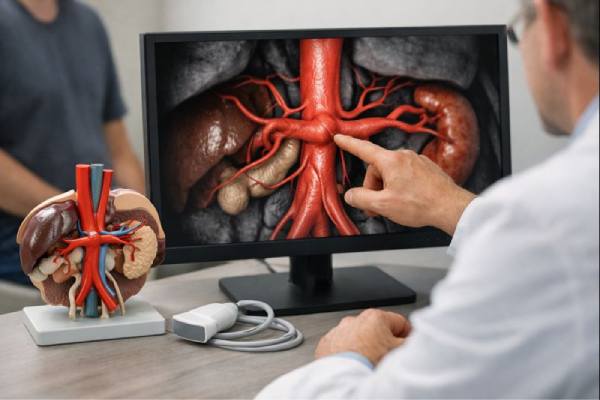
Dunbar syndrome occurs when the median arcuate ligament (a fibrous arch where the diaphragm attaches) sits lower than usual and presses on the celiac artery (a major vessel that supplies the stomach, liver, and spleen) and often the nearby nerve network called the celiac plexus. The compression tends to change with breathing: during exhalation the diaphragm rises and pressure on the artery can increase; during inhalation the diaphragm drops and the artery may open a bit. That breathing-related “accordion effect” is one reason certain imaging tests look at blood flow during different phases of respiration.
Two main mechanisms are thought to explain symptoms, and many patients likely have a mix of both:
- Reduced blood flow under stress: After a meal, digestive organs demand more blood. If the celiac artery is significantly narrowed and collateral circulation cannot keep up, some people develop pain or nausea during digestion.
- Nerve irritation (neurogenic pain): The celiac plexus can be compressed or stretched, producing burning, aching, or cramping pain that feels disproportionate to what scans show. This helps explain why some patients have severe pain even when objective blood-flow changes look modest.
A key point is that celiac artery compression is not rare on scans, but Dunbar syndrome is. Many people have an anatomic “pinch” without symptoms, and in those cases the finding is incidental. Clinically meaningful Dunbar syndrome is more likely when three things line up: (1) a classic symptom pattern, (2) imaging evidence that changes with breathing and matches the anatomy, and (3) exclusion of more common causes of post-meal pain and weight loss.
Over time, chronic narrowing can increase collateral blood flow through smaller arteries. In a subset of patients, that high-flow detour can contribute to aneurysms in the pancreaticoduodenal arcade, which is uncommon but important because it changes the urgency of management.
Why it happens and who is at risk
Dunbar syndrome is fundamentally an anatomic and mechanical problem: the ligament is positioned in a way that compresses the celiac artery and nearby nerves. The “why” usually comes down to normal human variation—where the diaphragm inserts, where the celiac artery branches off the aorta, and how much tissue surrounds the region. Most people with a low-lying ligament never develop symptoms, which suggests that anatomy alone is not the whole story. Pain sensitivity, nerve involvement, digestive demand after meals, and coexisting gut conditions can all shape whether compression becomes a true syndrome.
Several patterns show up repeatedly in clinical practice:
- Age: Many symptomatic patients are younger to middle-aged adults, though cases can occur in adolescents and older adults.
- Body build: A lean body habitus is frequently reported. Less fat around the vessels may reduce cushioning, and unintentional weight loss can worsen symptoms by decreasing that natural padding.
- Sex: Many series report a higher proportion of women among symptomatic patients, though the reason is not fully established.
- Hypermobile connective tissue traits: Some clinicians note overlap with hypermobility syndromes or autonomic symptoms in selected patients. This does not mean hypermobility causes Dunbar syndrome, but it may influence symptom burden and recovery needs.
- Psychological stress and chronic pain history: These do not “cause” MALS, but they can amplify pain perception and complicate the diagnostic process. They also matter because untreated anxiety, fear of eating, or prolonged opioid use can worsen nutrition and functioning.
Risk also rises when there is a long delay to diagnosis. Months of avoiding food due to pain can lead to dehydration, low protein intake, vitamin deficiencies, and reduced muscle mass. That spiral can make the nervous system more reactive and recovery slower—even after a successful procedure.
If you are trying to understand whether MALS is a reasonable concern, focus less on the label and more on the full picture: consistent post-meal epigastric pain, progressive food avoidance, objective weight loss, and imaging that shows dynamic compression that matches the anatomy. When those elements are absent, clinicians typically prioritize other diagnoses first.
Symptoms, patterns, and red flags
Dunbar syndrome is known for symptoms that are real but non-specific—meaning they overlap with many digestive disorders. The most helpful clues are the pattern, triggers, and what the symptoms lead you to change in daily life.
Common symptoms include:
- Upper abdominal (epigastric) pain, often described as aching, cramping, or burning
- Pain after eating, often starting within 15–60 minutes and lasting 1–3 hours
- Early satiety (feeling full quickly) and bloating
- Nausea and sometimes vomiting
- Unintended weight loss, often from fear of eating rather than poor appetite
- Food avoidance behaviors, such as eating tiny portions, skipping meals, or sticking to “safe” foods
Some people notice positional effects—such as pain relief when leaning forward or bringing knees toward the chest—though this is not universal. Others report that symptoms are worse during high-stress periods, after large meals, or with intense activity soon after eating.
Because MALS is a diagnosis of exclusion, it is important to recognize symptoms that should prompt evaluation for other conditions as well. Clinicians typically take a careful history to look for features that point elsewhere, such as reflux with acid regurgitation, right upper quadrant pain after fatty meals (gallbladder disease), or diarrhea with blood or mucus (inflammatory bowel disease).
Red flags that deserve prompt medical attention include:
- Rapid or severe weight loss, dehydration, or inability to keep fluids down
- GI bleeding (black stools, maroon stools, or vomiting blood)
- Fever, persistent night sweats, or new anemia
- Severe, sudden abdominal pain that is different from your usual pattern
- Fainting, chest pain, or shortness of breath, which may signal a broader vascular or cardiac issue
It also helps to name the “secondary harms” of chronic post-meal pain. Many patients develop a tight cycle: pain leads to eating less, which leads to weight loss and weakness, which increases sensitivity to pain and stress. Breaking that cycle—through structured nutrition support, pain strategy, and careful diagnostic planning—often matters as much as the final procedure.
A simple symptom diary can be surprisingly powerful: record meal size, timing of pain onset, duration, intensity (0–10), nausea, and any positional relief. This makes your pattern clearer and helps your clinician judge whether further vascular testing is likely to be useful.
How doctors confirm the diagnosis
Diagnosing Dunbar syndrome requires two parallel efforts: (1) documenting dynamic celiac artery compression that fits the anatomy, and (2) proving that more common causes of the symptoms are unlikely. Many patients reach vascular imaging only after months of gastrointestinal workup, which is frustrating but often appropriate because MALS is rare and abdominal pain is common.
Clinicians usually begin with a structured evaluation that may include:
- Basic labs: blood count (anemia), metabolic panel, inflammatory markers when indicated
- GI evaluation as needed: testing for ulcers, gallbladder disease, pancreatitis, celiac disease, motility disorders, and functional GI syndromes
- Nutrition assessment: degree and speed of weight loss, hydration status, and protein intake
When MALS is suspected, imaging focuses on two themes: anatomy and physiology.
Duplex ultrasound is often a first vascular test. It measures flow velocities in the celiac artery and can be performed with attention to respiratory phases. Higher velocities and a marked change between exhalation and inhalation can support the diagnosis. The test is operator-dependent, so quality matters.
CT angiography (CTA) or MR angiography (MRA) can show the classic appearance: a focal narrowing at the origin of the celiac artery with a “hooked” contour and post-stenotic dilation. Good reports also describe whether collateral vessels are enlarged, which can hint at chronicity and physiologic significance.
Because imaging findings can be incidental, many teams use additional tools to improve diagnostic confidence:
- Functional correlation: Does the imaging severity match the symptom pattern?
- Exclusion logic: Have reasonable alternative diagnoses been addressed?
- Celiac plexus block: In selected patients—especially when neurogenic pain is suspected—a temporary anesthetic block of the celiac plexus may predict who will benefit from surgery. Pain relief after a block does not prove MALS, but it can be a practical decision aid.
Finally, clinicians assess readiness for intervention. Surgery is more likely to help when symptoms are consistent, weight loss is clearly driven by post-meal pain, imaging shows convincing dynamic compression, and the patient has a realistic plan for nutrition and rehabilitation after treatment.
Treatments that work and what to expect
There is no single “pill” that cures Dunbar syndrome. The main effective treatment is surgical decompression—cutting the median arcuate ligament to relieve pressure on the celiac artery and often releasing surrounding nerve tissue. The goal is to remove the mechanical trigger and reduce nerve irritation so eating becomes tolerable again.
Common procedural approaches include:
- Laparoscopic release: minimally invasive, smaller incisions, often faster recovery
- Robotic-assisted release: similar minimally invasive benefits with enhanced instrument control in some centers
- Open surgery: used in complex cases, prior surgery, or when arterial reconstruction is anticipated
During surgery, many surgeons also perform celiac ganglionectomy or neurolysis (freeing or removing portions of nerve tissue) when nerve-driven pain is strongly suspected. In some patients, ligament release alone improves blood flow and symptoms; in others, symptoms persist if nerve irritation remains dominant.
What about stents? Endovascular stenting of the celiac artery is generally not the first step because the artery is being compressed from the outside. A stent placed without decompression can deform or fail. However, stenting or arterial reconstruction may be considered when:
- Significant residual narrowing persists after decompression
- There is fixed scarring of the artery
- Symptoms continue and imaging shows ongoing flow limitation
- There are associated aneurysms or complex collateral patterns that require vascular planning
Outcomes are best described as “improvement rates,” not guarantees. Many studies report meaningful symptom relief in a majority of properly selected patients, but a notable minority have partial relief or recurrence. Factors associated with better results in clinical series often include clearer symptom patterns, shorter duration of severe symptoms, good nutrition support, and positive response to diagnostic nerve block when used.
Recovery is not only about incision healing. The hardest part for many patients is rebuilding a calm relationship with food. A realistic plan often includes:
- Gradual return to meals (small, frequent, protein-forward)
- Treatment of nausea or reflux if present
- Gentle activity that supports gut motility and conditioning
- A non-opioid pain strategy whenever possible
- Follow-up imaging when symptoms persist or when vascular complications are a concern
A good surgeon will also discuss “what success looks like” for you: fewer pain days, ability to eat normal portions, stable weight, and less fear around meals. That shared definition helps you track progress honestly over the months after treatment.
Living with MALS, prevention, and when to seek care
Daily management matters whether you are still being evaluated, waiting for a procedure, or recovering afterward. Because MALS symptoms often reshape eating behavior, the most protective strategy is preventing the nutrition-and-fear spiral that can make everything worse.
Practical steps that often help before and after treatment:
- Small, frequent meals: aim for 5–6 smaller meals rather than 2–3 large ones. Many people tolerate lower-fat, lower-fiber meals better during flares.
- Protein priority: include protein at each eating opportunity (eggs, yogurt, tofu, fish, poultry, legumes) to reduce muscle loss during weight decline.
- Hydration plan: sip fluids steadily through the day; dehydration can worsen dizziness, nausea, and constipation.
- Symptom-guided pacing: avoid intense activity immediately after meals; consider a gentle 10–15 minute walk to support digestion if tolerated.
- Constipation prevention: use fiber cautiously—some people worsen with high fiber during pain flares. Discuss stool-softening strategies with your clinician if needed.
- Pain strategy with guardrails: heat packs, breathing techniques, and targeted non-opioid medications may help. Long-term opioids can slow the gut and increase pain sensitivity over time, so most teams try to avoid them when possible.
- Stress and sleep support: chronic abdominal pain is exhausting. If anxiety, panic around eating, or insomnia develops, treating these directly can improve overall symptom burden and recovery.
After decompression, many clinicians encourage a structured “re-feeding and conditioning” plan. The nervous system may stay reactive for weeks, so progress can be uneven. A realistic recovery timeline often includes early improvement in one domain (less severe pain) followed by slower gains (more normal meal sizes, stable weight, less nausea). If symptoms worsen again, it does not automatically mean surgery “failed”—it may signal residual narrowing, persistent nerve-driven pain, a separate GI diagnosis, or deconditioning that needs targeted support.
Seek urgent care if you develop:
- Severe, sudden abdominal pain unlike your usual pattern
- Vomiting that prevents keeping fluids down
- Black or bloody stools, or vomiting blood
- Fainting, severe weakness, or confusion
- High fever with abdominal tenderness
- Rapid, ongoing weight loss or signs of dehydration
Because Dunbar syndrome is complex, the best long-term care is usually multidisciplinary: gastroenterology for the broader differential and symptom control, vascular surgery for anatomy and decompression strategy, pain specialists when neurogenic pain dominates, and dietitians to protect nutrition. The condition is challenging—but with the right team and a realistic plan, many people regain confidence in eating and a more stable daily life.
References
- Systematic Review of the Efficacy of Treatment for Median Arcuate Ligament Syndrome 2022 (Systematic Review)
- Overview of Median Arcuate Ligament Syndrome: A Narrative Review 2023 (Review)
- Clinical Outcomes after Median Arcuate Ligament Release in Patients Responsive to Celiac Plexus Block 2024 (Outcomes Study)
- Celiac plexus block: A diagnostic tool for neurogenic median arcuate ligament syndrome 2025 (Diagnostic Study)
- Median Arcuate Ligament Syndrome: Where Are We Today? 2025 (Review)
Disclaimer
This article is for general educational purposes and does not replace medical advice, diagnosis, or treatment. Dunbar syndrome (median arcuate ligament syndrome) can mimic many gastrointestinal and vascular conditions, and the decision to pursue surgery depends on a careful, individualized evaluation. Do not delay urgent care if you have severe abdominal pain, signs of dehydration, fainting, or gastrointestinal bleeding. Always discuss medication changes, nutrition plans, and procedural options with your qualified healthcare team.
If you found this article helpful, please share it on Facebook, X (formerly Twitter), or any platform you prefer, and follow us on social media. Your support through sharing helps our team continue producing high-quality health content.