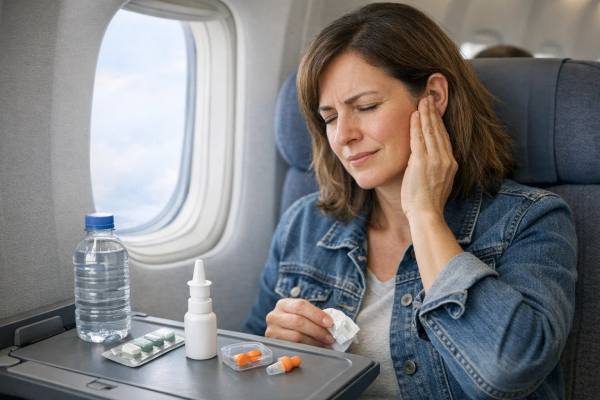
Ear pain after a flight can feel unfairly intense when you already have a cold. The discomfort is not “just pressure” in a vague sense—it is usually a predictable mechanical problem: swollen tissues in your nose and throat make it harder for the Eustachian tube (the tiny pressure-equalizing channel behind the eardrum) to open on cue. During descent, the outside air pressure rises faster than your middle ear can match it, and that mismatch can tug on the eardrum and surrounding structures, producing sharp pain, fullness, muffled hearing, and lingering soreness after landing.
The good news is that most cases improve with time and simple techniques. Even better, you can reduce the odds of it happening again by planning around the descent, using gentle pressure maneuvers correctly, and choosing medications and tools with clear limits and safety in mind.
Essential Insights
- Ear pain after flying with a cold is usually caused by temporary Eustachian tube blockage that prevents pressure equalization during descent.
- Starting pressure-equalizing actions early and repeating them regularly during descent often reduces pain and shortens recovery time.
- Forceful “hard blowing” can worsen injury risk; gentle, frequent techniques are safer than one strong attempt.
- Decongestants and nasal sprays can help some people but have important health cautions and should not be overused.
- A simple timeline plan (the week before, the hour before, and the descent) is the most reliable way to prevent repeat episodes.
Table of Contents
- Why a cold makes flying hurt
- How to tell it is tube blockage
- In-flight moves that reduce pain
- Medicines and tools that help safely
- When flying is risky and when to seek care
- A prevention plan for your next trip
Why a cold makes flying hurt
When you fly, the cabin pressure changes as the plane climbs and descends. Your middle ear is an air-filled space behind the eardrum, and it needs to “trade” small amounts of air with the back of your nose to stay comfortable. That trade happens through the Eustachian tube, which normally opens briefly when you swallow, yawn, or move your jaw.
A cold makes this system unreliable for two reasons:
- Swelling and mucus narrow the opening. Viral inflammation thickens the lining of the nose and the Eustachian tube, and mucus can physically block the passage. Even if you can breathe through your nose, the tube may still be too sticky or swollen to open well.
- The timing of descent is unforgiving. Most people feel pressure most strongly on descent because the outside pressure increases, and the middle ear must let air in to “catch up.” If the tube does not open, the eardrum can be pulled inward, creating pain, pressure, and reduced hearing. That is why the last 30–45 minutes of a flight often matter more than takeoff.
You might notice one ear hurts more. Small differences in anatomy, side-sleeping congestion, allergies, a deviated septum, or a history of ear infections can make one tube less cooperative. Children are also more vulnerable because their tubes are narrower and can clog more easily.
After landing, symptoms can linger because the middle ear lining may be irritated and fluid can accumulate. Many people describe a dull ache, crackling, or a “cotton in the ear” sensation for hours—or even a few days—especially if they kept trying to blow hard against a blocked tube.
The key idea is this: your goal is not to “force” the ear open once—it is to help the tube open gently and repeatedly during the period of rapid pressure change, particularly during descent.
How to tell it is tube blockage
Eustachian tube–related pain has a recognizable pattern. The timing, the sensation, and the “extras” around it help you separate it from other causes of ear pain.
Common signs of pressure-related blockage
- Pain that peaks during descent (or sometimes shortly after landing), especially if you were congested.
- Fullness, popping, or crackling when swallowing or yawning.
- Muffled hearing in the affected ear, sometimes with mild ringing.
- Pressure that changes with jaw movement (chewing, yawning) or improves briefly after a successful pop.
- A sense of imbalance without true spinning can occur, but it is usually mild.
Clues it might be something else
- Ear infection (middle ear): pain that continues to intensify over 24–48 hours, fever, significant fatigue, or new drainage. Colds can set the stage for infections, but infection pain is typically less tied to descent timing.
- Outer ear irritation: pain when you tug the outer ear or press on the small cartilage in front of the ear canal; often linked to water exposure or earbuds.
- Jaw joint or muscle pain: ear-area pain with chewing, clenching, morning soreness, or tenderness in the jaw joint; pressure changes usually do not trigger it.
- Sinus pressure referred to the ear: facial pressure (cheeks, forehead), tooth pain, or pain that worsens when bending forward.
A quick self-check after landing
Try this sequence once you are on the ground:
- Swallow 5–10 times slowly.
- Chew something and yawn.
- If it still feels blocked, try one gentle pressure maneuver (described in the next section).
If you get a brief pop and some relief, that supports tube blockage. If nothing changes and the pain is severe or worsening, treat it more cautiously.
Red flags that deserve prompt medical attention
- Sudden, major hearing loss in one ear
- Spinning vertigo, vomiting, or inability to walk steadily
- Bloody or persistent fluid drainage from the ear
- Severe pain that does not ease at all after the flight
- Facial weakness, severe headache, or a high fever
Most flight-related tube problems improve, but these warning signs suggest complications or a different diagnosis.
In-flight moves that reduce pain
The biggest mistake people make is waiting until the pain is sharp and then trying to “blast” the ears open. A better strategy is early, gentle, and repetitive equalization, especially when the plane begins descending.
Set yourself up before descent
- Stay awake for descent. Sleeping through the critical pressure changes makes you miss the natural swallowing and jaw movement that keeps the tube functioning.
- Hydrate lightly. Small sips help swallowing; alcohol can worsen dehydration and nasal swelling for some people.
- Clear the nose gently. Blow one side at a time without force. Aggressive blowing can push mucus where you do not want it.
Use these techniques in a “ladder,” from easiest to strongest
- Swallow and sip: Take frequent sips of water. Aim for a swallow every 30–60 seconds once descent starts.
- Chew and yawn: Gum, a chewy snack, or slow jaw circles can trigger repeated tube openings.
- Toynbee maneuver: Pinch your nose closed and swallow. This can be less harsh than blowing and works well for some people.
- Gentle Valsalva: Pinch your nose, close your mouth, and blow very gently as if fogging a window—just enough to feel mild pressure. Stop immediately when you feel a pop or if pain increases.
A useful rule is small attempts often: one gentle maneuver every 1–2 minutes during active descent is usually safer than one long, forceful blow.
If one ear is “stubborn”
- Keep your head upright and try a swallow with your chin slightly tucked.
- Alternate: swallow, yawn, then one gentle maneuver.
- Do not keep forcing if pain spikes—pause, reset, and try again after 30–60 seconds.
For children and infants
- Offer a bottle, breast, straw cup, or pacifier during descent (sucking and swallowing are ideal).
- Older kids can practice “yawn and swallow” games and gentle nose-pinching swallows.
- Avoid teaching hard blowing. Children can overdo it easily.
Right after landing
If you still feel blocked, keep using gentle swallowing and chewing for 10–20 minutes. Many ears open gradually once pressure changes stop and the tissues relax.
Medicines and tools that help safely
Medications can be helpful, but they work best when you know what they can and cannot do. They do not replace good descent technique, and they come with real safety boundaries.
Pain relief first
If you can take them safely, a standard dose of an over-the-counter pain reliever (such as acetaminophen or an anti-inflammatory) can reduce the “alarm” level of pain and make it easier to equalize gently. The goal is comfort, not masking severe symptoms you should evaluate.
Oral decongestants
Oral decongestants can reduce nasal and tube swelling for some adults, particularly those with a history of repeat flight pain. However, they can raise heart rate and blood pressure and may worsen anxiety, tremor, and insomnia.
Use extra caution or avoid unless a clinician advises otherwise if you have:
- Uncontrolled high blood pressure, heart rhythm problems, or significant heart disease
- Narrow-angle glaucoma
- Hyperthyroidism
- Significant prostate symptoms
- Pregnancy or breastfeeding (individual risk varies)
They are generally not a casual choice for children.
Topical nasal sprays
Short-acting nasal decongestant sprays may reduce swelling near the tube opening, but they must be used carefully:
- They work best when timed to the period you need them (often the descent).
- Using them for more than a few days can trigger rebound congestion, which is the opposite of what you want.
Saline spray or saline rinses are safer for frequent use and can thin mucus, making your pressure maneuvers more effective.
Intranasal steroid sprays
Steroid nasal sprays are not instant decongestants. They are most useful when allergies or longer-lasting nasal inflammation are part of the picture. They typically work best when started days in advance, used consistently, and paired with allergen control (and sometimes an antihistamine, if appropriate).
Pressure-regulating earplugs and “gadgets”
Specialty earplugs may slow the rate of pressure change at the eardrum and can feel soothing, especially for frequent flyers. Still, they are not a guarantee, and they do not fix a fully blocked Eustachian tube. Think of them as a comfort tool, not a cure.
What to avoid
- Repeated forceful Valsalva attempts when pain is sharp
- Using decongestant sprays for long stretches “just in case”
- Taking new medications for the first time immediately before a flight without knowing how you react
If you are prone to flight ear pain, the safest approach is a planned combination: comfort measures, gentle technique, and carefully chosen medication only when it truly fits your health profile.
When flying is risky and when to seek care
Sometimes the best prevention is choosing not to fly—especially if your risk of injury is high. While most people recover without lasting problems, significant pressure mismatch can cause middle ear inflammation, fluid buildup, and, rarely, eardrum injury.
Consider postponing flying when possible
It is especially reasonable to delay travel if you have:
- A severe cold with heavy congestion you cannot clear at all
- Significant ear pain before the flight begins
- A recent ear infection or severe sinus infection
- High fever, marked facial pain, or thick nasal discharge that is worsening
- Recent ear surgery unless your surgeon has cleared you
If you cannot postpone, the priority becomes minimizing the pressure gap during descent and avoiding forceful maneuvers.
What recovery often looks like
After barotrauma-type irritation, you may have:
- Fullness and muffled hearing that improves over hours to a few days
- Intermittent popping or crackling
- Mild soreness around the ear
If symptoms steadily improve, that trend is reassuring.
When to get medical evaluation
Seek prompt care if you notice:
- Drainage of blood or fluid from the ear
- Sudden drop in hearing, especially on one side
- Spinning vertigo, severe imbalance, or vomiting
- Severe pain that persists without improvement over 24 hours
- Symptoms that remain stuck for more than a week, particularly with hearing reduction
A clinician can look for eardrum retraction, fluid behind the eardrum, or other findings that change management. Testing may include hearing checks and measurement of middle ear pressure. Treatment varies from watchful waiting and symptom relief to targeted therapy if complications or infection appear.
Why “toughing it out” can backfire
If you keep flying repeatedly while congested, you can trap cycles of irritation and fluid, making the tube more reactive on the next trip. If your job or schedule forces frequent flights, it is worth discussing a personalized plan with a clinician—especially if you have repeated episodes, significant hearing changes, or persistent one-sided symptoms.
A prevention plan for your next trip
The most reliable way to prevent ear pain is to treat it like a timing problem. Your ears need help most during descent, and your nose and throat tissues need support before you even board.
The week before travel
- If allergies play a role for you, start consistent allergy control early (environment changes, routine nasal care, and any clinician-recommended sprays).
- Practice gentle equalization on the ground so it is familiar and not stressful on the plane.
- If you have a pattern of severe flight ear pain, consider discussing a plan with a clinician before your trip—especially if you also have frequent sinus infections or prior ear complications.
24 hours before the flight
- Prioritize sleep and hydration.
- Avoid heavy alcohol if it worsens your congestion.
- Pack what you will actually use: water, gum, a simple snack, saline spray, and any pre-planned medications.
60 minutes before takeoff and before descent
- Do a gentle nose-clear routine: saline, then light blowing one side at a time.
- If you have a clinician-approved medication plan, follow the timing precisely rather than guessing.
- Choose a seat and routine that support being awake for descent.
During the flight: a descent protocol
When the plane begins descending (or when the crew announces it), switch into “ear mode”:
- Start chewing and sipping right away.
- Swallow frequently, even if you do not feel pressure yet.
- If pressure builds, use the ladder: swallow, yawn, nose-pinching swallow, then a gentle Valsalva.
- Repeat small attempts every 1–2 minutes during the active descent phase.
After landing: protect the recovery window
- Keep swallowing and chewing for 10–20 minutes if you still feel blocked.
- Avoid aggressive nose blowing for the first hour if your ears feel tender.
- If you develop worsening pain later that day, treat it as a signal to reassess rather than pushing through.
A simple checklist you can save
- Stay awake for descent
- Sip and swallow early and often
- Use gentle maneuvers, repeated—not forceful blows
- Use medications only when they fit your health profile and timing plan
- Seek care for red flags or symptoms that do not improve
A cold does not have to ruin your ears the next time you fly. With a descent-focused routine and sensible safety boundaries, most people can prevent the worst pain and recover faster when congestion is unavoidable.
References
- BTS Clinical Statement on air travel for passengers with respiratory disease 2022 (Guideline)
- Medical Management for Eustachian Tube Dysfunction in Adults: A Systematic Review and Meta-Analysis 2022 (Systematic Review and Meta-Analysis)
- Efficacy of intranasal corticosteroid sprays in relieving clinical signs of Eustachian tube dysfunction: a systematic review and meta-analysis of randomised, controlled trials 2024 (Systematic Review and Meta-Analysis)
- Eustachian tube dysfunction in adults 2025 (Review)
- A double-blind comparison between oral pseudoephedrine and topical oxymetazoline in the prevention of barotrauma during air travel 1998 (RCT)
Disclaimer
This article is for general educational purposes and is not a substitute for personal medical advice, diagnosis, or treatment. Ear pain after flying can have multiple causes, and certain symptoms—such as severe or worsening pain, drainage from the ear, sudden hearing loss, spinning vertigo, or high fever—require timely medical evaluation. Do not start or change prescription or over-the-counter medications based on this article without considering your medical history, current medications, and individual risk factors, and seek guidance from a qualified clinician when needed.
If you found this helpful, please consider sharing it on Facebook, X (formerly Twitter), or any platform you prefer so others can travel more comfortably.