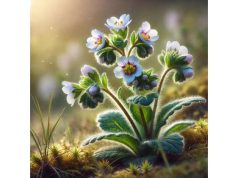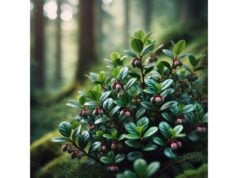
Eastern teaberry, Gaultheria procumbens, is a low-growing evergreen shrub native to North America and better known to many people as American wintergreen or checkerberry. Its bright, cooling aroma has long made it useful in teas, flavorings, liniments, and topical pain products. Yet the plant is more than a pleasant scent. It contains salicylate-based compounds that help explain its traditional role in easing aches, reducing inflammatory discomfort, and supporting short-term topical relief for sore muscles and joints.
What makes Eastern teaberry especially interesting is the difference between the whole plant and the concentrated oil distilled from it. The leaves and aerial parts contain glycosides, flavonoids, and procyanidins, while the essential oil is dominated by methyl salicylate and behaves much more like a potent active ingredient than a gentle herb. That distinction shapes every practical decision about safety, dosage, and use. Used carefully, Eastern teaberry has legitimate value. Used casually, especially as an essential oil, it can become risky much faster than many herbal users expect.
Quick Overview
- Eastern teaberry is best known for short-term pain and inflammation support, especially in topical products.
- Its key chemistry includes gaultherin, methyl salicylate precursors, and antioxidant polyphenols.
- A cautious traditional tea range is about 1 to 2 g dried leaf per cup, once or twice daily for short periods.
- Concentrated wintergreen oil should not be swallowed and can cause serious salicylate toxicity if misused.
- People with aspirin allergy, bleeding risk, pregnancy, or children should avoid medicinal use unless a clinician approves it.
Table of Contents
- What is Eastern teaberry
- Key compounds and medicinal properties
- Does Eastern teaberry help pain
- How is it used in practice
- How much is safe
- Side effects interactions and avoidance
- What the evidence really shows
What is Eastern teaberry
Eastern teaberry is a small woodland shrub in the Ericaceae family, the same broad family that includes blueberries and other acid-soil plants. It spreads low across the forest floor, carries glossy evergreen leaves, and produces bright red berry-like fruits that persist into colder months. In herbal writing, the names Eastern teaberry, American wintergreen, and checkerberry often refer to the same species: Gaultheria procumbens.
For health readers, the most important fact is that this plant is closely linked with wintergreen oil. When the leaves are processed, they yield a strongly aromatic oil rich in methyl salicylate. That single detail explains why Eastern teaberry has such a strong reputation for aches, liniments, and “heat” rubs. But it also explains why the herb deserves more caution than many soothing teas or culinary botanicals.
Historically, the plant was used in several ways. Leaves were infused as a tea, fresh material was chewed or applied more directly in folk practice, and the oil became valuable in pain-relief products, flavoring, and fragrance. Today, most modern consumers encounter Eastern teaberry not as a loose herb but as a component of topical creams, massage blends, counterirritant rubs, mouth products, or wintergreen-flavored items.
That creates an easy misunderstanding. The herb itself is not the same thing as the essential oil. A leaf tea is relatively mild and chemically mixed. The distilled oil is highly concentrated and pharmacologically much sharper. Many people search for “wintergreen benefits” and unknowingly jump between these two forms as if they were interchangeable. They are not.
It also helps to place Eastern teaberry among other natural salicylate plants. Like meadowsweet, it belongs to the small group of herbs associated with salicylate chemistry and traditional pain use. But Eastern teaberry is unusual because its essential oil can behave much more intensely than a typical salicylate-rich tea herb.
In practical terms, Eastern teaberry is best understood in four layers:
- as a traditional leaf herb with a long history of tea use
- as a source of methyl salicylate-rich wintergreen oil
- as a topical pain-relief ingredient
- as a plant whose safety profile changes dramatically with concentration
That last point shapes the rest of the article. Eastern teaberry can be useful, but it is not a casual “more is better” herb. The form matters first, and the dose matters immediately after that.
Key compounds and medicinal properties
Eastern teaberry has a more interesting chemistry than its familiar minty scent suggests. The compound most people recognize is methyl salicylate, but the whole plant contains more than that. In leaves, stems, and fruits, researchers have identified salicylate glycosides, flavonoids, catechins, procyanidins, chlorogenic acid derivatives, and other phenolic compounds. Together, these compounds shape the plant’s medicinal profile.
One of the signature constituents is gaultherin, a methyl salicylate glycoside. This matters because it helps explain why the whole herb and the essential oil do not behave the same way. In the plant, gaultherin and related glycosides act as precursor forms. They must be broken down before releasing methyl salicylate. That slower pathway is one reason whole-plant preparations may feel more gradual and less immediately aggressive than the oil.
The essential oil, by contrast, is dominated by methyl salicylate itself. That is the compound most responsible for wintergreen’s characteristic odor and for much of its counterirritant, topical analgesic, and rubefacient behavior. In simple terms, it helps create the warming, cooling, tingling, or distracting sensation people associate with pain-relief creams.
The plant’s nonvolatile compounds also matter. Flavonoids and procyanidins contribute antioxidant and anti-inflammatory potential that the oil alone cannot fully represent. That is why a whole-leaf extract may show a broader biological profile than a near-pure salicylate oil. Eastern teaberry is therefore best viewed as two related medicinal materials:
- a salicylate-rich herb with polyphenol support
- a concentrated oil with strong methyl salicylate dominance
This distinction also helps when comparing Eastern teaberry with white willow. White willow is known for salicin and related compounds that are metabolically converted after ingestion. Eastern teaberry, especially as an oil, delivers a much more direct and concentrated salicylate experience. That is one reason topical use is more common than oral self-treatment.
The main medicinal properties associated with Eastern teaberry include:
- topical analgesic action
- anti-inflammatory potential
- counterirritant activity
- mild antimicrobial activity in some preparations
- antioxidant support from leaf polyphenols
Still, chemistry does not equal a guaranteed clinical outcome. A plant can have promising compounds and only modest human evidence. Eastern teaberry fits that pattern. Its chemistry is strong enough to justify careful use, especially in topical settings, but not strong enough to justify exaggerated claims about curing arthritis, replacing medical pain care, or functioning as a harmless natural aspirin.
The most helpful way to think about its medicinal properties is this: Eastern teaberry is a salicylate herb first, an aromatic herb second, and a gentle daily tonic only in very limited forms. Once the concentration rises, the safety conversation becomes just as important as the benefits conversation.
Does Eastern teaberry help pain
Pain relief is the reason most people look up Eastern teaberry, and that interest is understandable. The plant has a long traditional association with rheumatic discomfort, muscle soreness, inflammatory pain, and general aches. Modern products built around wintergreen oil continue that tradition in sprays, creams, patches, and massage rubs.
The most realistic benefit is short-term topical relief for localized musculoskeletal discomfort. When Eastern teaberry is used in a properly formulated topical product, the salicylate effect can create a counterirritant response. That means the skin feels warmth, cooling, tingling, or surface stimulation that can make deeper discomfort feel less prominent for a period of time. This can be useful after exertion, for mild strain, or for stiff areas that respond to surface rubs.
That said, Eastern teaberry is not the same as evidence-backed first-line pain treatment. It is better thought of as an adjunct. For some people, it may help reduce the perceived intensity of localized pain. For others, it mainly creates a strong sensory effect without major functional relief.
As a tea or mild leaf preparation, the benefits are less dramatic. Traditional use suggests the plant may support inflammatory discomfort and mild feverish states, but a tea is not equivalent to a topical methyl salicylate product. Readers often overestimate what a cup of wintergreen leaf tea can do for active pain. In real use, leaf preparations are subtler and better suited to short, cautious traditional use than to strong symptom control.
It also helps to compare Eastern teaberry with other natural pain herbs. If the goal is systemic, oral, salicylate-like support, some people may actually be looking for something closer to willow bark for gradual pain support rather than a methyl salicylate-heavy herb. Eastern teaberry stands out most in topical pain culture, not in long-term oral pain management.
Potential areas where people may find benefit include:
- sore muscles after activity
- mild joint stiffness
- temporary back, neck, or shoulder discomfort
- massage support for localized tension
- short-term use in over-the-counter pain rubs
Areas where expectations should stay modest include:
- chronic inflammatory disease
- severe arthritis flare-ups
- neuropathic pain
- significant sports injury
- long-term daily pain control without clinician guidance
A useful original point here is that Eastern teaberry’s strongest “pain benefit” may be practical rather than curative. It can help someone move more comfortably for a while, tolerate stiffness better, or feel temporary relief in a specific area. That still matters. But it is different from changing the underlying disease process.
Used wisely, Eastern teaberry can have a place in a broader pain-relief plan. Used as a substitute for diagnosis, rehab, prescription therapy, or safer evidence-based treatment, it quickly becomes less impressive than its reputation suggests.
How is it used in practice
Eastern teaberry has several traditional and modern uses, but they are not equally safe or equally sensible. The form you choose should match the goal.
The mildest traditional form is a leaf infusion. This is usually made from dried leaves, sometimes from aerial parts, and used as a short-term herbal tea. In this form, Eastern teaberry is more of a cautious traditional herb than a daily wellness beverage. It has a distinctive flavor, but because of its salicylate character, it is not the sort of tea most people should drink all day, every day.
The most common modern use is topical. Wintergreen-containing creams, gels, oils, and liniments are applied to sore muscles and joints. Here, Eastern teaberry functions as a rubefacient or counterirritant. The aim is usually not deep tissue penetration in a dramatic sense. It is surface-level modulation of sensation and local comfort.
A third use is in personal-care products. Wintergreen aroma and methyl salicylate are sometimes used in oral-hygiene products, flavor systems, and cosmetic preparations. But this does not mean home blending is a good idea. The concentration window matters. A professional formulation can be reasonable; an improvised one can irritate tissue quickly.
The most practical use cases look like this:
- a short course of a labeled topical rub for a sore shoulder
- a diluted massage preparation used on a small area
- an occasional traditional tea rather than a routine daily tonic
- professionally made oral-care or cosmetic products that list methyl salicylate clearly
What should you avoid? Three situations stand out.
First, do not treat Eastern teaberry essential oil as a culinary oil or casual oral remedy. It is too concentrated. Second, avoid applying wintergreen oil heavily under heat wraps, tight bandages, or over broken skin, because absorption can rise. Third, avoid layering multiple salicylate products without noticing it. A pain patch, a rub, and aspirin on the same day may not seem connected, but pharmacologically they matter together.
If your main goal is skin toning or minor surface irritation support rather than musculoskeletal discomfort, a non-salicylate topical herb such as witch hazel for topical use may make more sense. Eastern teaberry is not the right answer for every external application simply because it smells medicinal.
A good rule for practical use is to start with the least aggressive form that fits the job. That often means:
- topical product first for localized aches
- tea only if you specifically want traditional leaf use
- no oral essential oil use without professional supervision
- short-term use before reassessing whether it is truly helping
Eastern teaberry works best when it is used with purpose, not as a catch-all herb. Its most useful real-world identity is a focused pain-support plant, especially in labeled topical products, rather than a broad-spectrum home remedy.
How much is safe
Dosage is the section where Eastern teaberry becomes less simple than it first appears. There is no well-established modern clinical dose for every form of Gaultheria procumbens, and that matters. Whole leaf, extract, and essential oil are not interchangeable. A sensible dose for one can be excessive or unsafe for another.
For leaf tea, the safest approach is a conservative traditional range. A practical amount is about 1 to 2 grams of dried leaf per cup, or roughly 1 teaspoon of cut leaf, steeped in hot water for 5 to 10 minutes. Most adults who choose to use it traditionally should keep intake to once or twice daily and use it for short periods rather than indefinitely.
That modest range matters for two reasons. First, the plant still belongs to the salicylate family. Second, many people do not need Eastern teaberry as a daily oral herb. If someone simply wants a pleasant everyday herbal beverage, peppermint as a gentler daily tea is often the easier and safer fit.
For tinctures or standardized extracts, there is no broadly accepted self-care dose that can be recommended across products. Concentrations vary too much. Label directions, extraction ratio, and total salicylate exposure all matter. The safest advice is to follow the manufacturer’s instructions closely and avoid combining multiple salicylate products without professional guidance.
For topical products, dose means amount, concentration, area, and frequency. A thin layer on a limited area is very different from repeated applications over a large part of the body. Safe use usually means:
- applying only the labeled amount
- avoiding more frequent use than directed
- not using it under occlusion unless instructed
- not combining it with heating pads
- washing hands after use
- stopping if irritation appears
For essential oil, the safest self-care dose by mouth is none. Eastern teaberry oil is not appropriate for casual oral use. Even small volumes of wintergreen oil can deliver a surprisingly large salicylate load. That is one of the most important safety truths about this plant.
Timing also matters. If using a tea, take it after food if you are prone to stomach upset. If using a topical, try the smallest effective area first. If using it for pain, reassess after a few days. A product that does not help after repeated correct use is unlikely to transform with heavier dosing.
The most practical dosage principle is simple: when Eastern teaberry becomes concentrated, restraint should increase. Mild leaf tea may fit short-term traditional use. Essential oil should be handled like a potent active ingredient, not a stronger version of the tea.
Side effects interactions and avoidance
Eastern teaberry has a narrower safety margin than many herbs because of its salicylate chemistry. That does not make it unusable. It means the risk profile depends heavily on form, concentration, age, and concurrent medication use.
The most common side effects from tea or mild oral preparations are gastrointestinal. Some people may notice nausea, stomach irritation, heartburn, or general intolerance, especially if they use a strong infusion or take it on an empty stomach. Tinnitus, lightheadedness, or unusual sweating would be reasons to stop and reassess, particularly if other salicylate exposure is in the picture.
Topical side effects are often more immediate. These can include:
- redness
- burning or stinging
- itching
- rash
- allergic contact dermatitis
- worsening irritation on damaged skin
With essential oil or strong topical products, the more serious issue is systemic salicylate exposure. This risk rises with large application areas, repeated use, heat, broken skin, occlusion, low body weight, older age, or simultaneous use of other salicylates. A product can seem “topical only” and still matter systemically if conditions favor absorption.
Interactions are also important. Eastern teaberry may not be a good choice for people taking:
- aspirin
- anticoagulants
- antiplatelet drugs
- other NSAIDs
- frequent bismuth subsalicylate products
- multiple pain rubs with overlapping active ingredients
The main concern is cumulative salicylate effect, plus higher bleeding or irritation risk.
People who should generally avoid medicinal use of Eastern teaberry include:
- children and teenagers, especially during viral illness
- pregnant people
- breast-feeding people
- anyone allergic to aspirin or salicylates
- people with bleeding disorders
- people with active ulcers or significant gastritis
- people with severe kidney disease
- people already using high-salicylate pain products
A useful distinction is that whole-leaf preparations may be gentler than the oil, but they are not risk-free. “Natural aspirin-like” is still aspirin-like in the ways that matter.
The strongest safety advice in this entire guide is straightforward: never swallow wintergreen essential oil casually. Also treat any unexplained rapid breathing, vomiting, confusion, ringing in the ears, or severe irritation after exposure as a situation that deserves urgent medical attention.
Eastern teaberry becomes much safer when used briefly, in small amounts, and in the correct form. It becomes much riskier when users assume that plant origin means low toxicity. With this herb, that assumption is exactly where many problems begin.
What the evidence really shows
The research on Eastern teaberry is promising, but it is not evenly strong across all claims. This is where a balanced view helps most.
The best-supported part of the story is phytochemistry. Researchers have mapped the plant’s salicylate glycosides, polyphenols, flavonoids, and essential-oil profile in considerable detail. That gives strong plausibility to its traditional anti-inflammatory and topical pain-relief reputation. In particular, the species-level review literature now makes it clear that Gaultheria procumbens is more than a simple methyl salicylate source. The leaf extracts contain a broader network of biologically relevant compounds.
Preclinical evidence is also fairly solid. Extracts and isolated compounds show anti-inflammatory, antioxidant, and enzyme-modulating activity in laboratory models and ex vivo immune-cell systems. That does not prove clinical efficacy in the everyday sense, but it supports why the plant continues to attract scientific interest.
The weakest area is direct human clinical evidence for the whole herb. There is not a large, modern body of randomized clinical trials showing that Eastern teaberry tea or extracts consistently improve pain, arthritis, or other conditions in real-world patients. Most of the stronger modern human discussion centers on methyl salicylate, topical salicylates, or wintergreen-containing products rather than standardized whole-plant oral preparations.
That distinction matters because it keeps expectations realistic. The evidence currently supports these conclusions:
- Eastern teaberry has credible anti-inflammatory and antioxidant activity in nonhuman models.
- Wintergreen oil and methyl salicylate clearly have pharmacologic topical effects.
- Safety concerns are real, especially with concentrated topical or oral exposure.
- Human evidence for the whole herb as a standardized oral medicine remains limited.
Another important point is that “topical salicylate” evidence is mixed. Some people get real symptom relief, but broader evidence reviews do not place topical salicylates among the strongest topical pain options overall. In other words, Eastern teaberry has believable mechanisms and meaningful tradition, yet it does not automatically outperform better-studied modern topicals.
A sensible evidence-based position is this: Eastern teaberry is a legitimate medicinal plant with genuine pharmacologic activity, especially because of salicylate chemistry and supportive polyphenols. But its strongest uses are focused, short-term, and form-specific. The science supports caution and respect more than hype.
That may actually be the most useful takeaway. Eastern teaberry does not need exaggerated claims to be worthwhile. It is most convincing when presented honestly: a potent traditional North American herb that may help with localized pain and inflammation support, but one that deserves careful dosing, strong safety awareness, and modest expectations.
References
- Phytochemistry and Biological Profile of Gaultheria procumbens L. and Wintergreen Essential Oil: From Traditional Application to Molecular Mechanisms and Therapeutic Targets 2024 (Review)
- Gaultherin, a Natural Alternative to Aspirin: A Comprehensive Review of Molecular Mechanisms, Pharmacokinetics, Biocompatibility, Isolation Techniques, and Plant Sources 2025 (Review)
- The Effect of Standardised Leaf Extracts of Gaultheria procumbens on Multiple Oxidants, Inflammation-Related Enzymes, and Pro-Oxidant and Pro-Inflammatory Functions of Human Neutrophils 2022
- Short-term cutaneous vasodilatory and thermosensory effects of topical methyl salicylate 2024
- Unmasking the Hidden Risk of Systemic Toxicity from Topical Salicylates 2025 (Systematic Review)
Disclaimer
This article is for educational purposes only and is not a substitute for medical diagnosis, treatment, or individualized advice. Eastern teaberry and wintergreen oil can interact with medicines and may be unsafe for certain people, especially children, pregnant or breast-feeding individuals, people with aspirin allergy, bleeding risk, ulcer disease, or those using blood thinners or NSAIDs. Concentrated wintergreen oil should never be self-prescribed by mouth. Seek medical guidance before using this herb medicinally if you have a chronic condition, take prescription medication, or are treating ongoing pain.
If you found this article useful, please share it on Facebook, X, or any platform your readers use most.