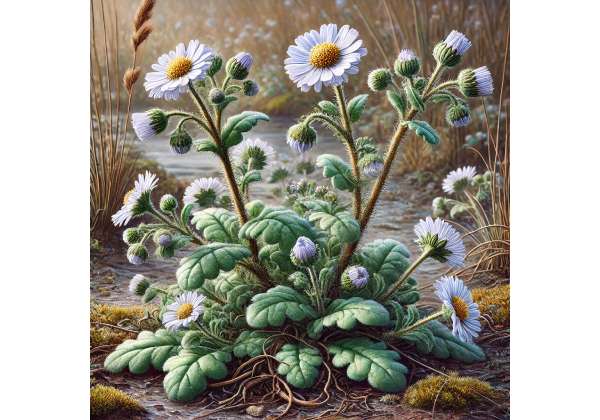
Eclipta, botanically known as Eclipta prostrata and often called bhringraj or false daisy, is a small herb with an outsized reputation in traditional medicine. It is especially well known in Ayurvedic practice, where it has been used for scalp care, hair support, liver wellness, and recovery from inflammatory states. Modern interest in the plant centers on a cluster of bioactive compounds, including wedelolactone, demethylwedelolactone, flavonoids, and saponins that may help explain its antioxidant, anti-inflammatory, and tissue-supportive effects.
What makes Eclipta worth a closer look is not just the range of claims around it, but the difference between traditional experience and modern evidence. It appears in oils, powders, fresh juice, decoctions, and extracts, and each form has a different practical role. Some uses, especially for hair and liver support, are deeply rooted in tradition but still rely mostly on lab and animal data rather than strong clinical trials. Used carefully, Eclipta can be a thoughtful herbal option. Used as a cure-all, it quickly becomes less convincing than its reputation suggests.
Core Points
- Eclipta is best known for traditional support of hair, scalp, liver, and inflammatory balance.
- Its most studied compounds include wedelolactone, demethylwedelolactone, flavonoids, and triterpenoid saponins.
- There is no standardized clinical dose, but traditional powder use often falls around 1 to 3 g once or twice daily.
- Human evidence is limited, so pregnancy, breast-feeding, and chronic illness call for extra caution.
- People taking diabetes medicines, liver medicines, or multiple herbal formulas should avoid self-prescribing high doses.
Table of Contents
- What is Eclipta
- Which compounds drive its effects
- What benefits are realistic
- How is Eclipta used
- How much should you take
- Side effects and who should avoid it
- What the research actually says
What is Eclipta
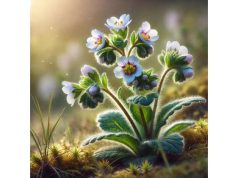
Eclipta is a low-growing annual herb in the Asteraceae family. It thrives in damp ground, roadside soils, field margins, and tropical to subtropical climates. The plant has small white flower heads, narrow leaves, and a reputation for growing where more delicate herbs struggle. In English it is often called false daisy. In South Asian traditions it is widely known as bhringraj, a name strongly associated with hair oils, scalp preparations, and rejuvenative formulas.
Botanically, Eclipta prostrata and Eclipta alba are often treated as synonyms in herbal literature. That naming overlap matters because labels, studies, and traditional texts may switch between the two. For most consumer and search purposes, they refer to the same medicinal herb. If you are buying a powder, oil, tincture, or extract, it helps to check whether the label identifies the botanical name rather than relying only on “bhringraj.”
Traditional systems do not use Eclipta for just one purpose. It has been used for:
- hair fall and scalp care
- premature graying
- liver and gallbladder support
- skin irritation and minor wounds
- digestive and inflammatory complaints
- general restorative formulas
That broad range can make the herb sound almost magical, but a more useful interpretation is that Eclipta has long been treated as a tissue-support herb rather than a single-target herb. It is commonly used where the goal is gradual support, not a dramatic short-term effect.
Its strongest modern identity is split between two roles. One is as a traditional internal herb used in powders, decoctions, and extracts for liver and inflammatory support. The other is as a topical herb used in scalp oils, masks, and hair products. That second role explains why it is often discussed alongside amla-centered Ayurvedic hair routines, even though the plants have different chemistry.
A practical point that many articles miss is that Eclipta behaves differently depending on form. A fresh juice, a dried powder, an alcohol extract, and a thick hair oil are not interchangeable. The same herb can be mild in a simple tea and much more concentrated in an extract. That matters for expectations, safety, and dosing.
So the best way to think about Eclipta is not as a universal remedy, but as a traditional herb with two especially important modern themes: internal support for liver and inflammatory balance, and external support for scalp and hair care.
Which compounds drive its effects
Eclipta’s medicinal profile comes from a mix of coumestans, flavonoids, triterpenes, saponins, phenolic compounds, and smaller specialized constituents. The two best-known compounds are wedelolactone and demethylwedelolactone. These are often treated as the plant’s signature markers because they appear repeatedly in pharmacology papers on anti-inflammatory, antioxidant, and hepatoprotective activity.
Wedelolactone matters because it helps connect the herb’s traditional reputation with modern mechanistic research. It has been studied for effects on inflammatory signaling, oxidative stress, and cell regulation pathways. That does not make it a miracle molecule, but it does explain why Eclipta keeps attracting research attention in liver, skin, and hair-related models.
Beyond the coumestans, Eclipta also contains:
- flavonoids such as luteolin and apigenin derivatives
- sulfated flavonoids identified in more recent chemical work
- triterpenoid and steroidal saponins such as eclalbasaponins
- thiophenes and phenolic acids
- plant sterols and other minor bioactives
These compounds likely work in combination rather than isolation. That matters because many supplement claims focus almost entirely on wedelolactone, as if the whole plant is just a delivery system for one ingredient. In reality, the herb behaves more like a phytochemical network than a single-compound drug.
Another important point is that Eclipta chemistry varies. The growing environment, harvest timing, storage conditions, extraction method, and plant part all influence what ends up in the final product. A leaf powder, aqueous decoction, hydroalcoholic extract, and oil infusion can emphasize different groups of compounds. This is one reason commercial products may not feel equally effective, even when they use the same herb.
The plant’s chemistry also helps explain why Eclipta spans several traditional uses at once. Coumestans and flavonoids support the anti-inflammatory and antioxidant story. Saponins and other triterpenes may contribute to broader tissue-support and membrane-level effects. Sulfated flavonoids may help explain why some traditions describe the plant as useful in bleeding-related or wound-related contexts, although that area is far less familiar to modern consumers than the hair and liver claims.
In practical terms, these compounds suggest four realistic medicinal directions:
- protection against oxidative stress
- modulation of inflammatory signaling
- support for liver-focused herbal formulas
- scalp and follicle-support activity in preclinical models
This is also where discipline matters. Phytochemistry can make a herb look more proven than it really is. Strong chemical plausibility does not automatically equal strong human outcomes. Eclipta’s compound profile is impressive, but it should be viewed as a reason for careful interest, not as proof that every traditional claim has been clinically confirmed.
What benefits are realistic
Eclipta is often advertised as if it can regenerate hair, reverse liver disease, calm the skin, improve immunity, and act as a daily anti-aging tonic all at once. That is too broad to be useful. A more grounded view is that Eclipta has several plausible benefit areas, but most are supported better by tradition and preclinical data than by robust human trials.
The most established traditional use is hair and scalp support. Eclipta oils, pastes, and masks are commonly used for hair fall, brittle hair, dull scalp, and premature graying. Modern lab and animal work suggests the herb may influence the hair cycle and support anagen, the growth phase. That is promising, but it is not the same as having strong clinical proof in people with androgenetic alopecia or major shedding disorders.
A second major area is liver support. In traditional medicine, Eclipta is widely used in formulas for sluggish liver function, heat-related states, and recovery after strain. Preclinical studies on liver injury models help support this reputation, and that is why Eclipta is often discussed with other liver-support herbs such as milk thistle. Still, “support” is the key word. The evidence does not justify presenting Eclipta as a standalone treatment for hepatitis, fatty liver disease, or elevated liver enzymes without medical care.
A third realistic area is anti-inflammatory and skin support. Extracts have shown antibacterial, antioxidant, and anti-inflammatory activity in skin-related work, including experimental topical formulations. This makes Eclipta relevant to scalp care, irritated skin, and cosmetically oriented plant formulas. But once again, the strongest data are not yet large-scale human trials.
A fourth possible benefit is broader oxidative-stress support. Eclipta’s flavonoids and coumestans help explain why it is studied as an antioxidant herb. This may be relevant to recovery, tissue resilience, and age-related stress at the cellular level. Yet antioxidant activity in a lab assay is not the same as a meaningful health outcome in real life. It is a supportive property, not a clinical endpoint.
The realistic benefit picture looks like this:
- topical hair and scalp support, especially in traditional use
- liver-support potential, mostly based on preclinical evidence
- anti-inflammatory and skin-calming potential
- antioxidant support as a background property rather than a main use
What should be treated more cautiously are the bigger marketing claims. There is not enough human evidence to say that Eclipta reliably regrows hair in common baldness, reverses chronic liver disease, treats autoimmune skin disorders, or works as a universal rejuvenative tonic.
The herb can still be valuable. It simply makes more sense as a modest, targeted herb than as a sweeping solution. That distinction is what separates a useful botanical from an overhyped one.
How is Eclipta used
Eclipta is used in several forms, and this is one of the main reasons the herb can feel confusing. Someone searching for “bhringraj benefits” may be reading about an internal powder, a scalp oil, a fresh juice, and a standardized extract in the same session without realizing that these are very different products.
For internal use, the herb commonly appears as:
- dried powder
- decoction or tea
- fresh expressed juice
- capsule or tablet
- tincture or hydroalcoholic extract
For external use, it is more often found as:
- scalp oil
- herbal paste
- hair mask
- cream or ointment
- ingredient in compound cosmetic formulas
The most traditional topical use is hair oil. In that setting, Eclipta is usually infused into a base oil and massaged into the scalp before washing or left on for a period of time. This is where the herb’s cultural reputation is strongest. It is not simply a fragrance plant. It is used as a scalp-conditioning herb, often in routines meant to support shedding, dullness, breakage, and stressed hair texture.
It is also commonly paired with henna-style botanical hair masks or other traditional scalp herbs. That does not mean those combinations are automatically better. It means Eclipta is usually used as part of a hair-care system rather than as a single magical ingredient.
For internal use, powders and decoctions are usually chosen when the goal is slower, whole-herb support. Extracts may be preferred when someone wants a more concentrated product, but that also increases the need for careful dosing and clearer product quality. Fresh juice is traditional in some systems, yet it is less practical for most people outside fresh-herb contexts.
A practical way to match form to purpose is:
- use scalp oil or mask when the goal is hair or scalp support
- use powder or decoction when the goal is traditional internal support
- use extracts only when the label is clear and the dose is specific
- avoid assuming that “stronger” always means better
It is also worth noting that Eclipta is not a good herb for improvised excess. A topical oil used a few times weekly is different from layering multiple concentrated extracts, powders, and capsules on top of each other. Herbal routines become less intelligent when every form is used at once.
Used well, Eclipta is practical. It can fit a scalp routine, a short internal support plan, or a compound herbal formula. Used poorly, it becomes one more example of an herb whose many forms create more confusion than benefit.
How much should you take
There is no universally standardized clinical dose for Eclipta, and that needs to be said first. Most dosage ranges come from traditional use, product labeling, or herbal practice rather than from large human trials. That does not make them meaningless, but it does mean they should be treated as cautious starting points rather than precision prescriptions.
For dried powder, a common traditional range is about 1 to 3 grams once or twice daily. Some people stay at the low end, especially when they are combining Eclipta with other herbs or using it for the first time. Powder is often taken with warm water, honey, or as part of a mixed herbal blend.
For fresh juice, traditional use often falls around 5 to 10 mL once or twice daily. This form is less common in everyday modern use because fresh plant material is not available to most people, and product stability becomes a real issue.
For decoctions and teas, dosing is less exact because extraction varies with simmer time, herb quality, and plant part. A practical whole-herb approach is to use a small measured amount of dried herb, prepare it consistently, and judge tolerance before increasing frequency. In real use, this is more about regularity than about chasing a high dose.
For topical hair oil, dosage is really about frequency and amount rather than milligrams. Typical use looks more like:
- a small scalp massage 2 to 4 times weekly
- leaving the oil on for a set period before washing
- patch testing before full use
- reducing frequency if the scalp feels heavy, itchy, or irritated
For extracts and capsules, the label matters. Standardization can vary widely, and one product may reflect whole herb while another is built around concentrated marker compounds. This is one reason “take two capsules” is not very meaningful unless you know the extract ratio and what the capsules actually contain.
A sensible dosing strategy is:
- start low and use one form at a time
- keep internal use moderate rather than stacking products
- reassess after 2 to 4 weeks instead of assuming longer is always better
- stop if there is no clear benefit or if side effects appear
If your main goal is gentle scalp comfort rather than a stronger medicated-feeling routine, a simpler botanical such as aloe vera for mild scalp soothing may actually be a lower-risk place to begin.
The most important dosage principle with Eclipta is not the exact number. It is the absence of strong standardization. That means quality, consistency, and moderation matter more than trying to find the most aggressive dose.
Side effects and who should avoid it
Eclipta is generally presented as a gentle herb, but “gentle” is not the same as risk-free. Its safety profile looks acceptable in moderate traditional use, yet modern human safety data are still limited. That means caution is especially important when the herb is used regularly, in concentrated extracts, or alongside prescription medication.
The most likely side effects from internal use are fairly ordinary:
- stomach upset
- loose stool
- nausea
- bitter aftertaste
- reduced appetite in sensitive users
Topical products can cause a different set of problems. A scalp oil or paste may trigger itching, redness, heaviness, follicle irritation, or a contact reaction, especially when mixed with fragrance-heavy oils or multiple herbs. This is one reason patch testing matters before applying a new Eclipta product broadly.
Interactions are not fully mapped, but a few areas deserve caution. Because Eclipta is traditionally used in liver and metabolic contexts, it makes sense to be careful if you take:
- diabetes medicines
- medicines heavily dependent on liver metabolism
- multiple herbal hepatics at the same time
- complex hair or skin formulas with many active botanicals
The issue is not that a dangerous interaction is proven in every case. The issue is that evidence is incomplete, and overlapping products make adverse effects harder to interpret.
People who should avoid self-prescribing Eclipta or should use it only with professional guidance include:
- pregnant people
- breast-feeding people
- children
- people with chronic liver disease under active treatment
- people on glucose-lowering medication
- people with known plant allergies or very reactive skin
- people already using several herbs for the same goal
Another underappreciated safety issue is product quality. Eclipta is sold in powders, oils, and blended formulas that can vary in purity, plant part, extraction method, and contamination risk. A low-quality product may be less effective, more irritating, or simply different from what the label implies.
Topical users sometimes make a separate mistake: applying too much too often because the product feels natural and cosmetic. But an overloaded scalp routine can worsen irritation instead of helping it. If the goal is simple barrier support after mild irritation, a straightforward soothing topical may outperform a heavily layered herbal oil.
The safest way to use Eclipta is in a limited, purposeful way. Choose one form, use a modest amount, and watch for benefit and tolerance. That is a better safety strategy than assuming that a plant with a long tradition can be used indefinitely without consequence.
What the research actually says
The research on Eclipta is encouraging, but it is still more convincing in the laboratory than in the clinic. That is the clearest summary.
There is a solid body of ethnomedicinal and phytochemical literature showing that Eclipta prostrata contains bioactive compounds with plausible anti-inflammatory, antioxidant, liver-supportive, and scalp-related actions. Reviews consistently describe the plant as chemically rich and biologically active. This is enough to take the herb seriously.
Where the evidence weakens is human outcomes. Many of the most interesting findings come from cell studies, mechanistic papers, animal models, or topical formulation research. Those studies are useful because they show how the plant might work. But they do not tell us with confidence how much benefit a typical person will get from a powder, oil, or capsule.
Hair is a good example. Eclipta has one of the strongest reputations in traditional hair care, and preclinical studies suggest it may influence anagen signaling and follicle biology. That is promising. Yet strong human trials in common hair-loss conditions are still missing. In practice, the evidence supports “traditionally valued and biologically plausible,” not “clinically settled.”
Liver support follows the same pattern. Preclinical hepatoprotective work is one reason the herb remains important in herbal systems. But this is not the same as having high-quality clinical proof that Eclipta meaningfully changes outcomes in liver disease. At present, it is more accurate to see it as a supportive herb than a treatment-level intervention.
Skin and anti-inflammatory use may be one of the more practical modern directions. Recent topical research and dermatology-focused reviews suggest genuine potential in anti-inflammatory, antioxidant, and scalp-focused formulations. Even here, however, better human research is needed before making broad therapeutic claims.
So what can we say with confidence?
- Eclipta has credible traditional use and real phytochemical depth.
- Its anti-inflammatory and antioxidant properties are supported by preclinical data.
- Hair and liver claims are plausible, but not strongly confirmed in large human studies.
- Product form, quality, and concentration likely influence outcomes a great deal.
- Human evidence remains the main missing piece.
That last point matters most. Eclipta is not an herb that needs hype to be interesting. It is already interesting because it sits at the intersection of traditional credibility and modern pharmacologic promise. The research supports curiosity, careful use, and reasonable expectations. It does not support presenting the herb as fully proven for every claim attached to it.
References
- Eclipta prostrata (L.) L. (Asteraceae): Ethnomedicinal Uses, Chemical Constituents, and Biological Activities 2021 (Review)
- Unlocking Therapeutic Potential: Comprehensive Extraction, Profiling, and Pharmacological Evaluation of Bioactive Compounds from Eclipta alba (L.) Hassk. for Dermatological Applications 2024 (Review)
- Anti-Inflammatory Potential and Synergic Activities of Eclipta prostrata (L.) L. Leaf-Derived Ointment Formulation in Combination with the Non-Steroidal Anti-Inflammatory Drug Diclofenac in Suppressing Atopic Dermatitis (AD) 2024
- Antioxidant Effects of E. alba: A Narrative Review 2024 (Narrative Review)
- Eclipta prostrata promotes the induction of anagen, sustains the anagen phase through regulation of FGF-7 and FGF-5 2019
Disclaimer
This article is for educational purposes only and is not a diagnosis, treatment plan, or substitute for professional medical advice. Eclipta may affect people differently depending on the form used, the dose, the product quality, and any medicines or health conditions involved. Because strong human dosing and safety data remain limited, speak with a qualified clinician before using Eclipta internally if you are pregnant, breast-feeding, managing liver or metabolic disease, taking prescription medication, or treating significant hair loss or chronic skin symptoms.
If this article helped you, please share it on Facebook, X, or any platform your readers use most.