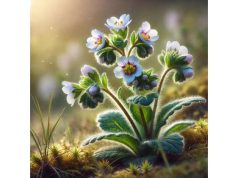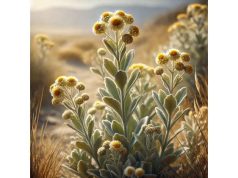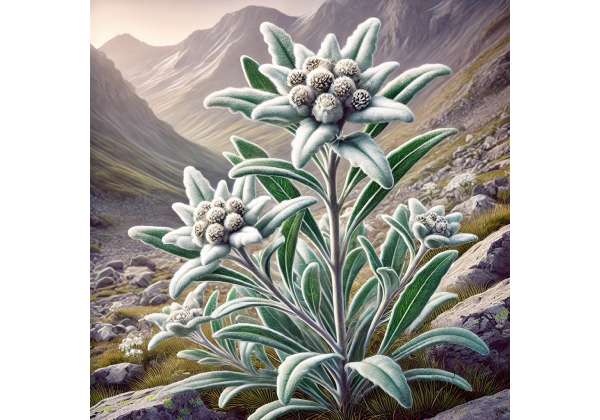
Edelweiss is one of those rare herbs that carries both cultural romance and real scientific interest. Best known as the small, white alpine flower associated with the mountains of Europe, Leontopodium alpinum has a long history in traditional medicine and a growing place in modern skin care. What makes it stand out is not only its appearance, but the chemistry it developed to survive harsh altitude, strong UV exposure, cold air, and dry rocky soils.
Those stress conditions helped the plant build a protective network of polyphenols, phenolic acids, flavonoids, and other compounds that now attract attention for antioxidant, anti-inflammatory, and skin-protective effects. In traditional use, edelweiss appeared in remedies for respiratory discomfort, digestive upset, and irritation. Today, it is used far more often in topical formulas, especially in products aimed at skin barrier support, redness, environmental stress, and visible aging.
That shift matters. Edelweiss is no longer best understood as a general folk tea. It is better seen as a carefully sourced alpine botanical with promising cosmetic and dermatologic uses, modest medicinal evidence, and a safety profile that depends heavily on the form, source, and dose.
Key Facts
- Edelweiss is best supported for topical antioxidant and skin-soothing use, especially in anti-aging and barrier-care products.
- Early research suggests anti-inflammatory and protective effects, but oral medicinal evidence in humans remains limited.
- Published topical studies have used about 0.001% to 1% extract, depending on the application.
- Avoid wild harvesting, internal essential oil use, and self-treatment during pregnancy, breastfeeding, or active skin allergy.
- People with Asteraceae sensitivity or unclear product sourcing should avoid unsupervised use.
Table of Contents
- What is edelweiss
- Key compounds and properties
- Does edelweiss help skin
- Other possible benefits
- How to use edelweiss
- How much edelweiss to use
- Safety and who should avoid it
- What the evidence really says
What is edelweiss
Edelweiss, or Leontopodium alpinum, is a perennial alpine plant in the daisy family. It grows in high mountain environments, especially on rocky limestone slopes, where cold wind, strong sunlight, and low-nutrient soil create constant environmental stress. That harsh setting is not just a botanical detail. It helps explain why edelweiss produces an unusually protective chemistry and why modern formulators became interested in it in the first place.
Historically, edelweiss was used in Alpine folk medicine for a range of practical complaints, including coughs, bronchial irritation, abdominal discomfort, diarrhea, dysentery, and fever. It was used as powder, infusion, tincture, and compress depending on region and tradition. Today, those older internal uses still appear in herbal histories, but the plant’s modern role has shifted sharply toward skin care, scalp care, and topical antioxidant support.
One reason for that shift is availability. Wild edelweiss is protected in many regions, so responsible use now depends on cultivation or laboratory callus culture rather than wild harvesting. This is more than an ecological side note. It changes the entire supply chain. Many modern edelweiss extracts are not taken directly from wild mountain flowers, but from controlled plant cultures designed to preserve the species and standardize key compounds.
That makes edelweiss different from many familiar herbs sold as dried teas or kitchen botanicals. In practice, most consumers encounter it in a serum, cream, hair product, or cosmetic extract rather than as a loose medicinal herb. This form matters because the evidence is stronger for topical than oral use.
There is also frequent confusion around naming. You may see edelweiss listed as Leontopodium alpinum, Leontopodium alpinum Cass., or, in older literature, as part of the broader Leontopodium group. For readers, the simplest rule is to look for the exact botanical name on the label and to prefer cultivated or callus-culture extracts from reputable brands.
The most useful modern definition is this: edelweiss is a protected alpine medicinal plant now used mainly as a topical botanical for antioxidant, anti-inflammatory, and skin-resilience support. It still has a traditional internal story, but its strongest present-day case is on the skin, not in the teacup.
Key compounds and properties
Edelweiss has earned scientific attention because its chemistry is unusually rich for such a small mountain plant. Researchers have identified phenolic acids, flavonoids, lignans, terpenoids, coumarins, and other protective compounds across the Leontopodium genus, with several of the most interesting markers concentrated in edelweiss extracts.
The best-known signature compounds are leontopodic acids A and B. These are often treated as the plant’s flagship molecules because they help explain its strong antioxidant identity. They are not the only active substances, but they are among the most distinctive. Alongside them, researchers have reported caffeoylquinic and quinic acid derivatives, chlorogenic-acid-related compounds, flavonoid-rich polyphenols, and smaller amounts of other bioactive plant constituents.
From a practical standpoint, these compounds suggest several core medicinal properties:
- Antioxidant activity, which may help neutralize oxidative stress.
- Anti-inflammatory effects, especially in skin-related models.
- Mild antimicrobial action in early laboratory studies.
- Protective effects on collagen-related pathways and barrier function.
- Possible soothing and anti-redness activity in topical use.
A helpful nuance is that edelweiss chemistry varies by source. Wild aerial parts, cultivated plant material, and callus-culture extracts do not always have identical profiles. In modern commercial use, callus culture is especially important because it allows production of desired compounds without damaging protected mountain populations. That is one reason many published studies focus on callus extracts rather than hand-harvested wild flowers.
This also explains why edelweiss appears so often in anti-aging products. The plant seems to combine two traits formulators like: a strong antioxidant profile and evidence of support for stressed skin. That does not mean it reverses aging in a dramatic sense. It means it may help the skin manage environmental burden more effectively.
Readers sometimes compare edelweiss with better-known plant antioxidants. That can be useful, but the comparison should be fair. Edelweiss is not a magic substitute for every botanical in skin care. It belongs more naturally in the same conversation as gotu kola for connective tissue support, where the interest lies in resilience, protection, and long-term skin quality rather than quick cosmetic masking.
The most grounded takeaway is that edelweiss is chemically interesting because it is a stress-adapted plant. Its compounds are part of its own survival system, and modern herbal and cosmetic use is essentially an attempt to borrow some of that protective logic for human skin and tissue care.
Does edelweiss help skin
This is where edelweiss makes its strongest case. Most modern interest in Leontopodium alpinum centers on the skin, and for good reason. The available research, while still limited, is more coherent here than in nearly any other use category. Studies on edelweiss callus extracts suggest antioxidant protection, reduced inflammatory signaling, support against photoaging-related stress, and possible improvements in visible skin quality when used topically.
The most realistic way to describe its skin role is not “miracle anti-aging plant,” but “protective support botanical.” It appears most relevant for skin exposed to environmental stress, redness, dullness, and early visible signs of aging. That includes concerns such as fine lines, weakened barrier function, and irritation from light or pollution exposure.
Several pathways make this plausible. In laboratory and cell-based models, edelweiss extracts have been associated with:
- Reduced reactive oxygen species.
- Lower expression of inflammatory mediators.
- Lower MMP-1 activity, which matters because MMP-1 is tied to collagen breakdown.
- Better collagen-related signaling in stressed skin cells.
- Improved barrier-related gene expression in some models.
The small human evidence that does exist is topical rather than oral. In one published cosmetic study, regular facial application of an edelweiss callus extract was linked with improvements in periorbital wrinkles, elasticity, dermal density, and skin thickness compared with placebo. That does not make edelweiss a drug treatment, but it does push it beyond purely theoretical skin care hype.
A second practical area is scalp and hair-support use. A topical edelweiss extract has also been studied for hair density and the maintenance of the growth phase in hair follicles. That does not mean the plant is now a first-line hair-loss treatment, but it does suggest its activity may extend beyond simple moisturization.
Still, readers should keep expectations in proportion. Edelweiss seems most useful as a supportive ingredient in well-formulated topical products, not as a standalone answer to deep wrinkles, chronic inflammatory skin disease, or clinically significant hair loss. It belongs in a layered approach.
That is why it makes sense alongside other gentle skin-support herbs. Someone who likes edelweiss for environmental stress and antioxidant defense might also appreciate calendula for gentle topical support, though the texture of evidence and the main actions are not identical.
In simple terms, yes, edelweiss appears to help the skin, especially when used topically and consistently. Its benefits are most believable in the areas of barrier support, calmness, antioxidant defense, and visible skin quality over time. That is a meaningful role, even if it is less dramatic than marketing language often suggests.
Other possible benefits
Outside the skin, edelweiss has a broader traditional reputation than most modern buyers realize. Older folk use linked it with coughs, bronchial irritation, sore throat, abdominal pain, diarrhea, dysentery, and fever. Laboratory studies also point toward anti-inflammatory, antimicrobial, analgesic, and possibly neuroactive effects. The important caveat is that most of these areas remain early-stage and are not backed by strong modern human trials.
The first category is respiratory comfort. Traditional use suggests the herb was seen as useful for upper-airway and chest complaints, especially in mountain folk practice. That history is real, but modern evidence has not caught up in a way that would justify strong claims. If edelweiss has value here, it is more likely as a mild traditional support herb than as a clinically proven respiratory botanical.
The second category is digestive use. Historical records describe it for diarrhea, dysentery, abdominal aches, and feverish gastrointestinal conditions. Some newer ethnoveterinary work in Switzerland also documents infusion use for diarrhea in livestock. This is a fascinating continuity point, because it suggests the plant’s digestive reputation did not vanish entirely. But again, modern human dosing and trial data are sparse.
Other possible areas include:
- Mild antimicrobial action in laboratory tests.
- Anti-inflammatory effects in skin and vascular cell models.
- Analgesic or anti-swelling activity in older animal studies.
- Hair and scalp support when used topically.
- Exploratory neuroprotective or cholinergic interest from older mechanistic work.
This breadth can mislead readers if it is not framed carefully. A plant with many plausible actions is not the same as a plant with many clinically proven uses. Edelweiss is a classic example of that difference. It has enough chemistry and enough traditional history to keep researchers interested, but not enough human evidence to justify broad internal self-treatment.
That is especially relevant because modern edelweiss is now mostly sold as a cosmetic ingredient, not as a widely standardized oral remedy. So when people search for “edelweiss benefits,” they often find a blend of traditional medicine, cosmeceutical marketing, and early lab research presented as if they are equally strong. They are not.
A fair comparison is to think of edelweiss as a traditional support herb that overlaps with other seasonal botanicals, though with a far stronger modern skin-care identity. For respiratory comfort, for example, people looking at alpine or household herbs may also explore elderflower in traditional winter infusions, which has a more familiar oral use pattern than edelweiss today.
The balanced conclusion is that edelweiss may have benefits beyond the skin, but those uses remain secondary. At present, its non-topical benefits are better described as historically interesting and biologically plausible than as confidently established.
How to use edelweiss
The best way to use edelweiss depends on the goal, but for most people the modern answer is topical use. Unlike culinary herbs that move easily from tea to capsule to kitchen, edelweiss is now most practical in professionally prepared skin and scalp products. This reflects both the evidence and the reality that wild edelweiss is protected in many regions.
The most common modern forms include:
- Facial serums or creams for antioxidant and anti-aging support.
- Barrier-care products for stressed or reactive skin.
- After-sun or environmental-defense formulas.
- Scalp tonics and leave-on hair serums.
- Standardized cosmetic extracts in lotions or gels.
For many readers, the smartest approach is to choose a finished product instead of trying to improvise with raw plant material. A well-made formula gives you clearer concentration, better preservation, and less risk of contamination or species confusion. It also reduces the temptation to use stronger and harsher preparations than the plant probably needs.
If you are using edelweiss on the skin, a practical approach looks like this:
- Start with a cultivated or callus-culture product from a reputable brand.
- Patch test on a small area for 24 to 48 hours.
- Use it on clean skin once daily at first.
- Increase only if your skin tolerates it well.
- Avoid combining it with too many new active products at the same time.
Raw internal use deserves more caution. Traditional powders, infusions, and tinctures do exist in the historical record, but there is no widely accepted clinical oral dosing standard for modern consumers. That means self-directed internal use should be approached carefully, if at all. If someone still chooses a tea or tincture from cultivated food-grade material, the best rule is to keep it conservative, short term, and secondary to safer, better-defined options.
This is also a plant where sourcing matters ethically. Wild-picked edelweiss can be illegal or ecologically harmful depending on location. Modern herbal use should favor cultivated or cell-culture material rather than treating wild mountain populations as a wellness resource.
From a practical user perspective, edelweiss works best when matched to what it actually does well: daily skin resilience, calm support, and environmental defense. It is not a plant that needs dramatic home extraction or heavy medicinal experimentation. Its strengths are more refined than that.
For users who prefer simple soothing botanicals, it may also fit within a broader routine that includes calming herbs such as chamomile for skin and irritation support. The key is to use edelweiss as a focused botanical, not as an all-purpose cure.
How much edelweiss to use
Dosage is one of the most important areas to handle honestly. There is no standard, evidence-based oral dose for edelweiss that clinicians routinely use. That alone separates it from more established medicinal herbs. Most of the useful modern dosing information comes from topical research and product design, not from oral trials in humans.
For topical use, published research gives a few helpful landmarks:
- One human hair-related study examined 0.001% edelweiss extract in ex vivo follicle work and used a leave-on serum daily in people.
- One facial study used a 1% edelweiss callus culture extract in a placebo-controlled cosmetic setting.
- Cell studies on photoaging or blue-light stress use much higher experimental concentrations, but those should not be translated directly into real-life product use.
That means the most realistic consumer takeaway is not a universal percentage, but a range of expectations. Cosmetic products may use very low concentrations when the extract is highly active or standardized, while other finished products may rely on different formulation systems. More extract is not automatically better.
A sensible way to think about dose is by format:
- Serums and creams: follow the label exactly, especially if the product is standardized.
- Leave-on hair products: daily use is usually more relevant than a higher concentration.
- Multi-ingredient formulas: assess the full product, not just the edelweiss percentage.
- DIY preparations: generally not the best place to start with this herb.
For oral use, caution is the rule. There is still no broadly accepted human medicinal dosing range, and modern products are often not designed for internal use at all. If a cultivated, food-grade edelweiss tea or tincture is marketed for ingestion, it should be used strictly according to the manufacturer’s instructions rather than guessed at from old folk practice.
Duration matters too. Topical use often depends on consistency over weeks rather than on a single large application. In the small clinical skin and hair studies, benefits were linked with regular repeated use, not with one-time treatment. That is typical for plant-based topical support.
A practical dosage principle emerges from this evidence: with edelweiss, form matters more than amount. A well-formulated, moderate-dose topical product used consistently is far more reasonable than chasing aggressive concentrations or improvising an internal regimen without guidance.
So, if the question is “How much edelweiss should I use?” the best honest answer is this: for skin and scalp, use a finished product as directed, knowing research has used roughly 0.001% to 1% extract depending on the application. For oral use, there is still too little standardization to recommend a confident general dose.
Safety and who should avoid it
Edelweiss appears fairly well tolerated in topical use, but “fairly well tolerated” is not the same as fully established safe in every form. The biggest safety issue is that consumers often assume a charming alpine flower must be gentle in every context. That is not a reliable way to judge any herb. Safety depends on preparation, concentration, route of use, and individual sensitivity.
For skin products, the main risks are ordinary botanical ones:
- Contact irritation.
- Allergic rash.
- Stinging when applied over broken or highly inflamed skin.
- Reactivity when layered with strong acids, retinoids, or fragranced products.
Because edelweiss belongs to the Asteraceae family, people with sensitivities to related plants should be especially cautious. A family history of reacting to daisies, ragweed, chamomile, or similar botanicals does not guarantee a reaction, but it raises the odds enough to justify patch testing.
Internal use raises more uncertainty than topical use. There is not enough modern human safety data to support casual long-term oral use, especially in concentrated extract form. That means several groups should avoid self-directed internal use unless guided by a qualified clinician:
- Pregnant people.
- Breastfeeding people.
- Young children.
- People with multiple medications or complex chronic disease.
- Anyone with known Asteraceae allergy.
- Anyone using a product with unclear botanical sourcing.
Another practical safety issue is wild harvesting. In many regions, wild edelweiss is protected. Beyond the legal concern, wild collection also creates ecological pressure on a culturally and botanically significant species. Responsible safety therefore includes environmental safety: use cultivated or callus-culture products, not illegally harvested wild plants.
There is also a quality-control issue. Some products market “alpine flower” or “edelweiss complex” without clearly identifying whether the ingredient is a whole-plant extract, a callus culture extract, or simply a fragrance concept. That matters because weak labeling makes it impossible to judge likely effect or safety.
A smart safety checklist is simple:
- Check the botanical name.
- Prefer cultivated or callus-culture sourcing.
- Patch test topical products.
- Avoid internal essential oil use.
- Do not use it to replace treatment for persistent skin disease, respiratory illness, or digestive infection.
A final point matters for expectations. Edelweiss is better understood as a supportive botanical than a rescue treatment. That alone improves safety because it reduces the chance that someone delays proper care while waiting for a plant to do a job it was never proven to do.
What the evidence really says
The evidence for edelweiss is promising, but it is narrow. That is the clearest way to summarize it. Leontopodium alpinum has credible phytochemistry, interesting laboratory data, and a small but meaningful amount of topical human research. At the same time, it has very limited modern evidence for oral medicinal use. Readers who understand that balance are far less likely to be misled by either hype or unnecessary skepticism.
The strongest points in favor of edelweiss are these:
- Its chemistry is distinctive and well characterized.
- Antioxidant activity has been shown repeatedly in extract studies.
- Anti-inflammatory effects are plausible and supported in skin-related models.
- There is some controlled human evidence for topical skin and hair applications.
- Modern cultivation and callus-culture systems make sustainable use possible.
The main limitations are just as important:
- Most clinically relevant work is topical, not oral.
- Many studies use callus-culture extracts rather than traditional whole-herb forms.
- Sample sizes in human studies are small.
- Experimental cell concentrations do not translate neatly into product advice.
- Long-term internal safety and interaction data are still sparse.
This is why edelweiss should not be described as a fully established medicinal herb in the same way as better-studied botanicals. It is more accurate to call it a modern cosmeceutical plant with traditional medicinal roots. That phrase may sound less romantic, but it fits the actual evidence.
This evidence profile also explains why consumers can feel confused. Marketing language often presents edelweiss as if it were simultaneously a mountain immune tonic, a digestive herb, a wound remedy, and a premium anti-aging ingredient. In reality, the best-supported lane is topical skin support, followed by scalp-care potential. The older internal traditions are historically interesting, but not equally validated.
A useful comparison is with herbs that already have a clearer topical reputation. People who want straightforward expectations may also look at witch hazel for topical use patterns, where the main actions are easier to define. Edelweiss is more specialized and arguably more elegant, but the evidence is still developing.
So what should a careful reader conclude? Edelweiss is worth paying attention to, especially for skin-barrier support, antioxidant defense, and gentle anti-aging applications. It is not yet strong enough to justify broad oral medicinal claims. Used that way, with its strengths and limits both in view, it becomes a genuinely useful herb rather than just a beautiful one.
References
- Leontopodium species: Phytochemistry, biosynthesis, synthesis, pharmacology, and synthetic advancement 2025 (Review)
- Profiling of Polyphenolic Compounds of Leontopodium alpinum Cass Callus Cultures Using UPLC/IM-HRMS and Screening of In Vitro Effects 2021 (Phytochemistry Study)
- Effects and Mechanism of the Leontopodium alpinum Callus Culture Extract on Blue Light Damage in Human Foreskin Fibroblasts 2023 (Preclinical Study)
- An extract of Leontopodium alpinum inhibits catagen development ex vivo and increases hair density in vivo 2022 (Clinical and Ex Vivo Study)
- Anti-Aging Effects of Leontopodium alpinum (Edelweiss) Callus Culture Extract Through Transcriptome Profiling 2020 (Clinical and Mechanistic Study)
Disclaimer
This article is for educational purposes only and does not replace medical advice, diagnosis, or treatment. Edelweiss is used mainly in topical products, and its oral medicinal use is not well standardized. Product quality, concentration, allergy history, pregnancy status, skin condition, and other treatments all affect safety. Seek professional guidance before using edelweiss internally or on compromised skin, and do not rely on it alone for persistent digestive, respiratory, dermatologic, or hair-loss problems.
If you found this article helpful, please share it on Facebook, X, or any other platform you prefer.