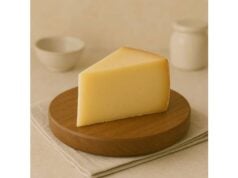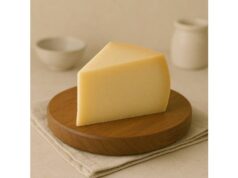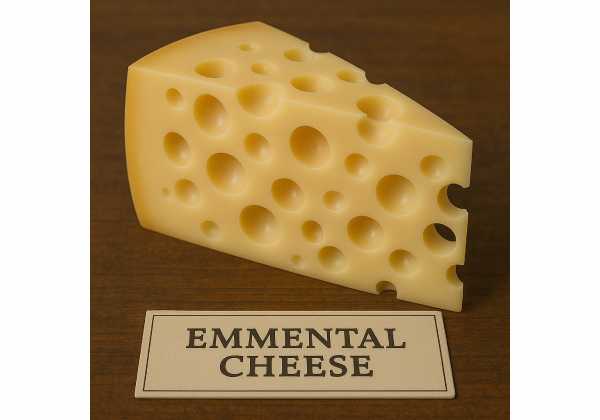
Buttery, nutty, and famously “holey,” Emmental cheese (the classic Swiss-style wheel) brings dependable meltability and steady nutrition to everyday cooking. Its elastic paste and signature eyes come from propionic fermentation, which also develops a mellow sweetness and toasted notes that suit hot and cold dishes alike. Emmental is naturally low in lactose and rich in high-quality protein, calcium, phosphorus, and vitamin B12; potassium, zinc, selenium, and iodine can also contribute meaningfully depending on the milk and region. Because it melts evenly and browns without greasiness, Emmental is ideal for gratins, croque-monsieur, omelets, and soups—yet it slices neatly for sandwiches and cheeseboards. The main cautions are familiar: sodium and saturated fat add up quickly with large portions, and milk allergy remains a strict contraindication. This guide brings together precise per-100-gram nutrition tables, evidence-based benefits and risks, smart shopping and storage tips, and kitchen strategies for big flavor with moderate portions—so you can enjoy Emmental’s character while staying aligned with your health goals.
Nutrition Snapshot
- Calcium- and protein-dense with vitamin B12 and phosphorus per 100 g.
- Naturally low in lactose; still unsafe for milk allergy.
- Typical serving: 30 g (one slice), enjoy several times weekly within a balanced diet.
- Limit if you must restrict sodium, saturated fat, or tyramine (for certain medications).
Table of Contents
- Emmental at a Glance: Origin, Style, and Uses
- Emmental Nutrition Profile (per 100 g)
- Evidence-Based Health Benefits of Emmental
- Risks, Allergies and Interactions
- Selecting, Quality, Sustainability and Storage
- Preparation, Cooking and Nutrient Retention
- Portions, Comparisons and FAQs
Emmental at a Glance: Origin, Style, and Uses
Emmental (Emmentaler) is a large, natural-rind, semi-hard cheese that originated in Switzerland’s Emme valley. It is crafted from cow’s milk, cooked and pressed, then aged to develop a springy, sliceable body with the well-known round “eyes.” Those eyes—and the delicate hazelnut aroma—are by-products of propionic fermentation during warm room (thermophilic) affinage. Young wheels taste milky and sweet; longer aging deepens nuttiness and yields a drier paste that grates and browns predictably.
Understanding style and quality helps you pick the right piece for your kitchen:
- Milk and make: Traditional wheels are made from high-quality cow’s milk, heated and pressed to expel whey, then brined and ripened. The warm-room stage allows carbon dioxide to form eyes and develop buttery complexity without sharpness.
- Age cues: Young Emmental (around 4–12 weeks) is supple and mildly sweet, perfect for sandwiches or quick melts. Mid-aged styles (3–6 months) show bigger eyes, a firmer cut, and toastier aroma that excels in gratins and savory pastries.
- Texture and melt: Emmental stretches without oiling off and browns evenly, making it a reliable choice for fondue blends, croque-monsieur, vegetable bakes, and soufflés. It also shreds cleanly and resists clumping when tossed with a little starch in sauces.
Flavor pairing tips
- Bright and crunchy: Apples, pears, grapes, cucumbers, radishes, and dill offer contrast to Emmental’s buttery sweetness.
- Vegetable mains: Roasted brassicas, mushrooms, tomatoes, and potatoes carry its flavor well; add lemon or mustard to keep dishes lively.
- Grains and legumes: Whole-grain bread, rye, farro, and lentils build fiber and potassium to balance sodium at the meal level.
Substitutions
When a recipe lists “Swiss cheese,” Emmental (or a similar Swiss-type) is usually intended. For a richer melt, blend with a little Gruyère; for thrift, mix half Emmental with part-skim mozzarella to keep stretch high while moderating saturated fat and sodium.
Practical nutrition strategy
Cheese concentrates both nutrients and salt. Treat Emmental as a flavor amplifier: use measured slices or gratings to elevate vegetables, beans, and whole grains instead of letting cheese become the bulk of the plate. This approach preserves enjoyment and supports heart-smart patterns.
Emmental Nutrition Profile (per 100 g)
Context: Values reflect plain, unfortified Emmental (Swiss-type cheese), per 100 g. A practical household portion is 30 g (one standard slice or a small handful of shreds). Daily Values (%DV) are adult label DVs.
Macros and Electrolytes (per 100 g)
| Nutrient | Amount | %DV |
|---|---|---|
| Energy | ~400 kcal | — |
| Water | ~39 g | — |
| Protein | ~27.5 g | 55% |
| Total fat | ~31.4 g | 40% |
| Saturated fat | ~18.6 g | 93% |
| Carbohydrate | ~1.5 g | 1% |
| Total sugars | ~0 g | — |
| Fiber | 0 g | 0% |
| Sodium | ~190 mg | 8% |
| Potassium | ~73 mg | 2% |
Fats and Fatty Acids (per 100 g)
(varies with season, feed, and make)
| Component | Amount |
|---|---|
| Monounsaturated fat | ~8.2 g |
| Polyunsaturated fat | ~1.4 g |
| Omega-3 (total) | ~0.13 g |
| Omega-6 (total) | ~0.74 g |
| Cholesterol* | ~94 mg |
*No established %DV for cholesterol on current labels.
Protein and Amino Acids (per 100 g, selected)
| Amino Acid | Amount |
|---|---|
| Leucine | ~3.0 g |
| Lysine | ~2.6 g |
| Valine | ~2.2 g |
| Tryptophan | ~0.41 g |
| Proline | ~3.8 g |
Emmental provides complete, highly bioavailable protein with a leucine profile favorable for muscle protein synthesis.
Vitamins (per 100 g)
| Vitamin | Amount | %DV |
|---|---|---|
| Vitamin A (RAE) | ~292 µg | 32% |
| Riboflavin (B2) | ~0.32 mg | 25% |
| Vitamin B12 | ~3.1 µg | 129% |
| Folate (DFE) | ~10 µg | 2% |
| Vitamin D | ~0 µg | 0% |
| Vitamin K (menaquinone-4, K2) | ~6–7 µg | — |
| Choline | ~14 mg | 3% |
Minerals (per 100 g)
| Mineral | Amount | %DV |
|---|---|---|
| Calcium | ~900 mg | 69% |
| Phosphorus | ~580 mg | 46% |
| Zinc | ~4.3 mg | 39% |
| Selenium | ~30 µg | 55% |
| Magnesium | ~34 mg | 8% |
| Iodine | ~140 µg | 93% |
| Iron | ~0.1 mg | 1% |
Glycemic & Acid–Base Metrics
Available carbohydrate is minimal; practical glycemic impact is negligible at typical portions. As with most aged cheeses, Emmental contributes a modest positive acid load.
Allergens & Intolerance Markers
Contains milk proteins (casein, whey). Lactose is typically very low due to fermentation and aging, but milk allergy remains a strict contraindication.
Additives & Fortification
Classic Emmental is unfortified. Some retail packs may include surface natamycin as an antifungal treatment or anti-caking agents in shredded products. Remove natural rinds and do not eat non-edible coatings unless labeled otherwise.
Notes: Nutrient values vary by dairy herd, geography, and aging length. For sodium-reduced or lower-fat versions, check labels; values will differ from these tables.
Evidence-Based Health Benefits of Emmental
1) Bone-supporting matrix: calcium, phosphorus, and protein together
Emmental concentrates calcium and phosphorus in a protein matrix, which supports bone mineralization and maintenance. Per 100 g, it routinely provides ~69% DV calcium and ~46% DV phosphorus along with ~27.5 g complete protein. For day-to-day meals, even a 30 g slice adds roughly 7–8 g protein and up to a quarter of a day’s calcium when combined with leafy greens, legumes, or fortified grains.
2) Meaningful B-vitamin contribution
A 100 g portion supplies ~129% DV vitamin B12 and ~25% DV riboflavin. B12 supports red blood cell formation and neurologic function, while riboflavin helps convert food to energy. If your diet is light on meat or fortified foods, small servings of Emmental can help close B-vitamin gaps (especially when paired with yogurt, eggs, fish, or fortified plant foods).
3) Naturally low in lactose
Fermentation and aging reduce lactose to trace levels in Swiss-type cheeses. Many people with lactose intolerance tolerate small servings (for example, 15–30 g) without symptoms—especially when eaten with other foods. Tolerance varies, so build gradually and monitor comfort.
4) Satisfying protein that supports meal quality
Cheese’s savory impact per gram can improve satisfaction, helping you build meals around vegetables and whole grains while keeping portions reasonable. Think: a thin Emmental layer under toasted breadcrumbs on roasted broccoli, or a measured sprinkle into a whole-grain omelet with spinach and tomatoes.
5) Cardio-metabolic context: neutral within balanced patterns
While Emmental contains saturated fat, the totality of modern evidence suggests neutral to modestly favorable associations between moderate cheese intake and cardiovascular outcomes when part of plant-forward patterns. The “food matrix” (minerals, fermentation products, and protein structure) appears to attenuate LDL-cholesterol responses compared with isolated saturated fat. In practice, pairing Emmental with potassium-rich produce and swapping butter for olive oil at the same meal is a sensible strategy.
6) Culinary versatility with steady melt
Emmental’s even melt and browning behavior make it a practical way to add creaminess without cream. Blended with a sharper, lower-moisture cheese (for example, a little aged Gruyère or Parmesan), you can use less total cheese while achieving a more pronounced flavor.
From benefits to habits
- Use 20–30 g as a finishing accent on vegetables or grains.
- Combine with beans, lentils, or eggs to create high-satiety, balanced plates.
- Choose lower-sodium breads and condiments to offset cheese sodium.
- If aiming to limit saturated fat, keep Emmental to small portions and cook with olive oil.
Risks, Allergies and Interactions
Sodium and saturated fat
Per 100 g, Emmental typically provides ~190 mg sodium and ~18.6 g saturated fat. In real life, portions matter more than 100-g numbers: a 30 g slice has roughly ~60 mg sodium and ~5.6 g saturated fat. People managing blood pressure, cardiovascular disease, or high LDL cholesterol should use small servings and emphasize vegetables, legumes, whole grains, and unsaturated oils across the day.
Lactose intolerance vs. milk allergy
Aged cheeses like Emmental are usually very low in lactose. That said, milk allergy (an immune response to milk proteins) is a strict reason to avoid Emmental altogether. If symptoms follow tiny amounts, obtain evaluation for allergy rather than assuming lactose is the cause.
Pregnancy considerations
Pasteurized, semi-hard cheeses such as Emmental are generally considered safe when refrigerated and handled properly. Avoid unpasteurized cheeses unless cooked until steaming hot. Always check labels for “pasteurized milk.”
Biogenic amines (histamine and tyramine)
Aged cheeses can contain biogenic amines formed during fermentation and ripening. Sensitive individuals may experience flushing, headaches, or blood-pressure changes. People taking monoamine oxidase inhibitor (MAOI) medications must follow a tyramine-restricted diet; if Emmental is permitted at all, portions must be very small and fresher cuts are preferable. Discuss specifics with your clinician or pharmacist.
Weight management and energy density
Cheese is calorie-dense. Using Emmental as a flavor booster—not the main component—keeps meals enjoyable without overshooting energy needs. Pre-portion slices or cubes (for example, 20–30 g) to make restraint easy.
Food safety and handling
Keep Emmental at ≤4 °C (≤40 °F), wrap cut faces to minimize moisture loss and odors, and store away from the refrigerator door to avoid temperature swings. Trim or discard surface growths you cannot confidently identify; if mold penetrates the interior or odors are sharp or sour, discard.
Selecting, Quality, Sustainability and Storage
How to choose a good piece
- Appearance and feel: Look for a clean, natural rind and a pale straw-to-light-gold paste with round, glossy eyes. The cut surface should be slightly moist, elastic, and free of cracks or large splits. Excess sweating, strong ammonia, or sour odors signal poor handling.
- Origin and style: Authentic Swiss Emmental, European Swiss-type, and regional Swiss-style cheeses share similar traits. Age statements guide use: younger for sandwiches, mid-aged for gratins and baking.
- Forms and convenience: Buy wedges for quality and shred as needed; pre-sliced or pre-shredded packs are convenient but may include anti-caking agents and lose aroma faster.
Label details that matter
- Pasteurized milk: Choose pasteurized for pregnancy-safe use.
- Sodium and fat: “Light” or reduced-sodium versions exist; expect slightly firmer texture and a milder melt.
- Rind and coatings: Natural rinds are not usually eaten. Avoid consuming wax or plastic coatings.
Storage and shelf life
- Unopened: Keep refrigerated; quality often holds for weeks past purchase if sealed.
- After opening: Rewrap cut faces in parchment (to breathe) plus a loose outer layer of foil, or use a ventilated cheese box. Aim to finish within 3–4 weeks for best flavor.
- Freezing: Freeze grated Emmental up to 2–3 months for cooked uses. Thaw in the refrigerator; expect a crumblier texture.
- Mold management: For firm cheeses with a small spot of surface mold, trim at least 2.5 cm (1 inch) around and below the spot. Discard if unusual colors appear or mold threads run through the interior.
Sustainability and budget
- Local producers: Smaller dairies may publish pasture, feed, and animal-welfare practices; supporting transparent producers can lower transport impact and improve freshness.
- Waste less: Buy only what you’ll finish in a few weeks; freeze small bags of grated leftovers for omelets or casseroles.
- Value tips: Emmental delivers excellent calcium-per-euro and protein-per-euro; purchase mid-sized wedges and portion into 30 g slices for predictable nutrition and cost control.
Preparation, Cooking and Nutrient Retention
Heat behavior and vitamins
Minerals (calcium, phosphorus, zinc, selenium) and vitamin B12 are relatively heat-stable in the cooking temperatures typical for cheese dishes. Riboflavin can decline with prolonged high heat. Emmental’s even melt allows gentle methods—lower temperatures and shorter times—to retain texture and preserve vitamins.
Best methods for Emmental
- Gentle melts (sandwiches, toasties): Cook over low-medium heat with a lid to trap steam. This softens slices without browning the fat.
- Gratins and casseroles: Bake the base nearly to doneness; add a thin Emmental layer in the last 5–8 minutes and finish under a light broil for color.
- Light sauces: Take the pan off heat and whisk in finely grated Emmental with a teaspoon of corn starch or flour to prevent separation; residual heat is usually enough to melt the shreds smoothly.
- Soups: Blend a small handful into pureed vegetable soups off heat for body, or float a slice on whole-grain toasts and broil briefly (French-style).
- Baking: In scones or savory muffins, Emmental’s lower moisture avoids greasy crumbs; balance with herbs, mustard, or black pepper for heightened flavor at lower doses.
Portion-smart flavor strategies
- Pre-measure: Plan 20–30 g per person for topping or 30–40 g for a light main in mixed dishes.
- Stretch with plants: Add roasted mushrooms, spinach, leeks, or tomatoes for umami so you can use less cheese.
- Use acidity: Lemon, vinegar, or mustard brightens richness and reduces the need for extra salt.
- Blend cheeses: Combine Emmental with a small amount of a sharper, drier cheese (for example, aged Parmesan). You’ll get more perceived flavor while using fewer total grams.
Food safety while cooking
Hold hot dishes at ≥60 °C (140 °F), refrigerate leftovers within 2 hours, and reheat gently to avoid oiling off and rubbery textures.
Portions, Comparisons and FAQs
What is a sensible serving of Emmental?
For most adults, 30 g (one standard slice or a small handful of shreds) is a practical serving. That typically provides ~100–120 kcal, ~7–8 g protein, ~5–6 g saturated fat, and ~60 mg sodium (brand-dependent). Enjoy Emmental several times per week within a diet emphasizing vegetables, legumes, whole grains, fruit, nuts, and olive oil.
How does Emmental compare with other cheeses? (per 100 g)
- Emmental (Swiss-type): ~400 kcal; ~27.5 g protein; ~31 g fat; sodium usually lower than many cheeses; calcium ~900 mg.
- Gruyère: Similar melt with deeper savory notes; often higher sodium and slightly higher fat.
- Edam: Milder, leaner; typically less fat and sodium per gram but also less calcium.
- Cheddar (mild): Sharper taste; sodium tends to be higher; melt is reliable but can oil off at high heat.
- Mozzarella (part-skim): Lower fat and sodium; stretchier but milder flavor.
Is Emmental suitable for lactose intolerance?
Often yes, in small portions. Start with 15–20 g eaten with other foods and increase gradually based on comfort. Symptoms after tiny amounts suggest another issue such as milk protein allergy; seek medical evaluation.
Is Emmental safe in pregnancy?
Pasteurized semi-hard cheeses like Emmental are generally safe when properly stored. Avoid unpasteurized versions unless cooked until steaming hot. Always check labels.
What about tyramine and medications?
Aged cheeses can contain tyramine, which may interact with MAOI antidepressants and certain antibiotics. If you take these medicines, follow a clinician-guided tyramine-restricted plan; if any cheese is allowed, keep portions very small and choose fresher cuts.
How do I enjoy the flavor while using less?
- Shred very finely to maximize surface area and melt.
- Layer with acidity and herbs for contrast.
- Combine 20 g Emmental + 5 g aged Parmesan for bigger flavor impact than 25 g of Emmental alone.
Bottom line
Use Emmental as a flavorful accent. Measure portions, pair with plant foods, and apply gentle heat techniques. You’ll keep sodium and saturated fat in check while enjoying its signature nuttiness and dependable melt.
References
- Nutrition Facts for Swiss Cheese 2024 (Data Resource)
- Cheese consumption and multiple health outcomes: an umbrella review and updated meta-analysis of prospective studies 2023 (Umbrella Review)
- A Review on the General Cheese Processing Technology, Flavor Biochemistry, and the Key Factors Affecting the Cheese Quality 2021 (Review)
- Eating, Diet, & Nutrition for Lactose Intolerance 2025 (Guidance)
- Foods to avoid in pregnancy 2024 (Guidance)
Disclaimer
This guide is educational and does not replace personalized medical advice, diagnosis, or treatment. If you have cardiovascular disease, high blood pressure, kidney disease, milk allergy, lactose intolerance, are pregnant, or take medications that interact with aged foods (such as MAOIs), consult a qualified healthcare professional for individualized recommendations on cheese selection, portions, and frequency.
If you found this article helpful, please consider sharing it on Facebook, X (formerly Twitter), or any platform you prefer. Your support helps us continue creating clear, evidence-based resources.