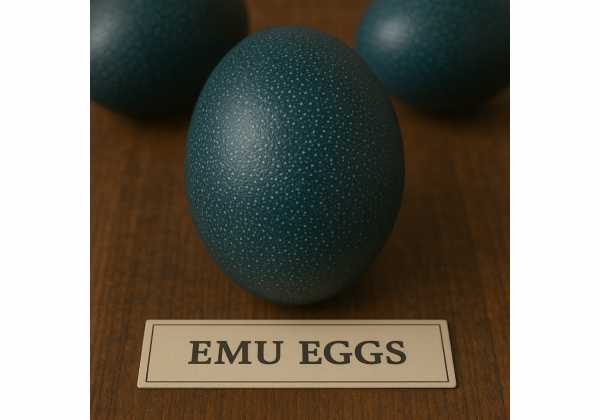
Emu eggs turn heads for good reason: each emerald-green shell can weigh half a kilogram or more, with a rich yolk and a mild, savory flavor that suits both hearty breakfasts and special-occasion dishes. Compared with hen eggs, emu eggs are roughly ten times larger, with a near 1:1 yolk-to-white ratio that produces custards, quiches, and baked goods with a notably silky texture. A single egg can feed a crowd, yet the nutrition per 100 g is comparable to familiar table eggs—plenty of high-quality protein and essential micronutrients, with very little carbohydrate. Because emu eggs are seasonal and niche, they are typically sourced from specialty farms or markets; freshness, proper storage, and thorough cooking matter for safety just as they do for any egg. This guide brings together what is known about emu egg composition, benefits and risks, practical buying and storage tips, and the best ways to prepare them while retaining nutrients and that prized, luxurious mouthfeel.
Top Highlights
- Provides complete protein and fat-soluble vitamins with very low carbohydrates per 100 g.
- Large yolk and gentle flavor excel in custards, quiches, and rich pastries.
- Handle like other eggs: refrigerate, keep shells intact, and cook to a safe internal temperature.
- Typical serving: 100 g (about one-sixth of an egg), enjoyed 1–3 times weekly in a varied diet.
- People with egg allergy or on physician-directed cholesterol restriction should avoid or limit.
Table of Contents
- Emu eggs: detailed overview
- Emu egg nutrition profile
- Evidence-based benefits of emu eggs
- Risks, allergies and interactions
- Choosing, sustainability and storage
- Cooking emu eggs and retention
- Portions, comparisons and FAQs
Emu eggs: detailed overview
Emu eggs come from Dromaius novaehollandiae, a large, flightless bird native to Australia. Their shells are deep green to nearly black with a pebbled surface and multiple pigment layers. Most eggs weigh roughly 500–650 g, though sizes vary by age, season, and bird. A practical kitchen rule: one emu egg substitutes for about 10–12 standard chicken eggs. Inside, you will notice a near one-to-one ratio of yolk to albumen (egg white), which is different from hen eggs, where the white typically outweighs the yolk about two to one. That balance gives emu eggs their trademark richness and sets up a different behavior in recipes—more body from yolk lipids, slightly less foaming power than an equal mass of hen egg white, and a custard that sets softly yet slices clean.
The flavor is familiar—savory and eggy—without the pronounced minerality you might associate with some duck or goose eggs. Texture stands out: because the yolk proportion is high, scrambled emu eggs cook up velvety; quiches and flans feel luxurious; and enriched doughs (brioche, challah, laminated pastries) get a golden hue and tender crumb. For large-format dishes—party frittatas, tortilla española, or baked strata—one egg is incredibly convenient.
Availability is seasonal in many regions (emu hens lay mostly in cooler months), and most eggs are sold directly by small farms or specialty markets. If you buy fresh for cooking, choose clean, uncracked shells that feel heavy for their size. Displayed eggs are sometimes emptied for craft or art; avoid those for food use, and never rely on decorative eggshells for consumption.
From a nutrition standpoint, 100 g of raw emu egg provides complete protein with all essential amino acids, substantial fat from the yolk, very little carbohydrate, and a spectrum of vitamins and minerals comparable to table eggs. Like all shell eggs, emu eggs can carry Salmonella on the shell or, rarely, inside; sensible handling and thorough cooking mitigate that risk. Because a single egg yields multiple servings, planning for safe storage of leftovers is part of good kitchen practice.
Culinarily, think of emu eggs as a specialty ingredient that behaves like an extra-rich egg. You can whisk portions into sauces (hollandaise, sabayon), bake custards in water baths, or slice hard-cooked wedges for salads. With the right technique, their size becomes a feature rather than a hurdle.
Emu egg nutrition profile
Below are nutrient values per 100 g raw edible portion of emu egg, followed by a baseline micronutrient table derived from widely used whole-egg averages where emu-specific data remain limited. Use these figures to compare on an equal-weight basis and to plan portions when using part of a very large egg.
Macros & Electrolytes (per 100 g)
(whole emu egg; proximate analysis)
| Nutrient | Amount | %DV* |
|---|---|---|
| Energy | 177 kcal | — |
| Water | 71.8 g | — |
| Protein | 12.9 g | 26% |
| Total Fat | 13.8 g | 18% |
| Carbohydrate | 0.2 g | 0% |
| Ash (total minerals) | 1.3 g | — |
*Percent Daily Value (%DV) uses U.S. adult reference intakes: Protein 50 g/day; Total Fat 78 g/day; Carbohydrate 275 g/day. Energy DVs are not listed per FDA labeling format.
Carbohydrates (per 100 g)
| Component | Amount |
|---|---|
| Total Carbohydrate | 0.2 g |
| Dietary Fiber | 0.0 g |
| Total Sugars | ~0.2 g |
Protein & Amino Acids (overview)
- High biological value protein with all essential amino acids.
- Yolk contributes phospholipids (e.g., phosphatidylcholine) and bioactive peptides that form during cooking or digestion.
- Emu eggs’ near 1:1 yolk-to-white ratio yields a higher proportion of yolk-derived nutrients per 100 g of whole egg compared with hen eggs.
Fats & Lipid Components (per 100 g, qualitative)
- Predominantly triglycerides with meaningful phospholipids from yolk (e.g., lecithins).
- Saturated, monounsaturated, and polyunsaturated fatty acids are all present; exact proportions vary by bird diet and season.
- Cholesterol is concentrated in the yolk; whole-egg cholesterol per 100 g is in the same order of magnitude as standard table eggs.
Vitamins (baseline whole-egg values per 100 g; proxy for emu eggs)
| Vitamin | Amount | %DV |
|---|---|---|
| Vitamin A (retinol activity equivalents) | 160 µg | 18% |
| Vitamin D (cholecalciferol) | 2.0 µg | 10% |
| Vitamin E (alpha-tocopherol) | 1.05 mg | 7% |
| Vitamin K (phylloquinone) | 0.3 µg | <1% |
| Thiamin (B1) | 0.04 mg | 3% |
| Riboflavin (B2) | 0.457 mg | 35% |
| Niacin (B3) | 0.075 mg | <1% |
| Pantothenic Acid (B5) | 1.53 mg | 31% |
| Vitamin B6 | 0.17 mg | 10% |
| Folate (DFE) | 47 µg | 12% |
| Vitamin B12 | 0.89 µg | 37% |
Minerals (baseline whole-egg values per 100 g; proxy for emu eggs)
| Mineral | Amount | %DV |
|---|---|---|
| Calcium | 56 mg | 4% |
| Copper | 0.072 mg | 8% |
| Iodine | 21 µg | 14% |
| Iron | 1.75 mg | 10% |
| Magnesium | 12 mg | 3% |
| Manganese | 0.028 mg | 1% |
| Phosphorus | 198 mg | 16% |
| Potassium | 138 mg | 3% |
| Selenium | 30 µg | 55% |
| Sodium | 142 mg | 6% |
| Zinc | 1.29 mg | 12% |
Allergens & Intolerance Markers
- Major egg-white allergens include ovalbumin, ovomucoid, ovotransferrin, and lysozyme; yolk contains less common allergens (e.g., alpha-livetin).
- Avidin in raw egg white tightly binds biotin; cooking denatures avidin and mitigates this concern.
Glycemic & Acid–Base Metrics
- Net carbohydrate is negligible; practical glycemic impact is minimal.
- Protein and phospholipids contribute to satiety.
Notes and footnotes
- Micronutrient values presented in the vitamin and mineral tables reflect widely referenced whole-egg (chicken) baselines and serve as a reasonable proxy when emu-specific datasets are unavailable. Actual emu egg values vary by diet, breed, and husbandry.
- Emu eggs are not typically fortified; flavored or processed products (e.g., brined egg, prepared dishes) can add sodium or other additives not reflected here.
Evidence-based benefits of emu eggs
Complete, efficient protein. Emu eggs deliver all nine essential amino acids in a matrix that cooks readily and digests well. Heat denaturation during cooking improves accessibility of egg proteins to digestive enzymes, supporting efficient absorption. Per 100 g, protein is similar to conventional table eggs, but the higher yolk fraction in emu eggs shifts the sensory experience toward creaminess without forfeiting protein density. For athletes, older adults, and anyone recovering from illness or surgery, high-quality egg protein helps preserve or build lean mass when paired with resistance exercise and adequate energy intake.
Choline and fat-soluble nutrients. Egg yolk is a leading dietary source of choline, a component of phosphatidylcholine and sphingomyelin that supports cell membranes, brain development, and neurotransmission. Fat-soluble vitamins A, D, and E also reside in the yolk, and their absorption is supported by the yolk’s natural lipid matrix. While exact emu-specific levels vary, the overall pattern mirrors that of table eggs: modest vitamin D, meaningful vitamin A and E, and a broad suite of B-vitamins (especially riboflavin and pantothenic acid) per 100 g.
Satiety and blood sugar neutrality. With virtually no carbohydrate and a balance of protein and fat, emu eggs have a low glycemic impact. Swapping refined-carbohydrate breakfasts for egg-based meals often improves fullness through the morning and can reduce between-meal snacking, especially when combined with fiber-rich vegetables or whole grains.
Culinary versatility with functional advantages. The near equal yolk-to-white ratio changes cooking performance in useful ways. Yolks provide phospholipids and emulsifiers that stabilize sauces and batters; the white still foams but yields a tighter crumb and softer set. In practice, emu eggs create custards with fine gel structure and enriched breads with tender bite and excellent color. For foodservice, one egg simplifies batching for large pans of frittata or strata.
Affordability per serving in certain contexts. While a single emu egg costs more than a dozen hen eggs, each yields many portions. When used for events or family meals, the cost per cooked serving can approach regular eggs, especially if purchased directly from farms in season.
Comparable cardiovascular picture to other eggs. Most healthy people can include eggs without adverse effects on blood lipids, provided overall diet quality is sound. Dietary cholesterol affects serum cholesterol modestly for the majority; a smaller subset (“hyper-responders”) may see larger changes and should follow clinician guidance. Emu eggs are best treated like any egg in this respect—enjoyed regularly but not excessively, with cooking methods (poaching, baking, steaming) that minimize added saturated fat.
Who benefits most?
- Home cooks seeking a special-occasion centerpiece that doubles as a protein-rich staple.
- Athletes and active adults aiming for 20–30 g protein per meal (pair emu egg portions with legumes or dairy to reach target).
- Bakers and chefs designing ultra-silky custards or enriched doughs without stabilizers.
Risks, allergies and interactions
Food safety. Like all shell eggs, emu eggs can harbor Salmonella. The risk is controlled by buying from reputable producers, refrigerating promptly, avoiding cracked eggs, keeping raw eggs separate from ready-to-eat foods, and cooking until the white and yolk are firm or egg dishes reach 71–74 °C (160–165 °F). Because a single emu egg yields many portions, divide leftovers into shallow containers and chill within 2 hours.
Allergies. Egg is a common childhood allergen. Key egg-white proteins (ovalbumin, ovomucoid, ovotransferrin, lysozyme) and certain yolk proteins can trigger reactions that range from hives to anaphylaxis. Anyone with a known egg allergy should avoid emu eggs. For those under evaluation, follow an allergist’s plan; families introducing egg to infants should use fully cooked forms and seek individualized guidance if there is severe eczema, prior reactions, or other high-risk features.
Vaccines and egg allergy. Current public health recommendations state that people with egg allergy may receive any influenza vaccine appropriate for their age and health status. This change reflects extensive safety data and removes earlier special precautions related to egg-based vaccines. As with all vaccines, administration should occur in settings equipped to recognize and treat allergic reactions.
Cholesterol and cardiometabolic concerns. The yolk contains cholesterol. For most people, modest egg intake does not meaningfully worsen cardiovascular risk when part of a balanced diet. Individuals with diabetes, familial hypercholesterolemia, or a clinician-directed low-cholesterol plan should tailor frequency and portion size with professional advice. Cooking methods matter: pair emu eggs with vegetables, choose unsaturated cooking oils in small amounts, and keep processed meats off the plate.
Foodborne illness susceptibility. Children under 5, adults over 65, people who are pregnant, and those with weakened immunity face higher risks from Salmonella. In these groups, serve eggs fully cooked, avoid raw or undercooked preparations, and reheat leftovers thoroughly.
Drug-nutrient notes.
- Biotin: large amounts of raw egg white can bind biotin in the gut due to avidin; normal cooking denatures avidin and eliminates this concern.
- Anticoagulants: consistent vitamin K intake matters; eggs are low in vitamin K, so typical emu egg portions are unlikely to affect dosing, but keep overall diet steady.
Environmental and sourcing risks. Emu eggs are niche; informal or unregulated sales can increase the chance of poor handling. Favor farms that follow good agricultural and refrigeration practices. Decorative or blown eggshells are not for eating.
Choosing, sustainability and storage
How to choose high-quality emu eggs.
- Shell integrity: pick clean, intact shells with no cracks; the surface should be evenly pebbled and firm.
- Weight and sound: a fresh egg feels heavy for size; a noticeable slosh when gently shaken can signal age.
- Provenance: favor direct-from-farm sellers or trusted markets that can state lay date and handling practices.
- Purpose clarity: confirm the egg is intended for food, not art or display.
Sustainability and animal welfare. Emu are ratites raised on pasture or mixed systems; their eggs are laid seasonally, and farms often use rotational grazing and low-input feeds. Because production volume is modest, transport emissions can be higher per egg than for hen eggs, but waste is low—one large egg can feed many people, and thick shells are reusable in craft or as calcium additive for garden soil (after thorough cleaning). Choose regional farms to minimize transport, and ask about feed sourcing and land stewardship.
Storage guidelines.
- Refrigeration: store promptly at 4 °C/40 °F or below; a stable, cold temperature extends shelf life and reduces bacterial growth.
- Orientation: keep eggs upright (wider end up) to center the yolk.
- Duration: freshness holds for several weeks when refrigerated; for best quality, use within 3–4 weeks of lay date.
- After cracking: if you will not use a whole egg at once, whisk the contents to a uniform mixture and portion into clean containers (100–150 g each). Label, refrigerate 3–4 days, or freeze up to 3 months. Thaw overnight in the refrigerator and cook fully.
- Leftovers: cooked dishes keep 3–4 days refrigerated; reheat to steaming hot.
Buying tips for kitchens and events.
- Estimate 100 g per person for entrees or 50–75 g as part of a multi-item meal.
- Plan cookware that fits: a deep 30–33 cm skillet or 23×33 cm baking dish suits one egg’s yield when making frittata or strata.
- Have a backup: because availability is seasonal, secure eggs in advance and test recipes using hen eggs for scaling.
Shell reuse and safety. If you plan to keep the shell for craft, empty the egg using sterile technique after the edible contents are removed for immediate cooking. Sanitize shells separately; never put emptied shells back near ready-to-eat food.
Cooking emu eggs and retention
Principles for best texture and nutrient retention
- Cook low and slow. Gentle heat (e.g., a moderate oven or low stovetop setting) protects delicate proteins and preserves moisture. Overheating toughens albumen and can squeeze out water.
- Mind emulsions. Yolk phospholipids stabilize sauces; controlled temperature (60–70 °C / 140–158 °F) yields glossy hollandaise or sabayon without splitting.
- Avoid prolonged high heat. Very high pan heat scorches proteins and can brown excessively before the center sets.
- Use steam or water baths. Custards and flans benefit from bain-marie baking, which reduces temperature spikes and curdling.
- Season smartly. Salt draws out moisture; add part of the salt at the end for creamy scrambles.
Core techniques with scaled quantities (per 100 g portions)
- Soft scramble: Whisk 100 g egg with 10–15 ml milk or water. Cook over low heat with constant stirring 2–4 minutes until small curds form; finish off heat with 5 g butter or olive oil.
- Baked frittata (family-size): For one emu egg (~600 g), combine with 150 ml dairy, 300–400 g sautéed vegetables, and 100 g cheese. Bake at 175 °C/350 °F in a 23×33 cm dish for 28–35 minutes to 72 °C/162 °F in the center. Rest 10 minutes before slicing.
- Custard or quiche: Aim for a custard ratio of 100 g egg : 150–200 ml dairy for a soft set. Bake in a water bath at 160–170 °C/320–338 °F until just set and barely trembling.
- Hard-cook, then slice: Gently lower 100–150 g egg portions (in ramekins or vacuum bags) into 80–85 °C/176–185 °F water for 14–18 minutes, then chill. This sous-vide-style approach yields clean slices for salads or ramen.
Retaining vitamins and minimising losses
- B-vitamins are water-soluble; limit dilution (skip unnecessary water) and avoid overcooking that drives off steam.
- Fat-soluble vitamins A, D, E are heat-stable within normal cooking ranges; pair with vegetables and a small amount of unsaturated fat for better absorption.
- Minerals are generally stable; retention improves with gentle methods and minimal draining.
Flavor pairings
- Vegetables: leeks, spinach, roasted peppers, asparagus.
- Herbs & aromatics: chives, tarragon, dill, nutmeg, black pepper.
- Cheeses: alpine styles, fresh goat cheese, aged cheddar in moderation.
- Grains & pulses: farro, quinoa, cannellini beans—add fiber to round out satiety.
Common pitfalls
- Rubbery texture: heat too high or cooking too long; switch to low heat and remove from heat just before fully set.
- Weeping custard: oven too hot or no water bath; reduce temperature and use a bain-marie.
- Curdled sauces: temperature spikes or insufficient whisking; keep mixtures moving and use a thermometer.
Portions, comparisons and FAQs
How much is a serving?
Because one emu egg is so large, it helps to portion by weight. A practical serving is 100 g of raw egg (about one-sixth of an average egg), which cooks into a generous slice of frittata or two medium scrambled portions. If you are matching recipes that list “large eggs,” use 50 g = 1 hen egg as a converter.
How do emu eggs compare to hen or duck eggs?
- Size: emu eggs are roughly ten times larger than hen eggs; duck eggs are 20–30% larger than hen eggs.
- Yolk proportion: emu ≈ 1:1 yolk to white; hen ≈ 1:2; duck often has a relatively larger yolk than hen but less than emu.
- Taste and texture: emu eggs are mild and richly textured; duck eggs can taste slightly more mineral and make exceptionally firm baked goods.
- Nutrition per 100 g: all are comparable in protein; emu and duck trend higher in total fat per equal weight due to larger yolk fractions, while carbohydrate is negligible across the board.
How often can I eat them?
For most healthy adults, 1–3 times per week in 100 g portions fits comfortably into balanced eating. Frequency should align with overall dietary patterns, activity, and clinician advice for those with cardiometabolic conditions.
Are emu eggs better for baking?
They excel in custards, flans, crème brûlée, and enriched doughs due to high yolk content and natural emulsifiers. For airy foam cakes or macaron-style meringues, hen egg whites are more predictable; you can blend emu egg white with hen whites to improve lift.
Can I freeze emu egg?
Yes. Crack, whisk to a uniform mixture, and portion (e.g., 100–150 g). Freeze up to 3 months. Thaw under refrigeration and cook fully—freezing can slightly change texture but works well for scrambles and baking.
What about the shell?
The shell is unusually thick and layered. After separating the edible contents for immediate cooking, clean and dry the shell if you plan to reuse it for craft. Do not store or serve food in decorative shells.
Is raw or runny emu egg safe?
Raw or undercooked eggs carry a higher risk of Salmonella illness. Choose fully cooked preparations—set whites and yolks, or an internal temperature of about 71–74 °C (160–165 °F) for mixed dishes.
Who should limit or avoid?
- Anyone with known egg allergy.
- People advised by their clinician to limit dietary cholesterol or who are hyper-responders to cholesterol.
- Groups at higher risk of severe foodborne illness should avoid raw or undercooked egg dishes.
References
- Chemical and Physical Characterization of Dromaius novaehollandiae (Emu) Eggs 2010
- The Golden Egg: Nutritional Value, Bioactivities, and Emerging Benefits for Human Health 2019 (Systematic Review)
- What You Need to Know About Egg Safety 2024 (Guideline)
- Flu Vaccines and People with Egg Allergies 2024 (Guideline)
- Eggs of extinct dwarf island emus retained large size 2021
Disclaimer
The information in this article is for general education only and is not a substitute for personalized medical advice, diagnosis, or treatment. Always speak with a qualified health professional about your specific health needs, food allergies, and dietary changes. If you think you are experiencing a foodborne illness or an allergic reaction, seek medical care promptly.
If you found this guide useful, please consider sharing it with friends and colleagues on Facebook, X, or your preferred platform. Your support helps us continue creating clear, high-quality nutrition resources.