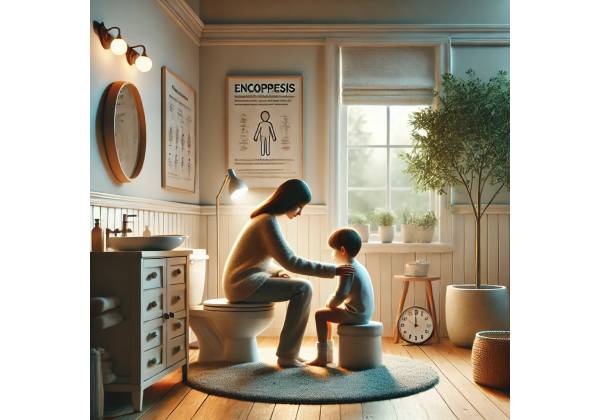
Encopresis can be one of the most upsetting childhood toileting problems for families because it is messy, embarrassing, and easy to misunderstand. Many parents worry that repeated stool accidents mean a child is being defiant, careless, or lazy. In reality, that is often not the case. For many children, accidents happen because stool has built up in the rectum over time, normal sensation has become blunted, and softer stool leaks around the blockage without much warning.
That is why effective treatment usually has to do more than tell a child to “try harder.” The right plan depends on the cause, the child’s age, whether constipation is involved, and how much stress, shame, pain, or family conflict has built up around toileting. Good care often combines bowel treatment, a predictable toilet routine, behavioral support, and patience over a period of months rather than days.
Table of Contents
- Why treatment depends on the type of encopresis
- How encopresis is evaluated
- Clearing stool retention safely
- Building a daily toilet program
- Therapy, family support, and school planning
- Medication and when treatment needs to change
- Recovery timelines and when to seek more help
Why treatment depends on the type of encopresis
Encopresis is repeated passage of stool in underwear or other inappropriate places after the age when bowel control is normally expected. The most important treatment question at the start is whether the child has retentive encopresis or nonretentive encopresis.
Retentive encopresis is linked to chronic constipation and stool withholding. A child may avoid stooling because earlier bowel movements were painful, because they do not want to stop playing, because they dislike public bathrooms, or because they have developed a habit of tightening and holding. Over time, stool sits in the rectum too long, becomes large and hard, and stretches the rectum. As that happens, the child may feel less urge to go, and looser stool can leak around the retained mass. Parents often see frequent smears, small accidents, or sudden larger leaks and assume the child did not notice or did not care. In many cases, the child genuinely had poor warning.
Nonretentive encopresis is different. The child soils without clear stool retention or chronic constipation. This pattern is less common and usually requires a different evaluation. The plan may lean more heavily on schedule, behavioral assessment, emotional context, and in some cases specialty care rather than simply increasing laxatives.
A broader discussion of patterns and warning signs appears in encopresis symptoms and causes, but for treatment decisions, the practical distinction is straightforward: if constipation and withholding are driving the accidents, the bowel has to be treated directly. If constipation is not the main issue, treatment has to look harder at routine, behavior, development, stress, and less common medical causes.
| Feature | Retentive encopresis | Nonretentive encopresis |
|---|---|---|
| Main problem | Constipation, stool withholding, rectal stretching, overflow leakage | Soiling without clear stool buildup |
| Common clues | Large or painful stools, infrequent bowel movements, abdominal discomfort, skid marks | More regular stool pattern, less evidence of chronic retention |
| Core treatment | Clean-out if needed, maintenance laxative plan, toilet routine, follow-up | Scheduled toileting, behavior support, careful reassessment, targeted referral when needed |
| What often goes wrong | Stopping treatment too early once accidents begin to improve | Assuming more laxative will fix a problem not driven by retention |
This distinction also helps families let go of blame. In retentive encopresis especially, accidents are often the end result of a body process that has been developing for weeks or months. A child may still resist treatment, hide dirty underwear, or deny accidents out of shame, but that is not the same as choosing the problem. Treatment works best when the goal is restoration, not punishment.
How encopresis is evaluated
A good evaluation usually starts with a careful history rather than a long list of tests. The clinician will want to know when accidents started, how often they happen, whether stools are hard or painful, how often the child goes to the bathroom, whether there is stool withholding, and whether the problem began after toilet training, a change in routine, school stress, illness, or a painful bowel movement.
Common questions include:
- How many bowel movements happen in a week
- Whether stools are large, hard, painful, or clog the toilet
- Whether the child shows withholding behaviors such as stiffening, crossing the legs, hiding, or avoiding the bathroom
- Whether there is abdominal pain, bloating, poor appetite, or nausea
- Whether urinary accidents, bedwetting, or recurrent urinary symptoms are present
- What the child eats and drinks in a typical day
- Whether there are developmental, sensory, attention, or school-related difficulties
- How the family currently responds to accidents and toileting
A physical exam may include growth measures, abdominal exam, and other checks based on the child’s symptoms. Not every child needs imaging or lab work. In straightforward retentive encopresis, diagnosis is often clinical. The key job is to determine whether the pattern fits functional constipation and overflow soiling or whether there are clues suggesting a different medical problem.
Red flags that may prompt broader evaluation include:
- Delayed passage of meconium as a newborn
- Poor growth or weight loss
- Severe abdominal distension
- Vomiting
- Blood in the stool not easily explained by a fissure
- Fever or systemic illness
- Abnormal neurological findings, leg weakness, or unusual lower back findings
- Failure to respond to appropriate constipation treatment
- Severe pain that seems out of proportion
Evaluation should also look at the emotional and practical context. Some children become deeply ashamed and try to hide accidents. Others avoid school bathrooms because of privacy concerns, bullying, or fear of asking for permission. Some have attention or executive-function problems and simply miss body signals or delay using the bathroom until it is too late. Others have sensory sensitivities, rigidity around routines, or high conflict with caregivers that turns the whole toilet process into a daily struggle.
The goal is not to label every case as psychological. It is to understand the full picture. A child can have genuine stool retention and also have anxiety about using the bathroom. A child can improve medically but keep having setbacks because the school routine is unrealistic. A strong treatment plan usually works because it addresses both the bowel and the environment around it.
Clearing stool retention safely
When stool has been backed up for a long time, treatment usually starts with disimpaction, often called a clean-out. This is one of the most important steps in retentive encopresis, because maintenance treatment usually works poorly if a large stool burden is still sitting in the rectum. Parents sometimes feel discouraged when they have already increased fiber, offered prune juice, or tried occasional laxatives without success. That is common. Once the rectum is chronically stretched, the problem is often too established for small home measures alone.
Clean-out methods vary by age, severity, and clinician preference. Oral polyethylene glycol is commonly used because it is effective and widely accepted in pediatric care. In some cases, rectal treatments may be recommended, but the approach should be guided by a clinician, especially if the child has severe pain, fear, or an uncertain diagnosis.
Families should know a few practical things about clean-outs:
- They are often messy and may temporarily increase accidents.
- Stool output can be large, frequent, and unpredictable for a day or more.
- A child may need easy bathroom access, extra clothing, and time away from usual activities.
- The clean-out is not the whole treatment plan. It is the beginning of one.
After disimpaction, the focus shifts to maintenance therapy. This is where many families stop too soon. Once accidents improve, it can be tempting to assume the problem is solved. But the rectum often needs time to shrink back toward normal size and regain better sensation. If treatment is stopped early, stool builds up again, the child starts withholding again, and the cycle returns.
Maintenance treatment often includes:
- A daily osmotic laxative or other clinician-guided bowel medicine
- Regular toilet sitting after meals
- Tracking stool frequency and consistency
- Monitoring for relapse rather than waiting for large accidents to return
It is also important to set realistic expectations. The child may still have accidents during treatment, especially early on. Softer stools do not mean the medicine is making the condition worse. In many cases, they mean the bowel plan is finally moving retained stool through a rectum that has been overloaded for a long time.
Diet helps, but diet alone rarely fixes established retentive encopresis. Fiber, fruit, vegetables, and fluids support the plan, but they do not reliably replace disimpaction and maintenance medicine when significant stool retention is present. Families often feel relieved when they understand this because it shifts the problem from “we must be feeding the child wrong” to “the bowel needs structured treatment.”
Pain also matters. If bowel movements continue to hurt, withholding usually returns. That is why stool softening, fissure care when needed, and calm bathroom routines are so important. The child has to experience repeated bowel movements that are easier and less frightening than before, or the learned pattern of avoidance tends to persist.
Building a daily toilet program
Once stool retention is being treated, the next job is to rebuild regular, low-stress bowel habits. A daily toilet program gives the child’s body repeated chances to empty the rectum before leakage happens. It also helps retrain awareness of body signals that may have become dulled during long periods of constipation.
A practical toilet program is usually simple:
- Have the child sit on the toilet after meals, especially after breakfast and dinner.
- Keep each sit brief, often around 5 to 10 minutes.
- Use a footstool if needed so the knees are supported and the child can relax the pelvic floor.
- Reward cooperation and routine, not just successful stool passage.
- Keep the mood neutral and matter-of-fact.
That last point matters more than many parents expect. If every toilet sit turns into a lecture, a battle, or a high-pressure test, resistance tends to grow. Children who feel embarrassed may already believe they are failing. Building a routine works better when it is predictable, calm, and boring rather than emotionally loaded.
Helpful tools can include:
- A simple stool diary
- A visual schedule for younger children
- A sticker or point system for sitting, trying, and telling an adult when an accident happens
- Spare clothes and wipes stored in a discreet, accessible place
- A school note that allows bathroom access without delay
The reward system should focus on behaviors the child can control. “Sit after breakfast,” “tell an adult when underwear is dirty,” and “take medicine as planned” are good targets. “Have no accidents this week” is usually too broad and can backfire.
Food and fluids support the program but should be handled realistically. Encourage regular meals, enough hydration, and a pattern of foods that supports softer stools. It is usually more helpful to make modest sustainable changes than to introduce an extreme diet the child will not maintain. Physical activity can also help bowel regularity and body awareness.
If the child is highly resistant, break the process into smaller steps. One child may need to begin by simply going into the bathroom without conflict. Another may need a softer toilet seat, privacy, or headphones to reduce sensory discomfort. A child who has had repeated painful stools may need time to trust that sitting on the toilet no longer means pain.
This part of treatment is often where improvement becomes visible but uneven. One week may look much better than the next. Travel, holidays, illness, school changes, and missed medicine can quickly disrupt the routine. That does not mean the plan failed. It usually means the bowel and behavior system still needs consistency.
Therapy, family support, and school planning
Encopresis is not only a bowel problem. Over time, it can affect confidence, family relationships, school life, and the child’s willingness to talk openly about accidents. That is why support matters even when constipation is the main medical driver.
For some families, the most helpful intervention is parent coaching. Caregivers may need help shifting from frustration and repeated reminders to a calmer, more structured approach. Children often respond better when the adults around them agree on a consistent plan and stop changing tactics every few days.
Therapy is not always necessary, but it can be very useful when:
- Shame and avoidance are intense
- Bathroom refusal has become a power struggle
- Anxiety around stooling is prominent
- Accidents are causing school distress or social withdrawal
- The child is hiding dirty clothes, lying about accidents, or becoming oppositional around routines
- Family conflict is making treatment hard to carry out
In those situations, a clinician may draw from several structured therapy approaches to reduce fear, improve routines, and help both child and parent respond more effectively. The focus is usually practical rather than abstract: reducing anxiety, increasing cooperation, and lowering conflict around toileting.
School planning is often overlooked, but it can make or break progress. A child who is afraid to use the school bathroom, cannot ask for a pass discreetly, or has no private backup plan for accidents is more likely to withhold stool all day and worsen constipation. Helpful school supports may include:
- Quiet permission to use the bathroom when needed
- Access to a nurse’s office or private restroom
- Extra underwear and clothing kept at school
- A neutral cleanup plan that protects privacy
- Avoiding punitive responses to odor or accidents
Some children also have bladder symptoms or wetting problems alongside stool accidents, so clinicians may ask about bedwetting or daytime urinary issues as part of the overall plan. Others struggle because impulsivity, distractibility, or poor routine-following gets in the way of toileting habits, and that may raise questions about whether ADHD is complicating treatment.
The central support message is simple: children do better when adults are steady, private, and non-shaming. Even when the child seems dismissive or resistant, humiliation usually makes the problem worse. Calm repetition, structured routines, and a sense that the adults are on the child’s side tend to be more effective than pressure.
Medication and when treatment needs to change
For encopresis, “medication” usually refers to bowel medicines, not psychiatric medication. That distinction is important because families sometimes hear the word therapy and assume treatment is mainly emotional, or hear the word medication and assume something sedating or behavior-altering is being prescribed. In most cases, the medicines used are aimed at constipation and stool passage.
Common medication roles include:
- Disimpaction: often with a clinician-directed bowel clean-out plan
- Maintenance: keeping stools soft enough to pass comfortably and regularly
- Relapse prevention: continuing treatment long enough for normal rectal sensation and habits to recover
Polyethylene glycol is commonly used in pediatric constipation care. Depending on the situation, other laxatives may also be used under medical guidance. The key point is not the brand name but the purpose: medicines are often needed long enough to keep the bowel moving comfortably while the child relearns normal stooling patterns.
Treatment needs to change when the response does not fit the expected pattern. Examples include:
- The child continues to have significant accidents despite what appears to be a good clean-out and maintenance plan
- The child is taking medicines inconsistently because of taste, resistance, or side effects
- Stools are still painful or very infrequent
- The child seems not to be constipated, yet soiling continues
- There are red flags for an organic medical cause
- The family cannot realistically carry out the current plan
In those cases, the next step may be a treatment adjustment rather than just “more of the same.” The clinician may review dose, timing, adherence, bathroom routine, stool pattern, and whether stool retention is still present. They may also reconsider whether the child has nonretentive encopresis, pelvic floor dysfunction, significant anxiety, or another problem that needs a different approach.
Referral to a pediatric gastroenterologist is reasonable when symptoms are severe, prolonged, atypical, or resistant to standard treatment. In selected cases, pelvic floor-focused therapy or other specialty interventions may be considered, but these are usually not the starting point for typical retentive encopresis. Surgery is rare and generally relates to specific underlying organic disorders, not routine functional encopresis.
One of the most common reasons treatment fails is not that the child is untreatable. It is that the plan is stopped too early, applied inconsistently, or never matched to the actual type of encopresis in the first place.
Recovery timelines and when to seek more help
Recovery from encopresis usually takes time. Families often want to know how long it will take for accidents to stop completely, but the more useful question is whether things are moving in the right direction. With established stool retention, improvement is often gradual. The child may start by having softer stools, less pain, fewer very large stools, and slightly fewer accidents before achieving steady bowel control.
Signs that treatment is moving in the right direction include:
- Stools are softer and easier to pass
- Bathroom trips are becoming more predictable
- The child is less fearful of stooling
- Abdominal discomfort is decreasing
- Accidents are becoming less frequent, less severe, or easier for the child to recognize
- Family conflict around toileting is easing
Relapse is common enough that families should expect it and plan for it. Travel, illness, changes in school routine, holidays, decreased fluid intake, stopping medicine too early, and renewed withholding can all bring accidents back. A setback does not erase previous progress, but it often means the child needs the structured plan restarted sooner rather than later.
Additional medical follow-up is important when:
- There is little or no improvement after a well-carried-out treatment plan
- Accidents worsen despite treatment
- Stooling remains very painful
- The child develops vomiting, weight loss, fever, or significant abdominal swelling
- Blood in the stool is persistent
- Urinary symptoms become frequent
- The child becomes highly distressed, withdrawn, or refuses school because of the problem
There is also a point where emotional recovery matters as much as bowel recovery. Children who have been teased, scolded, or repeatedly embarrassed may continue to feel anxious even after accidents improve. Parents may still feel exhausted or tense because they are waiting for the next setback. Naming that stress can help. Recovery is not only the return of cleaner underwear. It is the return of confidence, predictability, and a family routine that no longer revolves around fear of accidents.
The long-term outlook is often good when treatment is consistent and matched to the cause. What usually helps most is not a dramatic one-time fix, but a steady combination of bowel care, routine, privacy, support, and follow-up long enough for the child’s body and habits to reset.
References
- Encopresis 2024 (Review)
- Constipation in Children and Adolescents: Evaluation and Treatment 2022 (Review)
- An Update of Pharmacological Management in Children with Functional Constipation 2023 (Review)
- The ten “hard” questions in pediatric functional constipation 2024 (Review)
- Evaluation and Treatment of Functional Constipation in Infants and Children: Evidence-Based Recommendations from ESPGHAN and NASPGHAN 2014 (Guideline)
Disclaimer
This information is for general educational purposes only and is not a substitute for medical advice, diagnosis, or treatment. Ongoing stool accidents, painful bowel movements, abdominal swelling, blood in the stool, weight loss, or poor response to treatment should be reviewed by a qualified pediatric clinician.
If you found this page useful, please share it on Facebook, X (formerly Twitter), or any other platform you prefer so more families can find clear, practical guidance.