An endocardial cushion defect is a heart condition that develops before birth. It affects the “central” part of the heart—where the upper and lower chambers meet and where the valves sit. Many people first hear about it during pregnancy ultrasound, early infancy, or later in life after a heart murmur or shortness of breath prompts testing. The good news is that today’s imaging and surgery can be highly effective, and many children grow into active adults.
This guide explains what the condition is, why it happens, who is more likely to have it, what symptoms look like across ages, how doctors confirm the diagnosis, and what treatment and long-term care typically involve—so you can make informed decisions and know what to watch for.
Table of Contents
- What is an endocardial cushion defect?
- What causes it and who is at risk?
- Early signs, symptoms, and complications
- How doctors diagnose it
- Treatment, surgery, and what recovery looks like
- Long-term management and when to seek help
What is an endocardial cushion defect?
“Endocardial cushion defect” is an older, broad term. Many clinicians now use atrioventricular septal defect (AVSD) because it describes the specific structures involved: the atria (upper chambers), ventricles (lower chambers), and the valves between them.
In a typical heart, a wall (septum) separates the right and left sides, and two separate valves control blood flow from atria to ventricles. In an endocardial cushion defect, the tissues that normally help form the middle of the heart do not fully join. That can lead to:
- A hole between the atria (atrial septal defect component)
- A hole between the ventricles (ventricular septal defect component)
- A valve that is shared or abnormal, often allowing blood to leak backward (regurgitation)
There are several patterns, often described as:
- Partial (incomplete) AVSD: usually a hole between atria plus a “cleft” (split) in the left-sided valve that can leak.
- Complete AVSD: a larger defect with a common atrioventricular valve and openings between both atria and ventricles.
- Transitional/intermediate forms: features between partial and complete.
Why this matters: the details predict symptoms, timing of treatment, and the chance of long-term issues like valve leakage or rhythm problems.
A helpful way to picture it is as a “busy intersection” in the heart that is missing some curbs and lane markings. When the separation is incomplete, blood may flow in the wrong direction or mix between sides. Over time, that can increase blood flow to the lungs, strain the heart, and raise lung blood pressure.
Many people with AVSD do very well, especially when diagnosed early and treated in a center experienced with congenital heart disease. The key is matching the treatment plan to the exact anatomy and to the person’s age, symptoms, and lung pressure.
What causes it and who is at risk?
Endocardial cushion defects form early in pregnancy during heart development. In most cases, there is no single preventable cause. Instead, it reflects a mix of genetic factors and early developmental influences.
Genetic and chromosomal factors
- The strongest known association is with Down syndrome (trisomy 21). AVSD is one of the most common heart defects seen in babies with Down syndrome.
- Other genetic syndromes and rare gene changes can also be involved, especially when AVSD occurs with additional birth differences.
- A family history of congenital heart disease can raise risk, even if no specific syndrome is identified.
Pregnancy and parental factors
These are not “fault” factors—many are not controllable—but they can modestly change risk:
- Maternal diabetes (especially if blood sugar is not well controlled early in pregnancy)
- Certain infections during pregnancy
- Exposure to specific medications known to affect fetal development (your clinician can review medication safety)
- Advanced maternal age (mainly because it increases the chance of chromosomal conditions)
Heart-structure context
Sometimes AVSD appears alongside other heart changes, such as:
- Outflow tract issues (how blood exits the heart)
- Unbalanced ventricles (one pumping chamber is much smaller)
- Valve abnormalities beyond the central valve
Those combinations can shift the plan from a straightforward repair to a more tailored surgical pathway.
Risk factors for more severe symptoms
Separate from “why it formed,” there are factors that predict who gets sick earlier:
- A complete (larger) defect rather than a partial one
- Significant valve leakage
- Rapid breathing, poor feeding, or poor growth in infancy (signals higher strain)
- Early elevation of lung blood pressure
If you are pregnant and AVSD is suspected, a fetal heart ultrasound can usually define the anatomy well enough to plan delivery and early care. If AVSD is diagnosed after birth, the next step is often to clarify whether the defect is partial or complete and how well the valves function—because that drives both timing and urgency of treatment.
Early signs, symptoms, and complications
Symptoms vary widely. Some people have obvious signs in the first months of life; others feel fine for years and are diagnosed later during a checkup.
Common symptoms in babies
When a defect allows extra blood flow to the lungs or causes valve leakage, infants may develop heart strain. Watch for:
- Fast breathing or working hard to breathe (ribs pulling in, flaring nostrils)
- Sweating with feeds
- Taking a long time to finish a bottle or tiring at the breast
- Poor weight gain or falling off growth curves
- Frequent respiratory infections
- A persistent “whooshing” heart murmur noted by a clinician
These symptoms often appear as lung blood flow rises over the first weeks of life.
Symptoms in children and adults
With partial defects or milder leakage, symptoms can be subtle:
- Shortness of breath with exertion
- Lower stamina compared with peers
- Palpitations (fast or irregular heartbeat)
- Swelling in legs or belly (later sign)
- Bluish lips or fingertips (less common in isolated AVSD, but possible if lung pressure becomes very high)
Complications to understand
- Heart failure: not a single event, but a state where the heart struggles to meet the body’s needs. In infants it often shows as feeding and growth problems.
- Pulmonary hypertension: high pressure in lung arteries from long-term overcirculation. This is one reason complete AVSD is typically repaired earlier in life.
- Valve problems: the left-sided valve may leak after repair or worsen over time. This can be mild and stable—or it can progress and require re-intervention.
- Heart rhythm disorders: atrial flutter/fibrillation or other rhythm issues become more common with age, especially in adults with unrepaired defects or long-standing chamber enlargement.
- Endocarditis risk: infection of heart lining/valves is uncommon, but risk can be higher in certain situations (particularly with residual defects or recent repairs).
A practical rule: symptoms that change quickly—new breathing difficulty, blue coloring, fainting, chest pain, or sudden weakness—should be treated as urgent, regardless of the underlying diagnosis.
How doctors diagnose it
Diagnosis is usually straightforward once the right tests are done. The main goal is not only to confirm the defect, but to map the exact anatomy and measure its impact on the heart and lungs.
Clinical exam and first clues
A clinician may suspect AVSD based on:
- A heart murmur
- Signs of extra blood flow to the lungs (fast breathing, crackles)
- Enlargement of the liver in infants (a sign of heart strain)
- Low oxygen levels in advanced cases
These clues guide the testing sequence.
Key tests
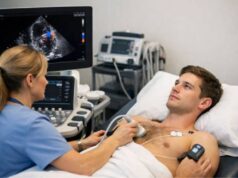
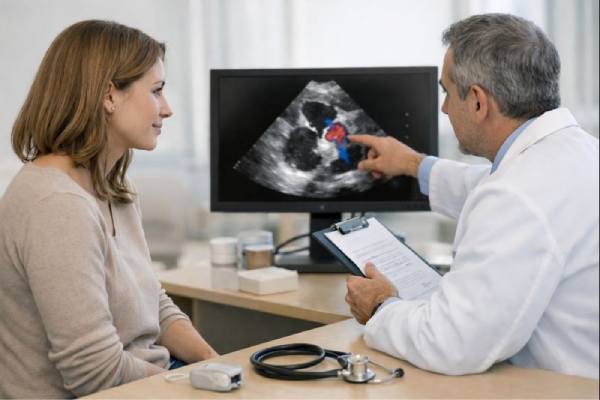
- Echocardiogram (heart ultrasound): the cornerstone test. It can show the holes, valve structure, direction of blood flow, degree of valve leakage, and estimates of lung pressures. In many children, it provides everything needed for surgical planning.
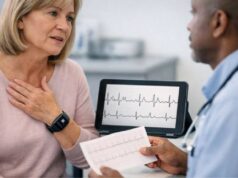
- Electrocardiogram (ECG): looks for rhythm issues and patterns of chamber strain. AVSD often has recognizable conduction patterns.
- Chest X-ray: may show heart enlargement or increased lung blood flow in symptomatic infants.
- Pulse oximetry: measures oxygen saturation; helpful if there is concern about mixing or high lung pressures.
Advanced imaging and procedures
When details are complex, or in adults with prior repairs:
- Cardiac MRI or CT: clarifies chamber size, valve function, and blood flow volumes, and can be especially useful when ultrasound images are limited.
- Cardiac catheterization: a thin tube placed into the heart’s vessels to directly measure pressures and oxygen levels. This is most important when pulmonary hypertension is suspected or when noninvasive estimates are uncertain.
Questions clinicians try to answer
A clear diagnosis includes:
- Is it partial, complete, or transitional?
- How well do the atrioventricular valves close?
- Are the ventricles balanced and capable of supporting a normal two-pump circulation?
- Is lung pressure elevated—and if so, is it reversible?
- Are there associated defects that change the surgical approach?
If you’re reviewing results, ask for a plain-language summary of those five points. They provide the backbone of the treatment plan and follow-up schedule.
Treatment, surgery, and what recovery looks like
Treatment depends on the type of defect, symptoms, valve function, and lung pressure. Many children do best with planned surgery in infancy or early childhood; adults may need repair, valve work, rhythm care, or long-term monitoring.
When medication helps
Medicines do not “close” the defect, but they can stabilize symptoms while planning surgery or while monitoring milder forms:
- Diuretics to reduce fluid overload and ease breathing
- Afterload-reducing medicines in selected cases to help forward blood flow
- High-calorie feeding plans for infants who tire during feeds (sometimes with feeding support)
These measures can improve comfort and growth, which can make surgery safer.
Surgery: the core treatment
For many patients, surgery aims to:
- Close the holes between chambers with patches
- Separate a common valve into two valves (in complete AVSD) or repair the cleft (in partial AVSD)
- Reduce valve leakage as much as possible
Timing is individualized, but complete defects are often repaired earlier to protect the lungs from long-term high flow and pressure. Partial defects may be repaired later if symptoms are mild, but significant valve leakage can push the timeline forward.
What recovery commonly involves
Recovery varies with age and complexity, but a typical course includes:
- Several days of close monitoring after surgery, often in an intensive care setting initially
- Gradual transition from IV to oral medications
- Pain control, breathing exercises (age-appropriate), and careful fluid management
- Follow-up echocardiograms to assess repair results
Many children return to normal feeding and activity over weeks. Adults often need a more deliberate return-to-exercise plan.
Possible long-term needs after repair
Even with excellent surgery, some people may later require:
- Additional valve repair or replacement (especially if leakage progresses)
- Treatment for rhythm problems (medications, ablation, or a pacemaker in select cases)
- Management of pulmonary hypertension if it developed before repair
A realistic expectation is this: repair is often highly successful, but follow-up is lifelong because valves and rhythms can change over time—even decades later.
Long-term management and when to seek help
Living well with an endocardial cushion defect—repaired or unrepaired—usually comes down to structured follow-up, heart-healthy habits, and knowing which symptoms matter.
Follow-up care that makes a difference
Most people benefit from periodic visits with a congenital heart specialist, even if they feel well. Follow-up commonly includes:
- Echocardiograms to track valve leakage and heart size
- Rhythm checks (ECG, Holter monitor, or event monitor if palpitations occur)
- Review of exercise tolerance, blood pressure, and oxygen levels
- Counseling about pregnancy, contraception, and other life-stage issues
In adults, follow-up often becomes more important with age because rhythm problems and valve wear become more common.
Exercise, school, work, and daily life
Many children and adults can be active, but the safest plan is individualized. General principles:
- Regular aerobic activity is usually beneficial when cleared by a clinician.
- People with significant valve leakage, pulmonary hypertension, or rhythm instability may need limits on intense or competitive sports.
- After surgery, return-to-activity is typically gradual over weeks to months, guided by symptoms and follow-up testing.
Dental care and infection prevention
Good dental hygiene matters because mouth bacteria can enter the bloodstream. Some patients may need antibiotics before certain dental procedures, depending on repair status and residual defects. Your cardiology team can give a clear yes/no answer for your specific situation—don’t guess.
Pregnancy and family planning
Pregnancy can be safe for many people after repair, but it should be planned:
- Review valve function and lung pressures before conception.
- Some medicines used for heart conditions are not pregnancy-safe and need adjustment.
- People with pulmonary hypertension or severe valve disease need specialized counseling because risks can be high.
When to seek urgent care
Seek emergency evaluation for:
- New or worsening breathing difficulty at rest
- Fainting, severe dizziness, or chest pain
- Blue lips/tongue, especially if new
- Sudden rapid heartbeat that does not settle, or palpitations with lightheadedness
- Stroke-like symptoms (face droop, arm weakness, speech trouble)
For non-urgent but important changes—declining stamina, new swelling, frequent nighttime cough, or increased palpitations—book a prompt cardiology review. Catching valve or rhythm changes early often prevents bigger problems later.
References
- 2025 ACC/AHA/HRS/ISACHD/SCAI Guideline for the Management of Adults With Congenital Heart Disease: A Report of the American College of Cardiology/American Heart Association Joint Committee on Clinical Practice Guidelines 2025 (Guideline)
- 2020 ESC Guidelines for the management of adult congenital heart disease 2021 (Guideline)
- Down syndrome and associated atrioventricular septal defects in a nationwide Norwegian cohort: Prevalence, time trends, and outcomes 2024
- A 27-Year Experience with Atrioventricular Septal Defect Correction 2025
- Long-term outcomes following atrioventricular septal defect in adult patients 2025
Disclaimer
This article is for general education and does not replace personalized medical care. Endocardial cushion defects vary widely in anatomy and severity, and safe decisions about testing, timing of surgery, exercise, pregnancy, and medications depend on your specific heart structure and current symptoms. If you think you or your child may have urgent symptoms—trouble breathing, fainting, chest pain, blue lips, or stroke-like signs—seek emergency care. For diagnosis and treatment planning, consult a qualified clinician, ideally a cardiologist experienced in congenital heart disease.
If you found this guide helpful, please share it on Facebook, X (formerly Twitter), or any platform you prefer, and follow us on social media. Your support through sharing helps our team continue producing clear, trustworthy health content.