Endocardial fibroelastosis is a rare heart condition most often seen in babies and young children, though it can appear later in life. In simple terms, the inner lining of the heart becomes unusually thick and stiff, which can make the heart pump less effectively. Doctors may find it during pregnancy imaging, after birth when a baby struggles with feeding and breathing, or when a child develops signs of heart strain.
Because it is uncommon, families often face two worries at once: understanding what it means right now and what it could mean years from now. This article walks you through what endocardial fibroelastosis is, why it happens, who is at higher risk, what symptoms look like at different ages, how it is diagnosed, and which treatments and long-term supports are most likely to help.
Table of Contents
- What endocardial fibroelastosis does to the heart
- What causes endocardial fibroelastosis?
- Symptoms and complications to watch for
- How endocardial fibroelastosis is diagnosed
- Treatment options and what to expect
- Long-term management and when to seek care
What endocardial fibroelastosis does to the heart
Endocardial fibroelastosis (often shortened to EFE) describes a pattern inside the heart: the endocardium—the smooth inner lining—becomes thickened by extra fibrous and elastic tissue. That thick layer can behave like a tight jacket around the pumping chamber, making it harder for the heart to fill and, in some cases, harder to squeeze.
EFE is best understood as a finding with different causes, not one single disease. Clinicians usually group it into two broad categories:
- Primary EFE: EFE appears without another major heart defect. This form is uncommon and may be linked to genetic factors or early-life injury to the heart muscle and lining.
- Secondary EFE: EFE develops alongside another heart problem that changes blood flow or pressure inside the heart. This is more common, especially in children.
Most often, EFE involves the left ventricle, the main pumping chamber that sends blood to the body. When the left ventricle becomes stiff, the body may still need the same amount of blood, so the heart tries to compensate by beating faster and retaining fluid. Over time, this can lead to symptoms of heart failure—especially in infants, whose hearts have less “reserve.”
EFE can also appear in combination with other heart muscle patterns. For example, some children with EFE also have features of dilated cardiomyopathy (an enlarged, weak ventricle) or left ventricular noncompaction (a more “spongy” inner heart muscle structure). These overlaps matter because they can change the expected course and the type of follow-up needed.
One practical point helps families: EFE can be mild, moderate, or extensive, and the thickness alone does not always predict the outcome. What matters most is how well the ventricle relaxes and pumps, whether valves leak, whether lung pressures rise, and whether the problem is stable or worsening over weeks to months. These are the pieces your cardiology team monitors closely.
What causes endocardial fibroelastosis?
EFE can develop through more than one pathway. A helpful way to think about it is: the endocardium thickens when the heart is exposed to the wrong stresses at the wrong time—often early in life—sometimes because of a built-in vulnerability.
Commonly described contributors include the following.
1) Congenital heart conditions that alter flow
Secondary EFE often appears when blood flow through the left side of the heart is restricted or abnormal. Situations that can set the stage include:
- Narrowing near or below the aortic valve (left-sided outflow obstruction)
- Borderline or small left-sided heart structures
- Valve problems that cause high pressure inside the left ventricle
- Complex congenital heart disease where the left ventricle is asked to do an unusual workload
When the ventricle faces persistent pressure or disturbed flow, the inner lining may respond by laying down extra tissue.
2) Genetic and developmental factors
Some cases, especially primary EFE, may relate to gene changes affecting heart development, the heart’s supportive tissue, or how cells respond to injury. Risk can be higher when:
- More than one family member has early cardiomyopathy, unexplained infant heart failure, or sudden cardiac death
- A child has EFE plus other congenital findings suggesting a genetic syndrome
- EFE appears very early (including before birth) without an obvious structural trigger
Genetics does not always provide a clear answer, but it can guide prognosis, family screening, and future pregnancy planning.
3) Infections and immune-related injury
Some infants develop EFE in the setting of inflammation or immune effects on the heart. Examples include:
- Viral infections that involve the heart muscle or lining
- Autoimmune-related fetal or newborn heart involvement (in rare cases, maternal antibodies can affect the fetus)
In these scenarios, EFE may be part of a broader inflammatory process, and doctors may look for clues in the pregnancy history, newborn testing, and imaging pattern.
4) Metabolic or systemic conditions
Rare metabolic disorders can affect the heart and may be discovered when EFE is part of a bigger clinical picture (growth concerns, muscle weakness, low blood sugar episodes, or liver problems). This is one reason cardiologists may order targeted blood tests when the cause is not obvious.
In many children, no single “why” is found. Even then, identifying whether EFE is primary or secondary—and whether the ventricle’s function is improving, stable, or declining—usually provides enough information to build a safe care plan.
Symptoms and complications to watch for
Symptoms depend on the child’s age, the extent of stiffness, and whether the heart is also weak or enlarged. Many babies show signs early because feeding and breathing place a surprisingly high demand on an infant heart.
Early symptoms in babies
Infants with significant EFE often develop signs of heart strain over days to weeks:
- Fast breathing, chest “pulling in” between ribs, or flaring nostrils
- Sweating with feeds or needing frequent breaks while feeding
- Taking longer than about 30 minutes to finish feeds, or falling asleep mid-feed from fatigue
- Poor weight gain, fewer wet diapers, or slower growth than expected
- Irritability or unusual sleepiness
- Cool hands and feet or mottled skin when circulation is poor
Because many of these signs overlap with common newborn problems, the pattern matters: breathing plus feeding difficulty plus slow growth is a classic combination that should prompt urgent evaluation.
Symptoms in older children and adults
EFE that is milder or develops later may present as:
- Reduced exercise tolerance (“gets tired faster than peers”)
- Shortness of breath with activity, or needing extra pillows at night
- Palpitations (awareness of a fast or irregular heartbeat)
- Chest discomfort with exertion (less common, but possible)
- Swelling in legs or belly (later sign)
Complications clinicians monitor
- Heart failure flare-ups: periods when breathing and feeding worsen, often triggered by viral illness, missed medication, or rapid growth that outpaces heart capacity.
- Arrhythmias: abnormal rhythms can occur if the heart muscle is stretched or scarred. Some rhythms cause mild palpitations; others can cause fainting or sudden collapse.
- Valve leakage: stiff or enlarged ventricles can distort valve shape, allowing blood to leak backward and adding more workload.
- Blood clots: when pumping is weak or rhythm is irregular, blood can stagnate in the heart and form clots that may travel elsewhere.
- Pulmonary hypertension: higher pressure in lung vessels can develop if left-sided pressures remain elevated for a long time.
A practical home guideline is to treat rapid change as a red flag. If a baby who was feeding reasonably well suddenly cannot finish feeds, breathes much faster at rest, turns blue around the lips, or becomes difficult to wake, that should be evaluated urgently.
How endocardial fibroelastosis is diagnosed
Diagnosis is built around imaging, because EFE is primarily a structural and functional problem. The goal is not only to “name it,” but to understand how the heart is performing and whether there is an underlying cause that changes treatment.
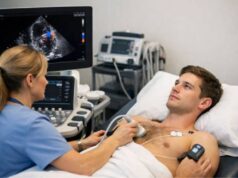
Echocardiogram: the essential test
A heart ultrasound (echocardiogram) is usually the first and most important test. It can show:
- A brighter-than-usual, thickened-looking inner lining of the ventricle
- How well the ventricle squeezes (systolic function) and relaxes (diastolic function)
- Whether the chamber is enlarged, normal size, or small
- Valve leakage (especially mitral valve function on the left side)
- Estimates of pressure changes that suggest rising lung pressure
- Associated structural defects that could explain secondary EFE
In prenatal cases, fetal echocardiography can identify EFE patterns and assess whether the fetus is developing heart enlargement, fluid buildup, or rhythm issues.
ECG and rhythm monitoring
An electrocardiogram (ECG) may show signs of chamber strain or conduction differences. If symptoms suggest intermittent rhythm problems—such as fainting, sudden pallor, or episodes of racing heartbeat—clinicians often use:
- A Holter monitor (typically 24–48 hours)
- Longer event monitoring when episodes are infrequent
Blood tests and “cause-finding” workup
Because EFE can be primary or secondary, many teams use targeted testing rather than a one-size-fits-all panel. Depending on age and presentation, they may consider:
- Markers of infection or inflammation when myocarditis is a concern
- Metabolic screening when there are signs of a broader disorder
- Genetic testing when EFE is early, severe, unexplained, or familial
Cardiac MRI and advanced assessment
Cardiac MRI can add useful detail, especially when ultrasound images are limited or when doctors need a deeper look at tissue characteristics and scarring. MRI can also quantify how much blood is pumping forward and how much may be leaking backward through valves.
Biopsy: uncommon, but sometimes decisive
Endomyocardial biopsy (sampling tiny pieces of heart tissue) is not routine for most children with suspected EFE, because it is invasive and not always necessary. It may be considered when the diagnosis is uncertain, when other treatable causes are strongly suspected, or when tissue confirmation would change major decisions.
Conditions that can look similar
Clinicians often need to separate EFE from:
- Dilated cardiomyopathy without EFE
- Restrictive cardiomyopathy from other causes
- Active myocarditis
- Left ventricular noncompaction
- Some congenital valve or outflow problems that secondarily stiffen the ventricle
A clear diagnosis usually emerges from combining imaging patterns with the clinical timeline—how quickly symptoms started, whether there was a preceding infection, and whether there is a structural trigger.
Treatment options and what to expect
Treatment for EFE is highly individualized. In practice, clinicians treat two things at once: the child’s current heart function and the underlying driver (when one can be identified). Many children improve with well-coordinated care, but severe cases may require advanced therapies.
Stabilizing symptoms: heart failure care
When EFE causes poor pumping or severe stiffness, early treatment often includes:
- Diuretics to reduce fluid congestion and ease breathing
- Medications that help the heart pump more effectively or reduce workload (chosen based on the child’s blood pressure and ventricle function)
- Nutrition support to meet growth needs, sometimes using higher-calorie feeds or temporary tube feeding if fatigue limits intake
In infants, success is often measured in very practical outcomes: breathing slows, feeding becomes easier, and weight gain becomes steady.
Treating the underlying trigger when possible
Treatment shifts when a specific cause is likely:
- If EFE is linked to a structural problem (such as left-sided obstruction), fixing that obstruction can reduce ongoing stress on the ventricle.
- If inflammation or immune involvement is suspected, specialty teams may consider anti-inflammatory or immune-modulating strategies in carefully selected cases, balancing potential benefit against infection risk.
Because EFE is rare, these decisions usually happen in centers with pediatric heart failure and congenital heart expertise.
Procedures and surgery in selected patients
Some patients with secondary EFE related to congenital heart anatomy may benefit from surgical strategies that:
- Improve forward blood flow
- Reduce pressure inside the left ventricle
- Address valve problems that are worsening heart strain
In certain complex left-heart conditions, surgeons may also discuss whether a two-ventricle repair is realistic or whether a single-ventricle pathway offers a safer long-term route. These are nuanced, anatomy-driven decisions, and second opinions at experienced centers can be helpful.
Anticoagulation and rhythm management
If pumping is markedly reduced or rhythm becomes irregular, clinicians may consider medications to reduce clot risk. Arrhythmias may be treated with:
- Rhythm-stabilizing medicines
- Catheter-based procedures in older children or adults, when appropriate
- A pacemaker or defibrillator in selected high-risk situations
Advanced therapies
When symptoms remain severe despite optimal medication and supportive care, options may include:
- Mechanical circulatory support as a bridge (temporary support while waiting for recovery or transplant)
- Heart transplantation for end-stage heart failure when recovery is unlikely
Families often want a clear timeline. While every case is different, clinicians typically reassess response to therapy over weeks to a few months, using symptoms, growth, echocardiogram trends, and hospitalizations to judge whether the heart is stabilizing or declining.
Long-term management and when to seek care
EFE care does not end when a child leaves the hospital or when symptoms improve. The heart can change as a child grows, and the same child may need different support at different life stages.
Follow-up that protects the future
Most children with EFE need structured follow-up with a pediatric cardiologist, and some will also need a pediatric heart failure specialist. Monitoring commonly focuses on:
- Ventricular size and function over time (improving, stable, or worsening)
- Valve leakage progression
- Rhythm checks, especially if palpitations, fainting, or unexplained fatigue occur
- Growth and development (because nutrition and oxygen delivery affect both)
Visit frequency varies: a recently diagnosed infant may need visits every few weeks, while a stable child may shift to every 6–12 months.
Everyday management at home
Families often do best with a simple, repeatable home plan:
- Track weight (for infants, often daily; for older children, as advised).
- Watch breathing at rest—especially during sleep.
- Keep a feeding log if feeding is difficult (time per feed, total volume, vomiting).
- Follow medication schedules carefully; missed doses can trigger fluid buildup.
- Plan ahead for viral season with hand hygiene and timely vaccinations.
If a clinician has recommended fluid limits or specific nutrition goals, writing them down as daily targets helps reduce uncertainty.
Activity and school considerations
Many children can attend school and play normally, but limits depend on heart function and rhythm stability. General guidance:
- Light to moderate activity is often encouraged when symptoms are controlled.
- Competitive or high-intensity sports may be restricted when pumping is reduced, lung pressures are elevated, or arrhythmias are present.
- Schools should know the child’s warning signs and have an action plan for fainting, chest symptoms, or sudden breathlessness.
Family screening and future pregnancies
If genetics are suspected, clinicians may recommend screening for siblings or parents (often with an echocardiogram and ECG). For future pregnancies, early prenatal care and fetal heart evaluation can be considered, especially when there is a known familial pattern.
When to seek urgent or emergency care
Seek emergency evaluation for:
- Blue lips or face, or oxygen levels that drop suddenly (if monitored)
- Severe breathing difficulty at rest, repeated pauses in breathing, or grunting
- Fainting, seizure-like episodes, or sudden collapse
- A very fast heartbeat with dizziness, chest pain, or weakness
- Signs of dehydration with worsening breathing (few wet diapers, dry mouth, lethargy)
For non-emergency changes—worsening fatigue, decreased appetite, new swelling, or reduced exercise tolerance—contact the cardiology team promptly. Catching a decline early often prevents a hospital stay.
References
- Endocardial Fibroelastosis: A Comprehensive Review 2026 (Review)
- Endocardial fibroelastosis in infants and young children: a state-of-the-art review 2023 (Review)
- Endocardial fibroelastosis and dilated cardiomyopathy – the past and future of the interface between histology and genetics 2021 (Review)
- 2023 ESC Guidelines for the management of cardiomyopathies 2023 (Guideline)
Disclaimer
This article is for educational purposes and does not replace medical advice, diagnosis, or treatment from a qualified clinician. Endocardial fibroelastosis can range from mild to life-threatening, and safe decisions about medications, activity, procedures, and long-term outlook depend on the individual’s heart structure, heart function, age, and symptoms. If you suspect a medical emergency—such as severe trouble breathing, blue lips, fainting, or sudden weakness—seek emergency care immediately. For personalized guidance, consult a pediatric cardiologist or a congenital/heart failure specialist.
If this article helped you, please share it on Facebook, X (formerly Twitter), or any platform you prefer, and follow us on social media. Your support through sharing helps our team continue producing clear, trustworthy health content.