An aneurysm is a weakened, bulging segment of an artery. Many aneurysms grow quietly for years, then become dangerous when they reach a size where rupture is more likely. “Endovascular aneurysm” is commonly used to describe aneurysms managed from inside the blood vessel using minimally invasive techniques—most often endovascular aneurysm repair (EVAR), where a stent-graft is delivered through the groin to reinforce the artery from within.
This approach can reduce early recovery time and surgical stress, but it also creates a new reality: long-term imaging follow-up becomes part of the treatment, because stent-grafts can develop leaks, shifts, or branch-flow issues over time. In this article, you’ll learn what endovascular aneurysm care involves, who benefits most, how doctors decide when to intervene, and what you can do to lower risk before and after repair.
Table of Contents
- What an endovascular aneurysm repair involves
- Causes and risk factors for aneurysms
- Symptoms and urgent warning signs
- How aneurysms are diagnosed and measured
- Treatment options and what to expect
- Follow-up, prevention, and when to seek care
What an endovascular aneurysm repair involves
“Endovascular” means “inside the blood vessel.” In endovascular aneurysm care, doctors treat the weakened artery from within rather than opening the abdomen or chest. The best-known example is EVAR for an abdominal aortic aneurysm (AAA). A related procedure, TEVAR, treats aneurysms in the thoracic (chest) aorta. Similar inside-the-vessel techniques also exist for iliac, visceral, and certain other aneurysms, sometimes using coils, plugs, or covered stents.
What the procedure actually does
An aneurysm does not “go away” after endovascular repair. Instead, a fabric-covered metal scaffold (a stent-graft) is placed inside the artery to create a new pathway for blood flow. The goal is to:
- Exclude the aneurysm sac from direct blood pressure
- Reduce rupture risk by preventing ongoing wall stress
- Preserve flow to critical branches (kidneys, intestines, legs), sometimes using special graft designs
Because blood is rerouted through the stent-graft, the aneurysm sac ideally shrinks over time. If it stays the same size or enlarges, that signals persistent pressure in the sac and needs investigation.
Why “less invasive” does not mean “set-and-forget”
Endovascular repair often lowers early complications compared with open surgery for many patients, especially those with higher surgical risk. But it introduces device- and anatomy-related issues that require long-term vigilance, including:
- Endoleak: persistent blood flow into the aneurysm sac around or through the graft
- Migration: the stent-graft shifts from its original position
- Limb problems: kinking or narrowing that reduces blood flow to the legs
- Branch compromise: reduced flow to kidney or intestinal arteries in complex anatomy
This is why follow-up imaging is not optional. A successful endovascular repair is a partnership between a well-executed procedure and consistent surveillance. A useful mindset is: EVAR often trades a bigger operation up front for a smaller operation plus long-term monitoring.
Causes and risk factors for aneurysms
An aneurysm forms when an artery wall loses strength over time. The causes vary by location (abdominal vs thoracic aorta vs peripheral arteries), but the underlying themes are consistent: chronic wall injury, degeneration of structural proteins, and inflammation that weakens the vessel’s “scaffolding.”
Common drivers
- Smoking: one of the strongest risk factors for AAA formation and growth. It accelerates wall degeneration and increases rupture risk.
- Age and male sex: risk rises with age; men develop AAA more often, though women who develop AAA may face rupture at smaller diameters.
- High blood pressure: increases mechanical stress on the artery wall, especially in the thoracic aorta.
- Atherosclerosis: plaque and chronic inflammation correlate with aneurysm risk, particularly in abdominal and iliac aneurysms.
- Family history and genetics: first-degree relatives of someone with an AAA have a higher risk. Certain inherited connective tissue disorders raise thoracic aneurysm risk substantially.
Thoracic aneurysm differences
Thoracic aortic aneurysms are more strongly linked to:
- Genetic syndromes and familial thoracic aortic disease
- Bicuspid aortic valve–associated aortopathy
- Long-standing uncontrolled hypertension
- Prior aortic dissection or injury
Because of these differences, the size thresholds for repair and the urgency of evaluation can vary by aneurysm type and patient risk.
Less common but important causes
- Infection-related aneurysm (mycotic aneurysm): bacteria infect the arterial wall, creating a fragile, rapidly evolving aneurysm.
- Inflammatory aneurysm: can involve marked wall thickening and pain.
- Trauma or iatrogenic injury: may cause pseudoaneurysms (a contained rupture rather than a true wall bulge).
- Vasculitis: immune-driven vessel inflammation that weakens the wall.
Risk factors that influence whether endovascular repair is suitable
Not all aneurysms are anatomically “EVAR-friendly.” Suitability depends on:
- Adequate “landing zones” of healthy artery above and below the aneurysm
- Vessel diameter and shape that can seal tightly around the graft
- Tortuosity (twists), calcification, and clot burden in access vessels
- Branch involvement (kidneys, intestinal arteries) that may require specialized devices
The practical takeaway: you can reduce aneurysm growth risk by controlling blood pressure and stopping smoking, but anatomy determines whether endovascular repair is feasible—and whether standard or complex grafts are needed.
Symptoms and urgent warning signs
Most aneurysms are silent until they become large, leak, or rupture. Many people learn they have an aneurysm after imaging for an unrelated issue or through screening. Because symptoms can signal imminent danger, it helps to know the patterns that warrant urgent action.
Typical symptom patterns
Unruptured aneurysms may cause no symptoms. When symptoms appear, they often relate to pressure on nearby structures, inflammation, or clot-related issues:
- Abdominal aortic aneurysm: deep abdominal discomfort, back pain, or a pulsating sensation in the abdomen (not always noticeable).
- Thoracic aortic aneurysm: chest or upper back pain, hoarseness, cough, or difficulty swallowing if the aneurysm presses on nerves or the esophagus.
- Iliac or peripheral aneurysms: groin pain, leg swelling, or signs of reduced blood flow if clot forms and embolizes downstream.
Pain that is new, persistent, and not clearly explained deserves evaluation—especially in someone with known aneurysm history.
Rupture warning signs
Aneurysm rupture is a medical emergency. Call emergency services immediately for:
- Sudden, severe abdominal, back, chest, or flank pain (often described as tearing or crushing)
- Fainting, severe dizziness, or collapse
- Very low blood pressure, cold clammy skin, or confusion
- Rapid heart rate with weakness or shortness of breath
Rupture can also present less dramatically at first, especially if there is a “contained leak.” Do not wait to see if it passes.
Symptoms after endovascular repair that need attention
After EVAR or TEVAR, most patients feel progressively better over days to weeks. Certain symptoms should prompt urgent contact with a clinician or emergency evaluation, depending on severity:
- New or worsening abdominal/back/chest pain after repair
- Fever with persistent pain (possible infection)
- Leg pain, numbness, coldness, or color change (possible limb ischemia)
- Sudden weakness, trouble speaking, or vision loss (possible stroke)
- Marked reduction in urine output or swelling (possible kidney injury)
- Shortness of breath that worsens rather than improves
Some post-procedure discomfort is expected, but severe pain, neurologic symptoms, or limb changes are not “normal recovery.” A key safety principle is to treat new symptoms after repair as potentially device- or clot-related until proven otherwise.
Complications that matter long-term
The most important long-term risks after endovascular repair are endoleaks, sac enlargement, and reinterventions. These complications are often silent—another reason imaging surveillance is essential even when you feel well.
How aneurysms are diagnosed and measured
Diagnosis starts with identifying the aneurysm and then answering two critical questions: how big is it, and what is the anatomy for repair planning? Because aneurysm decisions depend heavily on measurement precision, imaging technique and consistency matter.
Screening and first detection
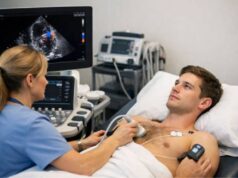
- Ultrasound is the standard screening tool for abdominal aortic aneurysm. It is fast, painless, and avoids radiation and contrast dye.
- Incidental detection often happens on CT or MRI done for kidney stones, back pain, or other abdominal problems.
- Family screening may be recommended when there is strong family history, depending on local practice and risk profile.
Measuring size and growth
Aneurysm risk rises with diameter and growth rate. Clinicians typically track:
- Maximum aneurysm diameter in a standardized plane
- Growth over time (a rapid increase is concerning)
- Morphology (shape, neck length, branch involvement)
For many AAAs, repair is often considered around 5.5 cm in men and 5.0 cm in women, or sooner if symptoms occur or growth is rapid. Individual thresholds can differ based on anatomy, body size, genetics, and surgical risk.
Pre-procedure planning imaging
When endovascular repair is being considered, doctors usually need detailed vessel maps:
- CT angiography (CTA) is the most common planning study for EVAR and TEVAR. It shows landing zones, branch vessels, calcification, clot, and access vessel size.
- MR angiography (MRA) may be used in selected patients, especially when contrast or radiation concerns exist.
- Duplex ultrasound can support follow-up and sometimes planning in experienced centers, but CTA remains the dominant planning tool for complex anatomy.
Clinicians also assess kidney function before contrast-based imaging and plan strategies to reduce kidney stress when risk is higher (hydration, minimizing contrast volume, and careful medication review).
Risk assessment before repair
Repair planning is not only about the aneurysm. Clinicians assess:
- Heart and lung reserve (to estimate perioperative risk)
- Frailty and functional status (predicts recovery and complications)
- Bleeding and clot risks (important for access and anticoagulation decisions)
- Life expectancy and goals of care (to ensure the benefit outweighs the burden)
The most helpful diagnostic outcome is a clear, shared decision: monitor safely, repair electively with an endovascular or open approach, or treat urgently if rupture is suspected. Good diagnosis reduces both undertreatment (missed rupture risk) and overtreatment (repair before the benefit is likely).
Treatment options and what to expect
Aneurysm treatment falls into three broad paths: surveillance, endovascular repair, and open surgery. The “best” option depends on rupture risk, anatomy, and the patient’s overall health.
1) Surveillance (watchful waiting)
Small, asymptomatic aneurysms are often monitored with regular imaging. Surveillance aims to intervene before rupture risk becomes unacceptable. During monitoring, clinicians also treat the drivers of growth:
- Tight blood pressure control
- Smoking cessation support
- Cholesterol management when indicated
- Exercise and nutrition plans appropriate for cardiovascular health
Surveillance is not passive—it is structured, timed, and paired with risk reduction.
2) Endovascular repair (EVAR/TEVAR and beyond)
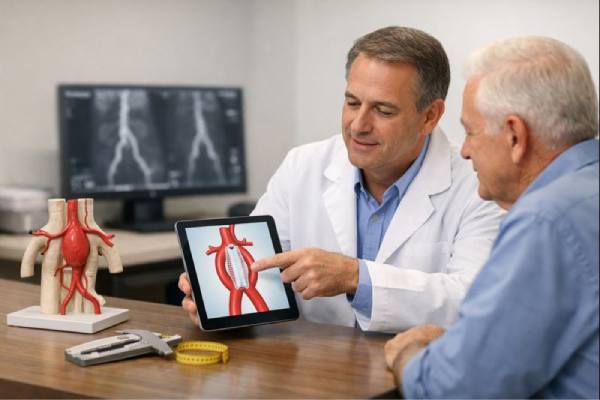
In typical EVAR, surgeons access arteries through small groin incisions or percutaneous punctures. A stent-graft is advanced under X-ray guidance and deployed to seal above and below the aneurysm. Many patients are walking the same day or next day, with shorter hospital stays than open repair in many settings.
Complex anatomy may require advanced approaches:
- Fenestrated or branched grafts to preserve flow to kidney and intestinal arteries
- Iliac branch devices to maintain pelvic blood flow while excluding iliac aneurysms
- Adjunctive coils or plugs to prevent back-bleeding into the aneurysm sac in selected scenarios
Key risks include access vessel injury, bleeding, kidney injury from contrast, and—depending on location—spinal cord ischemia risk (especially in extensive thoracic repairs). Most serious complications are uncommon but require immediate recognition.
Understanding endoleaks in plain language
An endoleak means the aneurysm sac is still getting blood flow or pressure. Some types are urgent; others are monitored unless the sac enlarges. The practical point is this: sac enlargement is a red flag after endovascular repair and typically triggers more imaging and, sometimes, reintervention.
3) Open surgical repair
Open repair removes or bypasses the aneurysm segment using a graft sewn in place through a larger incision. Recovery is longer, but open repair can offer durable long-term results in appropriate candidates, and it remains essential for certain anatomies and clinical situations.
Emergency treatment for rupture
Rupture requires immediate, life-saving intervention. When anatomy allows and resources are available, endovascular repair is often favored because it can be faster and less physiologically stressful, but the final decision depends on local expertise and the patient’s condition.
What to expect after choosing repair: you should leave the decision process knowing your aneurysm size, your anatomy category (standard vs complex), the planned follow-up schedule, and which symptoms should trigger urgent evaluation.
Follow-up, prevention, and when to seek care
Long-term success after endovascular aneurysm treatment depends on two things that work together: consistent surveillance and aggressive risk-factor management. The most common reason people run into trouble after EVAR is not that the initial procedure failed—it is that a silent problem developed later and was not detected early.
Follow-up imaging: what “lifelong surveillance” means
Your care team will tailor timing to your anatomy and graft type, but many follow-up pathways include:
- Early imaging after repair (often within the first month)
- Another assessment around the first year
- Ongoing imaging thereafter, which may be annual or spaced in stable cases, depending on findings, device, and local protocols
Follow-up may use CTA, duplex ultrasound, or a mix. Ultrasound-based surveillance can reduce radiation and contrast exposure, but it must be done by an experienced lab and paired with CTA when findings are unclear or when the sac changes.
Preventing sac enlargement and late complications
You cannot control every device-related risk, but you can strongly influence the environment that drives vascular disease:
- Stop smoking completely. This is one of the most powerful steps to slow aneurysm progression and reduce cardiovascular events.
- Control blood pressure consistently. Home monitoring a few times per week helps detect drift early.
- Take prescribed lipid and antiplatelet therapy as directed when indicated for your cardiovascular risk profile.
- Protect kidney function, especially if you need repeated contrast imaging: stay hydrated when allowed, discuss medication holds when appropriate, and avoid unnecessary kidney-stressing drugs.
A practical habit: keep a simple “aneurysm record” with your latest aneurysm sac size, graft type, next imaging date, and the phone number to call if symptoms change.
Activity and daily life after endovascular repair
Most people return to light activity within days and build toward normal routines over a few weeks. Your clinician may advise temporary lifting limits and a gradual return to exercise. Long-term, aim for cardiovascular fitness goals that are realistic for you; steady walking and strength training improve blood pressure control and overall vascular health.
When to seek care
Call emergency services immediately for:
- Sudden severe abdominal, back, or chest pain
- Fainting, severe weakness, or signs of shock
- Stroke-like symptoms (face droop, arm weakness, speech trouble)
- A cold, painful leg with color change
Contact your clinician urgently (same day) for:
- New persistent pain near the aneurysm area
- Fever with localized pain after repair
- New leg swelling or exertional leg pain
- Any report that the aneurysm sac is enlarging on follow-up imaging
The main message is simple: endovascular aneurysm care can be highly effective, but it works best when follow-up is treated as part of the therapy—not an optional extra.
References
- Editor’s Choice — European Society for Vascular Surgery (ESVS) 2024 Clinical Practice Guidelines on the Management of Abdominal Aorto-Iliac Artery Aneurysms – PubMed 2024 (Guideline)
- 2022 ACC/AHA Guideline for the Diagnosis and Management of Aortic Disease: A Report of the American Heart Association/American College of Cardiology Joint Committee on Clinical Practice Guidelines – PubMed 2022 (Guideline)
- Clinical Practice Guidelines of the Korean Society for Vascular Surgery for the Management of Abdominal Aortic Aneurysms: Focused on 18 Key Clinical Questions – PubMed 2026 (Guideline)
- CIRSE Standards of Practice on Management of Endoleaks Following Endovascular Aneurysm Repair – PMC 2024 (Guideline/Standards)
- Long-term Outcomes Associated With Open vs Endovascular Abdominal Aortic Aneurysm Repair in a Medicare-Matched Database – PMC 2022 (Observational Study)
Disclaimer
This article is for educational purposes and does not replace medical advice from a licensed clinician. Aneurysms and post-repair complications can be life-threatening. If you have sudden severe chest, back, or abdominal pain; fainting; shortness of breath at rest; stroke-like symptoms; or a cold painful limb, seek emergency care immediately. Treatment choices (surveillance vs endovascular vs open repair) depend on aneurysm size, anatomy, symptoms, genetic risk, kidney function, and your overall surgical risk, so discuss your specific situation with your vascular or cardiovascular team.
If this article was helpful, please share it on Facebook, X (formerly Twitter), or any platform you prefer, and follow us on social media. Your support through sharing helps our team keep producing high-quality health content.