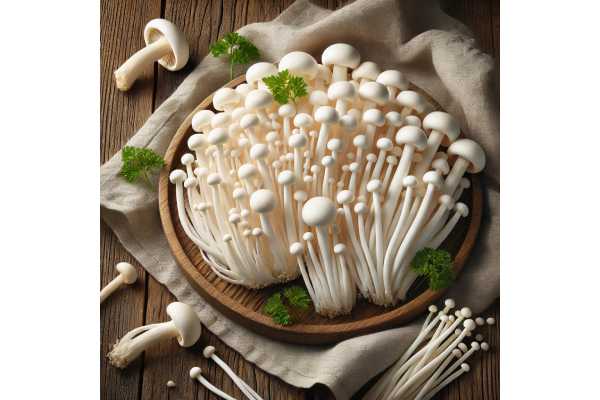
Enoki mushrooms (Flammulina velutipes) bring a delicate look and a surprising amount of structure to the plate. Their snowy caps and long, crunchy stems stay intact in broths, stir-fries, and chilled salads, delivering gentle sweetness and clean umami. Nutritionally, enoki is low in calories and fat yet provides fiber, B-vitamins, potassium, and unique fungal antioxidants such as ergothioneine. In many markets you’ll see chilled clusters in 100–200 g packets, ready to trim and cook in minutes. Beyond convenience, enoki is also a sustainable choice: indoor cultivation uses modest water, recycles agricultural by-products, and produces little waste. This guide blends practical shopping and cooking advice with a careful look at enoki’s nutrition, potential health benefits, and safety considerations (including listeria precautions) so you can enjoy it with clarity and confidence at home.
Quick Overview
- Typical serving: 100 g raw (about 1 packed cup) cooked 2–3 times per week fits most diets.
- Key benefits: very low calorie, source of fiber, niacin, riboflavin, potassium, and ergothioneine.
- Safety note: avoid raw enoki; cook thoroughly and buy from trusted suppliers due to past listeria recalls.
- Who should limit: people with mushroom allergy, and those at high risk for listeriosis (pregnant, older adults, immunocompromised) should avoid raw forms.
Table of Contents
- Enoki mushroom at a glance
- Enoki nutrition profile
- Evidence-based benefits of enoki
- Risks, Allergies and Interactions
- Selecting, Quality, Sustainability and Storage
- Preparation, Cooking and Nutrient Retention
- Portions, Comparisons and FAQs
Enoki mushroom at a glance
Enoki mushrooms are one of the most recognizable cultivated fungi: pencil-thin white stems topped with tiny button caps, sold in bundled clusters. The species, Flammulina velutipes, is native to temperate regions and known by many names—enokitake, golden needle, and winter mushroom among them. Commercial enoki is grown indoors on sterilized substrates (often hardwood sawdust with nutrient supplements) in high-humidity rooms. Low light and controlled airflow encourage the classic long ivory stems and petite caps familiar in Japanese, Korean, and Chinese cooking. Wild strains look different—shorter, brown to golden with velvety stems—and should not be confused in foraging contexts.
Taste and texture are enoki’s signature strengths. Raw, they are crisp and faintly nutty; cooked, they retain a springy bite and soak up aromatics without disintegrating. This makes them ideal in hot pots, miso soup, jjigae, ramen, and quick stir-fries. They also shine chilled: briefly blanched, then dressed with sesame oil, soy sauce or tamari, and rice vinegar. For a western-leaning plate, try them seared with garlic and lemon over fish or folded into omelets and risottos, where the strands mimic noodles.
From a nutrition standpoint, enoki is a very low-energy food (around 37 kcal per 100 g), with modest protein, minimal fat, and useful fiber. Micronutrients include niacin, riboflavin, folate, potassium, phosphorus, and copper. Like other mushrooms, enoki contains ergothioneine, a distinctive antioxidant amino-acid derivative that humans transport with a dedicated carrier. With post-harvest ultraviolet (UV) exposure, mushrooms can also provide vitamin D2; some producers label products “high in vitamin D.”
Sustainability is another plus. Indoor cultivation stacks vertically, recycles irrigation water, and turns agricultural by-products into food. Spent substrate is compostable and often repurposed as soil amendment. Packaging varies; breathable films protect quality while limiting condensation, and many brands now print clear cooking and safety instructions on pack.
Practical note on names: the pale, long-stemmed clusters common in supermarkets are cultivated enoki. Wild “velvet shank” (also F. velutipes) differs in appearance and grows on hardwood in cold months. Unless you’re an experienced forager, stick with cultivated enoki from reputable suppliers.
Enoki nutrition profile
How to use these tables. Composition can vary with strain, substrate, and water content. The tables below summarize typical values for raw enoki per 100 g. Percent Daily Value (%DV) uses adult reference DVs and rounded figures. Cooking changes water content; sautéing or simmering concentrates most minerals and fiber per cooked weight.
Macros and electrolytes (per 100 g)
| Nutrient | Amount | %DV |
|---|---|---|
| Energy | 37 kcal | — |
| Water | ~88–90 g | — |
| Protein | 2.7 g | — |
| Total fat | 0.3 g | 0% |
| Carbohydrate | 7.8 g | 3% |
| Dietary fiber | 2.7 g | 10% |
| Total sugars | ~0.2 g | — |
| Sodium | ~3–18 mg | 0–1% |
| Potassium | ~350–360 mg | 7–8% |
Carbohydrates detail (per 100 g)
| Component | Amount |
|---|---|
| Starch | ~0.0–0.2 g |
| Free sugars | ~0.2 g |
| β-glucans (estimated) | present (varies by strain and assay) |
Fats and fatty acids (per 100 g)
| Lipid | Amount | Notes |
|---|---|---|
| Total fat | 0.29 g | very low |
| Saturated fat | 0.03 g | negligible |
| Monounsaturated fat | ~0.05 g | trace |
| Polyunsaturated fat | ~0.15 g | linoleic acid predominant |
| Cholesterol | 0 mg | plant-free food |
Protein and amino acids (per 100 g)
| Item | Amount |
|---|---|
| Protein | 2.66 g |
| Notable amino acids | glutamic acid, aspartic acid (flavor-active) |
Vitamins (per 100 g)
| Vitamin | Amount | %DV |
|---|---|---|
| Thiamin (Vitamin B1) | 0.1–0.2 mg | 8–17% |
| Riboflavin (Vitamin B2) | ~0.20 mg | 15% |
| Niacin (Vitamin B3) | ~7.0 mg | 44% |
| Pantothenic acid (Vitamin B5) | ~1.4 mg | 28% |
| Vitamin B6 (Pyridoxine) | ~0.1 mg | 6% |
| Folate (Vitamin B9) | ~50 µg | 13% |
| Vitamin C | ~0–2 mg | 0–2% |
| Vitamin D2* | 0–several µg | 0–50% |
*Vitamin D2 increases markedly when mushrooms are exposed to ultraviolet light after harvest; values on ordinary packs vary by processing.
Minerals (per 100 g)
| Mineral | Amount | %DV |
|---|---|---|
| Phosphorus | ~100–110 mg | 8–9% |
| Magnesium | ~16 mg | 4% |
| Calcium | ~0–3 mg | 0% |
| Iron | ~1.1–1.2 mg | 6–7% |
| Zinc | ~1.0 mg | 9% |
| Copper | ~0.1–0.2 mg | 11–22% |
| Selenium | ~2 µg | 4% |
| Manganese | ~0.08 mg | 3% |
Bioactives and phytonutrients (qualitative)
- Ergothioneine (antioxidant amino-acid derivative).
- Phenolics and polysaccharides (including β-glucans) under active study for immunomodulatory and metabolic effects.
- Minimal natural sodium, no cholesterol, and very low fat.
Allergens and intolerance markers
- Fungal proteins can rarely trigger IgE-mediated allergy.
- Sugar alcohols (e.g., mannitol) and fermentable fibers may cause bloating in sensitive individuals.
Glycemic and acid–base metrics
- Glycemic impact: low, due to modest digestible carbohydrate and fiber.
- Acid–base: near neutral to slightly alkaline-forming in mixed meals.
Notes on variability
- Substrate, harvest maturity, and UV exposure can shift vitamin D2 and phenolic content.
- Cooking method alters water loss, changing per-100 g concentrations in cooked dishes.
Evidence-based benefits of enoki
Supports cardiometabolic patterns when used as a swap. Enoki is very low in calories and saturated fat. When you replace calorie-dense or high-saturated-fat ingredients with generous portions of sautéed or simmered enoki, dishes tend to be lighter without sacrificing satisfaction. Research on edible mushrooms and fungal β-glucans suggests small but favorable effects on lipids and glycemia when mushrooms displace refined carbohydrates or fattier meats within overall dietary patterns. In practical terms, substituting 150–200 g cooked enoki for an equivalent portion of high-fat meat in a noodle bowl or stir-fry reduces saturated fat while adding fiber and potassium.
Antioxidant capacity via ergothioneine. Enoki, like many cultivated mushrooms, is a meaningful dietary source of ergothioneine. This compound is unusual: humans have a specific transporter (OCTN1) for it, and it accumulates in tissues prone to oxidative stress. Contemporary reviews describe roles for ergothioneine in redox balance and cellular resilience. While clinical outcome trials are still limited, the compound is heat-stable enough that typical cooking retains useful amounts.
B-vitamin and mineral density in few calories. A 100 g portion provides roughly 44% of the daily value for niacin, ~15% for riboflavin, around 13% for folate, plus potassium near 350 mg. These nutrients support energy metabolism and nerve and muscle function. Copper and phosphorus contribute to connective tissue and bone health. Because enoki is mostly water and fiber with modest protein, it adds volume and texture to meals with minimal caloric load.
Vitamin D2 with UV treatment. When mushrooms are exposed to UV light after harvest, ergosterol converts to vitamin D2. Commercially UV-treated mushrooms can contribute several micrograms of vitamin D per 100 g—useful in winter or for people with low sun exposure. If labeling indicates “high in vitamin D,” the producer has applied a UV step. At home, you can place separated mushrooms gill-side up in midday sun for 30–60 minutes before cooking; D2 persists through standard cooking better than vitamin C.
Digestive and culinary advantages. Enoki’s fibers absorb flavors and thicken broths slightly, helping soups and stews feel fuller with fewer calories. Their quick cooking time (often 1–3 minutes to tender) supports home-cooking habits and vegetable intake, both associated with improved diet quality.
What “dose” is realistic? For everyday wellness, aim for 100–150 g cooked enoki 2–3 times per week as part of varied meals. Some clinical studies use concentrated extracts or powders; those protocols aren’t necessary for culinary benefits and should be guided by a clinician if you have medical conditions or take related medications.
Bottom line. The strongest advantages of enoki are culinary: fast, flexible, and satisfying. Those strengths make healthier choices easier to stick with—an under-appreciated mechanism by which foods support long-term health.
Risks, Allergies and Interactions
Cook enoki thoroughly; avoid raw. Multiple recalls and outbreak investigations have linked raw enoki to Listeria monocytogenes contamination. High-risk groups—including pregnant people, adults over 65, and immunocompromised individuals—should avoid raw enoki entirely and be vigilant about cross-contamination. For everyone, thorough cooking (bringing mushrooms to a steaming hot center) is important, and raw-ready dishes should be prepared with cooked, cooled enoki rather than raw.
Allergy and intolerance. IgE-mediated mushroom allergy is uncommon but documented. Symptoms can include oral itching, hives, wheeze, or, rarely, anaphylaxis. Occupational exposure (growers, chefs) may increase sensitization risk. Gastrointestinal discomfort can occur in some people due to sugar alcohols (e.g., mannitol) and fermentable fibers. If you’re sensitive, start with smaller portions and cook well.
Medication and condition considerations.
- Glucose-lowering drugs: Adding large amounts of high-fiber mushrooms may modestly affect post-meal glucose in some individuals. If you use insulin or sulfonylureas, monitor levels when changing intake.
- Lipid-lowering therapy: Culinary quantities of mushrooms are compatible with statins and other lipid agents. Avoid high-dose mushroom extracts marketed for cholesterol unless recommended by a clinician.
- Purines and gout: Mushrooms contain moderate purines compared with meats and some fish. Many people with gout tolerate modest servings; coordinate with your clinician during flare-prone periods.
- Digestive disorders: In irritable bowel patterns, reduce portion size and consider well-cooked preparations to lower fermentability.
Handling and storage to reduce risk. Keep enoki refrigerated in a breathable package; trim away base material before cooking; rinse briefly only if needed and pat very dry. Prevent cross-contamination by using separate cutting boards and promptly washing hands and surfaces. Discard any packages with off odors, sliminess, or visible mold, and always check brand notices for recall information.
Foraging caution. Wild F. velutipes differs in appearance (golden to brown caps, velvety stems) and occurs on hardwood in cold months; misidentification with toxic look-alikes is a serious risk. Unless trained, avoid wild harvests and rely on cultivated products from reputable suppliers.
Summary: Most people can enjoy cooked enoki safely. The key is sourcing from trusted producers, cooking thoroughly, and considering personal health status and medications.
Selecting, Quality, Sustainability and Storage
How to choose high-quality enoki.
- Appearance: Tight clusters with snowy-white stems and caps; avoid browning, wet spots, or sliminess.
- Base: A compact, beige “cake” of substrate at the base is normal; it should be clean and firm, not mushy or dark.
- Packaging: Prefer breathable packs with a clear “cook before eating” statement and a visible packed-on or best-by date. Excess condensation signals temperature abuse.
- Smell: Fresh, mild, and slightly earthy. Sour or fishy notes indicate spoilage.
Sustainability pointers. Indoor farms use stacked shelving, filtered air, and recirculating humidification, which conserve land and water. Substrates (hardwood sawdust, rice bran, wheat bran) repurpose by-products that would otherwise have low value. Spent substrate becomes compost or animal feed. If you have access to local growers, ask about renewable energy use, water recycling, and plastic reduction. Buying only what you will cook (and cooking promptly) is the single biggest waste-reduction step at home.
Storage and handling.
- Refrigeration: Keep at 1–5 °C. Store unopened packs for up to 5–7 days; once opened, wrap loosely in paper or a breathable container and use within 2–3 days.
- Cleaning: Trim 0.5–1 cm from the base to separate strands. Brush off visible substrate; if you rinse, do it quickly just before cooking and dry thoroughly to promote browning.
- Batch prep: Pre-trim and portion into meal-ready bundles; cook within 48 hours for best texture.
- Freezing: Best after par-cooking. Sauté 2–3 minutes to drive off moisture, cool, portion flat in freezer bags, and freeze up to 2–3 months.
- Drying: Enoki’s fine strands dry quickly at 50–60 °C. Rehydrate in warm stock 15–20 minutes; texture will be softer and suited for soups.
Quality cues as they age. Fresh enoki is crisp and squeaks when bent. As it ages, stems turn translucent, become slippery, and give off sour aromas. If in doubt, compost it. For an extra day of storage, spread strands in a single layer on a rack inside the fridge to increase airflow; replace any damp paper lining.
Buying on a budget. Look for multi-packs or “chef’s mix” bins. Dried enoki is cost-effective for broths; frozen pre-sautéed enoki saves weeknight time. Because enoki cooks in minutes, it’s a low-energy ingredient for quick meals.
Preparation, Cooking and Nutrient Retention
Prep basics. Remove the rubber band or twist-tie. Trim 0.5–1 cm from the base to separate strands. If the cluster is very dense, split it lengthwise. Keep strands similar in length for even cooking. Dry thoroughly if you rinsed; moisture hinders browning.
Flavor strategy. Enoki is mild; it loves aromatics and umami-rich partners. Build flavor in layers: start with a hot pan and a neutral or aromatic oil, add enoki and let it contact the surface undisturbed for 60–90 seconds, then toss. Finish with acidity (rice vinegar, lemon) and a salinity accent (soy sauce, tamari, or a pinch of salt). For richer dishes, add butter or sesame oil at the end to glaze.
Core techniques (typical time frames):
- Quick sauté: 3–5 minutes over medium-high heat; finish with garlic, ginger, and scallions.
- Broth cookery: 1–3 minutes in simmering soup or hot pot; add at the very end to keep stems crisp.
- Roasting: Toss with oil and salt; roast at 220 °C for 10–12 minutes until edges frill and stems caramelize.
- “Crispy clusters”: Dredge lightly in rice flour, pan-fry 2–3 minutes per side, drain, and season.
- Cold salads: Blanch 60–90 seconds, drain well, cool rapidly, and dress.
Retention of nutrients and bioactives.
- Water-soluble vitamins (B-complex, vitamin C) can leach into cooking liquids—consume the broth in soups and braises to capture them.
- Minerals (potassium, phosphorus, copper) are heat-stable; concentration can increase as water cooks off.
- Ergothioneine is relatively heat-stable; sautéing, roasting, and brief blanching retain meaningful amounts.
- Vitamin D2 formed via UV exposure survives typical kitchen heat better than vitamin C; avoid prolonged boiling to minimize losses.
- β-glucans are part of cell walls and persist through cooking, contributing subtle viscosity to soups.
Smart pairings for balanced meals.
- Proteins: tofu, eggs, chicken, fish, shrimp, tempeh.
- Grains and noodles: soba, brown rice, barley, udon, whole-wheat spaghetti.
- Vegetables: napa cabbage, bok choy, spinach, leeks, broccoli, asparagus.
- Flavor bases: miso, dashi, gochujang, soy sauce, sesame, garlic, ginger, white pepper.
Two example applications.
- Speedy enoki miso soup: Bring dashi to a simmer; whisk in white miso; add sliced scallions, tofu cubes, and 100–150 g enoki; simmer 2 minutes; finish with a few drops of sesame oil.
- Garlic-lemon enoki pasta: Sear enoki in olive oil until golden; add minced garlic and lemon zest; toss with whole-wheat spaghetti, parsley, and grated hard cheese.
Food-safety checkpoints. Cook until steaming hot; refrigerate leftovers within 2 hours in shallow containers; reheat to a hot, bubbling temperature before eating.
Portions, Comparisons and FAQs
Real-world portion and frequency. A practical serving is 100 g raw (about a packed cup), cooked as part of a mixed meal. Enjoy 2–3 times per week alongside other vegetables and proteins. Athletes or high-energy eaters may double this in balanced dishes.
How does enoki compare to other mushrooms? Relative to common oyster or shiitake, enoki is similar in calories and total protein but often higher in niacin and comparable in riboflavin. Its texture is more noodle-like and less meaty than oyster or shiitake. For vitamin D, the largest differences come from UV exposure rather than species; check labels for “high in vitamin D.”
Is enoki a meat substitute? It doesn’t match meat’s protein per gram, but it provides satisfying chew and umami. To make plant-forward meals more filling, combine enoki with tofu, eggs, legumes, or small amounts of meat or seafood. Layer umami with miso or soy sauce and brighten with acid.
Can kids, older adults, and pregnant people eat enoki? Yes—when cooked thoroughly and handled safely. High-risk groups should avoid raw enoki and any products involved in recalls. Cooking enoki in soups and stews is a safe, easy format for most households.
Does enoki affect blood sugar or cholesterol? Enoki’s fiber and β-glucans support a favorable dietary pattern, especially when enoki replaces refined carbohydrates or fatty meats. Effects are modest at culinary intakes and depend on overall diet. If you take glucose- or lipid-lowering medications, monitor when making notable diet changes.
What about gout? Mushrooms contain moderate purines. Many people with gout can include small portions of cooked mushrooms within a balanced plan; collaborate with your clinician during periods of frequent flares.
Troubleshooting in the kitchen.
- Stringy or watery texture: pan was crowded or mushrooms were wet—dry well and cook in batches.
- Bland: add a saline hit (soy/tamari), fresh acid, and scallions or herbs at the end.
- Rubbery: cooked too long in dry heat—switch to brief sautéing or simmering.
Budget and access tips. Buy multi-packs, use dried enoki for broths, and freeze pre-sautéed portions for fast weeknights. Because enoki cooks in minutes, it’s an efficient ingredient for quick, lower-energy meals.
References
- Listeria Outbreak Linked to Enoki Mushrooms 2022.
- Outbreak Investigation of Listeria monocytogenes: Enoki Mushrooms (November 2022) 2024 (Update).
- Vitamin D from UV-Irradiated Mushrooms as a Way for Vitamin D Supplementation: A Systematic Review 2023 (Systematic Review).
- The Current Situation and Future Trends of Ergothioneine in Biology and Medical Research: A Bibliometric Analysis 2025 (Review).
- Edible Mushrooms and Beta-Glucans: Impact on Human Health 2021 (Systematic Review).
Disclaimer
This guide is educational and does not replace personalized advice from your physician, pharmacist, or registered dietitian. Always follow current food-safety guidance, especially if you are pregnant, immunocompromised, or over 65. If you have a medical condition, take prescription medications, or have a history of food allergy, seek professional advice before making significant dietary changes or using mushroom-based supplements.
If this article helped you, please consider sharing it on Facebook, X (formerly Twitter), or another platform you prefer. Your support helps us continue producing clear, practical nutrition content. Thank you.