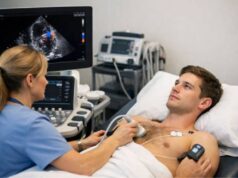
Eosinophilic endocarditis is a rare but serious condition where a type of white blood cell—an eosinophil—triggers inflammation and injury on the inner lining of the heart. Over time, that injury can lead to clots inside the heart, scarring, and stiffening that makes it harder for the heart to fill and pump normally. Some people develop symptoms quickly, while others feel only vague fatigue or shortness of breath until complications appear.
This condition matters because early treatment can limit permanent damage, yet it is often missed at first. The clues are usually a high eosinophil count on blood tests combined with heart symptoms or imaging findings that do not fit more common problems. In the sections below, you’ll learn what eosinophilic endocarditis is, why it happens, what warning signs to watch for, how doctors confirm the diagnosis, and how treatment is tailored to the cause and the stage of disease.
Table of Contents
- What eosinophilic endocarditis is
- Causes and risk factors behind eosinophilia
- Symptoms and complications by disease stage
- How eosinophilic endocarditis is diagnosed
- Treatments that protect the heart
- Management, follow-up, and when to seek urgent care
What eosinophilic endocarditis is
Eosinophilic endocarditis is heart injury driven by eosinophils—immune cells that normally help with allergy responses and parasite defense. When eosinophils become too numerous or overly activated, they can migrate into tissues and release proteins that are toxic to cells. In the heart, the damage often concentrates in the endocardium (the inner lining) and the nearby inner layer of heart muscle. You may also hear the terms Löffler endocarditis or eosinophilic endomyocardial disease; many clinicians use these labels to describe the same spectrum.
A helpful way to understand the condition is by its typical progression. Not everyone follows every step, but the “three-stage” model explains why symptoms and treatment choices can look so different from person to person:
- Stage 1: inflammatory injury (necrotic stage)
Eosinophils infiltrate heart tissue and degranulate, releasing proteins that inflame and injure cells. People may have chest discomfort, shortness of breath, or no symptoms at all. Blood markers of heart strain or injury can rise. - Stage 2: clot formation (thrombotic stage)
The injured inner surface becomes a site where clots can form, often near the heart’s apex (the tip of the ventricle). These clots can embolize—break off and travel—causing stroke or other organ damage. - Stage 3: scarring and stiffening (fibrotic stage)
Healing can leave thick scar tissue along the inner heart wall and sometimes the valves. The ventricle may become stiff and “restrictive,” meaning it cannot fill normally. Valve leakage can worsen because the scar tissue distorts the valve apparatus.
What makes eosinophilic endocarditis unique is that the heart is not the only target. Many people have signs of a broader eosinophilic disorder affecting the lungs, skin, nerves, gastrointestinal tract, or blood system. That is why management often involves both cardiology and hematology/allergy/immunology teams.
One more nuance: “endocarditis” usually makes people think of infection, but eosinophilic endocarditis is not the typical bacterial infection of heart valves. Antibiotics do not treat it unless there is a separate infection present. Instead, the core problem is immune-driven injury and its downstream effects—clotting and fibrosis—which is why early recognition can be lifesaving.
Causes and risk factors behind eosinophilia
Eosinophilic endocarditis usually develops in the setting of hypereosinophilia—a persistently high eosinophil count—though the severity of heart involvement does not always match the eosinophil number on a single lab test. Clinicians focus on identifying the driver of eosinophilia, because the most effective treatment depends on the cause.
Common underlying causes
- Hypereosinophilic syndrome (HES)
HES is a group of conditions where eosinophils remain elevated and cause organ damage. Some forms are “idiopathic” (no clear trigger), while others are linked to a clonal blood disorder, abnormal immune signaling, or specific gene changes. - Allergic and drug-related reactions
Certain medications can trigger eosinophilia with heart involvement. This can range from a medication hypersensitivity reaction to more complex immune syndromes. The timing—new drug within weeks to months—can be a critical clue. - Parasitic infections
Tissue-invasive parasites can drive marked eosinophilia. The risk rises with exposure history (travel, residence, certain food and water exposures). Treating the infection is essential, and it can change how and when clinicians use steroids. - Autoimmune and vasculitic disease
Eosinophilic granulomatosis with polyangiitis (EGPA) is a well-known example where eosinophils and inflammation can affect multiple organs, including the heart. - Cancer and blood disorders
Some leukemias, lymphomas, and myeloid/lymphoid neoplasms can produce eosinophilia. In these cases, targeted therapy may be more effective than broad immune suppression.
Risk factors that increase the chance of heart involvement
Not everyone with eosinophilia develops eosinophilic endocarditis. Factors that raise suspicion for heart involvement include:
- Persistent eosinophilia plus new cardiac symptoms (breathlessness, chest pain, palpitations, swelling)
- Unexplained blood clots (stroke, limb ischemia) in the setting of eosinophilia
- Elevated cardiac biomarkers (for example, troponin) without typical coronary artery disease findings
- Imaging findings such as apical thrombus, endocardial thickening, or restrictive filling patterns
Why “secondary causes” matter first
When clinicians evaluate hypereosinophilia, they often start by looking for secondary causes—allergies, asthma, drugs, parasites, and other inflammatory triggers—because treating the trigger can rapidly improve eosinophilia and reduce ongoing heart injury. At the same time, they screen for “primary” or clonal causes because those may require targeted therapies (for example, tyrosine kinase inhibitors in certain gene-rearranged diseases).
A practical and safety-focused point: if steroids are needed urgently to protect the heart, clinicians still try to assess parasite risk quickly. In some parasite exposures, steroids can worsen infection complications unless antiparasitic treatment is addressed. That balancing act—protecting the heart while avoiding avoidable infectious harm—is one reason eosinophilic endocarditis is best managed with a structured, cause-first approach.
Symptoms and complications by disease stage
Symptoms can be subtle early and dramatic later. Because eosinophilic endocarditis can evolve from inflammation to clotting to scarring, the symptom pattern often changes over time—and the most dangerous complications are not always preceded by severe pain.
Early-stage symptoms (inflammatory injury)
In the initial stage, symptoms may resemble other heart problems:
- Shortness of breath with exertion or at rest
- Chest discomfort that can feel pressure-like or sharp
- Fatigue that is out of proportion to activity
- Palpitations or a racing heartbeat
- Low-grade fever or a general “flu-like” feeling if there is broader inflammation
Some people have no obvious cardiac symptoms but develop abnormal tests (for example, elevated troponin) during evaluation of eosinophilia for another reason.
Clot-related symptoms (thrombotic stage)
As the injured inner lining becomes a surface for clot formation, symptoms may reflect emboli or impaired ventricular function:
- Sudden neurologic symptoms: facial droop, arm weakness, speech difficulty, vision loss (possible stroke)
- New severe limb pain, coldness, or color change (possible arterial embolism)
- Sudden abdominal pain or flank pain (possible organ infarction)
- Worsening breathlessness, especially if heart pumping or filling becomes impaired
An important nuance: clots can form in the heart even when the heart’s pumping strength looks “not too bad.” The risk comes from surface injury and altered flow near the apex.
Late-stage symptoms (fibrosis and restrictive physiology)
When fibrosis develops, the heart may become stiff. People often describe:
- Breathlessness with minimal exertion
- Swelling in legs or abdomen
- Rapid weight gain over days from fluid retention
- Reduced exercise tolerance and profound fatigue
- A sensation of fullness, bloating, or decreased appetite from congestion
Valve involvement can add new murmurs and worsening symptoms. Mitral valve leakage is often discussed in this context because scarring can distort the ventricle and valve apparatus.
Complications clinicians watch for
- Heart failure: from impaired filling, impaired pumping, or both
- Arrhythmias: atrial fibrillation, atrial flutter, or ventricular arrhythmias, which may cause palpitations, dizziness, or fainting
- Thromboembolism: stroke and systemic emboli are major sources of morbidity
- Progressive valve disease: leakage or distortion, sometimes requiring intervention
- Pulmonary hypertension: can develop as pressures back up through the lungs
- Sudden deterioration: can occur if an embolus occurs, an arrhythmia becomes unstable, or heart failure acutely worsens
Signs that should be treated as emergencies
Seek emergency care immediately for:
- Stroke symptoms (face droop, arm weakness, speech trouble)
- Fainting, near-fainting, or severe dizziness
- Chest pain with sweating, nausea, or severe shortness of breath
- A cold, painful limb or sudden severe limb weakness
- Severe shortness of breath at rest or blue lips
Because eosinophilic endocarditis is uncommon, it is easy for symptoms to be attributed to asthma, anxiety, viral illness, or “being out of shape.” The combination of eosinophilia and any new heart symptom is a strong reason to escalate evaluation rather than waiting.
How eosinophilic endocarditis is diagnosed
Diagnosis is a two-part problem: confirming heart involvement and identifying the cause of eosinophilia. Clinicians move quickly because the treatable window—before extensive fibrosis—can be short.
Step 1: confirm hypereosinophilia and assess urgency
Evaluation typically begins with:
- A complete blood count with differential (to quantify eosinophils)
- Review of trends (a single normal reading does not rule out episodic eosinophilia)
- Assessment for red flags: chest pain, breathlessness, neurologic symptoms, fainting, or signs of heart failure
Additional blood tests often include markers of inflammation, kidney and liver function, electrolytes, and cardiac biomarkers (such as troponin and natriuretic peptides). These help estimate severity and guide safe medication choices.
Step 2: cardiac testing to define structure, function, and clot risk
Common cardiac tests include:
- Electrocardiogram (ECG): may show nonspecific changes, conduction abnormalities, or arrhythmias.
- Echocardiogram: a key early test. It can show:
- apical thrombus (clot in the ventricular tip)
- endocardial thickening
- restrictive filling patterns
- valve leakage and chamber size changes
- reduced systolic function in more advanced or severe cases
If image quality is limited, contrast-enhanced echo may be used to improve clot detection. - Cardiac MRI (CMR): often provides the clearest picture of inflammation, scar, and thrombus. Typical clues include subendocardial patterns of injury and enhancement that help distinguish eosinophilic disease from more common cardiomyopathies.
- CT imaging: may help in selected cases, especially if MRI is not possible, but MRI is often preferred for tissue characterization.
Step 3: determine the cause of eosinophilia
A careful cause-workup usually includes:
- Medication and supplement review (including new or intermittent drugs)
- Travel/exposure history and targeted parasite testing when relevant
- Autoimmune evaluation when EGPA or related disease is suspected
- Hematologic evaluation for clonal or neoplastic causes, which may involve:
- peripheral smear review
- bone marrow assessment in selected cases
- molecular testing for gene fusions or mutations associated with eosinophilic neoplasms
This step matters because “one-size-fits-all” therapy is not optimal. For example, a patient with a targetable clonal eosinophilic disorder may respond dramatically to a specific therapy, while another patient needs immune suppression and long-term monitoring.
Is endomyocardial biopsy required?
Endomyocardial biopsy can provide definitive tissue proof, but it is invasive and can miss affected areas if sampling does not capture the right region. In practice, clinicians balance:
- how unstable the patient is,
- how strongly imaging and labs support the diagnosis,
- and whether biopsy results would change management.
If imaging strongly suggests eosinophilic involvement and the clinical stakes are high, treatment may begin while the broader diagnostic workup continues—especially in early inflammatory stages where delay increases the chance of clotting and fibrosis.
Treatments that protect the heart
Treatment has three goals: stop ongoing eosinophil-driven injury, prevent or treat clots, and manage heart failure or valve complications. The best plan depends on the disease stage and the underlying cause of eosinophilia.
1) Rapid control of eosinophilic inflammation
For many patients—especially with cardiac involvement—clinicians start with systemic corticosteroids because they can lower eosinophil activity quickly. Typical approaches include:
- high-dose oral steroids for significant cardiac involvement
- intravenous “pulse” steroids in life-threatening presentations (for example, severe myocarditis-like inflammation, cardiogenic shock, or rapidly progressive symptoms)
Steroids are often a bridge, not a long-term solution. Clinicians aim to taper carefully while adding cause-specific or steroid-sparing therapies when needed.
2) Treat the underlying driver
Examples of cause-directed therapy include:
- Clonal or gene-rearranged eosinophilic disorders: targeted therapy (such as tyrosine kinase inhibitors) can be transformative when indicated.
- EGPA or autoimmune disease: treatment may include steroids plus immunosuppressive or biologic therapy depending on severity and organ involvement.
- Parasitic infection: antiparasitic therapy is essential. When steroids are needed for heart protection, clinicians coordinate timing and coverage to reduce infectious risk.
- Drug-induced eosinophilia: stopping the culprit drug is a cornerstone, along with supportive care and, when needed, short-term immune suppression.
3) Anticoagulation and clot management
Because intracardiac thrombus and embolic events are major risks, clinicians often consider anticoagulation when:
- imaging shows an apical thrombus,
- there has been an embolic event,
- or the endocardial injury pattern suggests high clot risk.
The choice and duration of anticoagulation depend on bleeding risk, the presence of visible thrombus, whether fibrosis has developed, and how quickly eosinophilia comes under control. In some cases, anticoagulation continues until imaging confirms thrombus resolution and endocardial activity stabilizes. Antiplatelet therapy alone is typically not sufficient for intracardiac mural thrombus risk.
4) Heart failure and rhythm management
If heart failure symptoms are present, treatment often includes:
- diuretics to relieve fluid overload
- guideline-directed heart failure medications when pumping function is reduced
- careful blood pressure and heart rate control
Arrhythmias are treated based on type and severity and may include rate control, rhythm control, and anticoagulation decisions when atrial fibrillation occurs.
5) Advanced and procedural options
In later fibrotic stages, medical therapy may not fully reverse restrictive physiology. Some people require:
- valve repair or replacement if valve damage becomes severe
- endocardial decortication (rare, specialized surgery) in selected cases
- advanced heart failure therapies in severe, refractory disease
A realistic expectation: the heart can improve significantly if treatment begins in the inflammatory or early thrombotic stage. Once dense fibrosis forms, therapy shifts toward preventing progression, managing symptoms, and reducing clot and rhythm risks. That is why early recognition—before months of silent injury—matters as much as the specific medication chosen.
Management, follow-up, and when to seek urgent care
Living with eosinophilic endocarditis usually means living with a plan: monitoring eosinophils, tracking heart structure and function over time, and preventing complications during high-risk periods. Many people do well when care is coordinated and follow-up is consistent.
Follow-up monitoring that’s worth doing
A typical follow-up approach may include:
- Serial eosinophil counts: initially frequent (sometimes weekly), then spaced out once stable. Trends matter more than a single value.
- Repeat echocardiography: to track thrombus resolution, valve function, filling patterns, and ventricular performance. The schedule depends on severity—often sooner in the first months.
- Cardiac MRI in selected cases: to assess whether inflammation is resolving and whether fibrosis is stabilizing.
- Medication safety labs: especially for steroids and immunosuppressants (glucose, blood pressure, bone protection strategy, infection risk planning).
- Evaluation of the underlying eosinophilic disorder: hematology/allergy/immunology follow-up to confirm subtype, refine long-term therapy, and reduce relapse risk.
A helpful personal metric is to track functional capacity in real life: how far you can walk without stopping, whether stairs feel harder, and whether you need more pillows at night. These are often earlier warning signs than a single clinic vital sign.
Practical steps that reduce risk at home
- Take medicines exactly as prescribed. Abruptly stopping steroids or anticoagulants can be dangerous. If side effects arise, contact your clinician promptly for a safer adjustment.
- Watch for fluid retention. If you have heart failure symptoms, daily morning weight is a simple tool. Rapid gains over a few days may signal worsening congestion.
- Avoid dehydration and prolonged immobility. Both can raise clot risk. During long travel, stand and move regularly, and discuss clot-prevention strategies with your care team if you have a history of thrombus.
- Infection prevention matters. Steroids and immunosuppressants can raise infection risk. Ask your clinician which vaccines are appropriate for your situation and what to do if you develop fever.
- Heart-healthy basics still help. Sodium awareness, gentle physical activity as tolerated, blood pressure control, and good sleep support recovery even when the root cause is immune-driven.
Relapse prevention and tapering strategy
Relapse often happens during steroid tapering or when the underlying driver is not fully controlled. Many clinicians taper gradually over weeks to months, guided by:
- symptoms,
- eosinophil trends,
- and repeat imaging.
Steroid-sparing therapies (including biologics or targeted therapies when appropriate) can lower relapse risk and reduce long-term steroid side effects.
When to seek urgent care
Call emergency services immediately for:
- stroke symptoms (face droop, arm weakness, speech difficulty)
- chest pain with sweating, nausea, or severe shortness of breath
- fainting or a sustained fast/irregular heartbeat with weakness
- a cold, painful limb, or sudden severe limb weakness
- severe shortness of breath at rest, pink frothy sputum, or blue lips
Contact your clinician urgently (same day) for:
- new or worsening shortness of breath, swelling, or rapid weight gain
- new palpitations, dizziness, or near-fainting
- signs of bleeding on anticoagulation (black stools, vomiting blood, heavy unexplained bruising)
- fever while on steroids or immune-suppressing treatment
Eosinophilic endocarditis can feel overwhelming because it is rare and complex. The most protective mindset is to treat it as a time-sensitive, team-managed condition: control eosinophils, prevent clots, monitor the heart, and adjust therapy early—before complications force urgent decisions.
References
- In-Depth Review of Loeffler Endocarditis: What Have We Learned? – PMC 2024 (Review)
- World Health Organization and International Consensus Classification of eosinophilic disorders: 2024 update on diagnosis, risk stratification, and management – PubMed 2024 (Guideline/Consensus Update)
- Managing Patients with Hypereosinophilic Syndrome: A Statement from the Italian Society of Allergy, Asthma, and Clinical Immunology (SIAAIC) – PMC 2024 (Position Statement)
- Eosinophilic myocarditis: systematic review – PubMed 2024 (Systematic Review)
- Mepolizumab for hypereosinophilic syndrome: effectiveness and safety from real-world evidence – PMC 2025 (Review)
Disclaimer
This article is for educational purposes and does not replace personalized medical advice, diagnosis, or treatment. Eosinophilic endocarditis can lead to life-threatening complications, including stroke, dangerous heart rhythms, and severe heart failure. If you develop stroke symptoms, severe chest pain, fainting, sudden severe shortness of breath, or a cold painful limb, seek emergency care immediately. Treatments such as corticosteroids, immunosuppressive medicines, biologic therapies, and anticoagulants can be highly effective but also carry risks, including infection and bleeding, and must be tailored to your specific cause and health profile. Do not start, stop, or change prescribed medications without guidance from your clinician.
If you found this article helpful, please share it on Facebook, X (formerly Twitter), or any platform you prefer, and follow us on social media. Your support through sharing helps our team continue producing high-quality health content.