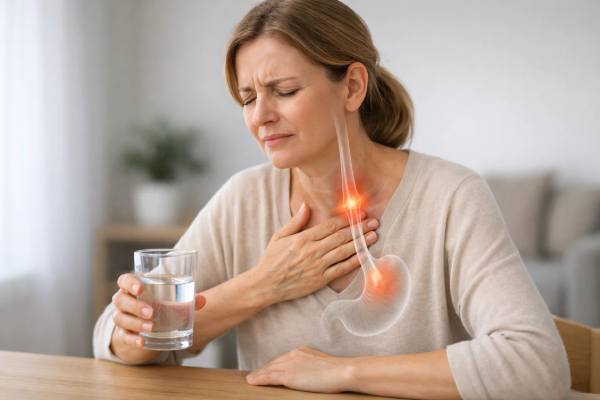
Esophageal spasms can feel dramatic: a sudden clamp-like chest pain, food that seems to “stick,” or swallowing that becomes strangely difficult for a few minutes. The good news is that many episodes are manageable once you understand what tends to set them off and what other conditions can mimic them. The tricky part is that the esophagus sits in the same neighborhood as the heart and lungs, so the safest approach is to treat new or severe chest pain as urgent until proven otherwise.
This article breaks down what esophageal spasm symptoms typically feel like, the most common triggers (including reflux and certain medications), and the full range of treatment options—from at-home strategies and targeted medications to procedures for persistent, life-disrupting cases. Along the way, you’ll learn how clinicians confirm the diagnosis and how to build a practical plan that reduces episodes over time.
Essential Insights
- Esophageal spasm often causes intermittent chest tightness and trouble swallowing that can last seconds to minutes.
- Identifying repeatable triggers (temperature extremes, stress, reflux, certain medications) can reduce episode frequency.
- New, severe, or “different” chest pain should be evaluated urgently to rule out heart and lung causes.
- Start with slow-eating mechanics and reflux control, then escalate to medications or procedures if symptoms persist.
- Track episodes with a simple log (time, food, temperature, stress, position, meds) to guide targeted treatment.
Table of Contents
- What an esophageal spasm feels like
- Why spasms happen and common triggers
- When chest pain or dysphagia needs urgent care
- How esophageal spasm is diagnosed
- Treatments that calm spasm and protect swallowing
- A practical plan for fewer episodes
What an esophageal spasm feels like
An esophageal spasm is a problem of movement and muscle timing in the esophagus—the tube that carries food from your mouth to your stomach. When the muscle contracts too strongly, too early, or out of sequence, you can get symptoms that are intense but often short-lived.
Common symptoms include:
- Chest pain or pressure: often described as squeezing, tight, or band-like. It may come on suddenly, sometimes during a meal, and can range from mild discomfort to pain that feels alarming.
- Dysphagia (trouble swallowing): a sensation that food is “stuck,” slow to go down, or requires extra swallows. Some people notice this more with liquids, others with solids, and many with both at different times.
- Regurgitation: food or liquid coming back up, especially if the esophagus is contracting unhelpfully against a closed or tight lower esophageal sphincter.
- Heartburn-like symptoms: burning behind the breastbone can occur alongside spasm, especially when reflux is part of the picture.
- Globus sensation: a non-painful feeling of a lump in the throat, typically between episodes.
A key feature is intermittency. You may have a completely normal day, then a cluster of episodes for a week, then nothing again. Episodes may last seconds to several minutes, and in some people longer, particularly when anxiety ramps up the pain experience or when swallowing repeatedly “re-triggers” the spasm.
It also helps to know what an esophageal spasm usually does not do. While it can be painful, it does not typically cause sustained shortness of breath, blue lips, or ongoing faintness. But because chest pain symptoms overlap with serious heart and lung conditions, your first priority is always safety—especially if the pain is new, severe, or comes with concerning features.
Why spasms happen and common triggers
The esophagus moves food downward through coordinated waves (peristalsis). Esophageal spasm describes patterns where that coordination is disrupted. Two commonly discussed patterns are:
- Distal esophageal spasm: contractions occur too early (“premature”) in the lower portion of the esophagus, which can create a chaotic or corkscrew-like movement pattern.
- Hypercontractile (jackhammer) esophagus: contractions may be coordinated but overly forceful, generating pain and swallowing difficulty.
In real life, these patterns can overlap with esophageal hypersensitivity, meaning the nerves interpret normal movement or mild reflux as pain. That’s one reason why symptoms can feel outsized compared with what tests sometimes show.
Triggers tend to fall into a few practical buckets:
1) Temperature and texture triggers
- Very hot drinks (fresh coffee or tea) or very cold drinks (ice water) can provoke abnormal contraction in sensitive individuals.
- Dry, dense foods—think bread, steak, or sticky rice—can increase swallow effort and raise the chance of a spasm if you’re rushing or not fully chewing.
2) Reflux-related triggers
Reflux does not always cause classic heartburn. Acid and non-acid reflux can irritate the lining and sensitize the nerves, increasing the chance of spasm-like symptoms. Clues include symptoms that worsen after large meals, late-night eating, alcohol, or lying down soon after eating.
3) Stress, fatigue, and autonomic arousal
Stress doesn’t “cause” every spasm, but it can lower your threshold. During stress, breathing becomes shallow, the chest wall tightens, and the nervous system becomes more reactive. That can amplify both the likelihood of a spasm and the intensity of pain when it happens.
4) Medication and substance triggers
Certain medications can alter esophageal muscle or nerve signaling. A standout category is opioid pain medications, which are associated with specific patterns of esophageal dysfunction in some people. Other possible contributors include medications with anticholinergic effects (which can dry the mouth and alter swallowing mechanics) and stimulants that increase nervous system arousal. Alcohol can contribute through reflux, dehydration, and direct irritation.
5) Inflammation or structural “look-alikes”
Conditions such as eosinophilic esophagitis, strictures, or a tight lower esophageal sphincter can mimic spasm symptoms. That’s why persistent dysphagia deserves evaluation rather than self-diagnosis.
The most useful mindset is pattern recognition: not every episode has one clear cause, but many people find 2–3 repeatable triggers that account for most flares.
When chest pain or dysphagia needs urgent care
Because esophageal spasm can imitate cardiac chest pain, a safety-first rule helps: If you are not sure whether chest pain could be heart-related, treat it as urgent. This is especially important if it is your first episode, markedly worse than usual, or feels different from prior symptoms.
Seek urgent evaluation (emergency services or an emergency department) for chest pain with any of the following:
- Pain that spreads to the arm, jaw, neck, or back
- Shortness of breath, sweating, nausea, or vomiting with chest pressure
- Fainting, near-fainting, confusion, or new weakness
- Chest pain brought on by exertion or accompanied by a racing heartbeat you cannot settle
- A new episode in someone with known heart disease risk factors, even if reflux has been present before
For swallowing symptoms, urgent evaluation is also warranted when you have:
- Food impaction (food stuck and you cannot swallow saliva)
- Progressive dysphagia (steadily worsening over weeks to months)
- Unintentional weight loss, persistent vomiting, or dehydration
- Painful swallowing that persists, especially with fever
- Vomiting blood, black stools, or symptoms of anemia (unusual fatigue, dizziness)
- Recurrent aspiration symptoms: coughing during meals, choking episodes, or repeated pneumonias
During a typical, non-emergency episode that feels consistent with prior spasms, these steps can help while you arrange non-urgent follow-up:
- Stop eating immediately and take pressure off the swallow reflex.
- Sip warm water or a warm (not hot) non-caffeinated beverage if swallowing is safe.
- Slow the nervous system: inhale through the nose for about 4 seconds, exhale for about 6–8 seconds, for 2–3 minutes.
- Stay upright. If reflux is part of your pattern, avoid lying flat right away.
If symptoms are frequent, disruptive, or anxiety-provoking, the goal is not to “tough it out.” It’s to confirm the diagnosis, rule out look-alikes, and choose a targeted treatment plan that reduces attacks and protects swallowing.
How esophageal spasm is diagnosed
Diagnosis is a combination of your story (symptoms and patterns) and objective testing. Because spasms can be intermittent, clinicians often look for both direct evidence and supportive clues, while also ruling out conditions that require different treatment.
Typical steps include:
1) History and risk check
A clinician will ask what triggers symptoms (temperature, stress, solids vs liquids), how long episodes last, whether heartburn is present, and whether medications (especially opioids) might be contributing. They will also check for alarm features like weight loss, anemia symptoms, or progressive dysphagia.
2) Cardiac evaluation when chest pain is prominent
This is not “overkill.” It is appropriate medicine. Many people are ultimately found to have an esophageal cause, but heart and lung conditions must be ruled out when symptoms overlap.
3) Upper endoscopy
Endoscopy evaluates for inflammation, erosive reflux disease, narrowing, rings, tumors, and eosinophilic esophagitis. A normal endoscopy does not rule out spasm, but it helps exclude structural problems and identifies treatable inflammation.
4) Barium esophagram
You swallow contrast while imaging captures the esophagus in motion. In some cases, spasm produces a classic corkscrew appearance. In many people, the study is normal between episodes. Still, it can reveal subtle narrowing or impaired emptying that guides next steps.
5) High-resolution manometry (HRM)
HRM is the key test for motility disorders. A thin catheter measures pressure patterns as you swallow. Modern diagnostic criteria emphasize that manometry patterns need to match symptoms to be clinically meaningful. In current classification frameworks:
- Distal esophageal spasm is typically diagnosed when a meaningful portion of swallows show premature contractions in the lower esophagus, with otherwise appropriate relaxation at the esophagogastric junction, plus compatible symptoms.
- Hypercontractile esophagus is considered when a meaningful portion of swallows show excessively strong contractions, plus symptoms such as dysphagia or non-cardiac chest pain.
6) Supportive testing when needed
If reflux is suspected but unclear, pH or impedance testing may be used. Some centers use a functional lumen imaging probe (FLIP) during endoscopy to assess distensibility and contractile patterns, which can add helpful context in borderline cases.
A useful take-home point: diagnosis is not just a label. It is a map that helps your clinician decide whether to focus on reflux suppression, spasm-calming medications, neuromodulation for pain sensitivity, or procedural therapy.
Treatments that calm spasm and protect swallowing
Treatment is typically stepwise: start with strategies that reduce triggers and inflammation, then add medications tailored to your pattern, and reserve procedures for persistent symptoms or clearly documented motility disorders that do not respond to conservative care.
Foundational measures (often make the biggest difference over time)
- Slow-eating mechanics: small bites, thorough chewing, and a deliberate pace. Many spasms are triggered by “stacked swallows” (repeated swallows without a pause).
- Temperature control: avoid very hot or icy drinks during flares; choose lukewarm beverages.
- Meal timing: finish eating 3 hours before lying down if reflux is a contributor.
- Reflux management: if reflux symptoms, nighttime symptoms, or laryngeal irritation are present, clinicians may recommend acid suppression and lifestyle changes (smaller evening meals, head-of-bed elevation, avoiding trigger foods).
Medications that relax smooth muscle (symptom relief focus)
These are often taken before meals or during flares, depending on the medication and your blood pressure profile:
- Calcium channel blockers (such as diltiazem) can reduce contraction intensity in some patients.
- Nitrates can relax smooth muscle but may cause headache and low blood pressure.
- In select cases, other smooth-muscle relaxants may be considered by a specialist.
Pain modulation when hypersensitivity is prominent
If chest pain is frequent and testing suggests heightened sensitivity or a functional pain component, clinicians sometimes use low-dose neuromodulators (for example, certain tricyclic antidepressants or similar agents). The goal is not sedation or mood change—it is reducing pain amplification in the esophagus.
Endoscopic options
- Botulinum toxin injection can reduce spasm activity in some cases, but benefits are often temporary and results can be inconsistent in non-achalasia spastic disorders. It may be considered when symptoms are severe and other options are limited.
Procedural therapy for refractory, well-documented disease
- Peroral endoscopic myotomy (POEM) is an endoscopic procedure that cuts selected muscle fibers to reduce abnormal contractions. It is most appropriate in carefully selected patients at experienced centers, particularly when manometry shows a clear spastic or hypercontractile disorder that matches symptoms. A key tradeoff is that reflux after myotomy is common enough that many patients need ongoing reflux management.
The practical goal is not just fewer episodes. It is safer swallowing, less fear around eating, and a plan that keeps you from cycling through uncertainty each time symptoms flare.
A practical plan for fewer episodes
Living with suspected esophageal spasm is easier when you separate what you can do immediately from what requires medical evaluation. A structured plan also reduces anxiety, which matters because anxiety can magnify pain perception and increase swallow tension.
Build a personal trigger map (7–14 days is often enough to see patterns)
Use a simple note on your phone with:
- Time of episode and duration
- Food and drink type (include temperature)
- Pace of eating (rushed vs relaxed)
- Body position (upright, reclined, lying down)
- Stress level (low, medium, high)
- Medications and supplements taken that day (especially pain medicines)
Once you see patterns, your prevention tactics become specific instead of generic.
Adopt “esophagus-friendly” eating mechanics
- Take small bites and set utensils down between bites.
- Alternate solids with sips of lukewarm liquid if that helps your swallow.
- If you notice episodes with bread or dry meats, add moisture (sauces, broth) and chew longer.
- Avoid “chasing” a stuck bite with large gulps; that can stack swallows and worsen spasm.
Create a flare protocol you trust
For episodes that feel consistent with your typical pattern:
- Pause eating and stay upright.
- Use slow exhalation breathing for 2–3 minutes.
- Try a small sip of warm water if safe.
- If you have a clinician-prescribed rescue medication, use it exactly as directed.
Reduce background irritation
Even if heartburn is not dramatic, reflux can be silent and still contribute to spasm-like symptoms. If your clinician recommends reflux treatment, treat it as a trial with clear checkpoints (for example, reassess after several weeks).
Know when to escalate
Escalate to a gastroenterology evaluation if:
- Episodes are frequent (for example, weekly or more)
- Dysphagia affects nutrition, hydration, or social eating
- Chest pain creates repeated urgent-care visits or persistent fear
- You rely on rescue measures often, or symptoms are worsening
Finally, ask your clinician for a medication review if you take opioids or other medicines that could affect motility. In some cases, adjusting therapy changes the entire course of symptoms.
References
- ESOPHAGEAL MOTILITY DISORDERS ON HIGH RESOLUTION MANOMETRY: CHICAGO CLASSIFICATION VERSION 4.0© 2021 (Consensus)
- Distal Esophageal Spasm: An Updated Review 2023 (Review)
- Long-term Outcome of Peroral Endoscopic Myotomy in Esophageal Motility Disorders: A Systematic Review and Meta-analysis 2023 (Systematic Review and Meta-analysis)
- Systematic Review With Meta-Analysis: Chronic Opioid Use Is Associated With Esophageal Dysmotility in Symptomatic Patients 2023 (Systematic Review and Meta-analysis)
Disclaimer
This article is for educational purposes only and does not replace individualized medical care. Chest pain can signal serious heart or lung conditions; seek urgent evaluation for new, severe, or changing chest pain, especially if it occurs with shortness of breath, sweating, fainting, or pain radiating to the jaw or arm. Difficulty swallowing, food impaction, weight loss, bleeding, or progressive symptoms also require prompt medical assessment. Diagnosis and treatment for esophageal spasm should be guided by a licensed clinician, often with specialized testing such as endoscopy or high-resolution manometry.
If you found this article useful, consider sharing it on Facebook, X (formerly Twitter), or any platform you prefer to help others recognize symptoms and seek appropriate care.