Ethiopian fig, Ficus vasta, is a large African fig tree valued not only for its shade and edible fruit, but also for its long-standing place in traditional medicine across parts of Ethiopia and neighboring regions. Unlike the common fig sold fresh or dried in supermarkets, this species is used more often as a wild food and medicinal tree than as a commercial fruit crop. Its leaves, bark, sap, gum, and fruit have all drawn interest. Traditional healers have used different parts for stomach discomfort, skin problems, muscle pain, and intestinal complaints, while modern laboratory studies point to antioxidant, antimicrobial, enzyme-inhibiting, and mineral-rich nutritional potential. Still, the evidence needs careful handling. Most of the strongest data so far come from test-tube studies, phytochemical analyses, and ethnobotanical surveys rather than from human clinical trials. That means Ethiopian fig is promising, but not yet proven as a standardized remedy. The most helpful way to understand it is as a medicinal tree with edible fruit, a rich traditional history, and a growing research profile that still needs stronger human evidence.
Core Points
- Ethiopian fig fruit can contribute fiber, calcium, and other minerals, while leaf extracts show antioxidant and antimicrobial activity in laboratory studies.
- Traditional uses include stomach discomfort, skin complaints, muscle pain, and intestinal worm remedies, but these uses are not yet backed by strong human trials.
- A practical food-based serving is about 50 to 100 g of ripe fruit at first, increasing to 100 to 200 g as tolerated.
- Fresh sap, bark, and concentrated homemade preparations may irritate skin or the digestive tract if used carelessly.
- Avoid concentrated medicinal use if you are pregnant, breastfeeding, highly sensitive to fig or latex-like saps, or taking medicines that require close blood sugar monitoring.
Table of Contents
- What is Ethiopian fig
- Key ingredients and medicinal properties
- Does Ethiopian fig have health benefits
- How Ethiopian fig is used
- How much should you take
- Safety, interactions, and who should avoid it
- What the research actually shows
What is Ethiopian fig
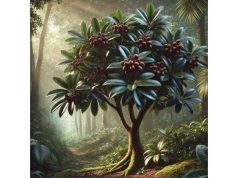
Ethiopian fig, botanically known as Ficus vasta, is a broad-canopied tree in the mulberry and fig family, Moraceae. It grows in dry and semi-dry regions of eastern and northeastern Africa and is especially familiar in Ethiopia, where it is often known by local names such as Warka. In the landscape, it is an impressive tree: tall, spreading, long-lived, and ecologically important. It offers shade, supports birds and other wildlife, and provides edible figs that are gathered from the wild in some rural communities.
What makes Ficus vasta especially interesting from a health perspective is that it sits in several categories at once. It is a wild edible fruit tree, a traditional medicinal plant, and a botanical source of gum and bioactive compounds. That combination often creates confusion. Some readers assume it functions like the common fig, Ficus carica. Others assume it is mainly a medicinal bark or leaf remedy. In reality, the tree has multiple uses, and the part being used changes the likely effect.
The fruit is usually treated as food first. It may be eaten ripe, gathered seasonally, or used as a supplementary wild food during times when cultivated foods are less available. The leaves, bark, sap, and sometimes roots appear more often in traditional medicinal contexts. Meanwhile, the gum has drawn scientific interest for an entirely different reason: not because people consume it for wellness, but because it may work as a pharmaceutical binder in tablet manufacturing.
That broader view matters. Ethiopian fig is not a standardized supplement with one “active dose.” It is a multipurpose medicinal tree whose uses depend on local knowledge, plant part, and preparation method. The wild fruit, for example, belongs more naturally in a food discussion, while bark and leaf remedies belong in an ethnomedicinal one.
Botanically, it also helps to place Ethiopian fig beside related fruit-bearing trees. Readers comparing it with mulberry as another Moraceae fruit tree will notice a family resemblance in the broader themes: edible fruit, polyphenols, mineral content, and long traditional use. But Ethiopian fig is much less studied in humans, and that gap should shape expectations from the start.
So, in simple terms, Ethiopian fig is best understood as a traditional African fig tree with edible fruit, medicinally used leaves and bark, and early scientific evidence suggesting it contains compounds worth studying further.
Key ingredients and medicinal properties
The chemistry of Ethiopian fig helps explain why the tree appears in both traditional healing and modern phytochemical research. Different studies on leaves and aerial parts show that Ficus vasta contains a broad mixture of plant compounds rather than one single dominant molecule. That is typical of medicinal trees, but it also means the profile changes with the part used and the extraction method.
Among the main groups of compounds reported are:
- flavonoids
- phenols and other polyphenols
- tannins
- coumarins
- triterpenes
- steroids and sterol-like compounds
- glycosides
- alkaloid-type constituents in preliminary screenings
- saponins in some extract analyses
Specific compounds linked with Ethiopian fig in the literature include beta-sitosterol, lupeol, stigmasterol, and ursolic acid. Newer analyses of solvent extracts have also identified a wider range of phytochemicals, including terpenoid and fatty-acid-related compounds. These do not automatically translate into medical benefit, but they do provide a plausible basis for the tree’s traditional reputation.
From a nutritional point of view, the fruit matters too. Recent analyses of wild edible fruits from Ethiopia suggest that Ficus vasta fruit can provide notable mineral value, especially calcium, with useful contributions from iron and other trace elements depending on the sample and study conditions. That does not make the fruit a miracle food, but it does support the idea that Ethiopian fig is more than just a famine fallback. It can contribute meaningful nourishment.
Taken together, these compounds and nutrients support several broad medicinal properties often discussed for Ethiopian fig:
- Antioxidant potential, linked to phenolics and flavonoids
- Mild antimicrobial potential, especially in leaf extracts tested in the laboratory
- Astringent activity, likely related to tannins
- Digestive support, mostly inferred from traditional use and fruit composition
- Topical soothing or protective effects, based on traditional applications rather than strong clinical trials
- Possible enzyme-inhibiting effects, including alpha-amylase, alpha-glucosidase, tyrosinase, and urease in laboratory models
This last point deserves caution. Enzyme inhibition sounds impressive, but a laboratory result is not the same as a proven human therapy. A leaf extract that inhibits alpha-glucosidase in vitro, for instance, may hint at blood sugar relevance, yet it does not prove that homemade Ethiopian fig tea will safely lower glucose in real life.
The most sensible way to interpret Ethiopian fig’s chemistry is this: it contains a diverse mix of compounds that support its traditional use and justify more research. That is stronger than a folk claim alone, but weaker than a validated clinical treatment. Its medicinal profile is promising, especially for antioxidant, antimicrobial, and astringent actions, but it still sits in the “emerging evidence” category rather than the “well-established remedy” category.
Does Ethiopian fig have health benefits
Yes, Ethiopian fig appears to offer real health value, but the benefits need to be framed with care. The strongest claims today are nutritional, traditional, and laboratory-based. The weakest claims are those that make it sound like a clinically proven treatment for a specific disease. It is more accurate to say that Ethiopian fig has promising health benefits than to say it has confirmed therapeutic effects.
One practical benefit comes from the fruit itself. As a wild edible food, Ethiopian fig can contribute calories, fiber, and minerals, especially calcium. In settings where wild foods help bridge seasonal shortages, that matters. A fruit that supports basic nourishment and micronutrient intake already has health value, even before you discuss phytochemicals.
A second likely benefit is antioxidant support. Leaf and aerial-part extracts have shown strong phenolic and flavonoid content in laboratory testing, along with measurable antioxidant activity. In real-life terms, this suggests a capacity to help neutralize oxidative stress. That does not mean it prevents chronic disease on its own, but it gives the plant a credible biochemical basis for broader supportive use.
A third area is digestive and stomach support. Traditional sources from Ethiopia report the use of Ficus vasta for stomachache and intestinal complaints. Laboratory studies showing enzyme inhibition and antimicrobial activity make those uses more plausible, though they do not prove them clinically. This is a good example of where traditional knowledge and modern phytochemistry point in the same direction, even if human trials are still missing.
A fourth area is skin and topical use. Bark and sap preparations appear in ethnobotanical records for eczema-like conditions and other external complaints. That may reflect astringent or antimicrobial effects, but it must be balanced against the possibility of irritation from fresh plant material. Traditional topical use should not be confused with proven dermatologic treatment.
Some authors also mention blood sugar-related potential because of alpha-amylase and alpha-glucosidase inhibition in vitro. This is scientifically interesting, but still preliminary. It is not enough to recommend Ethiopian fig as a diabetes remedy.
The most realistic benefit summary is this:
- the fruit may support nutrition and mineral intake
- the leaves contain antioxidant and antimicrobial compounds
- traditional use suggests digestive, skin, and musculoskeletal relevance
- early enzyme studies hint at metabolic potential
- none of these areas yet has robust human clinical confirmation
If your main interest is fiber-based digestive support, the fruit side of Ethiopian fig is more relevant than concentrated extracts. People wanting clearer, better-studied bowel support often compare fruit fiber with psyllium for more established digestive regularity. Ethiopian fig may still be useful, but it belongs in a gentler, less standardized evidence category.
So yes, Ethiopian fig has health benefits in a broad sense, especially as a nutrient-bearing traditional plant. The key is to keep expectations realistic and not leap from lab promise to medical proof.
How Ethiopian fig is used
Ethiopian fig is used in several distinct ways, and the part of the tree determines the purpose. That is one of the most important practical points for readers. The fruit, leaves, bark, sap, roots, and gum do not have the same role, and treating them as interchangeable can lead to confusion.
Fruit as food
The simplest and safest use is the ripe fruit. In parts of Ethiopia, Ficus vasta figs are eaten as a wild edible food, especially when available seasonally. In this form, Ethiopian fig functions more like a minor fruit than like a concentrated remedy. This is the best starting point for most readers because it aligns with both traditional practice and reasonable safety.
Leaves and bark in traditional medicine
Ethnobotanical reports describe the use of leaves, bark, and sometimes roots for stomachache, eczema-like skin conditions, rheumatic complaints, muscle pain, intestinal worms, and related problems. These preparations may involve crushing, drying, mixing with butter, infusion, or other locally specific methods. The exact recipe varies by community, and that variation is part of why modern dosage guidance remains weak.
Sap or latex-like exudate
Fresh sap has been used externally in some traditional settings, but this is an area where caution matters. Fresh fig-family saps can irritate skin and mucous membranes in sensitive people. Traditional topical use does not mean universal safety.
Gum
A more unusual modern use involves Ethiopian fig gum as a pharmaceutical excipient. Researchers have studied it as a tablet binder and found that it can help granules and tablets hold together. That is not a consumer wellness use, but it is a valuable sign that the tree has industrial and medicinal relevance beyond folk practice.
Practical use cases today
For a modern reader, the most realistic uses are:
- eating the ripe fruit as a seasonal food
- using only cautious, well-informed traditional preparations rather than improvised strong extracts
- understanding the gum as a pharmaceutical material, not a home remedy
- avoiding fresh sap applications unless guided by someone with reliable traditional expertise and clear safety awareness
One helpful way to think about Ethiopian fig is that it behaves more like a traditional village medicine tree than a polished supplement. That makes it culturally rich but harder to standardize. Readers interested in gentler topical plant traditions may also compare it with plantain in traditional topical care, although the two plants are not equivalent and Ethiopian fig has a much thinner clinical evidence base.
The best practical rule is simple: fruit is the most approachable form, while bark, sap, and leaf remedies deserve more caution. The farther you move from food use and toward concentrated medicinal use, the more uncertainty and safety questions enter the picture.
How much should you take
There is no universally accepted modern dosage for Ethiopian fig as a medicinal plant. That is the most important dosage fact to understand. Unlike a standardized extract with clinical trials behind it, Ficus vasta is still used mostly as a traditional food and folk remedy. Because of that, dosage is better discussed in food-based and cautious traditional-use terms rather than in the style of a validated supplement monograph.
Fruit as food
For the edible fruit, a reasonable practical range is:
- 50 to 100 g of ripe fruit as a first serving
- 100 to 200 g as part of a meal or snack if tolerated well
This is not a medical dose. It is a conservative food-based range that respects the fruit’s traditional edible role. As with any wild fruit, preparation, ripeness, cleanliness, and individual tolerance matter.
Leaf and bark preparations
For medicinal leaf or bark preparations, the evidence is much less clear. Traditional reports document the existence of infusions, crushed plant parts, dried powders, and topical mixtures, but they do not give a single validated adult dose that can be safely generalized.
That means the safest guidance is:
- avoid creating strong homemade concentrated extracts
- if used traditionally, keep preparations modest and short-term
- use one preparation at a time rather than combining bark, sap, and leaf remedies
- stop promptly if irritation or stomach upset occurs
Topical use
For fresh sap, bark paste, or leaf mixtures used externally, standardization is absent. A small test area is safer than broad application. Because plant saps can irritate or sensitize skin, there is no sensible reason to apply Ethiopian fig topically in large amounts.
What about capsules or extracts
At present, there is no widely established over-the-counter Ethiopian fig extract with a clinically validated dose for digestion, skin, metabolic support, or pain relief. Some research extracts have been tested in laboratories, but that is not the same as a consumer dosing guideline.
Practical dosing principles
The best real-world approach is to match the form to the evidence:
- ripe fruit can be used as food in moderate amounts
- traditional medicinal use should stay conservative
- stronger homemade extracts are not a good place for guesswork
- no one should assume that “natural” means dose does not matter
This may sound less satisfying than a neat milligram target, but it is more honest. Ethiopian fig does not yet have the level of clinical validation needed for precise self-treatment dosing. In this case, restraint is part of responsible use.
Safety, interactions, and who should avoid it
Ethiopian fig appears reasonably safe when the ripe fruit is eaten in normal food amounts, but medicinal use of bark, sap, roots, or concentrated leaf preparations deserves more caution. The main safety challenge is not that the tree is known to be highly poisonous. It is that the evidence is limited, the preparations vary widely, and some plant parts can irritate skin or the digestive tract.
Common safety concerns
Skin irritation
Fresh sap or crushed plant material may irritate sensitive skin, especially if left in place for a long time. Traditional topical use for eczema or wounds should not be assumed to be gentle for everyone.
Digestive upset
Large amounts of fruit or strong preparations may cause abdominal discomfort, loose stools, or nausea in sensitive users. This is more likely if someone takes a concentrated homemade remedy instead of eating the fruit as food.
Allergic reactions
People with known sensitivity to figs, mulberries, or latex-like plant saps may react more easily. Itching in the mouth, rash, or swelling after exposure should be taken seriously.
Uncertain potency
Because Ethiopian fig is not standardized, bark, root, and leaf remedies can differ widely in strength. That makes accidental overuse more likely than with a carefully labeled product.
Possible interaction concerns
No robust clinical interaction profile has been established for Ficus vasta, but a few cautious principles make sense.
- People taking blood sugar-lowering medicines should be careful with concentrated leaf remedies because enzyme-inhibition data raise at least a theoretical concern about additive effects.
- Those using topical medicated creams on damaged skin should avoid layering homemade bark or sap preparations on top without professional guidance.
- Anyone taking multiple herbal preparations at once should be cautious, since combining astringent, tannin-rich, or irritating plant materials can increase local side effects.
Who should avoid medicinal use
The following groups should avoid concentrated or improvised medicinal use unless guided by a qualified clinician or expert traditional practitioner:
- pregnant or breastfeeding women
- young children
- people with fig or plant-sap allergies
- people with chronic digestive disease
- those using diabetes medicines that require close monitoring
- anyone with open skin disease, severe eczema, or an unclear rash
Red flags
Seek proper medical evaluation rather than self-treatment if symptoms involve:
- persistent abdominal pain
- unexplained weight loss
- significant skin infection
- severe allergic symptoms
- blood in stool
- prolonged eczema or wound problems
- suspected parasitic illness that is not improving
Ethiopian fig is safest when approached with proportion. Fruit as food is one thing. Experimental medicinal self-treatment with sap, bark, or concentrated extracts is another. The more serious the condition, the less appropriate guesswork becomes.
What the research actually shows
The research on Ethiopian fig is promising, but it is not yet mature. That is the clearest summary. Most available evidence falls into four categories: ethnobotanical documentation, nutritional analysis, phytochemical profiling, and laboratory bioactivity studies. Each of these is useful, but none should be confused with strong clinical proof in humans.
What looks solid so far
First, ethnobotanical evidence is consistent enough to show that Ficus vasta has real traditional medicinal value in several Ethiopian communities. Reports describe its use for stomachache, eczema-like conditions, muscle pain, intestinal worms, and other complaints. This does not prove efficacy, but it shows a meaningful historical pattern rather than a casual anecdote.
Second, nutritional data on the fruit support its role as a useful wild edible food. Studies suggest that Ficus vasta fruit can be a notable source of calcium and can contribute trace minerals and dietary value in regions where wild foods still matter to household nutrition.
Third, leaf and aerial-part extracts show measurable biological activity in vitro. Researchers have reported strong phenolic and flavonoid content, antioxidant activity, and antimicrobial effects. Newer studies also report enzyme-inhibition findings that may be relevant to skin, digestive, or metabolic research pathways.
Fourth, the gum has industrial pharmaceutical value. Research showing that Ethiopian fig gum can function as a tablet binder is not the same as a health benefit for consumers, but it is still important. It tells us the tree has practical medicinal-industry relevance beyond folk use.
What is still weak or missing
What is missing are good human trials. There are no strong clinical studies showing that Ethiopian fig reliably treats stomach pain, eczema, worms, or blood sugar problems in people. That is the major gap.
There are also limits in standardization:
- different studies use different plant parts
- solvent extracts do not match traditional water preparations
- fruit nutrition does not equal medicinal potency
- traditional use varies by region and preparation method
This is why Ethiopian fig should be described as promising but preliminary. The evidence is strong enough to justify interest, but not strong enough to justify exaggerated claims.
A balanced conclusion would say this: Ethiopian fig is a nutritionally useful wild fruit and a culturally important medicinal tree with antioxidant, antimicrobial, and enzyme-related laboratory potential. It deserves more study. At the same time, modern readers should treat it as an emerging traditional botanical, not as a proven stand-alone remedy.
References
- Nutrient Composition and Antinutritional Evaluation of Selected Wild Edible Plants Grown in Agroforestry of Simada District, Ethiopia 2025
- GC-MS analysis, comprehensive biological profiling, molecular docking and ADMET studies of Ficus vasta Forssk. n-hexane extract 2025
- Ethnobotanical study of traditional medicinal plants used by the local people in Habru District, North Wollo Zone, Ethiopia 2024
- Physicochemical Characterization and Evaluation of Ficus vasta Gum as a Binder in Tablet Formulation 2023
- Phytochemical Profiling, In Vitro Biological Activities, and In-Silico Studies of Ficus vasta Forssk.: An Unexplored Plant 2022
Disclaimer
This article is for educational purposes only and is not a substitute for medical advice, diagnosis, or treatment. Ethiopian fig has a meaningful traditional history and promising laboratory research, but most claimed benefits have not been confirmed in high-quality human clinical trials. Wild fruits, bark, sap, and homemade herbal preparations can vary in strength and may cause irritation or other side effects. Seek professional guidance before using Ethiopian fig medicinally if you are pregnant, breastfeeding, managing a chronic condition, taking prescription medicines, or planning to use concentrated bark, sap, or leaf remedies.
If you found this article useful, please share it on Facebook, X, or any other platform your readers prefer.