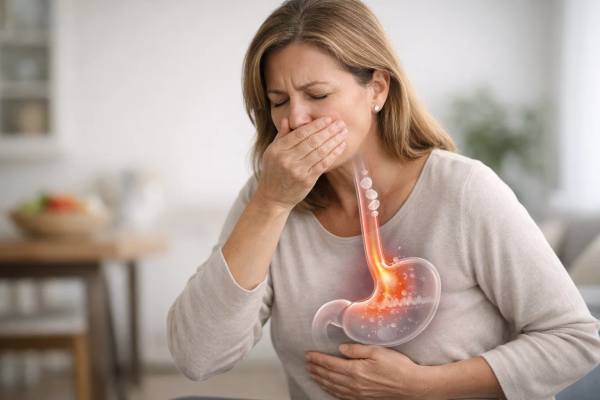
Burping is a normal pressure-release valve: it helps vent swallowed air so your stomach can stay comfortable after eating and drinking. The problem starts when burps become frequent enough to distract you, disrupt meals, or trigger chest or throat discomfort. Excessive burping can come from two very different processes—air that truly rises from the stomach and air that is repeatedly drawn into the esophagus and expelled before it ever reaches the stomach. Those differences matter, because the most effective fix depends on the pattern.
In this guide, you’ll learn the most common causes of persistent burping, including GERD and aerophagia, how clinicians distinguish “gastric” from “supragastric” belching, and a practical, step-by-step plan to reduce episodes. You will also find clear signals for when burping deserves medical evaluation, especially when it appears with weight loss, vomiting, or difficulty swallowing.
Quick Overview
- Identifying whether belching is gastric or supragastric usually points to the fastest, most effective treatment approach.
- Simple behavior changes—slower eating, fewer stacked swallows, and targeted breathing—often reduce burping within 1–2 weeks.
- Reflux control can meaningfully decrease belching when GERD is a driver, especially after meals and at night.
- Burping with progressive swallowing trouble, unexplained weight loss, or ongoing vomiting needs prompt medical evaluation.
- Practice diaphragmatic breathing for 5 minutes twice daily and during urges to burp to interrupt the air-swallowing cycle.
Table of Contents
- When burping becomes excessive
- Aerophagia and supragastric belching
- GERD and upper GI drivers
- Diet and habit triggers you can change
- A stepwise plan to stop burping
- Medical tests and treatments
When burping becomes excessive
Most people burp every day, especially around meals. In healthy digestion, that is expected: you swallow air while chewing, talking, and drinking, and your stomach periodically vents it upward. Burping becomes a concern less because of a perfect number and more because of impact—when it is frequent, intrusive, or accompanied by other symptoms.
Normal burping vs troublesome burping
A useful way to judge “excessive” is to ask two questions:
- Is it bothersome? Meaning it interferes with meals, work, sleep, exercise, or social comfort.
- Is it persistent? Meaning it happens repeatedly across days or weeks rather than as a one-off after a large meal or fizzy drink.
Some people also notice a pattern that strongly suggests a specific mechanism: burping that happens in rapid clusters, increases while talking, and fades when distracted often behaves differently than burping that rises after meals with sour taste, burning, or regurgitation.
Two different belching pathways
Belching is not one single event. Clinically, it is often divided into two patterns:
- Gastric belching: air truly rises from the stomach, typically triggered by stomach stretching and transient relaxation of the valve at the bottom of the esophagus. It is often meal-related.
- Supragastric belching: air is pulled into the esophagus and quickly expelled, sometimes dozens of times in a short period. This pattern is frequently driven by learned behavior and a strong “urge” sensation.
This distinction matters because gastric belching tends to improve when you reduce swallowed air and treat reflux or delayed emptying. Supragastric belching tends to improve most with behavioral retraining—especially breathing and swallow-pattern work—rather than with acid suppression alone.
Symptoms that change the urgency
Burping on its own is usually benign. Burping plus certain symptoms deserves more attention:
- Heartburn, regurgitation, chronic cough, hoarseness: reflux may be a driver.
- Upper abdominal pain, early fullness, nausea: dyspepsia or stomach sensitivity may be contributing.
- Difficulty swallowing, food sticking, vomiting, bleeding, weight loss: these are not typical “just gas” features and should be evaluated promptly.
If you are unsure where you fit, start by noticing timing (during meals vs between meals), sensation (air rising from below vs urge in throat/chest), and whether the burping stops during sleep. Those details often provide the first strong clues.
Aerophagia and supragastric belching
Aerophagia literally means “air eating.” In everyday terms, it is excessive air swallowing that leads to repetitive belching, bloating, or discomfort. Supragastric belching is closely related but more specific: it is a rapid in-and-out movement of air in the esophagus, often without the air ever reaching the stomach. Many people with troublesome burping have a mix of both—some true swallowed air in the stomach and a separate learned pattern that keeps the cycle going.
How supragastric belching often feels
People frequently describe:
- A sudden urge or pressure in the chest, throat, or upper abdomen
- A feeling that a burp will “fix” the sensation
- Burping that happens in strings—several in a row—especially while speaking or sitting quietly
- Partial relief for seconds, followed quickly by the urge returning
This pattern can become self-reinforcing. The body learns that a quick burp briefly reduces discomfort, so the brain repeats the behavior automatically, sometimes without conscious intent.
Why breathing and swallowing mechanics matter
Supragastric belching is often enabled by small, repeatable mechanics:
- A quick inhale that draws air into the esophagus
- A subtle throat movement that opens the upper esophageal sphincter
- A rapid expulsion that sounds like a burp
If your chest and neck muscles stay tense, you are more likely to “sip” air repeatedly. That is why techniques that relax the diaphragm, slow breathing, and reduce throat tension can reduce belching frequency even when diet changes do not.
Common drivers and contexts
Supragastric belching is often linked to:
- Stress and hypervigilance: noticing normal sensations and trying to “correct” them with a burp
- Talking while eating or drinking: increased air intake and more frequent swallowing
- Anxiety-related breathing patterns: shallow chest breathing and frequent sighing
- Reflux overlap: reflux can trigger throat discomfort, which then triggers a burp response, creating a loop
- CPAP or other airway pressure therapies: some people swallow air during therapy, which can worsen burping and bloating
The encouraging point is that this is one of the few gastrointestinal symptoms where skill-based training can be remarkably effective. Many patients see improvement when they practice a consistent technique for a few weeks—particularly diaphragmatic breathing and structured behavioral therapy focused on recognizing the urge and responding differently.
A quick self-check that can be revealing
Without trying to self-diagnose, ask:
- Does burping occur even on an empty stomach?
- Does it increase during conversation or when you are aware of being observed?
- Does it lessen when you are asleep or deeply distracted?
If the answer is “yes” to most, supragastric belching or aerophagia becomes more likely, and behavioral strategies deserve a central role in your plan.
GERD and upper GI drivers
GERD is a common contributor to frequent belching, but the relationship is nuanced. Reflux can increase belching, and belching can increase reflux. Understanding that two-way street helps you choose strategies that calm the cycle rather than accidentally feeding it.
How reflux can increase burping
When stomach contents reflux upward, even mildly, they can irritate the lower esophagus and trigger sensations such as burning, chest pressure, throat clearing, or a sour taste. In response, many people swallow more often. More swallowing means more air, and more air means more venting.
Reflux can also increase the likelihood of transient relaxation of the lower esophageal sphincter. That relaxation can allow both gas and acid to move upward, making burping feel more frequent after meals, with bending, or when lying down.
How burping can worsen reflux
Forceful or frequent belching can:
- Increase pressure changes across the esophagus and stomach
- Bring small amounts of stomach contents upward, especially after larger meals
- Reinforce throat clearing and repeated swallowing, which adds more air
In some people, what looks like “reflux that won’t respond” is actually a pattern dominated by supragastric belching, with reflux symptoms being triggered or amplified by repetitive air movement.
Other upper GI conditions that can contribute
Not every belching problem is reflux. Other contributors can include:
- Functional dyspepsia: upper abdominal fullness, early satiety, nausea, or burning without a clear structural cause. People may swallow air in response to discomfort.
- Delayed gastric emptying: when the stomach empties slowly, fullness and pressure can increase post-meal burping and nausea.
- Gastritis or medication irritation: anti-inflammatory medicines and certain supplements can irritate the upper GI tract, increasing discomfort and secondary swallowing.
- Food intolerances that increase gas production: fermentation can increase stomach and intestinal gas, which can drive more venting.
Clues that point toward reflux-led burping
Burping is more likely to be GERD-related when it:
- Peaks after meals and improves with smaller portions
- Is accompanied by heartburn, regurgitation, or nighttime symptoms
- Worsens with lying down, bending, tight clothing, or late meals
- Appears alongside chronic cough, throat symptoms, or hoarseness
If these features fit, you can often reduce burping by combining reflux-lowering habits with air-swallowing reduction. If they do not fit—especially if burping happens constantly regardless of meals—then behavioral causes deserve a stronger focus.
Diet and habit triggers you can change
Even when an underlying condition is present, daily habits determine how much air you swallow and how strongly your gut reacts to it. The goal is not a perfect diet—it is targeted adjustments that reduce the “inputs” that keep belching frequent.
High-yield habits that add air
These are common, often overlooked sources of swallowed air:
- Eating quickly, talking while chewing, or taking large bites
- Drinking through a straw or from narrow-mouth bottles that encourage gulping
- Chewing gum, sucking hard candy, or frequent lozenges
- Smoking or vaping
- Mouth breathing from nasal congestion
- Frequent “dry swallows” when anxious or when you feel an urge in the throat
Try changing one or two at a time. When you change everything at once, it becomes hard to learn what actually helped.
Drinks that commonly worsen burping
Beverages can increase burping in two ways: they either introduce gas directly or they encourage gulping.
- Carbonated drinks: soda, sparkling water, beer, kombucha, and fizzy energy drinks
- Very hot or very cold drinks: can trigger throat tension and repeated swallowing in sensitive people
- Caffeinated drinks: may worsen reflux symptoms for some, indirectly increasing swallowing and air intake
If you want a simple experiment, switch to still, room-temperature beverages for 7–10 days and observe changes.
Food patterns that increase pressure and belching
Belching can rise with:
- Large meals, especially dinner
- High-fat meals that slow stomach emptying in susceptible people
- Highly processed foods that are easy to eat quickly
- Frequent snacking that keeps the stomach constantly distended
If bloating and lower abdominal gas are also prominent, fermentable carbohydrates may play a role, but belching is often driven more by air-swallowing mechanics than by fermentation alone. Still, some people notice improvement by reducing large loads of sugar alcohols (found in some “sugar-free” products) and by spacing meals more consistently.
Posture and timing matter more than most people expect
Small changes can lower reflux and reduce pressure:
- Stay upright for 2–3 hours after dinner when reflux is part of your pattern
- Avoid intense bending right after eating
- Loosen tight waistbands after meals
- Consider elevating the head of the bed if nighttime reflux symptoms are frequent
The best strategy is the one you can repeat. Consistency beats intensity here—especially with habits like pacing, beverage choice, and post-meal positioning.
A stepwise plan to stop burping
A practical plan works best when it targets both the mechanics (air swallowing and pressure) and the drivers (reflux, stress, or stomach sensitivity). The structure below is designed to be followed for two weeks, with small upgrades based on what you notice.
Step 1: Reduce stacked swallows
Stacked swallows happen when you swallow repeatedly without a pause—common when eating quickly or when trying to push down a sensation in the throat.
- Take smaller bites and set utensils down between bites.
- Chew until food is easy to swallow without extra effort.
- Pause for one breath between swallows of liquid instead of gulping.
If you catch yourself “burp-hunting” (swallowing to force a burp), treat that as a cue to switch to breathing instead.
Step 2: Diaphragmatic breathing twice daily
This is the highest-yield technique for supragastric belching and aerophagia.
- Sit upright with one hand on the lower ribs.
- Inhale through the nose for about 4 seconds, letting the belly and lower ribs expand.
- Exhale slowly for about 6–8 seconds, keeping shoulders relaxed.
- Continue for 5 minutes, twice daily, and for 60–90 seconds during urges to burp.
This retrains the pressure gradient between chest and abdomen and reduces the quick “air-sip” inhale that fuels supragastric belching.
Step 3: Build a trigger log that takes 30 seconds
For each cluster of burps, note:
- Time and what you were doing (eating, driving, working, talking)
- Beverage type (especially carbonated, hot, or cold)
- Stress level (low, medium, high)
- Reflux signs (burning, sour taste, regurgitation)
After a week, most people see a pattern. That pattern is the roadmap.
Step 4: Tighten meal timing and reflux-friendly basics
If burping is meal-related or accompanied by heartburn:
- Avoid late, heavy dinners and finish eating 3 hours before lying down.
- Consider smaller evening portions for 10–14 days.
- Limit carbonated drinks during the trial.
If symptoms clearly improve, you have evidence that reflux or post-meal distension is a meaningful driver.
Step 5: Consider targeted help instead of escalating self-restriction
When burping is frequent and intrusive, the most effective next step is often skill-based therapy (behavioral therapy, speech therapy approaches, or gut-directed behavioral interventions) rather than cutting more foods. A trained clinician can help you identify the exact breath-swallow pattern that keeps the loop going and give you structured practice to break it.
Medical tests and treatments
If burping persists despite a solid two-week behavior and diet trial, the next move is not “try harder.” It is to confirm the dominant mechanism and treat it precisely. That may involve a medication trial, testing, or referral to a specialist who focuses on esophageal function.
When to seek medical evaluation promptly
Get medical care soon if burping is accompanied by:
- Progressive trouble swallowing or food sticking
- Recurrent vomiting, dehydration, or inability to keep food down
- Unexplained weight loss
- Blood in vomit or black stools
- Persistent severe upper abdominal pain
- New chest pain that is intense, exertional, or associated with shortness of breath, sweating, or fainting
These features are not typical of simple air swallowing and deserve evaluation.
What clinicians may test
Depending on your symptoms, a clinician may consider:
- Medication review: opioids, certain diabetes medications, and other drugs can change motility or increase nausea and swallowing.
- Upper endoscopy: to evaluate inflammation, narrowing, ulcers, or other structural causes.
- Reflux testing (pH or impedance-pH monitoring): especially if symptoms persist despite reflux therapy or if reflux is suspected without classic heartburn.
- Esophageal manometry with impedance: to evaluate motility and identify supragastric belching patterns objectively.
These tests are most helpful when paired with a clear symptom diary, because timing and triggers guide interpretation.
Treatment options your clinician may discuss
- Reflux-focused therapy: acid suppression or other reflux-directed strategies when GERD is present, often paired with meal timing changes.
- Behavioral therapy and breathing training: particularly effective for supragastric belching and aerophagia; often includes diaphragmatic breathing, urge management, and retraining habits that introduce air.
- Medication aimed at reducing reflux events: in selected cases, clinicians may consider medications that reduce transient sphincter relaxation or calm troublesome belching patterns, balancing benefits with side effects.
- Addressing contributing conditions: treatment for dyspepsia patterns, nausea drivers, constipation, or nasal obstruction that promotes mouth breathing.
- CPAP adjustments: if aerophagia is linked to airway pressure therapy, coordination with a sleep clinician may improve comfort without sacrificing therapy benefit.
The most important idea is alignment: when the treatment matches the belching type, progress is often faster and more durable. When the treatment targets the wrong mechanism—such as using stronger acid suppression for primarily supragastric belching—symptoms may linger and frustration rises.
References
- AGA Clinical Practice Update on Evaluation and Management of Belching, Abdominal Bloating, and Distention: Expert Review 2023 (Expert Review)
- ACG Clinical Guideline for the Diagnosis and Management of Gastroesophageal Reflux Disease 2022 (Guideline)
- Supragastric belching: Pathogenesis, diagnostic issues and treatment 2022 (Review)
- Belching Disorders and Rumination Syndrome: A Literature Review 2024 (Review)
- Behavioral therapy is superior to follow-up without intervention in patients with supragastric belching-A randomized study 2022 (RCT)
Disclaimer
This article is for educational purposes only and does not provide medical advice, diagnosis, or treatment. Excessive burping is often benign, but it can also occur alongside conditions that require medical care, including significant reflux disease and, less commonly, structural or inflammatory problems of the upper digestive tract. Seek urgent evaluation for chest pain that is new, severe, exertional, or associated with shortness of breath, sweating, fainting, or radiation to the jaw or arm. Prompt medical assessment is also important for progressive swallowing difficulty, persistent vomiting, bleeding, unexplained weight loss, or dehydration. Work with a licensed clinician to determine the safest, most effective evaluation and plan for your specific symptoms.
If this article was helpful, consider sharing it on Facebook, X (formerly Twitter), or any platform you prefer.