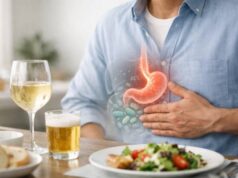
When your pancreas is healthy, it quietly releases enzymes and bicarbonate that turn meals into absorbable fuel. In exocrine pancreatic insufficiency (EPI), that delivery system falls below what your intestines need. The result is not just “an upset stomach” but predictable patterns: greasy or floating stools, stubborn bloating, and weight loss that feels out of proportion to what you are eating. Over time, EPI can drain fat-soluble vitamins, weaken bones, and chip away at strength and energy.
The good news is that EPI is measurable and treatable. A simple stool test called fecal elastase can help flag low enzyme output, and pancreatic enzyme replacement therapy can restore digestion when taken correctly. This guide explains what to look for, why it happens, how testing works, and how to build a plan that actually stops symptoms.
Quick Overview
- Correct treatment often reduces greasy stools and bloating within days to a few weeks when enzymes are timed with meals.
- Identifying EPI early helps prevent vitamin deficiencies, bone loss, and unintended weight loss.
- Borderline test results can be misleading, especially with watery stool, so interpretation matters.
- A practical starting point for many adults is taking enzymes during every meal and snack that contains fat or protein.
Table of Contents
- What EPI is and why it matters
- Greasy stool and other symptoms
- Common causes and risk factors
- Fecal elastase and diagnosis
- PERT dosing and meal strategy
- Nutrition monitoring and follow-up
What EPI is and why it matters
EPI means your pancreas is not delivering enough digestive enzymes into the small intestine to break down food reliably. The pancreas has two jobs: an endocrine role (hormones like insulin for blood sugar) and an exocrine role (enzymes and bicarbonate for digestion). EPI is the exocrine problem. You might also see the term pancreatic exocrine insufficiency (PEI); many clinicians use EPI and PEI interchangeably.
The main pancreatic enzymes include:
- Lipase to digest fat
- Proteases to digest protein
- Amylase to digest carbohydrates
Bicarbonate matters, too, because it helps neutralize stomach acid so enzymes can work properly in the small intestine. When enzyme output drops, fat digestion usually fails first. That is why greasy stool (steatorrhea) is a classic sign.
A key detail that surprises people: you can have meaningful EPI before it is obvious. Mild or moderate EPI may cause gas, bloating, and loose stools that look like common issues such as irritable bowel patterns or food intolerance. More severe EPI can lead to clear malabsorption, vitamin deficiencies, and weight loss.
Why EPI deserves careful attention:
- Symptoms can be persistent but fixable. Proper enzyme therapy often changes daily comfort and confidence quickly.
- Nutrition complications are real. Chronic malabsorption can lower vitamins A, D, E, and K, reduce muscle mass, and increase fracture risk.
- It is sometimes a clue to underlying disease. Chronic pancreatitis, pancreatic cancer, cystic fibrosis, and prior pancreatic surgery are common drivers.
EPI is not a character flaw or a “sensitive stomach.” It is a physiology problem that responds best to a structured plan: confirm risk, test appropriately, treat consistently, then monitor for nutritional recovery.
Greasy stool and other symptoms
People often search for EPI after noticing stool changes that do not match typical diarrhea. Greasy stool can look like:
- Pale, bulky, or “fluffy” stool that floats
- A shiny film in the toilet bowl or stool that sticks to the bowl
- Strong odor, larger volume, or urgent bowel movements
- More wiping than usual, or visible oil droplets after fatty meals
These signs are not exclusive to EPI, but they are highly suggestive when paired with risk factors (such as chronic pancreatitis) or clear weight loss.
Other common symptoms cluster around maldigestion and fermentation:
- Bloating and a tight, distended feeling after meals
- Excess gas and noisy bowels
- Crampy abdominal discomfort
- Loose stools or alternating loose stools and constipation
- Feeling full quickly because meals trigger discomfort
Weight loss in EPI is often subtle at first: clothes fit differently, strength dips, and appetite may drop because eating becomes unpleasant. Some people maintain weight by unconsciously choosing very low-fat foods, which can temporarily reduce greasy stools but worsens long-term nutrition.
Over time, symptoms may broaden into deficiency patterns:
- Vitamin D and calcium deficiency: bone pain, muscle aches, fractures, low mood
- Vitamin A deficiency: night vision trouble, dry eyes
- Vitamin E deficiency: numbness, tingling, balance issues (usually later and less common)
- Vitamin K deficiency: easy bruising, gum bleeding, prolonged clotting time
- Protein-calorie malnutrition: fatigue, swelling in ankles, hair thinning, slow wound healing
In children and teens, red flags include poor growth, delayed puberty, and persistent bulky stools.
A practical way to spot an EPI pattern is a two-week symptom log:
- Note stool appearance (oily, floating, pale, hard to flush).
- Record meals with approximate fat content (fried foods, creamy sauces, nuts, avocado).
- Track weight once weekly and appetite changes.
- Write down any fat-soluble vitamin supplements you already take.
If greasy stool and weight loss are present, it is worth evaluating promptly. Seek urgent medical care if stool changes accompany black tarry stool, persistent vomiting, fever, severe abdominal pain, jaundice, or rapid unintended weight loss.
Common causes and risk factors
EPI is a syndrome with multiple causes, and identifying the “why” can shape both treatment and follow-up. Some causes reduce the amount of functioning pancreatic tissue. Others interfere with enzyme delivery, mixing, or activation in the small intestine.
High-risk causes include:
- Chronic pancreatitis: repeated inflammation gradually scars the pancreas and lowers enzyme output. Alcohol use and smoking are common contributors, but genetic and autoimmune forms exist.
- Cystic fibrosis: thick secretions block pancreatic ducts and impair enzyme flow, often from early life.
- Pancreatic cancer: tumors can obstruct ducts or replace pancreatic tissue; EPI may be part of the first symptom set, especially with weight loss.
- Pancreatic surgery: procedures such as pancreatoduodenectomy (Whipple), distal pancreatectomy, or total pancreatectomy can reduce enzyme production or disrupt coordination between food and enzymes.
- Severe acute pancreatitis, especially necrotizing pancreatitis: enzyme-producing tissue can be damaged abruptly, with EPI that may be temporary or persistent.
Moderate-risk contexts include conditions where the pancreas may be intact but digestion is still impaired:
- Celiac disease or Crohn’s disease affecting the duodenum: inflammation can reduce hormonal signaling that normally stimulates pancreatic secretion.
- Upper gastrointestinal surgery (for example, gastric surgery): altered anatomy may cause “postprandial asynchrony,” where food and enzymes do not meet at the right time.
- Longstanding diabetes: pancreatic function can decline over time, and symptoms may overlap with other digestive issues.
- Hypersecretory states (such as Zollinger-Ellison syndrome): excess acid can inactivate enzymes and worsen fat digestion.
A useful clinical question is: Is there a reason your pancreas cannot produce enzymes, or a reason enzymes cannot work when they arrive? Both scenarios can produce greasy stool and malnutrition, but the workup may differ.
Risk clues that should raise suspicion even before testing:
- Unintended weight loss of 5% or more over 3 to 6 months
- New greasy stools after pancreatic surgery or severe pancreatitis
- Chronic upper abdominal pain that radiates to the back
- New diabetes plus digestive symptoms and weight loss
- A history of heavy alcohol use, smoking, or recurrent pancreatitis episodes
EPI can coexist with other gut problems, too. For example, bile acid malabsorption, small intestinal bacterial overgrowth, lactose intolerance, and irritable bowel patterns can overlap. That is why “treating symptoms” without identifying risk factors sometimes leads to partial improvement but ongoing malnutrition.
Fecal elastase and diagnosis
The most common first-line test for suspected EPI is fecal elastase-1, usually shortened to fecal elastase. Elastase is a pancreatic enzyme that remains relatively stable as it passes through the intestine. Measuring its concentration in stool offers a practical snapshot of pancreatic enzyme output.
How the test is typically interpreted (lab ranges vary):
- Less than 100 μg/g: strong evidence of EPI, often severe
- 100 to 200 μg/g: borderline or indeterminate
- Greater than 200 μg/g: EPI is less likely, though mild EPI can still be missed
Two critical limitations can prevent false reassurance or false alarm:
- Watery stool can dilute elastase and produce a falsely low result. If your sample is very loose, repeating the test on a formed or semi-solid stool is often recommended.
- Borderline results require context. A value in the 100 to 200 μg/g range should be weighed alongside symptoms, weight trend, vitamin levels, and risk factors.
Many people ask whether they must stop enzymes before testing. In most settings, fecal elastase testing can still be performed while taking pancreatic enzymes, because the test measures human pancreatic elastase rather than the enzymes contained in standard replacement products.
Diagnosis should be broader than a single number. A thorough evaluation often includes:
- History and risk review: pancreatitis episodes, pancreatic surgery, cystic fibrosis history, alcohol and smoking exposure, new diabetes, family history
- Nutrition assessment: current weight, weight change over time, muscle loss, appetite, and diet pattern
- Basic labs: fat-soluble vitamins (A, D, E, and K), complete blood count, iron studies, folate and B12, albumin, magnesium, zinc (chosen based on symptoms and risk)
- Bone health screening: a baseline bone density test is often appropriate when EPI is confirmed or strongly suspected
- Imaging when indicated: CT, MRI, or endoscopic ultrasound can reveal pancreatitis changes or masses; imaging does not “diagnose EPI,” but it helps identify causes that matter
Other tests exist but are used less often due to complexity or availability:
- 72-hour stool fat collection and coefficient of fat absorption: accurate but inconvenient and unpleasant
- Breath tests (such as mixed triglyceride breath testing): promising but not widely available in many regions
- Direct pancreatic function tests: specialized and rarely used outside select centers
When should you push for faster evaluation? Seek urgent assessment if digestive symptoms come with jaundice, persistent vomiting, severe pain, blood in stool, or rapid and unexplained weight loss, especially if new diabetes appears alongside these changes.
PERT dosing and meal strategy
The cornerstone of EPI treatment is pancreatic enzyme replacement therapy (PERT). These prescription products contain pancreatic enzymes (primarily lipase, protease, and amylase) that mix with food to restore digestion. For most people, success depends less on the brand and more on dose, timing, and consistency.
Timing is non-negotiable: enzymes work best when taken during the meal so they can mix with food in the stomach and enter the small intestine together. If you take enzymes long before eating, or after finishing, they may miss the window.
A practical starting approach often used in adults is:
- At least 40,000 to 50,000 units of lipase with each main meal
- About half that dose with snacks (especially snacks containing fat or protein)
Meals that are larger or higher in fat (pizza, creamy pasta, burgers, fried foods, nuts, desserts) usually require higher dosing than a small, low-fat meal. Many clinicians recommend adjusting stepwise over 1 to 2 weeks based on stool and symptoms rather than changing daily in a random way.
How to take PERT for better results:
- Swallow capsules with cool or room-temperature liquid.
- If a meal lasts longer than 20 to 30 minutes, consider splitting the dose: half at the start and half midway through.
- Take enzymes with every calorie-containing intake that includes fat or protein, not just “big meals.”
- Store enzymes as directed and avoid leaving them in hot environments.
If symptoms do not improve, work through a troubleshooting checklist before assuming enzymes “do not work”:
- Is the timing correct (during the meal)?
- Are you taking enzymes with snacks and drinks that contain fat (smoothies, meal replacements, coffee with cream)?
- Is the dose high enough for the fat content? Persistent greasy stool often means under-dosing.
- Could stomach acid be interfering? Some people benefit from acid suppression (often a proton pump inhibitor) when symptoms persist despite adequate dosing, especially if mixing is impaired.
- Is something else going on too? Small intestinal bacterial overgrowth, bile acid diarrhea, celiac disease, and lactose intolerance can mimic incomplete response.
Side effects are usually mild (constipation, nausea, abdominal discomfort). Rarely, very high enzyme doses have been associated with fibrosing colonopathy, mainly in cystic fibrosis populations. A commonly cited safety ceiling is avoiding doses above 2,500 lipase units per kilogram per meal or 10,000 lipase units per kilogram per day unless a specialist advises otherwise.
The goal is not perfection after every meal. The goal is a clear trend: fewer oily stools, improved comfort, stabilized weight, and recovery of vitamin status.
Nutrition monitoring and follow-up
EPI treatment works best when enzymes are paired with a nutrition plan that supports weight and vitamin repletion. One common mistake is going very low-fat to reduce symptoms. That can temporarily reduce greasy stool, but it may worsen calorie deficit and fat-soluble vitamin depletion. For many people, a low-to-moderate fat pattern is more sustainable, using enzymes to handle normal eating rather than avoiding it.
Practical nutrition priorities:
- Maintain adequate calories and protein. If weight loss has occurred, consider smaller, more frequent meals (for example, 4 to 6 eating times per day) to reduce symptom load per meal.
- Do not fear healthy fats. Olive oil, avocado, nuts, seeds, and fatty fish can be part of the plan when enzymes are dosed appropriately.
- Use a symptom-informed approach. If one meal is consistently problematic, adjust dose and timing first before eliminating the food.
- Limit alcohol and stop smoking. Both worsen pancreatic disease and undermine recovery.
Micronutrient monitoring is not optional in confirmed or strongly suspected EPI. Many clinicians track:
- Vitamins A, D, E, and K (vitamin K status may be assessed indirectly through clotting measures)
- Calcium, magnesium, and sometimes zinc
- Iron studies, folate, and B12 when fatigue, anemia, or poor intake is present
Bone health deserves special attention because chronic vitamin D and calcium malabsorption can accelerate bone loss. A baseline bone density scan is often appropriate, with repeat testing every 1 to 2 years when risk is high or deficiencies persist.
Follow-up also helps ensure enzymes are actually restoring nutrition. Useful markers include:
- Weight trend and body mass index
- Waist and muscle changes (how clothing fits, strength, endurance)
- Stool pattern (oiliness, urgency, frequency)
- Vitamin levels moving toward normal ranges
- Quality of life measures: energy, appetite confidence, social comfort
A realistic follow-up rhythm after starting or adjusting PERT is:
- 2 to 4 weeks: check symptom response, timing, and dose adequacy
- 3 months: reassess weight trend and targeted labs if deficiencies were present
- Every 6 to 12 months: ongoing nutrition monitoring and review of underlying pancreatic disease
Finally, remember the “why.” If EPI is tied to chronic pancreatitis, pancreatic cancer risk, or post-surgical changes, you may need additional surveillance, pain management, diabetes monitoring, or specialist care. Your enzyme plan should be stable, but the underlying condition may not be, and that is where proactive follow-up protects long-term health.
References
- AGA Clinical Practice Update on the Epidemiology, Evaluation, and Management of Exocrine Pancreatic Insufficiency: Expert Review 2023 (Guideline)
- European guidelines for the diagnosis and treatment of pancreatic exocrine insufficiency: UEG, EPC, EDS, ESPEN, ESPGHAN, ESDO, and ESPCG evidence‐based recommendations 2025 (Guideline)
- Diagnostic Accuracy of Fecal Elastase‐1 Test for Pancreatic Exocrine Insufficiency: A Systematic Review and Meta‐Analysis 2025 (Systematic Review)
- Consensus for the management of pancreatic exocrine insufficiency: UK practical guidelines 2021 (Guideline)
Disclaimer
This article is for educational purposes only and does not provide medical advice, diagnosis, or treatment. Digestive symptoms such as greasy stool, persistent diarrhea, and unintended weight loss can have multiple causes, including conditions that require urgent evaluation. If you have severe abdominal pain, jaundice, vomiting, blood in stool, rapid weight loss, or worsening weakness, seek prompt medical care. Always discuss testing, enzyme dosing, and vitamin supplementation with a qualified clinician who can tailor recommendations to your history, medications, and lab results.
If you found this guide useful, consider sharing it on Facebook, X, or any platform you prefer so others can recognize symptoms early and get appropriate care.