External iliac artery thrombosis is a blood clot that blocks the external iliac artery, a major vessel that carries blood from the pelvis into the leg. When this artery narrows or closes, the leg can lose blood flow quickly, turning the situation into a true time-sensitive emergency. Sometimes the blockage develops suddenly and causes dramatic symptoms. Other times it builds on top of long-standing artery disease and shows up as worsening walking pain or a foot that will not heal.
Because the external iliac artery sits “upstream,” problems here can affect the entire leg below it—from the thigh to the toes. The most important takeaway is simple: new severe leg pain, numbness, or a cold, pale leg should never be watched at home. Fast evaluation and treatment can save tissue, function, and sometimes life.
Table of Contents
- What it is and why it matters
- What causes this clot?
- Symptoms and danger signs
- How it’s diagnosed fast and safely
- Treatments to restore blood flow
- Recovery, prevention, and when to seek care
What it is and why it matters
The external iliac artery is one of the main “highway” vessels that feeds the leg. It becomes the common femoral artery at the groin, then branches into arteries that supply the thigh, calf, and foot. Thrombosis means a clot forms inside a blood vessel and partially or completely blocks flow. When the clot forms in the external iliac artery, the downstream leg can be starved of oxygen and nutrients.
Why this location matters is simple physics: a blockage high in the system cuts off flow to many smaller branches below it. If the blockage happens suddenly, muscles and nerves can begin to suffer within hours. That is why clinicians treat suspected acute limb ischemia (sudden loss of limb blood flow) as an emergency—similar in urgency to a stroke or heart attack.
External iliac artery thrombosis can present in two main ways:
- Acute thrombosis: a sudden clot causes abrupt symptoms—often severe pain, coldness, numbness, and weakness. This can happen when a plaque in the artery ruptures and triggers clotting, after trauma, or after medical procedures involving catheters.
- Acute-on-chronic thrombosis: a person has long-standing narrowing from peripheral artery disease, then a fresh clot forms on top and suddenly worsens circulation.
- Chronic occlusion: in some cases the artery closes slowly over time, and the body grows “detour” vessels (collaterals). Symptoms may be milder (walking pain, fatigue, slow-healing wounds), but the risk of worsening remains.
The body gives clues about severity through skin temperature, color, sensation, strength, and pulses. If nerves and muscles are deprived for too long, damage can become irreversible. Even when blood flow is restored, the sudden return of circulation can cause swelling and chemical shifts that require close monitoring.
A useful rule: pain plus a cold or numb leg is not a “wait and see” problem. It deserves urgent assessment, even if symptoms fluctuate.
What causes this clot?
External iliac artery thrombosis usually happens when two forces combine: a vessel problem that encourages clot formation and a trigger that pushes the system over the edge. Clinicians often think in terms of three contributors—vessel wall injury, abnormal blood flow, and increased clotting tendency.
Common causes include:
- Atherosclerosis (plaque-related narrowing): The most frequent background issue. Plaque narrows the artery and creates rough surfaces where clots can form. A plaque can also crack, causing rapid clot growth and sudden blockage.
- Embolism that lodges at the iliac level: A clot from the heart (for example with atrial fibrillation) or from another artery can travel and get stuck where vessels branch or narrow.
- Procedure-related thrombosis: Catheters, stents, or surgery involving pelvic or leg vessels can irritate the artery or change blood flow. Even when procedures are done correctly, thrombosis is a known complication.
- Trauma or dissection: A tear in the artery wall can create a “flap” that blocks flow and triggers clotting. This can happen after blunt injury or, rarely, spontaneously.
- Hypercoagulable states (blood clots too easily): Cancer, major inflammation, inherited clotting disorders, pregnancy/postpartum, and certain medications can raise clot risk.
- Iliac artery endofibrosis (often in high-endurance cyclists): Repetitive hip flexion and vessel stress can scar the artery wall and narrow the lumen, setting the stage for clotting—typically with exertional leg symptoms that progress over time.
- External compression or anatomic issues: Tumors, pelvic masses, or scarring can compress vessels, slowing flow.
Risk factors that make thrombosis more likely include:
- smoking or nicotine use
- diabetes
- high blood pressure
- high LDL cholesterol
- chronic kidney disease
- older age
- prior peripheral artery disease or prior stent/bypass
- prolonged immobility or dehydration (as a supporting factor)
- stimulant use (including illicit stimulants)
- personal or family history of abnormal clotting
One original, practical insight: the “why” often hides in the timeline. Sudden severe symptoms during normal activity suggest an abrupt event (embolus, plaque rupture, dissection). Gradual months of worsening walking pain suggests chronic narrowing with a recent clot “cap.” Tying symptoms to time and triggers helps clinicians choose the right test and the safest, fastest treatment pathway.
Symptoms and danger signs
Symptoms depend on how quickly the artery closes and whether collateral vessels can compensate. A complete sudden blockage tends to be dramatic. A partial or slowly progressive blockage can be subtle until it becomes critical.
Acute symptoms (minutes to hours) often include the classic “6 Ps,” though not everyone has all of them:
- Pain: sudden, severe leg pain—often starting in the thigh or calf and spreading downward.
- Pallor: the leg or foot looks unusually pale or “waxy.”
- Pulselessness: weak or absent pulses in the groin, behind the knee, ankle, or foot.
- Paresthesia: tingling or numbness, often starting in the toes.
- Paralysis/weakness: difficulty moving the foot or toes (a late and urgent sign).
- Poikilothermia: the limb feels cold compared with the other side.
Subacute or chronic symptoms (weeks to months) can look like peripheral artery disease:
- cramping or tightness in buttock, thigh, or calf with walking that improves with rest (claudication)
- leg fatigue or heaviness on one side, especially uphill or when cycling
- slower hair or nail growth on the affected leg
- foot wounds that heal slowly, or recurrent skin breakdown
- erectile dysfunction can occur with more proximal pelvic artery disease, especially if internal iliac flow is also affected
Danger signs that demand emergency care
- sudden severe leg pain plus coldness or numbness
- new weakness or inability to lift the foot
- rapidly worsening discoloration (blue/purple toes, mottled skin)
- severe swelling and tightness after blood flow returns (possible compartment syndrome)
- fainting, chest pain, or new shortness of breath (suggesting a broader clotting or cardiac problem)
Complications can be serious:
- Tissue loss and amputation risk if blood flow is not restored in time
- Nerve injury leading to persistent numbness or weakness
- Compartment syndrome (dangerous pressure build-up in muscle compartments) after reperfusion
- Kidney stress and metabolic shifts after restoring flow, especially in large ischemic burdens
- Recurrent thrombosis if the underlying cause (plaque, rhythm issue, clotting tendency) is not addressed
A helpful reality check: if symptoms include numbness or weakness, clinicians treat the limb as “threatened.” In practical terms, that usually means rapid imaging and revascularization planning—not watchful waiting.
How it’s diagnosed fast and safely
Diagnosis balances speed with precision. Clinicians want to confirm the blockage, locate it, estimate how threatened the limb is, and choose the safest way to restore blood flow. Much of this can happen quickly in an emergency department or vascular center.
Step 1: Bedside assessment
A clinician checks:
- skin color and temperature compared with the other leg
- capillary refill in the toes
- sensation and motor strength (can you wiggle toes, lift the foot?)
- pulses at the groin, knee, ankle, and foot
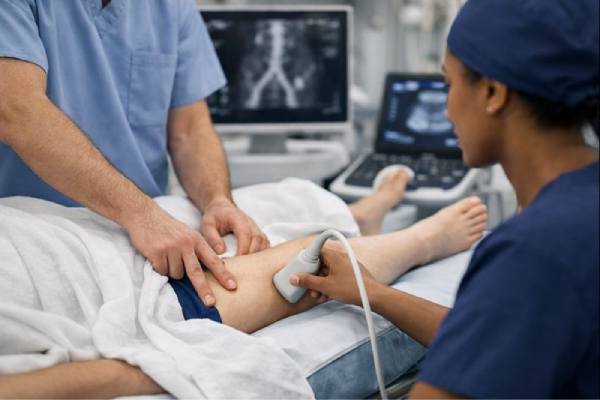
- Doppler signals (a handheld ultrasound can detect blood flow when pulses are hard to feel)
They also look for clues to the cause:
- irregular heartbeat (possible atrial fibrillation)
- recent procedures (catheterization, pelvic surgery)
- trauma, new back/hip pain, or connective tissue disorders (possible dissection)
- known peripheral artery disease, smoking history, diabetes
Step 2: Basic tests that guide urgency
- An ECG is often done if embolism or rhythm problems are suspected.
- Blood tests may include kidney function (important before contrast imaging), blood count (anemia or infection clues), and markers that help monitor muscle injury and metabolic shifts when reperfusion occurs.
Step 3: Imaging to map the blockage
Common imaging choices include:
- Duplex ultrasound: noninvasive and fast; can show flow patterns and identify many occlusions, though pelvis-level visualization can be harder in some body types.
- CT angiography (CTA): often the fastest way to map the iliac artery and downstream vessels with high detail. It helps the team plan endovascular treatment, surgery, or both.
- MR angiography (MRA): useful when contrast choices are limited, though it may be less available in urgent settings.
- Catheter angiography: performed when treatment is planned; it provides real-time vessel mapping and allows immediate intervention.
A key clinical step is severity classification (how threatened the limb is). Clinicians combine symptoms (pain, numbness, weakness) with exam findings and Doppler signals to decide whether the limb is viable, threatened, or already irreversibly injured. That classification drives the treatment choice: urgent anticoagulation alone, catheter-based clot treatment, or immediate surgery.
If the patient is stable, clinicians also look “upstream” for clot sources:
- heart evaluation for atrial fibrillation or structural issues
- review of medications and clotting risks
- in select cases, testing for underlying clotting disorders—especially in younger patients or those without typical plaque risk factors
The overall goal is simple: restore flow quickly, but do it in a way that prevents avoidable bleeding, repeat clotting, or missed underlying causes.
Treatments to restore blood flow
Treatment depends on how threatened the limb is, where the clot sits, what caused it, and how quickly symptoms began. In many suspected acute cases, clinicians start treatment while the diagnostic workup proceeds because time matters.
Immediate steps (common in acute presentations)
- Rapid vascular consultation and close monitoring of limb status.
- Anticoagulation is frequently started promptly to prevent clot extension, unless there is a clear reason it would be unsafe.
- Pain control, warming the patient (not direct heat on the limb), and careful fluid management may be used to stabilize the situation.
Revascularization options (restoring blood flow)
- Endovascular approaches (through catheters)
- Catheter-directed thrombolysis: medication is delivered directly into the clot to dissolve it. This can preserve native vessels and is often used when the limb is threatened but there is enough time to work safely, and bleeding risk is acceptable.
- Pharmacomechanical thrombectomy: devices break up and remove clot, sometimes combined with thrombolytic medication. This can be faster than thrombolysis alone, which matters when symptoms are advancing.
- Angioplasty and stenting: if an underlying narrowing (plaque or scar) caused the clot, opening the narrowed segment can reduce the chance of immediate re-occlusion.
- Open surgical options
- Surgical thrombectomy (embolectomy): removal of clot through an incision, often used when the limb is immediately threatened or when catheter options are unsuitable.
- Bypass surgery: creating a detour around a severely diseased segment, typically used when there is extensive plaque, repeated clotting, or poor vessel quality.
- Hybrid procedures: combinations of open and endovascular steps are common, especially in complex iliac disease.
Managing reperfusion and limb swelling
Restoring flow is not always the end of the danger. Reperfusion can cause:
- swelling in the muscles
- nerve compression
- metabolic shifts that stress the kidneys and heart
Clinicians watch for increasing pain, tight compartments, worsening numbness, or pain with passive stretching—signs that may require fasciotomy (surgical release of pressure).
Treating the underlying cause to prevent recurrence
After the acute phase, the plan usually includes:
- antiplatelet therapy and high-intensity statin when atherosclerosis is involved
- anticoagulation when embolism from atrial fibrillation or another cardiac source is confirmed
- targeted management of endofibrosis or mechanical causes (often requiring specialized vascular evaluation)
- control of blood pressure, diabetes, and smoking cessation support
A practical point many patients appreciate: the “best” procedure is the one that restores flow safely and addresses the reason the clot formed. Clearing clot without fixing the underlying narrowing is like clearing a blocked drain without removing the obstruction—it may work briefly, then fail again.
Recovery, prevention, and when to seek care
Recovery is more than healing the incision or removing the clot. It is about restoring function, protecting the repaired vessel, and reducing the chance of another event. Many people feel better quickly after revascularization, but the next weeks matter because re-occlusion and complications are most likely early.
What recovery often involves
- Medication adherence: antiplatelet agents, anticoagulants, statins, and blood pressure medications are commonly part of the plan. Skipping doses can raise recurrence risk.
- Wound and limb checks: monitor for new pain, color change, numbness, swelling, or drainage from procedure sites.
- Walking progression: once cleared, gradual walking improves circulation and builds collateral support. A common approach is frequent, shorter walks rather than occasional long pushes.
- Follow-up imaging: clinicians often schedule duplex ultrasound or other studies to confirm the artery remains open, especially after stenting or complex interventions.
Prevention strategies that matter in real life
- Stop nicotine exposure. Even “light” smoking and vaping can worsen vessel function and clot risk.
- Aim for consistent blood pressure control and diabetes management, not occasional “good weeks.”
- Build a diet pattern that lowers LDL cholesterol and supports healthy weight—most patients do best focusing on fewer processed foods and more fiber-rich staples.
- Stay hydrated during illness and high-heat days, and be cautious with medications or supplements that raise heart rate or constrict vessels unless prescribed.
- If you have atrial fibrillation or another embolic source, prioritize rhythm and anticoagulation management as directed.
When to seek urgent or emergency care
Call emergency services or go to the emergency department if you notice:
- sudden severe leg pain, especially with coldness or numbness
- a foot or leg that turns pale, mottled, blue, or suddenly colder than the other side
- new weakness, foot drop, or inability to move toes
- rapidly worsening swelling and severe pain after a procedure (possible compartment syndrome)
- chest pain, fainting, or sudden shortness of breath
Contact your clinician promptly (same day to within a few days) for:
- worsening walking pain compared with your post-treatment baseline
- new wounds, skin breakdown, or persistent toe pain at rest
- increasing bruising or bleeding if you are on blood thinners
- fever, spreading redness, or drainage at access or incision sites
A final perspective that can help: external iliac artery thrombosis is not only an “artery problem.” It is often a signal about overall vascular health, clotting risk, and lifestyle exposures. The most durable recoveries happen when the short-term fix (restoring flow) is matched with a long-term prevention strategy (protecting vessels and reducing clot triggers).
References
- Editor’s Choice – European Society for Vascular Surgery (ESVS) 2020 Clinical Practice Guidelines on the Management of Acute Limb Ischaemia 2020 (Guideline)
- 2024 ACC/AHA/AACVPR/APMA/ABC/SCAI/SVM/SVN/SVS/SIR/VESS Guideline for the Management of Lower Extremity Peripheral Artery Disease: A Report of the American College of Cardiology/American Heart Association Joint Committee on Clinical Practice Guidelines 2024 (Guideline)
- Editor’s Choice – European Society for Vascular Surgery (ESVS) 2023 Clinical Practice Guidelines on Antithrombotic Therapy for Vascular Diseases 2023 (Guideline)
- Catheter Directed Thrombolysis for Not Immediately Threatening Acute Limb Ischaemia: Systematic Review and Meta-Analysis 2023 (Systematic Review)
- Pharmacomechanical thrombectomy versus catheter-directed thrombolysis in acute limb ischemia: a systematic review and meta-analysis 2025 (Systematic Review)
Disclaimer
This article is for educational purposes only and does not provide medical advice, diagnosis, or treatment. External iliac artery thrombosis can cause acute limb ischemia, which is a medical emergency. Seek emergency care immediately for sudden severe leg pain, a cold or numb limb, new weakness, rapidly changing skin color, or symptoms that worsen quickly. Always follow a qualified clinician’s guidance on testing, blood thinners, and activity after vascular procedures, because individual risks and benefits vary.
If you found this article helpful, please share it on Facebook, X (formerly Twitter), or any platform you prefer, and follow us on social media. Your support through sharing helps our team continue producing clear, trustworthy health information.