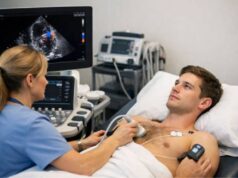
External jugular vein thrombosis is a clot inside the external jugular vein, the superficial vein that runs along the side of the neck and helps drain blood from the scalp and face. A clot here can feel alarming because it may show up as a tender cord or a new lump, sometimes after a recent infection, a medical procedure, or minor neck trauma. In many cases it stays localized and improves with simple care, but it should not be dismissed automatically. The same finding can occasionally signal a deeper clot, a catheter-related problem, or a condition that makes blood clot more easily.
If you notice rapid neck swelling, fever, shortness of breath, or a lump that grows, a prompt medical check is important. With the right evaluation, most people get a clear diagnosis and a practical plan.
Table of Contents
- What it is and what it isn’t
- Common causes and risk factors
- Symptoms, red flags, and complications
- How doctors confirm the diagnosis
- Treatment options and typical timelines
- Home care, prevention, and follow-up
What it is and what it isn’t
The external jugular vein sits close to the skin. You can often see it briefly when someone strains, coughs, or laughs hard. It runs down the side of the neck and typically empties into deeper veins near the collarbone. External jugular vein thrombosis means a blood clot forms inside this vein, partly or fully blocking it. Because the vein is superficial, the clot can sometimes be felt as a firm, rope-like segment under the skin.
What it is not is just “a swollen vein” from dehydration or exercise. Those temporary changes usually come and go within minutes. A thrombosed vein tends to be persistent and may be tender. It is also not automatically the same as a clot in the internal jugular vein, which is a deeper, larger vein inside the neck. Internal jugular vein thrombosis carries different risks and is more often linked to central venous catheters, cancer, or serious infection. External jugular thrombosis can be simpler, but it still deserves careful sorting.
It also helps to separate thrombosis from nearby look-alikes:
- Enlarged lymph nodes: often feel like round or oval “beans,” may be movable, and can follow a cold, dental issue, or skin infection.
- Cysts or lipomas: usually soft, slow-growing, and less tender.
- Neck abscess: warm, painful swelling with fever and worsening redness.
- Jugular vein aneurysm: an outpouching of the vein that often enlarges with straining; it can sometimes thrombose and feel firm.
- Superficial thrombophlebitis: inflammation plus clotting in a superficial vein. External jugular thrombosis often behaves like this category, with local pain and inflammation.
Why the distinction matters is that management changes based on depth and cause. A localized superficial clot after a clear trigger may need supportive care and monitoring. A clot that reaches the junction near the collarbone, appears without a trigger, or comes with systemic symptoms may need anticoagulation, imaging beyond ultrasound, and evaluation for underlying risk factors.
A useful mental model is “surface problem versus signal.” Sometimes it is simply a surface-vein event. Sometimes it is a signal pointing to deeper venous disease, a device-related complication, or a condition that increases clotting tendency. The goal of evaluation is to identify which one you have.
Common causes and risk factors
External jugular vein thrombosis usually forms when blood flow slows, the vein wall is irritated, or the blood becomes more prone to clotting. Clinicians often group the causes into local triggers, device or procedure factors, and whole-body risks.
Local triggers and mechanical causes
- Minor neck trauma: a seatbelt injury, sports contact, vigorous massage, or even repeated pressure from straps can irritate the vein wall.
- Localized infection or inflammation: skin infections, inflamed cysts, or nearby infections can create a pro-clot environment in superficial veins.
- Compression and positioning: prolonged neck positioning (for example, in some surgical settings or extended immobilization) can reduce flow in superficial veins.
- Jugular vein aneurysm with clotting: a dilated segment can allow sluggish flow, making clot formation more likely.
Medical devices and procedures
While internal jugular clots are more classically linked to central lines, external jugular thrombosis can still occur with:
- IV cannulation in neck-area veins, when used
- Nearby catheter placement or neck surgery, where local vessel irritation and altered flow may contribute
- Repeated venipuncture or difficult access, which can traumatize superficial venous segments
Whole-body risk factors that increase clotting tendency
These do not always cause the clot by themselves, but they raise the odds that a local trigger becomes a thrombosis:
- Cancer: some cancers increase clot risk even before diagnosis becomes obvious
- Hormone exposure: estrogen-containing contraception or hormone therapy can raise clot risk in susceptible people
- Pregnancy and postpartum period: clot risk rises due to physiologic changes in coagulation
- Inherited thrombophilias: certain genetic patterns can increase clotting risk, especially with additional triggers
- Autoimmune and inflammatory conditions: active inflammation can shift clotting balance
- Recent major illness or hospitalization: immobility, dehydration, and inflammation can converge
- Smoking and nicotine exposure: can worsen vascular health and clot tendency
- Prior venous thromboembolism: a history of clots increases recurrence risk
- Severe dehydration: concentrates the blood and can worsen flow, especially during fever or heat exposure
A practical clinical clue is the “provoked versus unprovoked” question. If the clot follows a clear event—like a recent procedure, a localized infection, or direct trauma—management often focuses on treating the trigger and watching for extension. If it appears without a clear reason, especially in an older adult or someone with recurrent clots, clinicians more strongly consider hidden drivers such as cancer, clotting disorders, or deeper venous involvement near the collarbone.
Another useful clue is distribution: a single short segment may reflect a local trigger; a longer segment, bilateral symptoms, or associated arm swelling may suggest a more central venous issue that needs broader imaging and a more aggressive prevention plan.
Symptoms, red flags, and complications
Because the external jugular vein is close to the skin, symptoms often show up as visible or touchable changes rather than vague discomfort. Many people notice the issue while looking in the mirror, shaving, or touching a new tender line along the side of the neck.
Common symptoms
- A firm, cord-like structure along the side of the neck, sometimes tracking downward toward the collarbone
- Localized tenderness or ache, often worse when turning the head or pressing on the area
- Mild swelling over the vein, sometimes with slight redness
- A new lump that feels elongated rather than round
- Discomfort with coughing or straining, especially if inflammation is present
Symptoms can be subtle when the clot is small or when inflammation is minimal. Some cases are found incidentally on ultrasound performed for a different concern.
Red flags that should prompt urgent evaluation
- Fever, chills, or worsening redness, which raises concern for septic thrombophlebitis (clot plus infection)
- Rapidly increasing neck swelling, voice changes, difficulty swallowing, or breathing trouble
- Marked one-sided facial swelling or swelling that extends into the arm, which may suggest more central venous obstruction
- Chest pain, shortness of breath, coughing blood, or sudden unexplained rapid heart rate, which can be signs of pulmonary embolism
- Severe headache, neurologic symptoms, or visual changes, which are uncommon for isolated external jugular thrombosis but warrant immediate assessment
Possible complications
Most isolated external jugular clots remain localized and resolve with time, but complications can occur:
- Extension into deeper veins near the collarbone, turning a superficial clot into a higher-risk pattern
- Pulmonary embolism, usually uncommon in isolated superficial clots but possible if extension occurs
- Septic thrombophlebitis, especially when the clot is linked to infection; this can spread bacteria through the bloodstream
- Persistent pain or residual firmness, which may take weeks to settle even after the clot stabilizes
- Cosmetic or anxiety burden, which is real and often under-discussed; a visible neck cord can be distressing even when risk is low
A subtle but important point: “pain level” is not a perfect guide. A small superficial clot can be quite painful because superficial veins have sensitive surrounding tissue. Meanwhile, a more significant clot near a venous junction may be less tender. That is one reason imaging matters.
If you have a history of clots, cancer, recent central line placement, or new systemic symptoms, clinicians generally treat the situation with a lower threshold for anticoagulation and a broader search for extension. If you are otherwise healthy with a clear trigger and reassuring imaging, the plan may be more conservative, with close follow-up.
How doctors confirm the diagnosis
Diagnosis starts with a careful history and exam, then relies heavily on ultrasound. Because the external jugular vein is superficial, it is often easier to assess than deeper neck veins, but the key question is not only “is there a clot?” It is also “how far does it extend, and why did it form?”
History and physical exam
Clinicians typically ask:
- When did you notice the lump or cord, and is it changing?
- Any recent infection, fever, dental issues, skin lesions, or sore throat?
- Any recent procedures, IV access, surgery, or trauma to the neck or chest?
- Any new medications, especially hormones, or recent long travel?
- Personal or family history of clotting?
- Symptoms suggesting extension or embolism, such as shortness of breath or chest pain
On exam they look for:
- a tender cord versus a round node
- skin warmth or redness over the vein
- swelling of the face, neck, or arm on the same side
- signs of systemic infection
- a new heart rhythm abnormality if embolic sources are suspected
Ultrasound (first-line test)
A duplex ultrasound can typically:
- visualize the clot within the vein
- test compressibility (a vein that does not compress normally suggests thrombus)
- evaluate blood flow around the clot
- check nearby veins for extension, including deeper venous segments near the collarbone when technically feasible
Ultrasound is especially useful because it is fast, noninvasive, and repeatable for follow-up.
When CT or MR imaging may be needed
Clinicians may order CT venography or other imaging when:
- ultrasound cannot adequately assess the venous junctions near the collarbone
- symptoms suggest deeper venous involvement or central obstruction
- there is concern for a mass compressing the vein
- infection is suspected and clinicians need to assess deeper neck spaces
- the clinical picture is unclear and alternative diagnoses remain plausible
Evaluating the underlying cause
Workup intensity depends on the patient and context. Common next steps include:
- basic blood tests if infection, anemia, or dehydration is suspected
- consideration of cancer screening appropriate for age and risk if the clot is unprovoked
- selective thrombophilia testing in younger patients with unprovoked or recurrent clots, or those with a strong family history
- evaluation for catheter-related thrombosis patterns if a device is present or was recently used
A practical takeaway: the best diagnostic plan answers three things clearly—location (external jugular only or extending), severity (superficial localized versus higher-risk junction involvement), and trigger (provoked versus unprovoked). That clarity is what allows confident treatment and safe follow-up.
Treatment options and typical timelines
Treatment for external jugular vein thrombosis is individualized. The same ultrasound finding can call for simple symptom control in one person and anticoagulation in another, depending on clot extent, symptoms, and underlying risk.
Supportive care (often enough for localized, low-risk cases)
When imaging confirms an isolated superficial clot without extension and there are no major clotting risks, clinicians may recommend:
- warm compresses several times daily for comfort
- anti-inflammatory pain relief if safe for you (some people use NSAIDs; others need alternatives due to kidney, stomach, or bleeding risks)
- gentle neck mobility to reduce stiffness while avoiding direct pressure or aggressive massage over the vein
- hydration and trigger control, such as treating a local infection or stopping a provoking activity
- follow-up ultrasound if symptoms worsen, the cord grows, or initial imaging could not fully assess nearby junctions
Symptom improvement often starts within days, but firmness can take 2–6 weeks to soften, and sometimes longer.
Anticoagulation (blood-thinning treatment)
Clinicians more strongly consider anticoagulation when:
- the clot is extensive, rapidly progressing, or very symptomatic
- the clot is close to a deeper venous junction or there is concern about extension
- there is coexisting deep vein thrombosis in the neck or upper limb
- the patient has higher-risk conditions such as active cancer, prior clots, or strong thrombophilia suspicion
- the event is catheter-related with a pattern that behaves like upper-extremity deep vein thrombosis
Duration depends on the pattern:
- For superficial-vein patterns judged higher risk, some clinicians use a shorter course (often measured in weeks) based on superficial vein thrombosis approaches.
- For deep-vein patterns or junction-involving clots, treatment often looks more like DVT management, commonly around 3 months, adjusted for cause and bleeding risk.
Choice of anticoagulant depends on medical history, kidney function, bleeding risk, cost, and clinician preference. The key is not the brand name but the fit for your situation and the plan for monitoring and stopping safely.
Antibiotics and infection control
If the clot is associated with infection—especially with fever, spreading redness, or systemic symptoms—treatment may include:
- antibiotics targeted to the suspected source
- drainage or source control if an abscess is present
- closer monitoring, because infected clots can behave more aggressively
Procedures and surgery (selected situations)
Procedural treatment is uncommon but may be considered when:
- a thrombosed jugular vein aneurysm causes ongoing symptoms or recurrent clotting
- there is an anatomic compression issue that repeatedly triggers thrombosis
- there is diagnostic uncertainty and excision is needed for definitive pathology
What to expect during recovery
Most people do well. The main practical risks during recovery are extension, recurrence, and medication-related bleeding if anticoagulation is used. A clear follow-up plan—what symptoms to watch, when to reimage, and when to reassess underlying causes—often matters as much as the initial prescription.
Home care, prevention, and follow-up
Once your clinician has confirmed the diagnosis and ruled out urgent concerns, home care focuses on comfort, preventing extension, and reducing future clot risk. The specific plan depends on whether you are managed with supportive care alone or with anticoagulation.
Practical home care
- Use warm compresses for short periods to ease tenderness.
- Avoid squeezing, rubbing, or deep massage over the cord. Irritating the vein can prolong inflammation.
- Keep activity normal unless your clinician advises otherwise. Prolonged immobility is rarely helpful and can increase clot risk elsewhere.
- If pain relief is recommended, take it as directed and avoid combining products that raise bleeding risk unless your clinician approves.
If you are prescribed anticoagulation
Daily habits can reduce complications:
- take the medication at the same time each day
- avoid high-risk activities for falls or blows to the head
- tell clinicians and dentists you are on a blood thinner
- watch for warning signs of bleeding, such as black stools, vomiting blood, coughing blood, severe unexplained bruising, or persistent nosebleeds
Prevention strategies that are often overlooked
- Address dehydration patterns: many “unprovoked” events have quiet triggers like fever, poor intake, or heat exposure.
- Review medications and supplements: stimulant-containing products, certain hormones, and dehydration-promoting agents can raise risk in susceptible people.
- Treat sleep and inflammation issues: poor sleep, uncontrolled inflammatory disease, and smoking can shift clotting balance over time.
- Keep routine health screening current: an unprovoked clot in an unusual location sometimes prompts clinicians to ensure age-appropriate cancer screening is up to date.
Follow-up and monitoring
Follow-up commonly includes:
- reassessment of symptoms within days to weeks
- repeat ultrasound if symptoms worsen, the cord grows, or the initial study could not fully evaluate nearby venous junctions
- a plan to reassess risk factors, especially after an unprovoked event or recurrent clots
When to seek urgent care
Go to urgent care or the emergency department if you develop:
- shortness of breath, chest pain, coughing blood, or fainting
- fever with worsening neck redness or rapidly increasing pain
- rapid neck swelling, trouble swallowing, voice change, or breathing difficulty
- new swelling of the face or arm on the same side
External jugular vein thrombosis is often manageable, but it is not something you should self-diagnose. The combination of correct imaging, a cause-focused plan, and clear follow-up is what turns a frightening neck finding into a controlled, predictable recovery.
References
- Editor’s Choice – European Society for Vascular Surgery (ESVS) 2021 Clinical Practice Guidelines on the Management of Venous Thrombosis 2021 (Guideline)
- Superficial Venous Thrombosis: A Comprehensive Review 2024 (Review)
- Upper Extremity Deep Venous Thrombosis: Etiologies, Diagnosis, and Updates in Therapeutic Strategies 2022 (Review)
- Internal Jugular Vein Thrombosis: Etiology, Symptomatology, Diagnosis and Current Treatment 2021 (Systematic Review)
Disclaimer
This article is for educational purposes only and does not provide medical advice, diagnosis, or treatment. Blood clots can be serious, and clots in the neck may require urgent evaluation to rule out deeper venous thrombosis, infection, or other dangerous causes. Seek emergency care immediately for shortness of breath, chest pain, coughing blood, fainting, rapidly worsening neck swelling, trouble swallowing, breathing difficulty, or fever with spreading redness. For personalized decisions about imaging, anticoagulation, and follow-up testing, consult a qualified clinician who knows your medical history.
If you found this article helpful, please share it on Facebook, X (formerly Twitter), or any platform you prefer, and follow us on social media. Your support through sharing helps our team continue producing clear, trustworthy health information.