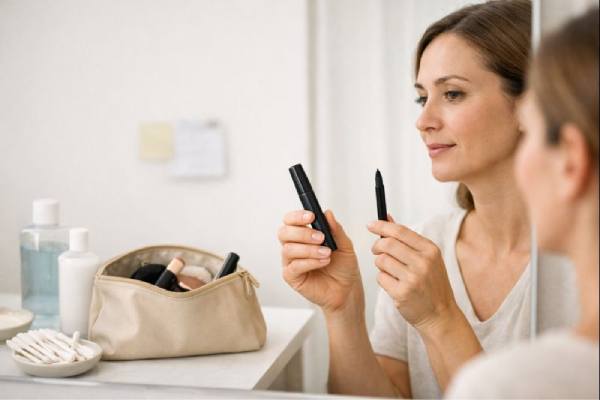
Eye makeup is meant to enhance your look, not compromise eye comfort. Yet mascara, eyeliner, and tools used near the lash line can become a quiet pathway for irritation and infection—especially when products are old, shared, or applied in ways that trap bacteria at the lid margin. The good news is that most makeup-related eye problems are preventable with a few simple habits: replacing high-risk products on a realistic schedule, keeping applicators clean, and knowing when to stop using makeup and get checked. This guide explains why mascara and eyeliner are more infection-prone than many other cosmetics, what replacement timelines make sense in real life, and how contact lenses, allergies, and dry eye change the equation. You will also learn the warning signs that should never be ignored, so you can keep both your routine and your eyes in a healthier balance.
Key Takeaways
- Replacing mascara regularly is one of the simplest ways to lower the chance of bacterial buildup near the eye.
- Avoid sharing eye makeup and avoid store testers; cross-contamination is a common and preventable risk.
- Lining the inner lash line can push pigment into the tear film and irritate glands that stabilize the tear layer.
- Stop eye makeup immediately if you develop redness, discharge, swelling, or pain, and discard products used during the episode.
- A practical baseline is to replace mascara and liquid eyeliner about every 3 months after opening, sooner if the product smells, dries out, or you have an infection.
Table of Contents
- How eye makeup can trigger infections
- How often to replace mascara and eyeliner
- Hygiene habits that protect your eyes
- Contact lenses, dry eye, and sensitive eyes
- What to do if you suspect an infection
- Choosing and storing eye makeup safely
How eye makeup can trigger infections
Eye infections linked to makeup are rarely caused by “dirty people.” They are usually caused by normal biology meeting a high-risk environment. Your eyelids and lashes naturally carry bacteria, and your hands touch phones, door handles, steering wheels, and keyboards all day. When a mascara wand or eyeliner tip repeatedly contacts lashes and lid margins, it can pick up organisms and carry them back into the tube or onto the pencil surface. With time—and especially with warm storage—microbes can multiply or persist, and then get reintroduced to the eye with each application.
Why the eye area is uniquely vulnerable
The eyelids are thin, gland-rich tissue. Tiny openings along the lash line release oils from the meibomian glands that stabilize the tear film. When makeup debris, waxes, or pigments build up at the margin, they can:
- Irritate the eyelid skin and gland openings
- Disrupt the tear film, leading to dryness and inflammation
- Increase rubbing, which can worsen irritation and spread microbes
The eye also has less “buffer” than skin. A small scratch on the cornea can become painful quickly and can increase infection risk, especially if a contaminated product is still being used.
Common makeup-related eye problems
Not every issue is a true infection, but the early symptoms can overlap. Makeup can contribute to:
- Blepharitis: eyelid margin inflammation that can feel gritty or burning
- Styes: tender lid bumps linked to blocked glands
- Conjunctivitis: redness and discharge, sometimes infectious, sometimes allergic or irritant
- Keratitis: corneal inflammation that can be serious, especially with contact lens wear
A key detail: infections often affect one eye more than the other at first, while allergy and irritation are often more symmetrical.
How contamination happens in real life
The riskiest situations are common and easy to miss:
- “Topping off” or re-wetting dried mascara with water or saliva
- Storing cosmetics in hot environments (cars, radiators, sunny windowsills)
- Sharing products with friends or using store testers
- Applying makeup when you already have watery eyes, a cold, or a mild eye irritation
- Using old products that have separated, changed smell, or changed texture
Understanding the mechanism makes prevention straightforward: reduce microbe transfer, reduce time for buildup, and protect the eyelid margin and corneal surface from repeated irritation.
How often to replace mascara and eyeliner
Replacement schedules are not about perfection. They are about risk management. Mascara and liquid eyeliner sit at the top of the risk list because they are used close to the eye, involve repeated applicator contact, and often contain ingredients that can dry out and change over time. Pencils tend to be lower risk than liquids, but they are not risk-free—especially if used on the inner lash line or sharpened infrequently.
Below is a practical schedule many eye clinicians consider reasonable for everyday use. If you have chronic eyelid inflammation, frequent styes, contact lens wear, or a history of infections, it is often worth being more conservative.
Mascara: the high-risk product
Replace every 2–4 months after opening, with 3 months being a common, easy-to-remember baseline.
Replace sooner if:
- The mascara smells “off” or different than usual
- It is dry, clumpy, or flakes heavily (flakes can irritate and carry debris into the tear film)
- You had any eye infection or significant redness while using it
- You accidentally used it while sick with a respiratory infection and had heavy eye watering or discharge
Practical tip: if you use mascara rarely, consider smaller tubes or travel sizes so you are not tempted to keep one product for a year.
Liquid eyeliner: treat it like mascara
Liquid liners (brush tip or felt tip) behave more like mascara than like a pencil because the tip repeatedly touches the lash line. A practical baseline is:
- Replace liquid eyeliner about every 3 months after opening
Replace sooner if the tip frays, the formula separates, or you notice increased eye watering or burning with application.
Pencil eyeliner: longer life, but with conditions
Pencils can last longer if they are sharpened regularly because sharpening removes the surface layer that contacts the skin.
A practical baseline:
- Replace pencil eyeliner every 6–12 months, and sharpen frequently
Replace sooner if:
- You used it during an eye infection
- The pencil is very old, crumbly, or causes repeated irritation
- You do not sharpen it (an unsharpened pencil effectively accumulates surface debris)
Gel pots and cream liners: moderate risk
Pot liners often involve dipping a brush repeatedly, which can introduce contamination if the brush is not cleaned. A practical baseline:
- Replace gel or cream liners every 3–6 months, depending on how clean your tools are and how often you use them.
The big picture is simple: mascara and liquid eyeliner deserve the shortest replacement intervals. If you only change one habit, change those two first.
Hygiene habits that protect your eyes
Replacement timing matters, but hygiene determines whether your products stay “low risk” between replacements. The goal is to reduce how much bacteria and debris get into products, and to keep the eyelid margin clean so the tear film stays stable.
Hands first, always
It sounds basic, but it is a major lever. Wash your hands before applying eye makeup, especially if you have been:
- Using your phone
- Handling contact lenses
- Cooking or cleaning
- Commuting (public transit surfaces are high-touch)
If handwashing is not possible, a clean rinse and dry is still better than applying makeup with visibly soiled hands.
Stop the “pump and re-wet” cycle
Two habits raise risk without offering real benefit:
- Pumping the mascara wand in and out of the tube forces air in, which can dry the product and change how preservatives work.
- Adding water or saliva to “revive” mascara can introduce microbes and dilute preservative systems.
If mascara is dry, it is telling you it is time to replace it.
Apply makeup in a way that respects the lid margin
The lid margin is where glands open. If makeup blocks or irritates those openings, dryness and inflammation become more likely.
Better technique:
- Apply liner slightly above the lash line rather than on the inner rim
- Avoid heavy “tightlining” on the waterline if you are prone to dryness, styes, or irritation
- Use a gentle hand; pressing hard increases microtrauma and makes irritation more likely
Tool hygiene: the overlooked step
Brushes and sponges can harbor microbes and oils. For eye tools:
- Wash reusable brushes regularly with a gentle cleanser and allow them to fully dry
- Avoid using the same brush for multiple people
- Replace applicators that are shedding, stiff, or difficult to clean
If you use a pot liner, tool cleanliness matters as much as the product itself because the brush goes back into the container repeatedly.
Do not share, and be cautious with testers
Sharing is a direct exchange of microbes. Even if both people “seem healthy,” silent eyelid inflammation and mild viral shedding can occur. Store testers are similar: many users, inconsistent hygiene, and unknown storage conditions.
Nightly removal is not optional
Sleeping in eye makeup increases debris at the lid margin and can worsen dryness, inflammation, and irritation. Gentle removal matters:
- Avoid aggressive rubbing
- Use a remover designed for the eye area
- Rinse residue so it does not stay at the lash line overnight
These habits work together: less contamination entering products, less debris on the lids, and fewer opportunities for irritation to become an infection.
Contact lenses, dry eye, and sensitive eyes
If you wear contact lenses or have baseline dryness, your tolerance for “minor” contamination and irritation is lower. Contacts can trap debris and microbes against the cornea, and dry eye reduces the eye’s natural ability to flush irritants away. That does not mean you must stop wearing makeup—it means your margin for error is smaller, so your habits should be tighter.
Contact lens wearers: reduce risk at the surface
If you wear soft lenses, consider these safeguards:
- Put lenses in before applying eye makeup to reduce product transfer onto the lens
- Remove lenses before removing makeup so remover residue does not soak into the lens surface
- Avoid applying liner on the inner lash line; pigment can migrate into the tear film and smear onto lenses
- If you feel gritty, irritated, or light-sensitive, switch to glasses for the day and do not “push through” discomfort
A practical improvement many people notice is simply reducing how much product is applied at the lid margin and focusing on lashes and outer lash line instead.
Dry eye and meibomian gland sensitivity
Dry eye is not just “not enough tears.” For many people, the oil layer is unstable because glands are blocked or inflamed. Eye makeup can worsen this when:
- Liner blocks gland openings
- Mascara flakes enter the tear film
- Removal involves heavy rubbing
- Residue remains overnight
If you have dryness, aim for:
- Lighter formulas that flake less
- Shorter wear time
- More consistent, gentle removal
- Avoiding waterline application
If your eyes burn or sting after makeup, it can be a sign that the surface is stressed—even if there is no infection.
Allergies, eczema, and sensitive skin
People with allergies or atopic skin can develop irritation that mimics infection:
- Itching and watery eyes may reflect allergy rather than bacteria
- Lid skin can react to fragrances, preservatives, or adhesives
- Rubbing increases inflammation and makes the surface more vulnerable
If you are sensitive, patch testing new products (away from the eye) and simplifying routines often helps. Also consider that “hypoallergenic” does not guarantee non-irritating; it is a marketing term rather than a medical label.
Lash extensions and adhesives
Extensions can increase debris retention at the lash line, and adhesives can trigger irritation. If you have extensions:
- Be extra careful with lid hygiene and gentle cleansing
- Avoid adding multiple layers of mascara unless specifically designed for extensions
- Watch for chronic redness, itching, or recurrent styes
In higher-risk eyes, the best strategy is not fear—it is precision. Shorter replacement intervals, less waterline application, and strict lens hygiene protect your comfort and reduce the chances of a small irritation turning into a bigger problem.
What to do if you suspect an infection
When symptoms appear, the best move is decisive and simple: stop exposure, protect the surface, and get evaluated if red flags are present. Many people make things worse by continuing makeup “just for today,” trying to cover redness, or reusing the same products that may be contributing.
Common warning signs
Makeup-related irritation and infection can look similar at first, but these symptoms should make you pause:
- New redness that does not improve after removing makeup
- Discharge (watery, stringy, or especially thick and yellow-green)
- Eyelid swelling, tenderness, or a localized painful bump
- Persistent gritty sensation or the feeling that something is in the eye
- Light sensitivity or sharp pain
- Blurred vision that does not clear with blinking
If you wear contact lenses, treat pain, light sensitivity, and sudden redness as urgent until proven otherwise.
What to do immediately
- Stop eye makeup right away. Do not apply anything near the lashes until symptoms resolve.
- Discard products used during the episode. Mascara and liquid liners used around the time symptoms started should be treated as contaminated.
- Switch to glasses if you wear contacts. Give the cornea a break while the eye is inflamed.
- Use supportive care for comfort: cool compresses and preservative-free artificial tears can reduce irritation and help flushing.
- Avoid rubbing. It spreads inflammation and can worsen lid swelling or corneal irritation.
When to seek prompt evaluation
Do not wait for a routine visit if you have:
- Moderate to severe pain
- Significant light sensitivity
- Vision changes that persist
- Copious discharge
- Symptoms mainly in one eye with rapid worsening
- Any concerning symptoms while wearing contact lenses
These features raise concern for corneal involvement, which can require timely treatment.
What not to do
- Do not “treat” redness by using old drops that were prescribed for a previous infection without guidance.
- Do not re-wet dried mascara or keep using makeup to cover symptoms.
- Do not keep reinfecting yourself by saving products that touched the eye during the episode.
One of the most protective habits is also the simplest: if your eye is telling you something is wrong, treat makeup as a removable exposure—not as something you must keep wearing through discomfort.
Choosing and storing eye makeup safely
Good replacement habits are easier when your products are stable, comfortable, and stored well. You do not need “medical-grade” makeup to reduce risk, but you do need products that behave predictably and routines that prevent microbial growth.
What to look for when buying mascara and eyeliner
Focus on practical performance and tolerance:
- Products that do not flake heavily (flakes irritate and migrate into the tear film)
- Formulas that feel comfortable and do not cause burning on application
- Packaging that keeps the tip or brush protected and closes securely
- For sensitive users, fewer added fragrances and fewer “tingling” additives
If you are prone to eyelid inflammation or dryness, consider simplifying. Using fewer layers and fewer products at the lid margin often reduces symptoms more than switching brands repeatedly.
Storage rules that matter more than most people realize
Microbes grow faster in warm environments, and preservatives break down over time. To keep products safer:
- Store eye makeup in a cool, dry place
- Avoid leaving products in hot cars, near radiators, or in direct sun
- Keep caps tightly closed to reduce drying and contamination
- Keep the outside of containers clean so debris does not get transferred to your hands and face
Travel and gym routines
Travel sizes can be helpful because they shorten how long you keep a product. If you carry makeup in a bag:
- Keep it in a clean pouch
- Avoid tossing open products where lint and dust collect
- Replace items sooner if they have been exposed to heat, humidity, or spills
Makeup removal: gentle and complete
Removal is where many routines become harsh. Too much rubbing irritates the lid margin and can worsen dryness. Aim for:
- A remover designed for the eye area
- Soft pads and a press-and-lift technique rather than scrubbing
- A final rinse to remove residue so it does not sit at the lash line overnight
A simple, sustainable schedule
If you want one system you can follow without overthinking:
- Write the open date on mascara and liquid liner
- Replace them around 3 months after opening
- Replace pencil liners 6–12 months after opening, sharpening often
- Replace sooner after any infection, product smell change, drying, or texture change
Infection prevention is less about a perfect product and more about a predictable routine: short replacement cycles for high-risk items, clean hands and tools, and storage conditions that do not turn your makeup bag into a warm incubator.
References
- Eye Cosmetic Safety | FDA 2022
- Microbiological Safety and Cosmetics | FDA 2024
- Microbial contamination associated with mascara use – PubMed 2008
- Ocular adverse events associated with eye makeup: a cosmetovigilance-based cross-sectional study of prevalence and predictors among Jordanian women – PMC 2025
- The impact of eyeliner usage on dry eye symptoms – PMC 2025
Disclaimer
This article is for general educational purposes and does not provide medical advice, diagnosis, or treatment. Eye redness, discharge, swelling, pain, light sensitivity, or vision changes can have multiple causes, including allergic reactions, irritation, and infections that may require prescription treatment. Seek urgent evaluation for significant eye pain, marked light sensitivity, sudden or persistent vision changes, heavy discharge, eye injury, or any concerning symptoms if you wear contact lenses. Always follow the guidance of a qualified eye care professional who can assess your specific situation.
If you found this article helpful, please consider sharing it on Facebook, X (formerly Twitter), or any platform you prefer. Your support by sharing helps our team continue producing clear, practical health content.