False unicorn, the common name for Chamaelirium luteum, is a woodland herb native to eastern North America and best known for its long history in traditional reproductive herbalism. The medicinal part is the root and rhizome, which older herbal texts described as a uterine tonic and supportive remedy for irregular menstruation, pelvic weakness, morning sickness, and fertility concerns. That reputation still drives interest today, but the modern evidence is far thinner than the folklore.
What makes false unicorn worth learning about is not a large body of clinical trials, but the combination of distinctive steroidal saponins, a narrow and highly specific traditional use profile, and important safety questions around product quality, pregnancy, and self-dosing. It is also a plant that can be confused with other “unicorn root” herbs, which makes correct identification more important than many shoppers realize.
For most readers, the practical issue is simple: false unicorn may have a historical place in specialist herbal practice, but it is not a proven fix for hormone imbalance, infertility, or menstrual disorders. A careful, realistic approach matters.
Essential Insights
- False unicorn is used mainly for traditional menstrual and fertility support, but strong human studies are lacking.
- Its best-known constituents are steroidal saponins, including chamaelirin and related glycosides.
- Traditional dosing is often listed as 1 to 2 g root tea or 2 to 5 mL tincture up to 3 times daily.
- Avoid use during pregnancy, breastfeeding, unexplained bleeding, or while taking fertility or prescription hormone medicines.
Table of Contents
- What is false unicorn
- Key compounds and likely actions
- Does false unicorn help reproductive health
- Other uses and practical limits
- How to use false unicorn
- How much should you take
- Safety, interactions, and who should avoid it
- What the evidence actually shows
What is false unicorn
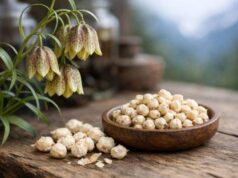
False unicorn is a perennial flowering plant in the Melanthiaceae family. It grows naturally in moist woodlands, shaded slopes, and open forest edges across parts of the eastern United States. You may also see it called fairy wand, blazing star, devil’s bit, starwort, helonias root, or star grub root. Those common names sound harmless, but they create real confusion in commerce because more than one herb has been sold under “unicorn root.”
That naming issue is one of the first practical things to understand. False unicorn is Chamaelirium luteum. It is not the same plant as true unicorn root, which is usually Aletris farinosa. It is also not the same as Helonias bullata, even though older herb literature sometimes blurred those names. When a product label says only “unicorn root,” it is not specific enough. A trustworthy label should clearly state Chamaelirium luteum and identify the root or rhizome as the medicinal part.
In traditional North American herbalism, false unicorn was valued mostly for female reproductive complaints, especially patterns described as weakness, poor uterine tone, scant or irregular menstruation, repeated early miscarriage, or pelvic heaviness. Older texts also describe it as a mild digestive bitter, diuretic, and, in higher amounts, an herb that can cause nausea or vomiting. That wider list of uses helps explain its historical popularity, but it also shows how loosely earlier herbal categories were defined.
The plant itself grows slowly, and the root harvest is destructive because the root and rhizome are the parts removed for commerce. That matters for both ecology and quality. Some modern extension materials note that cultivated stock is limited and that wild sourcing has remained common, which is one reason reputable suppliers matter so much with this herb. A rare, slow-growing plant is not ideal for casual high-volume supplement use.
From a consumer standpoint, false unicorn is best thought of as a niche traditional herb rather than a mainstream wellness botanical. It is not like peppermint, chamomile, or ginger, where everyday culinary familiarity gives people a reasonable feel for its safety and use. False unicorn belongs to a more specialized corner of herbal medicine, and that alone should lower expectations for self-treatment.
One useful way to frame it is this: the herb’s identity is fairly clear to botanists, but much less clear in the marketplace. So before asking whether it works, it is smart to ask whether the bottle contains the right plant, the right part, and responsibly sourced material.
Key compounds and likely actions
False unicorn is usually discussed in terms of its steroidal saponins. These are the compounds that make the herb chemically distinctive and the reason it keeps appearing in phytochemistry research even though modern clinical trials are scarce. Older herbal sources often name chamaelirin as a major constituent. More detailed laboratory work has also identified chiograsterol-related compounds, unusual steroidal glycosides, and aglycones that appear uncommon or unique to this species.
Why does that matter? Because it tells us the root is not chemically trivial. It contains constituents that are biologically active enough to interest researchers and to justify some caution in use. At the same time, a chemically interesting plant is not automatically a clinically proven one. That distinction is especially important with false unicorn, which is often marketed for “hormone balance” in a much more confident way than the data support.
Traditional herbal descriptions usually assign false unicorn several actions:
- Uterine tonic support for patterns of weakness rather than acute irritation.
- Mild emmenagogue activity in sluggish or delayed menstrual patterns.
- Digestive stimulation from its bitter qualities.
- Mild diuretic action in some older formulas.
A modern interpretation of those actions is still tentative. The best current view is that false unicorn may influence physiology indirectly rather than acting like a plant-based hormone replacement. Its steroidal saponins may affect signaling, membrane activity, or tissue responses in ways that earlier practitioners interpreted as reproductive support. But there is no good evidence that the herb simply “raises progesterone,” “adds estrogen,” or normalizes hormones in a predictable way.
This is where product language often gets ahead of the science. The word “hormonal” attracts attention, yet the herb has not earned the kind of mechanistic clarity associated with better-studied cycle herbs. Readers looking at broader reproductive botanicals often compare it with chaste tree for cycle-related hormone signaling, which has a more developed discussion around prolactin and luteal-phase symptoms. False unicorn remains much less defined.
Another practical issue is standardization. Commercial false unicorn products are not standardized in a dependable, widely accepted way. Two tinctures may both contain Chamaelirium luteum, yet differ in extraction strength, marker compounds, solvent ratio, and actual constituent content. That makes it harder to translate chemistry into predictable dosing.
So what do the key ingredients likely do? The honest answer is that they probably explain why the herb earned a historical medicinal reputation, but they do not yet justify broad modern claims. The chemistry is interesting. The pharmacology is incomplete. The gap between those two facts is exactly why false unicorn should be approached with interest, but also restraint.
Does false unicorn help reproductive health
This is the core search question, and it deserves a direct answer. False unicorn has a long traditional reputation for menstrual complaints, pelvic weakness, fertility support, and prevention of repeated early miscarriage, but strong modern human evidence is lacking. That means it may still have a place in individualized herbal care, yet it should not be treated as a proven reproductive remedy.
Historically, the herb was chosen less for sharp, inflammatory pain and more for patterns that older practitioners described as weak, sluggish, or atonic. In plain terms, it was often used when cycles seemed delayed, flow seemed scant, or the pelvis was described as lacking tone. It was also given in some traditions for morning sickness and recurrent early pregnancy loss. Those uses are a major reason the herb still appears in fertility-oriented supplements.
The difficulty is that reproductive problems are not one problem. Irregular periods, painful periods, endometriosis, luteal-phase issues, PCOS, thyroid-related cycle changes, infertility, and repeated miscarriage can all look similar from a distance and have completely different causes. An herb that was historically used for “female weakness” does not become a reliable answer for all of them.
A realistic way to think about false unicorn is to separate tradition from proof:
- Tradition suggests it may fit selected cases of low-tone reproductive complaints.
- Modern evidence does not show that it reliably improves fertility or cycle outcomes in well-studied patient groups.
- Safety uncertainty matters more here than with many other herbs because the people most interested in it are often trying to conceive or already pregnant.
That last point is crucial. The emotional pull of fertility supplements is strong, and it can make old claims sound stronger than they are. If someone is trying to conceive, it is easy to hear “traditional fertility herb” and assume a meaningful effect on pregnancy rates. At present, that assumption is not backed by strong clinical data.
This is also why false unicorn should never delay workup for red-flag problems such as:
- Heavy bleeding or anemia.
- Severe dysmenorrhea.
- Bleeding between periods.
- Suspected endometriosis.
- Recurrent miscarriage.
- Infertility after a defined trying period.
- Signs of thyroid, prolactin, or metabolic disorders.
In modern practice, false unicorn is best viewed as a narrowly traditional herb, not an all-purpose hormone fixer. Some people comparing classic reproductive formulas also look at motherwort for reproductive and stress-linked support, especially when symptoms include tension, palpitations, or a strong nervous-system component. False unicorn is usually the more specialized and less well-validated option.
So does it help reproductive health? Possibly, in selected traditional contexts. But if the question is whether it has strong modern proof for fertility or menstrual disorders, the answer remains no.
Other uses and practical limits
False unicorn’s reputation extends beyond reproductive care. Older herbal sources describe it as a digestive stimulant, a mild diuretic, and, in larger amounts, an emetic. Some texts also mention its use for worms or general debility. These older uses are part of the plant’s medicinal history, but most are not strong reasons to choose it today.
As a digestive herb, false unicorn was often framed as useful in depleted people with poor appetite and low vigor. That makes sense in historical herbal systems, where digestion and reproductive strength were often discussed together. In modern self-care, though, it would be hard to justify false unicorn as a first-line digestive remedy when safer, better-known options exist.
Its mild diuretic reputation is also best understood in context. Older practitioners often used herbs for “pelvic congestion” or fluid retention based on symptom patterns rather than lab-based diagnoses. Today, noticeable swelling, urinary discomfort, or persistent bloating deserves clearer evaluation. False unicorn is not a smart substitute for identifying the cause.
The herb’s large-dose emetic effect is less a benefit than a warning. When a plant’s historical record includes deliberate vomiting at higher doses, that tells you the therapeutic window may be narrow and that aggressive self-dosing is a bad idea. With false unicorn, nausea is not a sign of stronger benefit. It is a sign you may be using too much or that the herb is not a good fit at all.
Another limit is the language surrounding “uterine tonic.” It sounds precise, but it is actually broad and somewhat old-fashioned. The term may refer to muscle tone, tissue integrity, function, circulation, or simply the practitioner’s impression of constitutional weakness. That makes it hard to map directly onto modern diagnoses. It also explains why the herb can sound more versatile in old books than it likely is in real-world clinical care.
For that reason, false unicorn works best as a specialized herb with boundaries:
- It is not a general women’s health cure-all.
- It is not a dependable treatment for digestive or urinary problems.
- It is not a daily tonic for people without a clear goal.
- It is not a substitute for diagnosis when symptoms are persistent or severe.
Readers interested in gentler traditional pelvic herbs sometimes compare it with lady’s mantle for pelvic support, especially when they want something associated more with astringency and tissue tone than with uncertain hormone-like effects. That comparison highlights an important truth: false unicorn attracts attention because of its lore, but lore alone does not make it the best tool.
Its other uses are part of its story. They are not the strongest reason to buy it.
How to use false unicorn
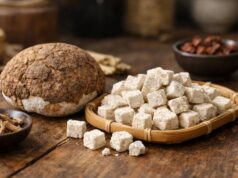
False unicorn is usually taken as a dried root tea, tincture, capsule, or liquid extract. In practice, tinctures and capsules are the forms most people encounter because they are easier to portion than chopped root. The traditional medicinal material is the root and rhizome, not the flowers or leaves.
The most common forms are:
- Dried root for tea or decoction.
- Tincture.
- Powdered root capsules.
- Combination formulas for menstrual or fertility support.
If you are evaluating a product, the label matters more than many shoppers expect. A useful checklist includes:
- The Latin name should be Chamaelirium luteum.
- The plant part should specify root or rhizome.
- The amount per serving should be clearly stated.
- The product should not hide the dose in a proprietary blend.
- The supplier should provide some sourcing transparency.
Tea is traditional, but it is not necessarily the easiest form to use well. Root extraction varies with cut size, freshness, steeping time, and the quality of the raw material. Tinctures are easier to titrate. Capsules are easier for consistency, though they may hide quality differences if the manufacturer is vague.
Timing depends on the goal. False unicorn is not usually taken as a symptom-only herb the way someone might use peppermint after a meal. Traditional use tends to be more consistent and schedule-based, often two or three times daily for a defined period. That said, it is wise to keep the trial limited and purposeful. A vague plan such as “I’ll take this for hormones for a few months” is not a strong strategy.
False unicorn is also often sold in combination with other reproductive herbs. That can make traditional sense, but it also makes evaluation harder. If five herbs are started at once, it becomes almost impossible to know what helped, what caused side effects, or whether the formula was appropriate in the first place. In classic-style formulas, it is sometimes paired with dong quai in broader menstrual support blends, but that does not mean every person needs both.
The most practical way to use false unicorn is as a defined trial with a clear reason. Track one or two symptoms, use one preparation, and reassess after a set interval. If the product is poorly labeled, wildly expensive, or built around vague fertility promises, that is usually a reason to walk away rather than experiment.
This is not a kitchen herb or a casual wellness powder. It is a specialist plant that rewards careful use, conservative expectations, and a strong preference for quality over marketing.
How much should you take
False unicorn does not have a well-established evidence-based dosage from modern clinical trials. The dose ranges most often repeated today come from traditional monographs and herbal references, not from contemporary studies in well-defined patient populations. That is important because it means the numbers are customary, not proven.
Traditional ranges commonly cited are:
- 1 to 2 g of the root as a tea.
- 2 to 5 mL of root tincture up to 3 times daily.
Those figures give a rough framework, but they do not solve the biggest dosing problem with false unicorn: product variability. One tincture may be far more concentrated than another. A capsule may contain plain root powder, a stronger extract, or a mixed formula with a small amount of the herb and much larger amounts of something else. Without standardization, “taking the usual dose” is less precise than it sounds.
A careful dosing approach looks like this:
- Start at the low end of the manufacturer’s labeled range.
- Use one product form only.
- Keep the trial short and purposeful.
- Watch for nausea, vomiting, abdominal discomfort, spotting, or unusual cycle changes.
- Stop if side effects appear or if there is no clear benefit after a reasonable trial.
Duration matters just as much as amount. Because false unicorn is used for slow, pattern-based concerns rather than immediate symptom relief, people sometimes keep taking it for months without deciding whether it is working. A better approach is to define success in advance. That might mean clearer cycle regularity, less pelvic heaviness, or fewer symptoms over one to three cycles. If nothing measurably improves, continuing indefinitely is usually not justified.
People trying to conceive should be extra cautious about timing. Even though the herb has historical use around miscarriage prevention and pregnancy-related nausea, that does not equal modern safety validation. In fact, the uncertainty around pregnancy is one reason many current references advise against unsupervised use once pregnancy is possible or confirmed.
The dose should also be interpreted in context. “Natural” does not mean unlimited. False unicorn is one of those herbs where pushing higher is more likely to bring stomach upset than better results. Its older medicinal record includes nausea and emesis at excessive amounts, which is a clear reminder not to treat it like a gentle tonic tea.
In practical terms, the best dose is the lowest amount that fits a clearly labeled product, a clear goal, and a time-limited plan. Anything more confident than that would promise more precision than the herb can honestly deliver.
Safety, interactions, and who should avoid it
Safety is the section where false unicorn deserves the most caution. The herb is not well studied in modern humans, it is often marketed for sensitive reproductive situations, and available products are not standardized in a reassuring way. That combination makes self-treatment riskier than it first appears.
The most commonly described adverse effects are gastrointestinal. Excessive doses may cause nausea and vomiting, likely related to the saponin-rich root. In real life, that means stomach irritation is not a minor inconvenience to ignore. It is a signal to stop or reassess, not to take more.
Potential drug interactions are also plausible. One in vitro study on commercial women’s herbal products found inhibition of several cytochrome P450 enzymes in preparations that included false unicorn. This does not automatically prove a major clinical interaction in every person, but it is enough reason to be cautious with medicines that depend heavily on liver metabolism.
Use extra caution with:
- Hormone therapy.
- Oral contraceptives.
- Fertility medicines.
- Drugs with a narrow therapeutic range.
- Multi-drug regimens metabolized through CYP pathways.
- Other supplements marketed for hormone balance.
Who should avoid self-treatment with false unicorn:
- Pregnant people.
- Breastfeeding people.
- Anyone with unexplained vaginal bleeding.
- People with hormone-sensitive cancers or estrogen-sensitive conditions.
- Those preparing for assisted reproduction or using fertility drugs.
- People with significant stomach irritation or a history of vomiting with botanicals.
- Children and adolescents.
Pregnancy deserves special emphasis. False unicorn has a contradictory reputation: historically recommended by some herbal traditions for threatened miscarriage, yet approached cautiously in modern references because the herb’s uterine and hormone-related effects are not well defined. That is exactly the kind of contradiction that should make people more conservative, not less.
Quality is part of safety too. A mislabeled or adulterated “unicorn root” product can change the entire risk profile. That is why vague labels are not just a quality issue but a safety issue. The right plant, the right part, and the right dose all matter.
So is false unicorn dangerous? The most accurate answer is that it is insufficiently studied, biologically active, and most often used in situations where mistakes matter. That is not a reason to panic, but it is a strong reason to treat it as a specialist herb rather than a casual supplement.
What the evidence actually shows
The evidence base for false unicorn is narrower than many readers expect. Modern research does support the fact that the herb contains distinctive steroidal saponins and other biologically interesting compounds. There is also limited laboratory work suggesting bioactivity and possible interaction potential. What is missing are strong human trials showing reliable benefits for infertility, menstrual disorders, or pregnancy-related concerns.
That gap is the most important fact to keep in mind. False unicorn is a real medicinal plant, but its best-supported modern story is chemical characterization, not clinical proof. In other words, researchers know more about what is in the root than about what routinely happens when real patients take it.
What the evidence supports reasonably well:
- The root contains steroidal saponins and related glycosides.
- Some constituents appear unusual or distinctive to this species.
- The herb has a documented traditional reputation in reproductive care.
- Product standardization is limited.
- Interaction potential cannot be dismissed.
What the evidence does not support well:
- Reliable fertility improvement in modern patients.
- Prevention of miscarriage.
- Routine pregnancy use.
- A clear hormone-balancing effect in a predictable direction.
- Long-term unsupervised use as a general tonic.
There is also a useful negative lesson here. Modern medicine often asks, “What is the outcome?” Traditional herbalism often asks, “What is the pattern?” False unicorn may still matter in an individualized pattern-based system, but that does not mean it has been validated by outcome-based research. Both statements can be true at once.
For evidence-focused readers, that may place false unicorn fairly low on the list of herbs worth trying alone. For readers interested in classic materia medica, it remains fascinating because it shows how a plant can carry a strong reputation into the modern era without accumulating equally strong clinical data. That does not make the tradition worthless. It just means the tradition should not be mistaken for certainty.
The most honest conclusion is restrained: false unicorn is historically important, chemically interesting, and clinically underproven. It may still have a role in specialist herbal care, but it has not earned broad confidence as a modern evidence-based reproductive remedy.
References
- The truth about false unicorn (Chamaelirium luteum): total synthesis of 23R,24S-chiograsterol B defines the structure and stereochemistry of the major saponins from this medicinal herb 2011.
- Structure and bioactivity of steroidal saponins isolated from the roots of Chamaelirium luteum (false unicorn) 2012.
- The effects of commercial preparations of herbal supplements commonly used by women on the biotransformation of fluorogenic substrates by human cytochromes P450 2011.
- Uterotonic Plants and their Bioactive Constituents 2011 (Review).
- False Unicorn Uses, Benefits & Dosage 2025 (Monograph).
Disclaimer
This article is for educational purposes only and is not a substitute for medical advice, diagnosis, or treatment. False unicorn is a traditionally used herb with limited modern clinical evidence, uncertain pregnancy safety, possible product-quality issues, and potential interaction concerns. Seek guidance from a qualified clinician before using it for fertility, menstrual concerns, miscarriage history, or alongside prescription medicines.
If this article helped you, please consider sharing it on Facebook, X, or any platform your audience prefers.