Fat embolism happens when droplets of fat enter the bloodstream and travel to small blood vessels, most often in the lungs and sometimes in the brain or skin. In many injuries—especially long-bone fractures—tiny fat droplets can appear in the circulation without causing illness. The concern is fat embolism syndrome (FES), meaning “symptoms from fat droplets,” where the body reacts strongly enough to cause breathing problems, confusion, or a distinctive rash. FES is uncommon, but it can become serious quickly, so it is worth understanding if you or a loved one has had major trauma, orthopedic surgery, or certain high-risk medical conditions. This guide explains what fat embolism is, why it occurs, how clinicians recognize it, what treatment usually involves, and the practical steps that reduce risk—especially during the first critical days after an injury or procedure.
Table of Contents
- What fat embolism is
- Causes and risk factors
- Early symptoms and complications
- How fat embolism is diagnosed
- Treatment and what to expect
- Prevention, recovery, and when to seek care
What fat embolism is
Fat embolism refers to fat droplets entering blood vessels and lodging in small arteries and capillaries. It is most often discussed after trauma because bone marrow contains fat, and a fracture can push marrow fat into damaged veins. Many people with long-bone fractures have some fat droplets in the bloodstream without becoming ill. The term fat embolism syndrome (FES) is used when those droplets trigger a clinical illness—usually involving the lungs, brain, and skin.
Two ideas help explain why fat embolism can be mild in one person and severe in another:
- Mechanical effect: fat droplets physically block small vessels, especially in the lungs, reducing oxygen transfer.
- Inflammatory effect: fat can be broken into free fatty acids that irritate vessel lining and provoke inflammation, making capillaries “leaky” and worsening swelling in the lungs or brain.
These effects can happen together. In FES, the lungs are commonly the first organ to struggle because they act like a filter for blood returning from the veins. When oxygen levels fall, the heart and brain may also be affected. If fat droplets cross into the arterial circulation—through very small lung vessels or a heart shunt such as a patent foramen ovale—neurologic symptoms can appear.
Clinically, people often search for a single hallmark sign, but FES is more of a pattern. Classic teaching highlights a triad:
- Breathing difficulty or low oxygen
- Neurologic changes (confusion, agitation, drowsiness)
- A petechial rash (tiny red-purple spots), often on the chest, armpits, neck, or face
Not everyone has all three. Some patients mainly show lung findings; others have prominent brain symptoms. Timing also matters: FES often appears after a short delay—frequently within the first few days after injury—rather than immediately at the moment of fracture.
It is also important to separate FES from other problems that can look similar after trauma, such as pulmonary embolism from a blood clot, pneumonia, aspiration, medication effects, or head injury. Because treatment priorities differ, clinicians focus on the whole story: injury pattern, timing, oxygen trends, mental status changes, and supportive imaging.
Causes and risk factors
The most common setting for fat embolism syndrome is orthopedic trauma, especially fractures that involve large amounts of marrow fat. Risk rises with:
- Long-bone fractures (femur most classically, also tibia)
- Pelvic fractures
- Multiple fractures or high-energy trauma
- Delayed stabilization of major fractures, which can prolong marrow leakage and inflammation
Orthopedic procedures can also trigger fat embolism, particularly when instruments raise pressure inside the bone:
- Intramedullary nailing and reaming
- Joint replacement procedures
- Manipulation of fractures during surgery
Outside trauma and orthopedics, fat embolism is increasingly discussed in several non-traumatic contexts. These are less common but important because they may not be suspected quickly:
- Cosmetic procedures involving fat transfer (fat grafting or liposuction), where fat can enter damaged vessels
- Sickle cell disease, where bone marrow injury and necrosis can release fat into circulation
- Severe pancreatitis, where fat metabolism and inflammation may contribute
- Bone marrow transplantation and some severe infections or inflammatory states (rare, but reported)
Not all risk is about the event itself. Patient and care-context factors can amplify vulnerability:
- Severe shock or low blood pressure after injury
- Low oxygen levels early in the course
- Major blood loss and aggressive fluid shifts
- Coexisting lung disease (which reduces reserve)
- Prolonged immobilization and pain-limited breathing, which can worsen oxygenation even without FES
A practical way to think about risk is “fat source + open vessels + physiologic stress.” A fractured femur provides a large fat source; torn venous channels provide access to circulation; and systemic stress (inflammation, hypoxia, shock) increases the chance that fat embolization becomes a full syndrome.
Families often ask whether FES is preventable. While no strategy eliminates risk completely, several measures reduce it meaningfully: early fracture stabilization when appropriate, careful surgical technique to limit pressure spikes, good oxygenation and pain control, and vigilant monitoring during the first 24–72 hours. Because FES is relatively uncommon, prevention is mainly about doing the basics well—fast, consistent trauma care—rather than a single “magic” medication.
Early symptoms and complications
Fat embolism syndrome usually does not announce itself with one unmistakable symptom. It tends to emerge as a cluster of changes—often within 12 to 72 hours after a major fracture or procedure—though earlier or later presentations can occur.
Early respiratory signs are common and may include:
- Shortness of breath or rapid breathing
- Low oxygen levels on a pulse oximeter
- New need for supplemental oxygen
- Cough, sometimes with frothy sputum
- Worsening chest imaging findings over hours
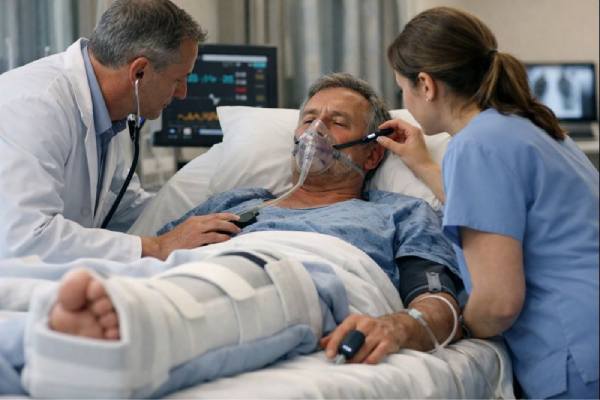
Respiratory problems range from mild oxygen requirement to severe lung injury resembling acute respiratory distress syndrome (ARDS). Clinicians watch closely because a person can deteriorate quickly, especially after a femur fracture or multiple injuries.
Neurologic symptoms can be subtle at first:
- Restlessness, anxiety, or agitation out of proportion to the situation
- Confusion, trouble focusing, or unusual sleepiness
- Headache, dizziness, or a “not myself” feeling
- In severe cases, seizures, focal weakness, or coma
Importantly, neurologic symptoms can appear even when the lungs are not dramatically compromised, which can confuse the picture after trauma.
Skin findings are less common but highly suggestive:
- A petechial rash (pinpoint red-purple spots) often on the upper body, conjunctiva, or axillae
The rash may fade within a day or two, so it can be missed if not checked early.
Other supportive clues that may appear include:
- Fever
- Fast heart rate
- A drop in platelet count or hemoglobin (not diagnostic by itself)
- Retinal changes seen on eye exam (not routinely checked unless suspicion is high)
Complications depend on severity and organ involvement:
- Severe hypoxemia leading to ICU admission or mechanical ventilation
- Cerebral fat embolism, which can cause prolonged confusion, weakness, or rarely lasting deficits
- Secondary complications of critical illness, such as infections, blood clots from immobility, or kidney strain from low oxygen and inflammation
- Injury from falls if confusion or dizziness develops
A useful safety point: after major orthopedic trauma or high-risk procedures, a sudden change in oxygen needs or mental status should be treated as urgent until proven otherwise. Families can help by reporting changes that may not show up in vital signs immediately—new confusion, unusual sleepiness, or a sense that the person’s breathing effort has changed.
How fat embolism is diagnosed
Fat embolism syndrome is primarily a clinical diagnosis, meaning clinicians diagnose it by recognizing a pattern rather than relying on one definitive lab test. This is especially true after trauma, where other problems—blood clots, pneumonia, aspiration, pulmonary contusion, medication effects, head injury—can look similar.
Step 1: Context and timing
Clinicians consider:
- Recent long-bone or pelvic fracture, orthopedic instrumentation, or high-risk non-traumatic setting
- A symptom delay (often hours to a few days)
- A combination of respiratory, neurologic, and skin findings
Step 2: Bedside assessment
The most immediate priorities are oxygenation and stability. If oxygen levels fall, clinicians treat first and confirm the cause in parallel. A careful exam looks for:
- Work of breathing and oxygen requirement trends
- Mental status change compared with baseline
- Petechiae on the chest, axillae, face, or conjunctiva
Step 3: Criteria and scoring tools
Several criteria sets exist (for example, Gurd-type criteria and scoring approaches). They can help structure thinking but are not perfect, and different hospitals use them differently. The key clinical idea remains: multisystem findings after a high-risk trigger, with no better explanation.
Step 4: Imaging and supportive tests
Common tests include:
- Chest imaging (X-ray or CT) to look for diffuse lung changes consistent with inflammation or edema
- Brain MRI when neurologic symptoms are prominent; a scattered “starfield” pattern can support cerebral fat embolism
- Echocardiography in select cases to assess heart function, rule out other causes of shock, or look for shunts that might allow fat to reach the brain more easily
Labs are supportive, not diagnostic. Clinicians may check blood counts, kidney and liver function, coagulation markers, and arterial blood gases to track severity and guide care. Finding fat droplets in urine or sputum is not reliable enough to confirm or exclude the diagnosis.
Step 5: Ruling out look-alikes
This is often where diagnosis becomes most careful. After trauma, clinicians may consider:
- Pulmonary embolism from a blood clot (especially if symptoms appear later or risk is high)
- Pneumonia or aspiration
- Lung contusion
- Sepsis
- Medication intoxication or withdrawal
- Head injury progression
In practice, diagnosis is a synthesis: a plausible trigger, typical timing, compatible lung and/or brain findings, and exclusion of a more likely single cause. The best outcomes usually come from early recognition paired with strong supportive care—because even when uncertainty remains, stabilizing oxygen and circulation protects the organs while the picture clarifies.
Treatment and what to expect
There is no single antidote that “dissolves” fat emboli on command. Treatment focuses on supportive care, preventing secondary injury while the body clears fat droplets and inflammation settles. Most patients improve with timely support, but severe cases require intensive care.
1) Oxygen and breathing support
This is the cornerstone because low oxygen is often the most immediate threat.
- Supplemental oxygen may be enough for mild cases.
- If breathing work increases or oxygen levels remain low, clinicians may use noninvasive ventilation or progress to mechanical ventilation.
- In severe lung injury, ICU teams use lung-protective ventilation strategies to reduce further damage.
2) Circulation and organ support
Maintaining steady blood pressure and organ perfusion matters, especially after trauma.
- IV fluids are used carefully to support circulation without flooding the lungs.
- Vasopressors may be used in shock when fluids are not enough.
- Pain control is not just comfort; it helps breathing by allowing deeper breaths and better coughing.
3) Fracture management and procedural considerations
Stabilizing major fractures is often part of prevention and control because ongoing motion and marrow leakage can worsen embolization and inflammation.
- Early, appropriate fixation can reduce ongoing fat release in many scenarios.
- Surgical teams also aim to minimize intramedullary pressure spikes when possible.
4) Medications: what is common and what is controversial
- Anticoagulants treat blood clots, but fat embolism is not a clotting disorder in the same way. Anticoagulation is not a routine treatment for FES unless another indication exists.
- Corticosteroids have been studied mainly for prevention in high-risk fracture settings and remain debated. Some evidence suggests potential benefit in selected patients, but practice varies because steroids also carry risks (infection, high blood sugar, poor wound healing). Clinicians consider the whole context rather than using steroids automatically.
- Antibiotics are not a treatment for FES itself, but they may be used if infection is suspected or confirmed.
5) Neurologic care
When brain symptoms dominate, teams focus on oxygenation, stable blood pressure, and preventing complications like aspiration. Seizures are treated directly. Many neurologic symptoms improve over days, but recovery can be slower when the initial episode is severe.
What to expect in recovery
Mild cases may stabilize within a few days. More severe cases can require prolonged ICU support, followed by weeks of rehabilitation for strength, endurance, and cognitive recovery. Families often find it reassuring to hear that improvement may come in stages—oxygen needs decline, clarity returns, stamina rebuilds—rather than all at once.
Prevention, recovery, and when to seek care
Prevention is most effective when it is built into routine trauma and surgical care. For patients and families, the practical goal is to recognize risk windows and respond quickly to changes—especially during the first few days after a fracture or high-risk procedure.
Prevention strategies clinicians commonly emphasize
- Early stabilization of major fractures when clinically appropriate
- Careful operative technique to reduce intramedullary pressure surges during instrumentation
- Consistent oxygen monitoring in high-risk patients, particularly after femur or pelvic fractures
- Good pain control to support deep breathing and reduce atelectasis (lung collapse)
- Early mobilization when safe, and prevention of immobility complications
What patients and families can do
Ask for a clear plan, especially if risk is high:
- What oxygen level changes should trigger urgent reassessment?
- Who should be notified if confusion, agitation, or unusual sleepiness appears?
- What is the expected timeline for recovery milestones (breathing, mobility, pain)?
- Which symptoms should prompt an immediate return to the hospital after discharge?
Recovery and activity
After serious trauma, fatigue and breathlessness can linger even after the acute episode resolves. A staged recovery plan often includes:
- Breathing exercises and gradual activity increases
- Physical therapy focused on gait, strength, and endurance
- Cognitive pacing if concentration or memory feels “off”
- Follow-up for lung function or imaging if symptoms persist
When to seek urgent care
Seek emergency evaluation immediately for:
- Sudden or worsening shortness of breath
- New oxygen requirement or rapidly dropping home pulse oximeter readings if you were given one
- New confusion, fainting, seizures, or inability to stay awake
- Chest pain with breathing difficulty
- A new rash of pinpoint red-purple spots on the upper body after trauma or a high-risk procedure
A useful family checklist
During the first 72 hours after a high-risk fracture or surgery, pay attention to:
- Oxygen needs (even “small” increases can matter)
- Breathing rate and effort
- Mental clarity compared with baseline
- New fever combined with respiratory or neurologic changes
Finally, remember that prevention is not about fear-driven restriction. It is about predictable monitoring and early response. When families and clinicians treat oxygen trends and mental status changes as meaningful data—not just “post-op stress”—fat embolism syndrome is more likely to be caught early, treated appropriately, and followed by a more complete recovery.
References
- Fat Embolism Syndrome: Evolving Perspectives on Diagnosis and Care – PMC 2025 (Review)
- Incidence of Fat Embolism Syndrome in Femur Fractures and Its Associated Risk Factors over Time—A Systematic Review – PMC 2021 (Systematic Review)
- Fat embolism: a systematic review to facilitate the development of standardised procedures in pathology – PMC 2024 (Systematic Review)
- Fat Embolism Syndrome – A Qualitative Review of its Incidence, Presentation, Pathogenesis and Management – PMC 2021 (Review)
Disclaimer
This article is for educational purposes and does not replace medical advice, diagnosis, or treatment. Fat embolism syndrome can become life-threatening, particularly after major trauma or orthopedic surgery, and it requires urgent clinical assessment when breathing or neurologic symptoms appear. Call emergency services right away for collapse, severe shortness of breath, chest pain with breathing difficulty, seizures, or sudden confusion after an injury or procedure. For non-urgent concerns, discuss individualized risk and recovery planning with your treating team, especially if you have a femur or pelvic fracture or have recently had a procedure involving bone instrumentation or fat transfer.
If you found this article useful, please consider sharing it on Facebook, X (formerly Twitter), or any platform you prefer, and follow us on social media. Your support through sharing helps our team continue producing quality health content.