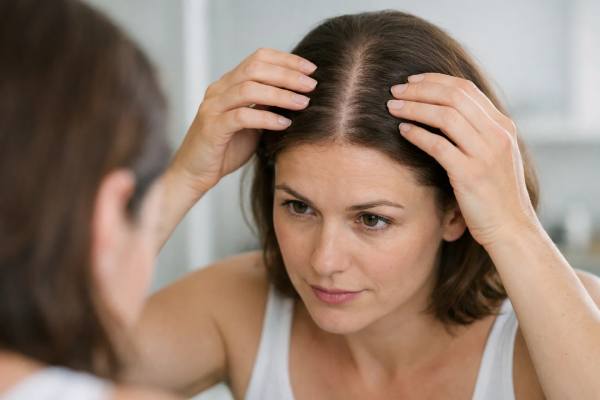
Female pattern hair loss is the most common cause of long-term hair thinning in women, yet it often starts so quietly that it is mistaken for “just shedding,” stress, aging, or a bad haircut. The earliest changes are usually subtle: a wider part, less volume at the crown, more scalp showing under bright light, or a ponytail that feels smaller than it used to. The condition is usually gradual, but it is also progressive, which is why timing matters. The earlier it is recognized, the better the chance of slowing miniaturization, preserving density, and keeping styling easier.
That does not mean every case needs aggressive treatment. Some women do well with topical therapy alone, while others need a broader plan that includes medical treatment, scalp evaluation, hormone assessment, or cosmetic support. The key is matching the treatment to the pattern, the pace of change, and the person’s goals. Once you know what female pattern hair loss looks like, how it is staged, and which treatments have real evidence behind them, the condition becomes far more manageable.
Core Points
- Early female pattern hair loss often shows up as part widening, crown thinning, and reduced overall volume rather than a receding hairline.
- Starting treatment earlier usually helps preserve existing density better than waiting for obvious thinning.
- Visible improvement from treatment usually takes months, not weeks, and results are maintained only while treatment continues.
- Sudden shedding, patchy bald spots, scalp pain, or marked redness suggest a different problem and need prompt evaluation.
- Apply growth treatments to the scalp itself, and use consistent monthly photos to judge progress more accurately.
Table of Contents
- Early signs of female pattern hair loss
- How stages and patterns are classified
- Why it happens and who is at risk
- How doctors confirm the diagnosis
- Treatment options with the best evidence
- Daily care and when to seek help
Early signs of female pattern hair loss
Female pattern hair loss rarely begins with a dramatic bald patch. In most women, it starts as a slow change in density across the top of the scalp. The central part looks broader. The scalp becomes more visible under direct light. Hair no longer falls the same way it did a few years earlier. Some women first notice it in photographs or while blow-drying. Others realize their ponytail is thinner, their clips feel loose, or the crown looks flat no matter how they style it.
A key feature is that the front hairline is often preserved, especially early on. That is one reason the problem can be missed. Instead of the classic receding hairline seen in many men, women usually develop diffuse thinning over the midline and crown. The hairs in affected areas also become finer over time. That process, called miniaturization, means the follicle still produces hair, but the strands are shorter, softer, and less pigmented than before.
Common early clues include:
- A part that seems wider than it used to be
- More scalp show-through at the crown
- Less density around the temples without complete bald patches
- Reduced overall volume, even when shedding seems “normal”
- Difficulty holding curls, waves, or root lift at the top of the head
It is also common to confuse female pattern hair loss with seasonal shedding, postpartum shedding, or stress-related shedding. The difference is persistence. A temporary shed tends to come on more suddenly and often improves over months. Female pattern hair loss tends to move slowly but steadily unless treated. Many women have both at once, which can make the thinning feel abrupt.
Scalp symptoms are not usually the main story. Mild itch or oiliness can happen, but burning, pain, crusting, or significant inflammation should raise concern for another diagnosis. So should patchy loss, broken hairs, or areas where the scalp looks shiny and scarred.
Because the early phase is easy to miss, comparison is valuable. Monthly photos in the same lighting, from the front, top, and crown, often reveal change more clearly than day-to-day mirror checks. Understanding the hair growth cycle also helps explain why visible density can change slowly even when treatment is working. Hair does not thicken overnight; it improves one growth cycle at a time.
How stages and patterns are classified
Female pattern hair loss is not just “mild” or “severe.” Dermatologists often classify it by pattern and stage, because those details help guide treatment and set realistic expectations. In practice, the most useful systems are the Ludwig scale, the Sinclair scale, and the so-called Christmas tree pattern described by Olsen.
The Ludwig scale focuses on diffuse thinning over the crown with preservation of the frontal hairline:
- Stage I: mild thinning, often seen as part widening and reduced fullness
- Stage II: more obvious loss of density across the central scalp
- Stage III: marked rarefaction, with significant scalp visibility at the top
The Sinclair scale is especially useful in clinic because it is sensitive to earlier change. It grades widening of the midline part from minimal change to advanced diffuse thinning. Many women seek help when they are around the earlier Sinclair stages, long before they would fit a more advanced Ludwig stage.
The Olsen or “Christmas tree” pattern describes a triangular widening of the central part, broadest toward the front of the scalp. This pattern is common and visually distinctive. It is one of the reasons a woman can have substantial thinning while still keeping a seemingly intact front hairline.
Patterns matter because they shape how hair loss is experienced. For example:
- Diffuse central thinning often affects styling, volume, and scalp visibility
- Frontal accentuation makes the part line and hair framing the face look sparser
- Temporal thinning may create a softer, more fragile hairline without true recession
Stage also matters because treatment response is usually better when follicles are still active. A miniaturized follicle can often be coaxed to produce a thicker hair. A follicle that has been inactive for a very long time is less likely to rebound. That is why earlier stages are often easier to stabilize than advanced ones.
Still, stage does not tell the whole story. Two women with the same grade can feel very different about their hair. One may be bothered mainly by scalp show-through under bright light. Another may be distressed by lost ponytail density or changes around the face. Curl pattern, hair color contrast, strand thickness, and styling habits all affect how visible the thinning looks.
Progression is usually slow, often over years. In some women, it seems almost unchanged for long periods. In others, menopause, nutritional stress, medication changes, or acute shedding events uncover it more quickly. That can make the condition feel sudden even when the underlying pattern has been developing quietly.
Staging is not about labeling a person. It is a baseline. Good baseline photos, scalp exam findings, and consistent follow-up tell you whether the condition is stable, slowly progressing, or responding to treatment. For women considering cosmetic support later on, it also helps to understand where options like hair fibers for thinning hair fit into the plan.
Why it happens and who is at risk
Female pattern hair loss is a non-scarring form of progressive follicle miniaturization. In plain terms, genetically susceptible follicles gradually produce thinner, shorter hairs. Over time, the proportion of robust terminal hairs falls, and the scalp looks less dense even if some hair is still present. The biology is complex, and unlike male pattern baldness, the role of androgens is not identical in every woman.
Genetics is the biggest long-term driver. A family history on either side can matter. Some women remember a mother or grandmother with thinning at the part line. Others do not know of any obvious family pattern, but the tendency may still be inherited. The age of onset varies widely. It can begin in the teens or twenties, but it becomes much more common after midlife and often becomes more noticeable around perimenopause and menopause.
Hormones can influence the picture, especially in women with signs of androgen excess. Clues include:
- Irregular menstrual cycles
- Acne that is persistent or severe
- Excess facial or body hair
- Rapid worsening of crown thinning
- A history suggestive of polycystic ovary syndrome
That said, many women with female pattern hair loss have normal hormone tests and no obvious endocrine disorder. In them, the follicles may simply be more sensitive to hormonal signaling even when blood hormone levels look unremarkable.
Age-related changes also matter. Hair fiber diameter may decrease with time, and the contrast between scalp and hair can make thinning easier to see. Menopause can bring a double hit: loss of estrogen support and the unveiling of an inherited pattern that had been mild for years. That is one reason women often say, “My hair changed after 40,” even if the groundwork was already there.
Inflammation, scalp conditions, and nutritional strain do not usually cause classic female pattern hair loss on their own, but they can worsen the appearance of thinning or overlap with it. Iron deficiency, crash dieting, major illness, thyroid disease, and medication-related shedding can all reduce hair density and expose an underlying patterned process. This is one reason the diagnosis is sometimes mixed rather than pure.
Risk also rises when there is prolonged metabolic or hormonal stress. Women with insulin resistance, PCOS, or significant weight shifts may notice faster progression. Tight hairstyles, harsh processing, and heat damage do not cause follicle miniaturization in the same way, but they can add breakage, making the overall density look even poorer.
It helps to think of female pattern hair loss as a baseline tendency that can be amplified by other stressors. A woman may have mild inherited thinning for years, then suddenly notice it after a period of intense shedding, menopause, or illness. That does not mean the trigger created the condition from nothing; it often exposed what was already developing.
The practical takeaway is important: finding and correcting overlapping issues can improve the final result, but treating the patterned component still matters. For women whose history suggests hormonal involvement, related pages such as thinning hair after 40 and hormones can add useful context.
How doctors confirm the diagnosis
The diagnosis of female pattern hair loss often begins with the story. A dermatologist will ask when the thinning started, whether it came on gradually or suddenly, which areas changed first, whether shedding increased, and whether there is a family history. They will also ask about menstrual history, menopause status, pregnancies, recent illness, weight change, medications, and symptoms such as acne, excess facial hair, fatigue, or scalp discomfort.
The physical exam is just as important. In classic female pattern hair loss, the scalp usually looks normal. The main findings are decreased density over the midline or crown, variation in hair shaft diameter, and preservation of follicular openings. Under magnification, the doctor may see miniaturized hairs living beside thicker terminal hairs. That mix of thick and thin shafts is a strong clue.
Trichoscopy, a close-up dermatoscopic exam of the scalp, is often the most useful office tool. It helps the clinician look for:
- Hair shaft diameter diversity
- More single-hair follicular units
- Increased miniaturized hairs in affected areas
- Signs of scale, redness, perifollicular change, or scarring
The next step is deciding whether laboratory testing is needed. Not every woman needs an extensive panel, but testing is often reasonable when the history suggests another driver or overlap. Common examples include iron studies, thyroid testing, and selected hormone tests when there are signs of androgen excess or menstrual irregularity. A mixed picture is common, especially when patterned thinning coexists with diffuse shedding.
The differential diagnosis matters because several other disorders can look similar at first glance. These include chronic telogen effluvium, diffuse alopecia areata, traction alopecia, thyroid-related shedding, and some scarring alopecias. Clues that point away from simple female pattern hair loss include:
- Sudden heavy shedding over weeks to months
- Round or patchy bald areas
- Eyebrow or body-hair loss
- Significant itching, burning, or pain
- Redness, pustules, thick scale, or loss of follicular openings
A scalp biopsy is not routine, but it can be very helpful when the diagnosis is uncertain or a scarring alopecia is possible. It gives a tissue-level view of miniaturization, inflammation, and follicle architecture. In the right case, it can prevent months of the wrong treatment.
This is also the stage where expectations begin to take shape. Some women mainly want to slow progression. Others want regrowth. Those are related but not identical goals. Stabilization is a success, especially in a progressive condition. Regrowth is possible too, but it depends on how long the follicles have been miniaturized and whether there are other active problems on the scalp.
If the distinction between temporary shedding and progressive thinning still feels unclear, the comparison between hair shedding and hair loss can be useful. The better the diagnosis, the better the treatment match.
Treatment options with the best evidence
The best treatment plan depends on stage, age, pregnancy potential, medical history, tolerance for daily routines, and how much regrowth versus stabilization matters to the patient. The strongest evidence still supports minoxidil as first-line treatment, but it is not the only option.
Topical minoxidil remains the standard starting point for many women. It helps prolong the growth phase and enlarge miniaturized follicles over time. The key is patience and proper use. It must reach the scalp, not just coat the hair. Benefits usually take several months to judge, and early shedding can happen before improvement becomes visible. It is also a maintenance treatment, which means gains fade after stopping.
Low-dose oral minoxidil has become a common option in dermatology practice, especially for women who find topical treatment irritating, messy, or hard to apply consistently. It is prescription-only and used off-label in many settings. It can be effective, but it is not a casual supplement. Side effects may include unwanted facial or body hair growth, ankle swelling, dizziness, and blood pressure-related concerns in susceptible patients. The conversation around topical versus oral minoxidil is often less about which one is universally “better” and more about who is the better fit for each.
Antiandrogen therapy can be especially helpful when there are hormonal clues or incomplete response to minoxidil. Spironolactone is the most familiar example. It may reduce androgen effects at the follicle level and is often used in women with acne, excess hair growth, or PCOS features. It is not appropriate during pregnancy, and monitoring may be needed depending on age, dose, and medical history.
Other options may be considered in selected cases:
- Finasteride or dutasteride: sometimes used off-label in carefully selected women, more often after menopause or with reliable contraception
- Platelet-rich plasma: office-based injections that may improve density in some patients, though protocols vary and results are not uniform
- Low-level laser therapy: a non-drug option with some supportive evidence, often used as an adjunct rather than a replacement
- Hair transplantation: best for selected women with stable loss, sufficient donor density, and realistic expectations
Treatment combinations are common because female pattern hair loss is chronic. A realistic plan might include one medical therapy, one adjunct, and one cosmetic support strategy. For example, a woman may use minoxidil for follicle support, PRP as an add-on, and camouflage fibers for confidence during the first six months.
What does success look like? Often:
- Less visible scalp at the part line
- Better crown coverage
- Less shedding
- Improved strand caliber
- Slower progression over time
The biggest mistake is stopping too early or switching too often. Hair treatment timelines are slow by nature. Before changing course, it helps to learn the basics of starting minoxidil correctly and to track results with standardized photos rather than memory alone.
Daily care and when to seek help
Daily care does not reverse female pattern hair loss by itself, but it can protect fragile density, improve scalp comfort, and make medical treatment easier to stick with. A good routine is gentle, consistent, and realistic. It should support the scalp rather than overwhelm it with too many products or harsh techniques.
Start with scalp-first habits. Wash often enough to keep the scalp comfortable and reduce buildup. In many women, especially those using topical treatments, a clean scalp improves product delivery and reduces irritation. Shampooing does not cause patterned hair loss. What matters more is avoiding rough scrubbing, aggressive detangling, and constant tension from hairstyles.
Helpful daily habits include:
- Applying scalp treatments to dry or nearly dry scalp skin
- Parting the hair in sections so medication reaches the target area
- Using fingertips, not nails, to spread product
- Limiting high-heat styling, especially at the crown
- Choosing looser hairstyles if the temples or hairline are fragile
- Protecting visible scalp from sun exposure
Cosmetic support can make a major difference while treatment is still taking effect. Tinted scalp products, fibers, powders, root sprays, and strategic cuts can all reduce the contrast between hair and scalp. Volume at the roots matters more than length alone, so some women do better with shorter layers or adjusted part placement. Others benefit from toppers, partial pieces, or a consultation on hair transplant candidacy in women if medical therapy is not enough.
It is also worth protecting emotional health. Hair loss in women can affect confidence, social comfort, and the sense of identity in a way that outsiders often underestimate. Feeling distressed does not mean you are overreacting. It means the problem matters, and that should be part of the care plan.
Seek professional evaluation sooner rather than later if you notice:
- Thinning that continues for more than a few months
- Rapid worsening after age 20 with a strong family history
- Irregular periods, acne, or unwanted facial hair
- Patchy loss, eyebrow thinning, or sudden dramatic shedding
- Burning, pain, redness, thick scale, or pustules
- No improvement after six to twelve months of consistent treatment
The earlier the diagnosis, the more follicles are usually still salvageable. Even when regrowth is modest, slowing progression can preserve styling options for years. That is a meaningful win in a condition that is usually chronic. The right time to get help is not when the thinning feels “bad enough.” It is when the pattern becomes persistent, progressive, or confusing.
References
- Hair Loss in Women 2025 (Review)
- Female-pattern hair loss: therapeutic update 2023 (Review)
- Low-Dose Oral Minoxidil Initiation for Patients With Hair Loss: An International Modified Delphi Consensus Statement 2024 (Consensus Statement)
- Efficacy and safety of oral spironolactone for female pattern hair loss in premenopausal women: a randomized, double-blind, placebo-controlled, parallel-group pilot study 2025 (RCT)
- Effectiveness of platelet-rich plasma in treating female hair loss: A systematic review and meta-analysis of randomized controlled trials 2024 (Systematic Review)
Disclaimer
This article is for educational purposes only and is not a substitute for medical advice, diagnosis, or treatment. Female pattern hair loss can overlap with hormone disorders, nutritional deficiencies, thyroid disease, autoimmune hair loss, and scarring scalp conditions. A licensed clinician should evaluate new, rapidly worsening, painful, patchy, or inflammatory hair loss, and anyone who is pregnant, breastfeeding, or planning pregnancy should review treatment safety with a qualified professional before starting therapy.
If this article helped, please consider sharing it on Facebook, X, or your preferred platform so it can reach someone else who may be trying to understand early hair thinning.