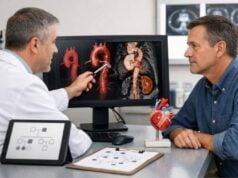
A femoral artery aneurysm is a bulging, weakened section of an artery in the upper thigh or groin. Many people first notice a new, pulsing lump near the crease where the leg meets the body, or vague groin discomfort that does not fit a muscle strain. While some aneurysms stay quiet for years, others can form clots, shower debris downstream, or—more rarely—bleed. The goal is not to panic, but to take it seriously and get the right imaging so a vascular specialist can estimate your risk and plan next steps. Treatment may be simple monitoring, or it may involve repair to prevent limb-threatening problems. Knowing the early warning signs and the “don’t-wait” symptoms can make a real difference.
Table of Contents
- What it is and why it matters
- What causes it and who is at risk
- Symptoms and complications to watch for
- How it is diagnosed
- Treatment options and what to expect
- Long-term management and when to seek care
What it is and why it matters
An aneurysm is an abnormal widening of an artery. In the femoral region, it most often involves the common femoral artery (in the groin) but can also affect the superficial femoral artery (runs down the thigh) or the deep femoral/profunda femoris artery (feeds thigh muscles). Clinicians also separate aneurysms into:
- True aneurysm: the artery wall stretches outward, and the bulge involves the vessel wall layers.
- Pseudoaneurysm (false aneurysm): blood leaks through a defect in the artery wall and forms a contained “sac” outside the vessel, often after a catheter procedure or trauma. This behaves differently and is treated differently.
Why femoral artery aneurysms matter is less about the bulge itself and more about what can happen inside it. Blood flow can become turbulent, encouraging clot to form along the wall. That clot can:
- Block the artery at the aneurysm (sudden loss of flow), or
- Break off and travel to smaller leg arteries (embolization), causing acute foot or leg ischemia.
Rupture (bleeding) is usually less common than with abdominal aortic aneurysms, but it can occur—especially with larger aneurysms or inflammatory/infectious causes. Another underappreciated issue is pressure on nearby structures. A groin aneurysm can compress a vein and lead to leg swelling, or irritate nearby nerves and cause pain, tingling, or weakness.
One more practical point: a femoral aneurysm can be a sign of “aneurysm tendency” elsewhere. Many people diagnosed with a femoral aneurysm are also evaluated for aneurysms in other locations (such as the aorta, iliac, or popliteal arteries), because treatment decisions and follow-up are safer when the whole vascular picture is known.
What causes it and who is at risk
Femoral artery aneurysms are uncommon, and their causes vary depending on whether the aneurysm is true or false.
Common causes of true femoral artery aneurysm
Most true femoral aneurysms are related to long-term wear on artery walls, often in the setting of atherosclerosis (plaque disease). The artery wall gradually weakens, and the vessel enlarges over time. Factors linked to this pathway include:
- Age: risk increases with older age.
- Male sex: reported more often in men than women.
- Smoking history: one of the strongest contributors to arterial injury.
- High blood pressure: increases mechanical stress on artery walls.
- High cholesterol and diabetes: accelerate vascular disease.
- Coexisting aneurysms elsewhere: suggests a broader weakness in arterial tissues.
Genetic and connective tissue contributions
Some people develop aneurysms at a younger age because of inherited or connective tissue conditions that affect how the body builds and maintains vessel walls. These conditions are not the most common explanation, but they matter because they can change how aggressively clinicians screen for aneurysms in other areas and how early they consider repair.
Inflammatory, infectious, and unusual causes
A smaller but important group of femoral aneurysms arise from:
- Inflammatory vessel disease
- Infection (mycotic aneurysm): can expand quickly and rupture; often comes with fever, tenderness, or redness.
- Prior radiation, prior groin surgery, or chronic local injury
Pseudoaneurysm (false aneurysm) risk factors
Pseudoaneurysms typically occur after:
- Catheter-based procedures (angiography, stenting, cardiac catheterization)
- Trauma (including orthopedic procedures near the hip)
- Repeated needle punctures (for example, difficult access or anticoagulation at the time of puncture)
Medications and clotting status can influence both formation and bleeding risk:
- Anticoagulants and antiplatelet medicines do not “cause” aneurysms, but they can make a pseudoaneurysm enlarge or bleed more easily.
- Conditions that affect clotting may increase complications once an aneurysm is present.
A practical takeaway: if you have risk factors for vascular disease, a new groin lump, or leg symptoms that do not fit a simple strain, it is reasonable to ask whether vascular imaging is needed. Early detection often expands your options—sometimes to monitoring rather than urgent repair.
Symptoms and complications to watch for
Many femoral artery aneurysms are found incidentally on imaging done for other reasons. When symptoms do occur, they tend to fall into a few recognizable patterns.
Local groin or thigh symptoms
Aneurysms near the groin can present as:
- A pulsating lump in the groin or upper thigh
- Aching, pressure, or tenderness in the area (often worse with standing or hip flexion)
- Visible swelling that seems to grow over weeks to months
Because the femoral artery sits close to veins and nerves, the aneurysm may cause symptoms from compression:
- Leg swelling (from vein compression)
- Heaviness or aching that resembles venous congestion
- Numbness, tingling, or burning pain (nerve irritation)
- Rarely, weakness if nerve compression is significant
Symptoms from reduced blood flow to the leg
Clot formation inside an aneurysm can reduce circulation gradually or suddenly.
Gradual flow limitation may look like:
- Calf or thigh pain with walking that improves with rest
- Coldness or fatigue in the leg during activity
Sudden blockage or embolization is more urgent and may cause:
- Sudden severe leg or foot pain
- Pale or blue discoloration of toes
- New numbness or inability to move the foot normally
- A sudden decrease in pulses compared with the other leg
These are time-sensitive because muscle and nerve tissue can be injured quickly when blood flow is cut off.
Rupture or rapid expansion
True rupture is less common than clot-related complications, but it can happen. Warning signs include:
- Sudden, severe groin or thigh pain
- Rapidly enlarging swelling or bruising
- Dizziness, fainting, or signs of shock (especially with heavy bleeding)
When symptoms may be misleading
A groin mass is often mistaken for a hernia, lymph node enlargement, or a soft tissue cyst. A key difference is that an aneurysm may feel pulsatile—but not always, especially if clot has partially filled the aneurysm. If a lump is new, growing, painful, or associated with leg symptoms, it deserves evaluation rather than watchful waiting at home.
A useful mental checklist is to separate “uncomfortable but stable” from “sudden change.” Sudden pain, sudden swelling, sudden discoloration, or sudden numbness should be treated as urgent until proven otherwise.
How it is diagnosed
Diagnosis starts with a careful history and physical exam, followed by targeted imaging to confirm the aneurysm, measure its size, and map nearby branches.
History and exam: what clinicians look for
A clinician will usually ask about:
- Timing and growth of a groin/thigh lump
- Pain pattern (constant vs activity-related)
- Walking tolerance and foot symptoms
- Prior catheter procedures or trauma
- Smoking history and cardiovascular risk factors
- Personal or family history of aneurysms
On exam, they assess:
- The mass (pulsatile vs nonpulsatile, tender vs nontender)
- Pulses in both legs and feet
- Skin temperature and color differences
- Signs of vein compression (swelling, visible veins)
- Nerve findings (sensation, strength, reflexes)
First-line imaging: duplex ultrasound
Duplex ultrasound is often the first test because it is fast, painless, and shows both structure and blood flow. It can:
- Confirm an aneurysm vs a pseudoaneurysm
- Measure diameter and length
- Detect clot inside the aneurysm
- Evaluate flow to the lower leg
For pseudoaneurysm, ultrasound can also show the classic flow pattern connecting the artery to the sac, which helps guide treatment.
Cross-sectional imaging: CTA or MRA
If repair is being considered—or if anatomy is complex—clinicians often order:
- CT angiography (CTA): excellent detail of vessel size and branch anatomy; helpful for surgical planning.
- MR angiography (MRA): useful when avoiding iodinated contrast is important, though availability and image quality can vary.
These tests help answer practical questions:
- Is the aneurysm involving the bifurcation into superficial and deep branches?
- Are there additional aneurysms in the iliac arteries or aorta?
- Is there significant plaque disease that could affect bypass targets?
Additional testing that may matter
Depending on symptoms and overall risk, clinicians may also use:
- Ankle-brachial index (ABI): compares blood pressure in ankle vs arm to screen for leg artery disease.
- Blood tests if infection or inflammation is suspected (for example, fever, redness, marked tenderness).
- Angiography in selected cases, particularly when endovascular treatment is planned or when acute limb ischemia is suspected.
Ruling out look-alikes
A careful workup also helps avoid dangerous missteps. A suspected hernia should not be aggressively pressed or manipulated until an aneurysm is ruled out. Likewise, a “blood clot” diagnosis should be reconsidered if the swelling is paired with a pulsatile mass or new pulse changes.
The bottom line: diagnosis is not only about naming the condition—it is about defining the aneurysm’s size, location, and downstream risk so the next decision (monitor vs repair) is grounded and individualized.
Treatment options and what to expect
Treatment depends on four practical factors: symptoms, aneurysm size, clot/embolization risk, and the patient’s overall surgical risk. Because femoral aneurysms are uncommon, specialists often weigh multiple features rather than relying on a single number.
When monitoring is reasonable
Observation may be considered when the aneurysm is:
- Small
- Asymptomatic
- Not showing rapid growth
- Not associated with clot, embolization, or threatened blood flow
Monitoring is not “doing nothing.” It means planned surveillance imaging (often ultrasound), risk-factor control, and clear instructions on what symptoms should trigger urgent reassessment.
Clear reasons to repair
Repair is generally favored when an aneurysm is:
- Symptomatic (pain, nerve symptoms, swelling from vein compression)
- Causing embolization or acute limb ischemia
- Showing rapid enlargement
- Ruptured or suspected of infection (requires urgent specialist care)
Open surgery: the traditional standard
Open repair remains the most common approach for many common femoral aneurysms because the artery sits in a mobile, high-stress area near the hip crease. Typical open strategies include:
- Removing or opening the aneurysm sac and creating a durable repair
- Replacing the diseased segment with a graft (synthetic or vein, depending on anatomy and infection risk)
- Preserving flow to important branches, especially the deep femoral artery, which can be crucial for collateral circulation
What to expect:
- Hospital stay commonly ranges from a few days to longer depending on complexity and overall health.
- Groin incisions can have wound or lymphatic complications, so meticulous wound care matters.
- Walking is encouraged early, but heavy lifting and intense hip flexion may be limited during early healing.
Endovascular or hybrid repair: less invasive in selected cases
Endovascular repair places a covered stent to exclude the aneurysm from inside the artery. This can be attractive for patients at high surgical risk or with anatomies that allow secure stent placement. Hybrid approaches combine limited open exposure with endovascular techniques.
However, endovascular decisions in the groin must be cautious because:
- Hip movement places repeated bending stress on devices.
- Branch vessels may need to be preserved to maintain blood supply.
- Long-term durability can vary by anatomy and device strategy.
Medications around treatment
Medications do not shrink aneurysms, but they can reduce complications and improve outcomes:
- Antiplatelet therapy and statins are often used when atherosclerosis is present.
- Anticoagulation may be needed in specific clot-related scenarios, guided by a specialist.
- Pain control is important, but new or worsening pain should not be masked without reassessment.
A helpful way to frame treatment is: repair is recommended when the risk of limb-threatening events outweighs the risks of the procedure. A vascular specialist’s job is to quantify those risks for your specific anatomy, not for an “average patient.”
Long-term management and when to seek care
Whether you are monitoring an aneurysm or recovering after repair, long-term management focuses on two goals: preventing vascular events and catching changes early.
Follow-up after diagnosis or repair
Your clinician may recommend:
- Scheduled ultrasound to track size (if unrepaired) or to confirm graft/stent patency (if repaired)
- Periodic assessment of leg pulses and walking tolerance
- Review of medications and cardiovascular risk targets
A practical approach is to keep a simple record: last imaging date, measured aneurysm size, and the next planned study. That avoids uncertainty if symptoms change.
Reduce growth and complication risk
Aneurysm risk is not only structural—it is also about the health of the artery lining and blood flow. The most protective steps are often the least glamorous:
- Stop smoking: the single most powerful lifestyle change for vascular risk.
- Control blood pressure: aim for steady control rather than “spikes and crashes.”
- Lower LDL cholesterol: many patients benefit from statin therapy when plaque disease is present.
- Manage diabetes: better glucose control reduces vessel injury over time.
- Move regularly: walking and light aerobic activity support circulation and overall cardiovascular health. Your clinician can tailor activity limits if you have symptoms or are post-op.
- Foot care: if circulation is reduced, minor foot injuries can become serious. Daily checks, good footwear, and prompt treatment of sores matter.
Screening for other aneurysms
Because femoral aneurysms can coexist with aneurysms elsewhere, clinicians often recommend imaging to assess the aorta and other leg arteries. This is less about “finding more problems” and more about preventing surprises—especially before elective repair.
“Don’t-wait” symptoms
Seek urgent medical care if you develop:
- Sudden severe groin/thigh pain or rapidly enlarging swelling
- New coldness, pallor, blueness, numbness, or weakness in the leg or foot
- Sudden inability to walk normally because of pain or weakness
- Fever and an increasingly tender, red, warm groin mass (possible infection)
- Dizziness, fainting, or signs of shock with groin swelling/bruising
Day-to-day living: a steady, realistic plan
Most people do best with a plan that is easy to follow:
- Know your diagnosis (true aneurysm vs pseudoaneurysm, location, size).
- Keep your imaging schedule and show up even when you feel fine.
- Treat vascular risk factors as seriously as the aneurysm itself.
- Have a clear threshold for calling your clinician versus going to urgent care.
A femoral artery aneurysm is manageable, but it rewards attention. When you combine surveillance with risk reduction—and you respond quickly to warning signs—you give yourself the best chance of avoiding emergencies and protecting long-term leg function.
References
- ESC Guidelines for the management of peripheral arterial and aortic diseases 2024 (Guideline)
- 2024 ACC/AHA/AACVPR/APMA/ABC/SCAI/SVM/SVN/SVS/SIR/VESS Guideline for the Management of Lower Extremity Peripheral Artery Disease: A Report of the American College of Cardiology/American Heart Association Joint Committee on Clinical Practice Guidelines – PubMed 2024 (Guideline)
- Incidence, Diagnosis, Treatment, and Outcomes of True Superficial Artery Aneurysms – PubMed 2021 (Review)
- Treatment of true superficial femoral artery aneurysms: the 15-year experience of a single centre – PubMed 2024 (Observational Study)
- Total endovascular repair of a common femoral artery aneurysm with a bifurcated endograft through a single ipsilateral approach – PubMed 2024 (Case Report)
Disclaimer
This article is for educational purposes only and does not provide medical advice, diagnosis, or treatment. Femoral artery aneurysms can cause urgent complications, and management choices depend on your anatomy, symptoms, imaging findings, and overall health. If you have a new pulsating groin lump, sudden leg or foot symptoms, or rapidly worsening pain or swelling, seek urgent medical care. For individualized guidance, consult a qualified clinician, ideally a vascular specialist, who can interpret your imaging and risks.
If you found this article helpful, please consider sharing it on Facebook, X (formerly Twitter), or any platform you prefer, and follow us on social media. Your support through sharing helps our team continue producing high-quality, trustworthy health content.