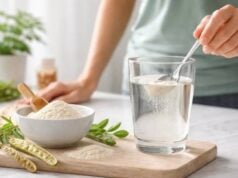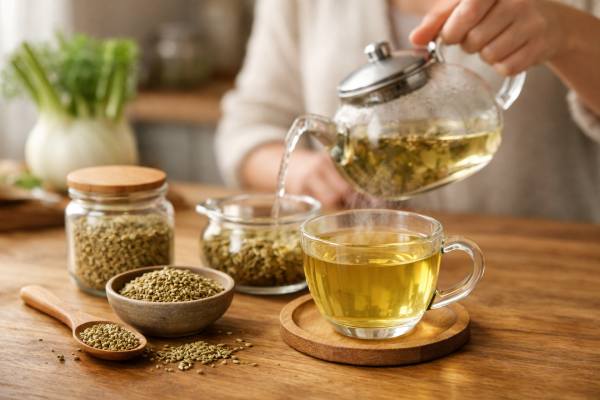
Bloating can feel deceptively simple—just “gas”—yet the causes range from fast eating and constipation to food sensitivities and stress-driven gut motility changes. Fennel (the aromatic plant with licorice-like notes) has a long history as a “carminative,” meaning it helps relieve gas and cramping. Modern research is still catching up to traditional use, but what we do know fits the lived experience many people report: fennel can be especially helpful when bloating is driven by spasm, sluggish upper-gut movement, or a “tight” feeling after meals.
This article breaks down how fennel may work, what the evidence can and cannot prove, and how to use fennel tea and seeds in practical, measurable ways—without turning it into a miracle cure. You will also learn who should avoid fennel and when persistent bloating deserves a medical check.
Core Points
- Fennel may ease bloating by relaxing intestinal smooth muscle and helping trapped gas move along.
- Benefits are most likely when bloating comes with cramping, post-meal fullness, or stress-related gut tension.
- Evidence is promising but limited; effects are usually modest and not a substitute for evaluating ongoing symptoms.
- Use tea or lightly crushed seeds after meals for the most practical day-to-day approach.
- Avoid concentrated fennel products if you are pregnant, managing hormone-sensitive conditions, or taking complex medications without clinician guidance.
Table of Contents
- Why fennel eases gas and bloating
- What evidence supports fennel use
- Fennel tea brewing and timing
- Seeds, extracts, and product choices
- Who should avoid fennel and why
- Combine fennel with smart habits
Why fennel eases gas and bloating
Bloating is not always “too much gas.” Often it is gas in the wrong place, at the wrong time, with the gut muscles gripping instead of moving smoothly. Fennel’s traditional reputation makes sense in that context because its key aromatic compounds—most famously anethole—are associated with antispasmodic effects (muscle-relaxing), and that can change how pressure and gas are experienced.
Gas discomfort is part pressure and part motion
Many people notice that bloating feels worse when the abdomen is tense, after a hurried meal, or when constipation is brewing. That is because the gut is a muscular tube. If segments tighten or slow down, gas that would normally pass quietly can become trapped and painful. When the gut relaxes and coordinates better, the same amount of gas can feel dramatically less bothersome.
Fennel may help by supporting three “mechanical” pieces of comfort:
- Reducing spasm: Relaxing smooth muscle can lessen cramping and the pinching sensation that often accompanies bloating.
- Supporting propulsion: When the stomach or intestines are sluggish, pressure builds. Gentle support of motility can help gas and food progress.
- Improving tolerance of stretch: Even without changing gas volume, reducing spasm can make the gut less reactive to normal stretching.
Why tea and seeds can feel different
How you use fennel matters because it changes what you extract.
- Tea (water infusion) pulls out a portion of the volatile oils and many water-soluble compounds. Warmth itself can be soothing, and sipping slowly may reduce air swallowing.
- Chewed seeds release aromatic oils directly in the mouth and upper gut. Crushing the seeds is important—whole seeds often pass through with less benefit.
- Concentrated products (capsules, extracts, essential-oil–based preparations) can deliver higher doses, but they also raise the stakes on side effects and interactions.
A useful way to think about fennel is as a “symptom shifter,” not a root-cause fixer. It can make bloating easier to live with while you work on the actual drivers—constipation, trigger foods, eating speed, reflux, or stress. If you expect fennel to erase all bloating regardless of cause, you will likely be disappointed. If you use it as a targeted tool for the right pattern, it often earns its place in your kitchen.
What evidence supports fennel use
The evidence for fennel sits in an in-between zone: stronger than folklore alone, but not as definitive as many people assume. Studies vary widely in the form used (tea, seed oil emulsion, multi-herb blends, extracts), the symptom being measured (bloating, pain, “dyspepsia,” colic crying time), and the population studied (infants, adults with functional gut disorders, mixed groups). That makes it hard to offer one universal “proven” claim—yet patterns do emerge.
Where fennel looks most promising
Fennel tends to perform best when symptoms are functional—meaning they are real and disruptive, but not explained by an obvious structural disease. Examples include:
- Post-meal fullness and upper-abdominal discomfort (often grouped under functional dyspepsia)
- Bloating with cramping where spasms seem to play a role
- Infant colic when gas and intestinal spasm are suspected contributors
In these contexts, fennel’s potential antispasmodic and motility-supporting actions align well with the symptom biology. Some mechanistic research also supports the idea that fennel preparations can influence gut muscle tone in ways that could reduce discomfort.
What the data cannot guarantee
Even when findings are positive, a few limitations are consistent:
- Small and diverse trials: Many studies include relatively few participants or use combination products, so it is difficult to isolate fennel’s specific contribution.
- Short durations: A week or two can show symptom shifts, but it does not tell you whether fennel meaningfully changes a long-term pattern of bloating.
- Different definitions of “bloating”: Some studies measure abdominal distension, others measure subjective discomfort, and those are not always the same thing.
- Publication and placebo effects: Digestive symptoms respond strongly to expectation, routine changes, and attention—so “some improvement” does not always mean a strong pharmacologic effect.
How to interpret fennel realistically
A practical evidence-based stance is:
- Fennel is reasonable to try for mild to moderate gas discomfort and bloating, especially if cramping or post-meal tightness is part of the picture.
- Expect modest relief, not a cure.
- If you need fennel daily just to function, that is a signal to look deeper—diet triggers, constipation management, reflux, medication side effects, or medical evaluation.
In short: fennel belongs in the “low-burden, potentially helpful” category for many adults, with stronger—but still not perfect—support in certain pediatric colic contexts and functional digestive patterns. Using it well means matching the form and timing to the symptom pattern, and knowing when it is time to stop experimenting and get answers.
Fennel tea brewing and timing
Fennel tea is the most approachable way to test whether fennel helps your bloating, and it is also the easiest to dose gently. The two common mistakes are using too little (or leaving seeds whole), and using it at the wrong time (long after symptoms peak).
How to brew fennel tea for maximum aroma
For most people, a simple infusion works well:
- Measure: Use 1 to 2 teaspoons of fennel seeds per cup (about 250 ml) of hot water.
- Crush: Lightly crush the seeds with the back of a spoon or a mortar and pestle. Crushing is what releases the aromatic oils.
- Steep: Cover and steep 7 to 10 minutes. Covering helps keep volatile compounds from escaping with steam.
- Strain and sip slowly.
If you prefer a stronger cup, extend steeping to 12 minutes rather than adding a large amount of extra seed right away. Stronger is not always better; it can taste harsh and may be more likely to cause nausea in sensitive people.
When to drink it
Timing is where fennel tea often shines:
- For post-meal fullness or tightness: Drink 10 to 20 minutes after eating.
- For crampy gas later in the day: Try a cup at the first sign of pressure, not after discomfort becomes intense.
- For “evening bloat”: A cup after dinner is often more effective than a late-night cup when you are already uncomfortable.
A common, reasonable routine is up to 2 to 3 cups per day for a short trial (for example, one week), then reassess. If you notice no clear shift after a week of consistent use, fennel may not be the right tool for your pattern.
Helpful pairings and what to avoid
You can pair fennel tea with simple behaviors that reduce air swallowing and support motility:
- Sit upright while drinking and for at least 30 minutes afterward.
- Take a 10-minute walk after meals if bloating tends to build.
- Avoid chugging—fast drinking can add swallowed air.
If you are prone to reflux, notice whether fennel tea is neutral, helpful, or irritating. Some people find warm herbal teas soothing, while others find that any warm beverage after a meal increases regurgitation.
The goal is to treat fennel tea like a structured experiment: consistent preparation, consistent timing, and a clear decision point about whether it helps you enough to keep it in your routine.
Seeds, extracts, and product choices
Fennel is sold in many forms, and your choice should match both your symptom pattern and your comfort with dosing. For most adults with occasional bloating, culinary seeds and tea are the safest starting point. Concentrated formats may be tempting, but they deserve more caution.
Chewing fennel seeds after meals
Chewing seeds is simple and surprisingly effective for some people because it releases aromatic oils immediately and encourages saliva flow (which can support digestion).
A practical method:
- Use 1/2 to 1 teaspoon of fennel seeds.
- Chew thoroughly for 30 to 60 seconds before swallowing.
- Use it after meals or at the first sign of pressure.
If you dislike the flavor, you can try crushing seeds and adding them to warm water, or mixing them into food (such as yogurt or cooked oats). The key is still to crush or chew—whole seeds are less reliable.
Powder, capsules, and standardized extracts
Capsules and extracts can be useful if you need portability or dislike tea, but they also introduce variability:
- Powdered seed can work similarly to chewed seeds, but it is easier to overdo. Start low.
- Standardized extracts are not uniform across brands. Labels may list different marker compounds, and “equivalent to X mg seed” is not always meaningful.
- Combination products (fennel plus other herbs) may help, but they also make it harder to know what is actually working.
If you choose capsules, a sensible approach is to follow the label and start with the lowest suggested serving, using it with meals rather than on an empty stomach.
Essential oil and why caution matters
Fennel essential oil is concentrated and not the same thing as tea. Ingesting essential oils without medical supervision can be risky due to potency, purity variation, and dosing errors. Some commercial preparations are specifically formulated for internal use, but many are not. For digestive relief, it is usually safer to stick with seeds and tea, especially if you are experimenting on your own.
Quality and storage tips that affect results
Because fennel’s helpful compounds are aromatic and volatile, storage matters:
- Choose seeds that smell sweet and strongly aromatic; stale seeds tend to be dull.
- Store in an airtight container away from heat and light.
- Replace seeds if the aroma fades—fennel that has “lost its smell” often has lost much of its functional value.
A good rule: if you can smell fennel clearly when you open the jar, you are more likely to feel its effects. If you cannot, your tea may be little more than warm water with a faint herbal note.
Who should avoid fennel and why
For most healthy adults using fennel as a food or mild tea, fennel is generally well tolerated. The risks rise with higher doses, concentrated extracts, and long-term daily use without a clear reason. This section is not meant to make fennel feel scary—it is meant to help you use it responsibly.
Common side effects and what they mean
Possible side effects include:
- Nausea or heartburn, especially with strong tea or when taken on an empty stomach
- Allergic reactions (more likely if you are sensitive to plants in the carrot and celery family)
- Headache or dizziness in rare cases, particularly with concentrated products
If fennel makes you feel worse, stop. “Pushing through” does not usually lead to adaptation with herbs that irritate your system.
Pregnancy, breastfeeding, and infants
This is where extra care is warranted:
- Pregnancy: Avoid high-dose fennel supplements unless a clinician explicitly recommends them. Culinary amounts in food are a different category than concentrated products.
- Breastfeeding: Fennel is sometimes used traditionally to support milk supply, but evidence is mixed and concentrated products may expose both parent and infant to higher levels of active compounds. Discuss regular use with a clinician if you plan to take it daily.
- Infants: Do not self-prescribe fennel preparations for infants without pediatric guidance. Infant dosing is not “small adult dosing,” and safety depends on formulation.
Hormone-sensitive conditions
Fennel contains compounds that may have estrogen-like activity in certain contexts. If you have a hormone-sensitive condition (for example, certain breast, uterine, or ovarian conditions) or you are taking hormone-related medications, it is wise to avoid concentrated fennel supplements unless your clinician confirms they are appropriate.
Medication interactions and medical complexity
Most food-level use is unlikely to cause major interactions, but caution is sensible if you:
- Take multiple prescription medications
- Use anticoagulants or have a bleeding disorder
- Have liver disease or seizure disorders
- Are preparing for surgery
In these cases, stick to culinary amounts or ask a pharmacist or clinician before using concentrated fennel products regularly.
When bloating is a warning sign
Seek medical evaluation rather than relying on fennel if bloating is:
- New and persistent (especially beyond 2 to 3 weeks)
- Associated with unintentional weight loss, fever, persistent vomiting, or anemia
- Accompanied by blood in stool, black stools, or severe abdominal pain
- Waking you at night, progressively worsening, or paired with significant bowel habit changes
Fennel can be part of symptom comfort, but it should never replace investigating red-flag patterns.
Combine fennel with smart habits
The best results with fennel usually come when you pair it with one or two targeted habits that address the most common bloating drivers: swallowed air, fermentation from trigger carbohydrates, constipation, and stress-related motility changes. Think of fennel as the “support,” and your daily habits as the “foundation.”
Match fennel to your bloating pattern
Use this quick pattern guide:
- Cramping and sharp gas pains: Try chewed seeds or tea soon after symptoms begin.
- Post-meal tightness and fullness: Use tea 10 to 20 minutes after eating and keep portions moderate for that meal.
- Constipation-linked bloating: Fennel may help discomfort, but it will not replace a constipation plan (hydration, fiber strategy, movement, and—when appropriate—medical guidance).
If constipation is part of your picture, track stool frequency and ease. Many people treat “gas” for weeks when the real driver is slow transit.
A simple one-week trial plan
If you want a structured test without overcomplicating it:
- Days 1 to 3: One cup of fennel tea after your largest meal.
- Days 4 to 7: Add either a second cup after another meal or chew 1/2 teaspoon of seeds after lunch.
- Keep this one additional rule: eat one meal per day slowly, aiming for 15 to 20 minutes, with no phone scrolling.
At the end of the week, ask two questions:
- Did bloating intensity meaningfully drop?
- Did you need fewer “rescue” behaviors (lying down, unbuttoning pants, skipping meals)?
If the answer is no, fennel is probably not the lever your body responds to.
Smart comparisons: when another option may fit better
Fennel is not the only evidence-informed tool:
- If bloating is strongly linked to reflux, some people do better with strategies focused on reflux triggers and meal timing, because antispasmodic herbs can occasionally worsen regurgitation.
- If symptoms are mainly lower-gut fermentation, a careful look at trigger foods (often specific carbohydrates) can be more impactful than any herb.
- If discomfort is mostly pressure without cramping, evaluating constipation, pelvic floor function, or food intolerances may yield more benefit than carminatives.
When fennel works best
In the real world, fennel tends to be most helpful when bloating feels like a “traffic jam” rather than a mystery: meals feel heavy, stress tightens the abdomen, gas feels stuck, and relief comes when things finally move. In those cases, fennel can be a gentle, repeatable tool—especially when used early, not as an afterthought once discomfort is already at full volume.
References
- Fennel Tea Has a Region‐Specific Effect on the Motility of the Stomach – PMC 2025
- Herbal Remedies for Constipation-Predominant Irritable Bowel Syndrome: A Systematic Review of Randomized Controlled Trials – PMC 2023 (Systematic Review)
- An Overview of Systematic Reviews of Herbal Medicine for Irritable Bowel Syndrome – PubMed 2022 (Systematic Review Overview)
- Cardiovascular Effects, Phytochemistry, Drug Interactions, and Safety Profile of Foeniculum vulgare Mill. (Fennel): A Comprehensive Review – PMC 2025 (Review)
- The effect of fennel (Foeniculum Vulgare) seed oil emulsion in infantile colic: a randomized, placebo-controlled study – PubMed 2003 (RCT)
Disclaimer
This article is for educational purposes and does not replace personalized medical advice, diagnosis, or treatment. Digestive symptoms can have many causes, and persistent or worsening bloating—especially with pain, bleeding, weight loss, fever, vomiting, anemia, or major bowel habit changes—should be evaluated by a qualified clinician. Herbal products can vary in strength and purity and may interact with medications or be inappropriate during pregnancy, breastfeeding, or for infants. If you are pregnant, managing a chronic condition, or taking prescription medicines, consult a healthcare professional before using fennel supplements or concentrated preparations.
If you found this helpful, consider sharing it on Facebook, X (formerly Twitter), or any platform you prefer.