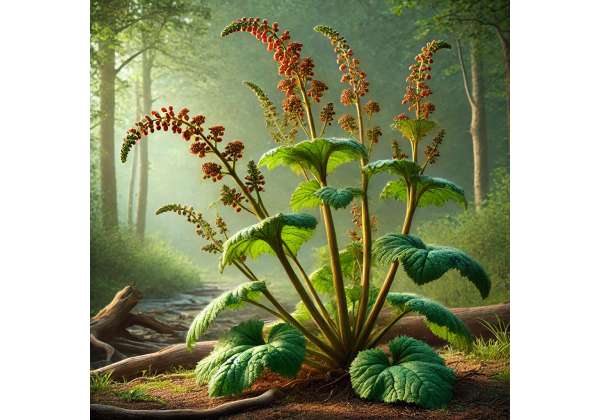
Fever Root, botanically known as Triosteum perfoliatum, is a traditional North American medicinal plant with a much older reputation than modern evidence base. Historical herbalists valued the root bark as a stimulating, bitter remedy for sluggish digestion, mild feverish illness, constipation, and certain cold-related complaints. Indigenous and later Eclectic traditions also described it as an emetic in larger amounts, which explains why its old uses often sat close to its risks.
Today, Fever Root is best approached as a historical herb rather than a mainstream wellness supplement. It belongs to the honeysuckle family, carries common names such as wild ipecac, horse-gentian, and wild coffee, and stands out for its clasping leaves and orange-yellow fruit. Older pharmacy texts describe bitter extractives, starch, and a putative alkaloid called triosteine, but modern phytochemical and clinical research remains limited.
That combination makes Fever Root interesting, but not casual. It may offer insight into older fever and digestive medicine, yet it has a narrow comfort zone. The most responsible way to understand it is through careful identification, modest expectations, and a safety-first reading of its traditional uses.
Core Fever Root Points
- Fever Root was historically used for feverish states, sluggish digestion, and constipation, not as a modern daily tonic.
- The root bark is the main medicinal part, and larger doses were traditionally known to provoke vomiting and purging.
- A historical powder range of about 1.3 to 3.9 g per day appears in older materia medica texts.
- Modern clinical evidence is very limited, so traditional use should not be mistaken for proven treatment.
- Pregnant or breastfeeding people, children, and anyone with gastrointestinal illness should avoid unsupervised use.
Table of Contents
- What Is Fever Root
- Key Ingredients and Traditional Actions
- What Is Fever Root Used For
- How Fever Root Is Prepared
- How Much Fever Root Per Day
- Safety Side Effects and Avoidance
- What the Evidence Really Shows
What Is Fever Root
Fever Root is a perennial woodland herb native to eastern and central North America. It belongs to the Caprifoliaceae family, the same broader family group that includes honeysuckles, though it does not look much like the familiar garden vines most people picture. The plant has opposite leaves that join around the stem at the middle nodes, small dull purple to brownish flowers, and bright yellow to orange fruit later in the season. That joined-leaf feature is one of its most useful field marks.
The common names tell you a great deal about how people once viewed it. “Fever Root” and “feverwort” point to older use in feverish illness. “Wild ipecac” reflects its ability to provoke vomiting in stronger amounts. “Horse-gentian” hints at its bitterness, while “wild coffee” refers to the occasional practice of roasting the fruits or seeds as a coffee substitute. None of those names means it is a gentle plant. In fact, they suggest the opposite: this was a working herb from an era when strong purges and sweats were routine parts of treatment.
One practical point matters more than it seems. Triosteum perfoliatum is often confused with Eupatorium perfoliatum, better known as boneset. Both share the species name perfoliatum, both are North American herbs, and both were tied to fever traditions. But they are completely different plants with different chemistry and different evidence. Anyone researching Fever Root should keep that distinction clear from the start.
Historically, the bark of the root was the main medicinal part. Native American use reports describe the root as an emetic, febrifuge, cold remedy, diuretic, and general tonic in specific traditions. Later Eclectic and early American botanical physicians described it as a cathartic, diaphoretic, and occasional substitute for ipecac or senega. That mixture of uses makes sense when you realize older herbal systems often treated fever, digestive stagnation, chest complaints, and bowel sluggishness as overlapping states rather than separate categories.
A modern reader should understand Fever Root in three layers:
- It is a clearly identified North American medicinal plant with a real historical record.
- Its main traditional use centers on root bark, not the whole plant indiscriminately.
- Its reputation comes mostly from older practice, not modern clinical testing.
That last point is crucial. Fever Root is not a rediscovered modern super-herb. It is better understood as a historically respected but under-researched plant whose old uses make it fascinating and whose risks make it unsuitable for casual experimentation. In practical herbal terms, that puts it in a very different category from gentle kitchen remedies or broadly tolerated daily tonics.
Key Ingredients and Traditional Actions
The chemistry of Fever Root is less fully mapped than that of better-studied herbs, and that gap shapes how responsibly it should be discussed. Unlike popular modern botanicals with standardized extracts and well-described marker compounds, Triosteum perfoliatum is still known mainly through older pharmacognosy and materia medica. That means its “key ingredients” are best described with caution.
Older analytical texts describe the plant, especially the root, as containing a strong bitter principle, substantial starch or fecula, and water-soluble extractive material. One later pharmacy source also reported a distinct alkaloid and gave it the name triosteine. That historical finding is interesting, but it should not be overstated. Triosteine is not a modern clinically validated active ingredient in the way curcumin, ginsenosides, or salicin are used as contemporary reference points. It is better treated as part of Fever Root’s old pharmaceutical record rather than proof of a refined modern mechanism.
Several older observations are still useful today:
- The root appears more active than the leaves or stalks.
- Water extracts much of the plant’s activity, which helps explain the historical use of decoctions.
- The root combines bitterness with a nauseating quality, a profile that matches its reputation as both a cathartic and an emetic.
- The leaves were considered milder and more associated with sweating effects than strong purgation.
That combination suggests Fever Root behaves less like a simple tonic bitter and more like a bitter-irritant medicinal root. In practical terms, the actions most often assigned to it were:
- Cathartic or laxative
- Emetic in larger doses
- Diaphoretic
- Mild tonic
- Occasional diuretic
- Pectoral or respiratory support in some traditions
The bitterness is important because bitter herbs often stimulate digestive secretions and appetite. But Fever Root does not sit comfortably beside milder classic bitters. Compared with classic bitter roots such as gentian, it appears less refined as a digestive herb and more forceful in its bowel and vomiting effects. That difference helps explain why it never became a widely loved everyday bitter in modern practice.
Another useful distinction is between traditional action language and modern evidence language. Terms like diaphoretic, febrifuge, and pectoral come from historical systems that described what a plant seemed to do in the body, not what it has proven in randomized trials. Fever Root’s ingredients may well support those older action patterns, but modern pharmacology has not caught up enough to define them clearly.
So the most accurate way to discuss key ingredients is this: Fever Root likely owes its effects to a mix of bitter extractives, root-based active fractions, starch-rich bulk constituents, and at least one historically described alkaloid. What matters more than naming every possible molecule is understanding the functional result. This is a plant whose chemistry historically pushed the body toward evacuation, sweating, and stimulation rather than gentle nourishment.
What Is Fever Root Used For
Fever Root was traditionally used for conditions that older herbal systems linked with fever, digestive stagnation, mucus, or sluggish elimination. Its historical uses were practical, but they were also shaped by an era when provoking sweat, vomiting, or bowel movement was considered part of treatment. That means its old reputation needs translation before it makes sense to a modern reader.
The strongest traditional uses fall into a few recurring groups.
First, Fever Root was used in feverish states, especially when there was a sense of heaviness, bowel sluggishness, or the early stage of a cold-like illness. The idea was not simply “take this for fever.” Rather, it was used when fever seemed tied to a loaded digestive tract, poor elimination, or the need to stimulate perspiration. That is a very old therapeutic model, and it does not map neatly onto modern fever management.
Second, it was used as a cathartic or slow laxative tonic. Historical physicians described powdered root bark in moderate amounts as a bowel-moving agent that also had some tonic value. In larger amounts it could become emetic and cathartic, which is precisely why it demands caution. The line between medicinal action and excessive action was never especially wide.
Third, some records describe its use in colds, chest complaints, pneumonia-like illness, and difficult respiratory states. Here the herb was treated more like a stimulating, clearing, or sweat-promoting root than a soothing one. In modern self-care, readers usually expect a respiratory herb to be gentle and demulcent, but Fever Root was often chosen for activity, not comfort. For a softer fever-and-sweating tradition, many people now reach for elderflower-style preparations instead.
Other reported uses appear in ethnobotanical and Eclectic literature:
- Dyspepsia and weak digestion
- Autumnal fevers and convalescence after illness
- Colic
- Bilious vomiting and diarrhea
- Painful urination in some Indigenous records
- Chronic rheumatism in some later herbal reports
The realistic question is not whether these uses were ever recorded. They were. The real question is how many remain credible as modern herbal recommendations. That is where caution belongs.
Most realistic historical takeaways:
- It was genuinely used as a purge-and-fever herb.
- It may have stimulated digestion and secretions through its bitterness.
- It likely had real physiologic activity strong enough to explain its reputation.
Less realistic modern takeaways:
- It should not be treated as a general immune herb.
- It is not a proven fever reducer by current standards.
- It is not a validated treatment for pneumonia, rheumatism, or urinary problems.
This is why Fever Root is most valuable as a historical and pharmacognostic herb rather than a broad consumer remedy. It may help explain how older North American medicine approached fever, constipation, and cold states, but it does not translate cleanly into modern self-treatment without raising safety questions. In plain terms, the plant’s uses are historically coherent, but modern claims should stay narrower than its folklore.
How Fever Root Is Prepared
Historically, Fever Root was prepared in forms that matched its strength: powder, decoction, tincture, and extract. The root bark was the main medicinal material, and the choice of preparation changed how forcefully the herb acted. That is important because a casual tea made from an herb with mild relaxing properties is one thing; a powdered root historically used as both cathartic and emetic is something else entirely.
The traditional preparations were fairly direct.
Powdered root bark was a standard form in older botanical medicine. It was used because it preserved the full bitter and evacuant action of the plant and allowed practitioners to measure doses with some consistency. Decoction was also common, especially when the goal was to extract water-soluble constituents and use the herb in a more old-fashioned medicinal style. Tinctures and extracts later appeared as more concentrated preparations, and some authors considered extract one of the better dosage forms.
Historically used forms included:
- Powdered root bark
- Root decoction
- Tincture
- Solid extract
- Occasionally leaf decoction for milder sweating action
- Roasted fruit or seeds as a coffee substitute rather than a core medicine
From a modern perspective, preparation raises two practical issues. The first is identification. Fever Root is not a widely standardized herb in commerce, which means correct species identification matters more than usual. The second is control. Stronger preparations can move quickly from “traditional” to “too much,” especially if someone assumes an old purge herb should be prepared like a pleasant daily tea.
A sensible way to interpret historical preparation is this:
- Powder and extract were the serious medicinal forms.
- Decoction was a working preparation, not a casual wellness beverage.
- Leaf preparations were considered milder than root preparations.
- Roasted fruit use belonged more to food curiosity than primary therapy.
This also explains why Fever Root faded from ordinary household use. Many herbs survived into modern life because they are easy to use safely. Fever Root did not. It remained more of a specialist historical herb because its preparation requires respect for dose and purpose.
If a reader is looking for a traditional respiratory bitter or expectorant idea, horehound offers a much more recognizable model of how an older herb can still fit contemporary self-care. Fever Root sits closer to the old purge tradition, where the preparation method was tightly tied to effect.
So while it is accurate to say Fever Root can be prepared as powder, decoction, tincture, or extract, that statement needs context. These are not interchangeable wellness formats. They represent different levels of concentration and different expectations of action. In modern practice, that makes preparation a safety issue as much as a usage issue.
How Much Fever Root Per Day
There is no modern, clinically standardized daily dose for Fever Root. What exists instead are historical dosage ranges from older American botanical medicine. Those numbers are useful for context, but they should never be mistaken for current evidence-based dosing guidance. With a plant known for cathartic and emetic effects, that distinction is essential.
Historical sources describe several dosage forms.
For powdered root bark, one older range places the dose at about 20 to 25 grains. Another later source describes 20 grains up to 1 drachm of powder as a mild but slow cathartic with tonic influence. In modern metric terms, that translates roughly to:
- 20 grains: about 1.3 g
- 25 grains: about 1.6 g
- 1 drachm: about 3.9 g
Those are not small differences. They suggest a root with a meaningful dose-response curve, where amount can shift the herb from bowel stimulant toward stronger evacuant action.
Older texts also give ranges for other preparations:
- Extract: about 5 to 15 grains, roughly 325 to 975 mg
- Tincture: about 1 to 4 fluid drachms, roughly 3.7 to 14.8 mL
- Strong tincture of recent root for sedative effect: about 1 to 10 drops
The safest way to interpret these figures is historically, not prescriptively. They show how earlier practitioners used the herb, but they do not establish what a modern adult should take without supervision. Product strength, root freshness, storage, extraction method, and species certainty all affect real-world effect.
A careful reader should also notice that historical authors themselves described variability. Some reported reliable cathartic action, while others noted that older material could lose potency. That means even traditional use was not perfectly predictable.
For practical modern guidance, a conservative framework would be:
- Do not assume a modern capsule matches historical powder doses.
- Do not extrapolate from old tincture doses to concentrated extracts.
- Do not use Fever Root as a casual “cleanse” herb.
- Do not repeat dosing simply because the first dose seemed weak.
- Do not treat historical dose ranges as suitable for children, frail adults, or people with medical conditions.
In truth, the most useful dosage lesson is not the number itself. It is the nature of the herb. Fever Root belongs to a category of older remedies where dose matters sharply and where benefits and side effects are closely linked. That is very different from gentle bitters, mild aromatics, or nourishing roots.
If your real goal is safer digestive support rather than historical catharsis, a gentler herb is usually the better choice. Fever Root dosage makes sense mainly in the context of historical study or trained traditional use, not casual home experimentation.
Safety Side Effects and Avoidance
Safety is the most important modern topic in any honest discussion of Fever Root. The same qualities that made it valuable to older practitioners also make it easy to misuse today. A herb used historically as an emetic and cathartic deserves more caution than a typical digestive or cold remedy.
The most obvious risks are gastrointestinal. Because the root bark can provoke bowel movement and, in larger amounts, vomiting, the likely adverse effects include:
- Nausea
- Vomiting
- Abdominal cramping
- Loose stool or diarrhea
- Dehydration
- Lightheadedness after purging
Those effects are not side issues. They are directly connected to the herb’s historical action. In other words, the risk profile is not separate from the benefit profile. It is the same physiology pushed too far.
Several groups should avoid unsupervised use entirely:
- Pregnant people
- Breastfeeding people
- Children
- Frail older adults
- People with inflammatory bowel disease, ulcers, or chronic diarrhea
- People recovering from dehydration or infection
- Anyone with uncertain plant identification
People taking medications also need care. Even though modern interaction studies are lacking, the herb’s traditional actions give enough reason for prudence. Combining it with stimulant laxatives, other emetics, strong diuretics, or medicines affected by fluid and electrolyte shifts is a poor idea. If vomiting or diarrhea occurs, absorption of regular medicines can also become less predictable.
Another safety problem is expectation. A person searching for an “old fever herb” may imagine something soothing, like a warm infusion that gently supports recovery. Fever Root is not well suited to that role. Historically, it was often used to push the body toward evacuation or perspiration. In a modern setting, that can easily be too aggressive for the actual problem.
Signs that a person should stop using it and seek medical advice include:
- Persistent vomiting or diarrhea
- Severe abdominal pain
- Weakness, dizziness, or signs of dehydration
- Fever, chest pain, or breathing trouble that suggests a more serious illness
- Any use during pregnancy or in a child without professional guidance
It is also wise to treat Fever Root as a poor first choice for mild digestive discomfort. If the goal is gentle support for nausea, sluggish digestion, or recovery from a heavy meal, ginger is far easier to justify from both a safety and evidence perspective.
In short, Fever Root is not dangerous because it is mysterious. It is risky because its historical actions are strong enough to produce real physiologic strain when misused. That makes it a herb for careful context, not improvised home dosing. Modern herbal safety usually rewards gentle, targeted, well-studied choices. Fever Root sits outside that comfort zone.
What the Evidence Really Shows
The evidence for Fever Root is mostly historical, botanical, and ethnobotanical. That does not make it worthless, but it does sharply limit what can be claimed with confidence. In practical terms, Triosteum perfoliatum is a well-documented old herb and a poorly documented modern one.
What the evidence supports reasonably well:
- The plant is a recognized North American medicinal species with a long traditional record.
- The root bark was widely considered the main medicinal part.
- Historical authors consistently described it as bitter, cathartic, and emetic in larger amounts.
- Some Indigenous and early American records place it in fever, cold, chest, and urinary-support contexts.
- Older pharmacy writers believed the root carried more activity than the leaves or stalks.
What the evidence does not support strongly:
- Modern clinical use for fever
- Reliable modern dosing standards
- Proven benefit for pneumonia, rheumatism, or urinary disorders
- Contemporary safety data from controlled trials
- Standardized extract claims based on human outcomes
This gap matters because Fever Root can sound more validated than it really is. A plant with several historical books behind it may appear “well researched,” but that is not the same as having modern phytochemical mapping, toxicology programs, pharmacokinetic data, and human studies. Fever Root has history. It does not yet have much of that modern infrastructure.
That makes it useful in two ways. First, it is a valuable example of how North American materia medica once worked. It shows how physicians and herbalists thought about fever, constipation, bitter roots, sweating, and purgation. Second, it offers a reminder that not every historically respected herb should be revived as a general wellness product.
A balanced interpretation would be:
- Historically meaningful
- Pharmacologically plausible in broad action
- Clinically underdeveloped
- Best understood with caution rather than enthusiasm
This is also where comparison helps. Some herbs used for seasonal illness or immune support now have at least a modest modern research trail. Fever Root does not yet sit in that category. If you want a cold-season herb with a much more contemporary evidence conversation, echinacea is easier to evaluate by modern standards.
So what does the evidence really show? It shows that Fever Root was not an invented folk curiosity. It had real medicinal reputation, real observed effects, and real place in early American plant medicine. But it also shows that most of what we can say today comes from old usage patterns, not modern clinical confirmation. That is the correct frame for the herb: historically credible, scientifically incomplete, and safer to study carefully than to romanticize.
References
- Triosteum perfoliatum L. | Plants of the World Online | Kew Science 2026
- Triosteum perfoliatum (perfoliate-leaved horse-gentian): Go Botany 2026
- American medical botany, being a collection of the native medicinal plants of the United States, containing their botanical history and chemical analysis, and properties and uses in medicine, diet and the arts, with coloured engravings 1817
- Vegetable materia medica of the United States; or, Medical botany: containing a botanical, general, and medical history of medicinal plants indigenous to the United States 1818
- Triosteum.—Fever-Root. | Henriette’s Herbal Homepage 1898
Disclaimer
This article is for educational purposes only and does not replace medical advice, diagnosis, or treatment. Fever Root is a historically strong herb with emetic and cathartic effects in larger amounts, and it is not appropriate for casual self-treatment of fever, constipation, or respiratory illness. Because modern clinical evidence is limited, use during pregnancy, breastfeeding, childhood, chronic illness, or alongside prescription medicines should be avoided unless guided by a qualified professional. Seek prompt medical care for persistent fever, chest symptoms, severe vomiting, dehydration, or worsening pain.
If this article was useful, please share it on Facebook, X, or any platform you prefer so more readers can find careful, evidence-aware herbal information.