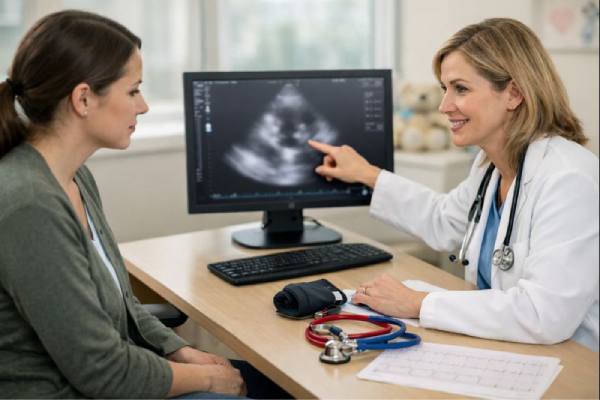
Fibroelastosis is an umbrella term for abnormal thickening of a tissue layer caused by extra fibrous (scar-like) and elastic fibers building up over time. In clinical medicine, it most often refers to endocardial fibroelastosis—a thickening of the heart’s inner lining that can make the heart stiff and weak, especially in fetuses, infants, and young children. Less commonly, people use “fibroelastosis” when discussing certain lung diseases, where fibroelastic tissue forms in the upper lungs and pleura. Because the heart form is the one most tied to urgent symptoms and early-life care, this article focuses mainly on endocardial fibroelastosis while briefly noting “look-alike” terms that can confuse searches. You will learn what fibroelastosis is, why it develops, which red flags matter most, how clinicians confirm the diagnosis, and what treatment and long-term management typically involve.
Table of Contents
- What fibroelastosis is and how it affects the body
- What causes fibroelastosis and who is at risk
- Symptoms and complications: what to watch for
- How fibroelastosis is diagnosed
- Treatment options and what to expect
- Management, prevention, and when to seek care
What fibroelastosis is and how it affects the body
In plain terms, fibroelastosis is a “thickening problem.” A normally thin lining or surface layer becomes abnormally thick because the body lays down extra collagen (fibrous tissue) and elastin (elastic fibers). That change can be a reaction to stress, inflammation, altered blood flow, infection, or a genetic pathway that pushes tissue toward scarring.
Endocardial fibroelastosis: the most common clinical meaning
When clinicians say “fibroelastosis” without qualifiers, they often mean endocardial fibroelastosis (EFE). The endocardium is the smooth inner lining of the heart chambers. In EFE, a dense, pale, elastic-rich layer forms beneath this lining, most often affecting the left ventricle. This layer can:
- Stiffen the ventricle, making it harder to fill between beats (a restrictive physiology).
- Reduce pumping efficiency, because a stiff, thickened inner layer interferes with normal wall motion.
- Distort valves or inflow/outflow pathways, contributing to valve leakage or obstruction in some cases.
- Worsen over time if the underlying trigger (pressure overload, flow disturbance, inflammation) continues.
EFE is not one single “germ-caused” disease. Instead, it is best understood as a pattern of injury and remodeling that can show up in different clinical settings. That framing helps patients and families make sense of why two people with “EFE” can have very different causes and outcomes.
Primary vs secondary EFE
Many teams use practical categories:
- Primary EFE: EFE without a major structural heart defect explaining it. This form is uncommon and may involve genetic factors, earlier-life injury, or metabolic disease in select cases.
- Secondary EFE: EFE that develops alongside a structural problem—especially left-sided obstructive lesions (for example, severe aortic stenosis or hypoplastic left heart spectrum). Here, abnormal flow and pressure conditions are thought to contribute to the fibroelastic layer.
Other “fibroelastosis” terms you may see online
You may also encounter pleuroparenchymal fibroelastosis (a lung condition) or pathology phrases like “fibroelastosis of the pleura.” These are real entities, but they are not the same as endocardial fibroelastosis and have different symptoms, tests, and treatments. If your symptoms are primarily breathing-related (chronic dry cough, progressive shortness of breath, weight loss), your clinician may be considering a lung diagnosis. If symptoms are heart-failure-like (poor feeding in an infant, swelling, rapid breathing, exercise intolerance), EFE is more likely the intended meaning.
What causes fibroelastosis and who is at risk
Because fibroelastosis is a remodeling pattern rather than a single cause, the best question is: what is driving the tissue to thicken? For endocardial fibroelastosis, clinicians usually think in a few major “cause buckets,” then tailor testing based on the person’s age and presentation.
1) Abnormal flow or pressure inside the heart
A strong association exists between EFE and conditions that alter flow patterns in the left heart. Examples include:
- severe congenital aortic stenosis
- hypoplastic left heart spectrum
- other left-sided obstructive lesions
When blood flow is abnormal (too turbulent, too slow in areas, or redirected), the inner lining of the heart experiences unusual mechanical stress. Over time, the endocardial layer can signal for fibrous and elastic deposition—essentially building a stiff “rind” that further impairs function. This is one reason EFE can be seen even before birth in some congenital heart conditions.
2) Inflammation and immune-mediated injury
In some fetal and neonatal cases, inflammatory pathways appear to damage the heart lining and conduction or muscle tissue. One well-described scenario involves maternal autoantibodies (often anti-SSA/Ro and anti-SSB/La) that cross the placenta. These antibodies are classically linked to congenital heart block, but in some cases they are also associated with fibroelastosis and myocardial injury. The key clinical point is that immune-mediated cases may evolve over weeks, and early recognition can change monitoring intensity and, in select situations, treatment strategy.
3) Infection or post-infectious remodeling
Historically, viral myocarditis (inflammation of heart muscle) has been explored as a trigger for fibroelastosis-like changes in some infants. The modern reality is that infection is an uncommon explanation in many settings, but it remains part of the differential diagnosis when a baby presents with sudden heart failure signs and there is a recent viral illness history.
4) Genetics, metabolic disease, and rare syndromes
Primary EFE can be associated with rare genetic pathways affecting heart development, elasticity, and repair. Some metabolic disorders can also affect the heart and create overlapping imaging findings. Clinicians consider these possibilities when:
- EFE occurs without a clear structural cause,
- more than one family member is affected,
- there are additional developmental or systemic findings.
5) Why “risk factors” look different here
For many health topics, risk factors are lifestyle-related. For EFE, risk factors are more often biologic context:
- being a fetus or infant with a left-sided obstructive congenital heart condition
- known maternal autoantibodies in pregnancy
- family history of early cardiomyopathy or unexplained infant heart failure
- prior fetal echo findings suggesting evolving left-heart dysfunction
The practical takeaway: EFE is usually a signpost pointing to an underlying driver—flow disturbance, immune-mediated injury, or a rarer genetic/metabolic explanation. Treatment is most effective when that driver is identified and addressed early.
Symptoms and complications: what to watch for
Symptoms depend on age, severity, and what else is happening in the heart. Some people have EFE noted on imaging as part of a broader congenital heart evaluation. Others present because the heart is already struggling. The most important concept is that fibroelastosis can cause stiffness and weakness, which leads to a predictable cluster of “low output” and “congestion” symptoms.
In fetuses and newborns
EFE may be suspected prenatally when fetal echocardiography shows poor left ventricular function, a bright thickened endocardial surface, or evolving chamber stiffness—often in the context of left-sided obstruction or immune-mediated disease. After birth, common warning signs include:
- rapid breathing, grunting, or persistent breathing effort
- poor feeding, sweating with feeds, or tiring quickly
- poor weight gain or failure to thrive
- bluish color around lips (especially with exertion like feeding)
- unusual sleepiness, decreased responsiveness, or cool extremities (low perfusion)
In infants and children
A child may present with symptoms that mimic other cardiomyopathies:
- fast breathing or shortness of breath with activity
- frequent respiratory infections or “wheezing” that does not behave like asthma
- abdominal swelling, enlarged liver, or poor appetite
- reduced exercise tolerance compared with peers
In adolescents and adults (uncommon but possible)
When fibroelastosis is discussed in adults, it is often in relation to a broader cardiomyopathy picture or a history of congenital heart disease. Symptoms can include:
- exertional shortness of breath
- leg swelling
- palpitations or fainting episodes (if rhythm problems coexist)
- chest discomfort or pressure-like fatigue during activity
Complications clinicians worry about most
Because EFE can progress or reflect an already stressed heart, teams watch closely for:
- Heart failure progression: Stiffness reduces filling; weakness reduces forward flow. Either can worsen rapidly in infants.
- Pulmonary hypertension: High pressures in lung vessels can develop secondary to left-heart congestion.
- Valve dysfunction: The ventricle’s shape and motion can worsen valve leakage, increasing volume overload.
- Arrhythmias: Some patients develop rhythm abnormalities, especially if there is myocardial scarring beyond the endocardium.
- Thromboembolism risk in severe dysfunction: When pumping is very weak, stagnant flow can raise clot risk in select situations.
- Need for advanced therapies: Mechanical circulatory support or heart transplant evaluation may become necessary if function cannot be stabilized.
A helpful “severity snapshot” used in real care
Clinicians often summarize risk using three practical lenses:
- how well the ventricle fills and pumps,
- whether there are associated structural lesions, and
- whether symptoms suggest the body is under-perfused or fluid-overloaded.
If breathing effort increases, feeding becomes difficult, swelling appears, or a child becomes unusually sleepy or gray/cool, that is not a “watch and wait” situation—it warrants urgent clinical assessment.
How fibroelastosis is diagnosed
Diagnosis typically starts with suspicion on imaging, then expands into a structured search for the cause and the functional impact. Because fibroelastosis is a tissue change, confirmation is partly visual (imaging) and partly functional (how the heart is performing).
1) Echocardiography: the core test
An echocardiogram is usually the first and most important test. Clinicians evaluate:
- Endocardial appearance: EFE can look like a bright, thickened inner lining—often described as “echogenic” endocardium.
- Ventricular function: How strongly the ventricle squeezes and relaxes.
- Diastolic function: Whether the ventricle fills easily or behaves stiffly.
- Chamber size and wall thickness: Some hearts dilate; others look restrictive.
- Valve function: Especially mitral and aortic valve anatomy and leakage severity.
- Outflow obstruction or flow abnormalities: Critical for determining if EFE is secondary to left-sided obstruction.
In fetal cases, a fetal echocardiogram also assesses the rhythm, signs of heart strain, and changes over time—because progression speed influences management decisions.
2) Electrocardiogram and rhythm monitoring
An ECG may show conduction delays, chamber enlargement patterns, or rhythm issues. If palpitations, fainting, or intermittent symptoms are present, clinicians may use Holter monitoring or longer-term rhythm monitoring to capture episodic arrhythmias.
3) Cardiac MRI: structure and tissue characterization
In some children and adults, cardiac MRI can help clarify:
- fibrosis distribution
- ventricular volumes and function with high precision
- associated congenital anatomy
- whether there is broader myocardial scarring beyond the endocardium
MRI can also guide discussions about prognosis and suitability for certain surgical strategies in congenital heart disease contexts.
4) Laboratory testing: targeted, not automatic
Labs are chosen based on clinical context rather than ordered “because EFE exists.” Examples include:
- inflammatory markers when myocarditis is suspected
- viral testing in select acute presentations
- metabolic screening when there are systemic clues
- genetic testing when primary EFE is suspected, there is a family history, or the pattern suggests an inherited cardiomyopathy
- maternal antibody testing in fetal/newborn cases when immune-mediated injury is possible
5) Tissue diagnosis: uncommon but definitive
A biopsy can show fibroelastic thickening, but it is not routinely pursued because it is invasive and often unnecessary when imaging and clinical context are convincing. In some surgical cases (for example, when resection is performed in congenital heart disease), tissue confirmation becomes available as part of treatment rather than as a purely diagnostic step.
A good diagnostic endpoint is not just “EFE present,” but a clear statement of:
- primary vs secondary EFE likelihood,
- the structural and functional drivers,
- severity and trajectory (stable, improving, progressing),
- and the next decision point that will change management.
Treatment options and what to expect
Treatment for fibroelastosis is really treatment for (1) heart function and (2) the underlying driver. The care plan is often layered: stabilize the patient today, correct the mechanical problem if one exists, and reduce ongoing injury so the heart can recover as much as possible.
1) Medical therapy for heart failure symptoms
When EFE causes symptoms, clinicians often use standard heart failure tools, tailored to age and physiology:
- Diuretics to reduce lung congestion and swelling.
- Afterload reduction (medicines that lower the resistance the heart pumps against) when appropriate.
- Medications to support contractility in more severe cases, especially during acute decompensation.
- Nutritional support in infants (high-calorie feeds, feeding strategies) because feeding can be equivalent to “exercise” for a struggling heart.
The goal is to relieve congestion, improve perfusion, and buy time for the heart to remodel favorably when possible.
2) Treating the structural driver
If EFE is secondary to a left-sided obstruction or complex congenital heart disease, the most impactful therapy may be mechanical:
- catheter-based interventions (in selected anatomies)
- surgical repair or staged palliation strategies
- procedures that address outflow obstruction, valve dysfunction, or chamber balance
In congenital contexts, EFE can influence whether a heart is suitable for a two-ventricle pathway versus a single-ventricle pathway. Those decisions are highly individualized and typically made at specialized pediatric cardiac centers.
3) Endocardial fibroelastosis resection in selected congenital cases
In some centers, surgical resection/peeling of EFE tissue is considered in carefully selected patients—particularly when EFE contributes to restrictive physiology and compromises left ventricular performance in borderline left-heart conditions. This is not a universal approach, and outcomes depend on anatomy, timing, and whether the ventricle can grow and function after intervention.
4) Immune-mediated or inflammatory scenarios
When EFE is linked to immune-mediated injury (especially in fetal/neonatal settings), management may include specialist-guided anti-inflammatory or immunomodulatory strategies in select cases. The clinical logic is to limit ongoing inflammatory injury and preserve myocardial function. Decisions here are nuanced because therapies must balance potential benefit with fetal/newborn and maternal safety.
5) Advanced therapies when the heart cannot compensate
If severe dysfunction persists despite optimized medical and surgical care, clinicians may discuss:
- mechanical circulatory support as a bridge (in appropriate centers)
- heart transplant evaluation when recovery is unlikely and quality of life is threatened
These conversations can feel sudden, but they often reflect proactive planning—evaluating options before an emergency makes choices narrower.
What to expect over time
Some patients improve substantially once the driver is corrected and heart failure is controlled. Others have a chronic course requiring long-term cardiology follow-up, repeat imaging, medication adjustments with growth, and careful planning around illnesses, anesthesia, or sports participation. The most useful question to ask your cardiology team is: “Is the heart primarily stiff, primarily weak, or both?” That answer often predicts which therapies are emphasized and what monitoring will matter most.
Management, prevention, and when to seek care
Living with fibroelastosis—especially endocardial fibroelastosis—usually means living with a plan. The best outcomes come from consistent monitoring, early response to changes, and clear guidance for everyday life.
Ongoing monitoring that actually matters
Most care plans revolve around a small set of repeatable checkpoints:
- symptom trend (breathing, feeding/exercise tolerance, swelling, sleepiness)
- growth and nutrition in children
- echocardiogram intervals based on stability (more frequent during change, less frequent when stable)
- rhythm monitoring if palpitations, fainting, or known arrhythmia risk exists
- medication reviews as weight and kidney function change (especially in infants)
Families often find it helpful to keep a simple “baseline note” on what normal looks like—typical breathing rate when calm, typical feeding time, typical activity tolerance—so changes stand out early.
Everyday management tips for heart-focused fibroelastosis
These are common practical supports, always individualized by a clinician:
- prioritize routine vaccinations and infection prevention, because respiratory illnesses can destabilize heart failure
- follow medication schedules precisely and track missed doses
- monitor sodium intake if advised (more common in older children/adults than infants)
- ask about safe activity ranges rather than self-restricting excessively; many patients can be active with appropriate boundaries
- coordinate dental and surgical care with cardiology, especially if there is complex congenital heart disease
What “prevention” can and cannot mean
You generally cannot prevent EFE in the way you can prevent lifestyle-driven disease. Prevention more often means:
- early detection of congenital heart obstruction and timely intervention
- targeted prenatal monitoring when maternal antibodies are known
- early referral to specialty care when a child shows persistent heart failure signs
- family counseling and genetic evaluation when primary EFE is suspected
When to seek urgent care
Seek urgent evaluation if any of the following appear, especially in infants and young children:
- fast or labored breathing at rest, grunting, or flaring nostrils
- blue/gray color, cool extremities, or marked sleepiness
- poor feeding, vomiting with feeds, sweating during feeds, or sudden drop in intake
- new or worsening swelling of legs, belly, or around eyes
- fainting, severe dizziness, or sustained palpitations
- fever with a noticeable decline in breathing or energy in a child with known heart dysfunction
Planning questions that reduce uncertainty
At follow-ups, consider asking:
- What is the current best explanation for the fibroelastosis in this case?
- Is the heart primarily stiff, weak, or both—and is it changing?
- What home signs should trigger a same-day call vs an emergency visit?
- What is the realistic goal: recovery, long-term stability on medication, or preparation for advanced therapies?
A well-structured plan turns fibroelastosis from a frightening label into a manageable roadmap: identify the driver, protect heart function, monitor intelligently, and act early when the trajectory shifts.
References
- Endocardial Fibroelastosis: A Comprehensive Review – PubMed 2024 (Review)
- Endocardial Fibrosis Elastosis: Long-Standing Mystery and Promising Therapy – PMC 2025 (Review)
- Abnormal Flow Conditions Promote Endocardial Fibroelastosis Via Endothelial-to-Mesenchymal Transition, Which Is Responsive to Losartan Treatment – PubMed 2021 (Translational Study)
- Endocardial Fibroelastosis – StatPearls – NCBI Bookshelf 2023 (Clinical Summary)
Disclaimer
This article is for general educational purposes and does not provide medical advice, diagnosis, or treatment. Fibroelastosis—especially endocardial fibroelastosis—can range from an imaging finding to a serious cause of heart failure, and evaluation and treatment must be individualized by qualified clinicians (often pediatric cardiology and congenital heart specialists). If you or your child has trouble breathing, poor feeding, fainting, bluish color, worsening swelling, or sudden decline in energy, seek urgent medical care.
If you found this article helpful, please share it on Facebook, X (formerly Twitter), or any platform you prefer, and follow us on social media. Your support through sharing helps our team continue producing clear, trustworthy health content.