Fig, or Ficus carica, is one of the oldest cultivated fruits in the world, yet it still feels modern in the way it bridges food and herbal tradition. It is sweet, soft, and mineral-rich, but also far more complex than a simple dessert fruit. The fruit provides fiber, natural sugars, potassium, calcium, and a broad mix of polyphenols. The leaves and latex have their own traditional uses, though they deserve much more caution than the fruit itself. That contrast matters, because “fig” can mean a fresh fruit, a dried fruit, a leaf tea, or a milky sap with skin-irritating potential.
Most people are interested in fig for digestion, bowel regularity, cardiometabolic support, and antioxidant value. Those are the areas where the plant makes the most sense. Fresh and dried figs are functional foods first, while leaf tea has a smaller but growing research base. The strongest practical question is not whether fig is “medicinal” in an abstract way, but which part is being used, in what form, and with what expectation. Used that way, fig becomes much easier to understand and much safer to use well.
Key Facts
- Fresh and dried figs can support bowel regularity because they provide fiber, sorbitol-like sugars, and a useful fruit matrix.
- Fig fruit also supplies potassium and polyphenols that may fit well in a heart-friendly diet.
- A practical food serving is about 2 to 3 fresh figs or 2 to 4 dried figs at a time, depending on size and sugar tolerance.
- Fig leaf tea and fig latex are not the same as eating the fruit, and latex can irritate skin and worsen sun sensitivity.
- People with fig allergy, latex-fruit syndrome, kidney stone concerns, or poorly controlled blood sugar should use extra caution.
Table of Contents
- What Is Fig and Why It Matters
- Key Compounds in Fruit Leaf and Latex
- Does Fig Help Digestion
- Fig for Heart Blood Sugar and Skin
- How to Use Fresh Dried and Leaf Forms
- How Much Fig Per Day
- Side Effects Interactions and Who Should Avoid It
- What the Evidence Actually Says
What Is Fig and Why It Matters
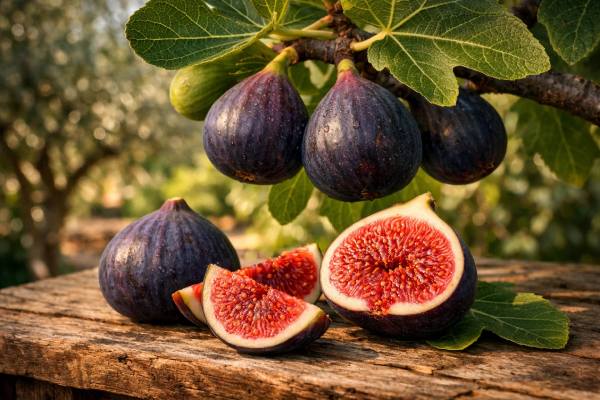
Fig is the fruit of Ficus carica, a member of the mulberry family and one of the oldest fruit trees cultivated around the Mediterranean and western Asia. Botanically, what people call the fruit is actually a fleshy enclosed inflorescence called a syconium, with many tiny flowers and seed-like structures inside. That detail is interesting, but its practical meaning is even more useful: fig is a whole plant food with distinct edible, medicinal, and irritating parts.
The part most people know is the fruit itself. Fresh figs are soft, highly perishable, and naturally sweet, while dried figs are denser, chewier, and much more concentrated in sugar, minerals, and calories per gram. The leaves have a long record of folk use and are now being studied for tea and extract applications. The latex, the white milky sap released from stems, leaves, and immature fruit, is a different matter altogether. It is chemically active and can irritate skin, especially when combined with sun exposure.
That separation between fruit, leaf, and latex is the single most important thing to understand before using fig medicinally. A person eating fresh figs for fiber is doing something very different from a person drinking fig leaf tea or rubbing fig latex on a wart. Articles that collapse all of those uses into one health claim usually create more confusion than clarity.
From a nutrition standpoint, fig is best understood as a fruit with added functional value. It provides dietary fiber, potassium, calcium, magnesium, small amounts of iron, and a range of plant compounds that cluster more densely in darker-skinned fruit and in the peel. Dried figs are especially valued for convenience and mineral density, though their sugar load is also more concentrated.
Culturally, fig sits at the meeting point of food and medicine. It has appeared in traditional systems as a digestive aid, mild laxative, soothing food during illness, and topical household remedy. That layered history explains why fig still shows up in both the kitchen and the herbal aisle. It also explains why modern readers should ask a very simple question before using it: am I treating this as food, as tea, or as a plant remedy?
If you place fig in a modern health context, it behaves less like a strong medicinal herb and more like a therapeutic food. In that sense, it belongs in the same broader conversation as date palm as a traditional energy-rich fruit, though fig usually stands out more for fiber and laxation than for sheer sweetness alone.
Key Compounds in Fruit Leaf and Latex
Fig chemistry makes sense only when the plant is divided into parts. The fruit, leaves, and latex do not share the same profile, and that is exactly why they are used differently. Most of fig’s food-based health value comes from the fruit, while much of its stronger biological activity and irritation potential comes from the leaves and latex.
In the fruit, the main nutritional features are fiber, natural sugars, organic acids, and minerals such as potassium and calcium. The fruit also contains polyphenols, especially phenolic acids, flavonoids, anthocyanins in darker varieties, and smaller amounts of carotenoids. These compounds help explain why figs are often described as antioxidant-rich, especially when the peel is included and when the fruit is dried carefully. Darker figs usually contain more phenolic material than pale varieties, and the peel often contributes more antioxidant density than the pulp.
The seeds also matter more than people think. Though tiny, they contribute texture, some fiber, and part of the fruit’s polyphenol load. That makes fig closer to other seeded fruit systems where the whole matrix matters, much like grape seed polyphenols and related compounds help explain why whole grape products behave differently from sweetened juice alone.
The leaves have their own profile. Fig leaves contain phenylpropanoids such as caffeoylmalic acid, rutin, and other flavonoids, which are often highlighted in leaf-tea research. These compounds likely help explain why fig leaf tea has drawn attention for allergy-related and metabolic studies. The leaves are not nutritionally interchangeable with the fruit, and that is why fruit benefits should not be used to justify leaf dosing.
The latex is chemically distinct again. It contains proteolytic enzymes such as ficin, along with furocoumarin-related compounds and other substances that can irritate skin or become phototoxic under sun exposure. This is one of the clearest examples in plant medicine of why “natural” is not the same as gentle. Fig latex is biologically active in a way that deserves caution, not casual experimentation.
A practical way to think about fig compounds is this:
- Fruit gives you fiber, sugars, minerals, and food-grade polyphenols.
- Leaves give you tea-oriented flavonoids and phenylpropanoids.
- Latex gives you enzymes and irritating compounds with much narrower safety margins.
That layered chemistry also explains why fig has so many different reputations. A dried fig eaten with breakfast behaves like a functional fruit. A leaf infusion behaves more like a mild botanical tea. Fresh latex on the skin behaves more like a reactive plant fluid. Understanding those differences is what turns fig from a vague “healthy fruit” into a plant that can be used intelligently.
Does Fig Help Digestion
Digestion is where fig has its strongest practical reputation, and for most people it is the most believable reason to use it. The best-supported digestive role is bowel regularity. Fresh figs contain fiber and water, while dried figs concentrate fiber, sugars, and fruit solids in a way that can make them especially useful for people who struggle with hard stools or sluggish transit.
Part of this effect comes from the simple mechanics of the fruit. Fiber adds bulk, helps hold water in stool, and supports easier passage through the bowel. Figs also contain naturally occurring sugars and sugar alcohol-like compounds that can gently pull water into the gut, which helps explain why they have been used for centuries as a mild laxative food. This is not the same as a harsh stimulant laxative effect. It is better understood as a softer food-based regularizing effect.
Human evidence supports that general pattern. Fig paste has been studied in adults with functional constipation and was associated with improvements in colon transit time, stool form, and abdominal discomfort. That matters because it shows the traditional constipation reputation is not based only on folklore. At the same time, it is important not to stretch the conclusion too far. Fig helps best as part of a bowel-supportive diet and routine, not as a guaranteed cure for every cause of constipation.
Dried figs are often more effective than fresh ones for this purpose simply because they are more concentrated. A small serving can deliver more fiber and more osmotic pull than the same weight of fresh fruit. Still, more is not always better. Too many dried figs can lead to bloating, gas, or loose stools, especially in someone who is not used to higher fruit-fiber intake.
This is also where comparison matters. If your main goal is strong fiber-driven regularity, psyllium for digestive support is usually much more potent and predictable than a few servings of fruit. Fig works best as a gentle and food-like option rather than as a fiber supplement replacement.
Digestive use of fig can also include supportive rather than corrective roles:
- Adding softness and variety to a low-fiber diet.
- Helping make breakfast or snacks more bowel-friendly.
- Providing a more tolerable option for people who dislike fiber powders.
- Working as part of a broader constipation strategy that includes fluids and movement.
Leaf use is different. Some folk traditions use leaf decoctions or teas for digestive complaints, but fruit-based digestive use is much easier to defend than leaf-based internal use. The fruit has a clearer food tradition, a more predictable safety profile, and better relevance to constipation outcomes.
The best digestive summary is therefore simple: fig helps most as a gentle constipation-supportive food. It is most useful when eaten consistently and moderately, not when taken in extreme amounts after symptoms have already become severe.
Fig for Heart Blood Sugar and Skin
Beyond digestion, fig is often discussed for cardiometabolic health and skin-related use. These areas deserve a balanced reading. The fruit has a strong nutritional logic for heart-friendly eating, the leaves show some early metabolic and dermatologic promise, and the latex has topical activity but also much more risk.
For heart and vascular health, the fruit makes the most sense as part of a whole dietary pattern. Figs provide potassium, fiber, and polyphenols, all of which fit well within a cardioprotective eating style. Dried figs can also contribute calcium and magnesium, though their sugar density means portion size still matters. No one should think of fig as a cholesterol drug or blood-pressure treatment. Its likely benefit is quieter: replacing less useful sweets, increasing plant-food diversity, and adding fiber and minerals to meals.
Blood sugar is more nuanced. Fresh figs are generally easier to fit into a balanced diet than dried figs, because dried fruit concentrates sugars substantially. That does not make dried figs “bad,” but it does mean they work best in measured portions. Leaf preparations are where the stronger blood-sugar conversation begins. Traditional use and some early research suggest fig leaf decoctions and extracts may influence glycemic handling, but those findings are still too preliminary to support confident medical claims. The most grounded advice is to see fig fruit as compatible with a healthy diet in moderate amounts, while treating leaf-based glucose claims as exploratory.
Skin use is where fig becomes especially mixed. On the one hand, fig leaf tea has shown promise in mild atopic dermatitis research, which suggests the leaves may have useful anti-allergy or skin-calming effects when used in standardized ways. On the other hand, fig latex can irritate skin and become phototoxic with sun exposure. That means “fig for skin” is not one single idea. A tea, a carefully made topical product, and raw latex are very different things.
A realistic split looks like this:
- Fruit may support skin indirectly through better nutrition and polyphenol intake.
- Leaf tea may have early promise in mild atopic dermatitis.
- Latex should be treated with caution because it can burn, irritate, or sensitize skin.
That last point is especially important because the internet often romanticizes home wart remedies using fig latex. The sap is active, but activity is not the same as safety. In modern self-care, a familiar soothing option such as aloe vera for topical skin care is far easier to justify than improvised fig-latex use.
The overall picture is measured. Fig fruit fits well in heart-friendly eating and modest metabolic support. Fig leaves show interesting early signals. Fig latex is a reminder that plant activity always comes with context. Used with that distinction in mind, fig can be genuinely useful without being overstated.
How to Use Fresh Dried and Leaf Forms
Fig can be used in several forms, but the most sensible route depends on the goal. Fresh fruit is best for hydration, gentle fiber, and moderate sweetness. Dried fruit is best for convenience and stronger laxation support. Leaf tea belongs in a more experimental category, while latex is better treated as a caution topic than as a routine home remedy.
Fresh figs work well when you want a functional fruit that still feels like food rather than treatment. They can be eaten alone, paired with yogurt, chopped into oats, or added to salads and grain dishes. Because they are soft and perishable, they tend to be used quickly and seasonally. This makes them better for short fresh-food windows than for year-round consistency.
Dried figs are more practical for daily use. They store well, travel easily, and are often the easiest form to use for constipation support. They also pair well with nuts, cheese, or breakfast foods. Because they are concentrated, they behave more like a deliberate portion than a casual fruit snack. This is one reason fig sits in a similar practical category to cranberry and other fruits often used in dried or prepared forms, though fig is much sweeter and less acidic.
Leaf tea needs more care. The human trial data available do not justify casual high-dose use, but they do suggest that prepared leaf tea can be tolerated and may have niche benefits. If someone chooses this form, it is better to use a commercial or well-identified leaf product and keep the dose modest rather than improvising from unknown leaves. Drying, cultivar choice, and furocoumarin content all matter more here than they do with the fruit.
Latex is the least practical form for general use. The old folk habit of applying raw fig latex to skin lesions persists in some communities, but it is easy to overdo and difficult to control. From a modern perspective, latex is better approached as a compound-rich plant fluid with irritation potential rather than as a simple home remedy.
A practical use hierarchy looks like this:
- Fresh fruit for general food use.
- Dried fruit for convenience and bowel support.
- Leaf tea only in cautious, defined circumstances.
- Latex avoided unless specifically guided and fully understood.
This hierarchy matters because it keeps fig in its strongest lane. The fruit is the most useful, the easiest to dose, and the safest for most people. The leaves may be promising, but they still need more standardization. The latex is where fig stops behaving like a friendly fruit and starts behaving like a reactive plant material.
How Much Fig Per Day
Because fig is both a food and, in some forms, a folk remedy, dosage depends entirely on the part being used. The fruit has the clearest and safest range. The leaves have a narrower, more experimental space. The latex does not belong in routine self-dosing at all.
For fresh figs, a practical serving is usually about 2 to 3 medium fruits at a time. This gives enough fiber and polyphenol-rich skin to matter without pushing sugar too high for most people. Larger servings can still fit into a healthy diet, but they are no longer doing anything unique that a moderate serving cannot do.
For dried figs, 2 to 4 pieces is a realistic daily range for most adults, depending on size. This amount often works well for bowel support, especially when taken with water and used consistently rather than all at once. More than that can be reasonable in athletic or high-calorie diets, but for digestion-focused use it may simply raise the risk of bloating or loose stools.
For juice, puree, or fig paste, the dose becomes less obvious because sugar concentration and processing vary so much. A moderate serving, roughly half a cup of unsweetened puree or a small portion of fig paste, makes more sense than treating these as unlimited health foods.
Leaf tea is a separate category. In the human atopic dermatitis trial, participants consumed 500 mL daily of a prepared fig leaf tea for 8 weeks. That does not mean every homemade leaf infusion should aim for that amount. It simply shows that this level was used in a structured product. For home use, a lower and simpler approach is wiser unless the product is standardized.
A practical dose guide looks like this:
- Fresh fruit: 2 to 3 figs per serving.
- Dried fruit: 2 to 4 figs per serving.
- Unsweetened puree or paste: small measured portions.
- Leaf tea: modest use only, following product directions when available.
Timing also matters. Figs are often most useful:
- At breakfast, when they help increase fiber early in the day.
- Between meals, as a structured snack.
- In the evening, for people using dried figs to support bowel regularity overnight into the next morning.
The main mistakes are easy to avoid. People often assume dried figs can be eaten like fresh fruit in unlimited amounts, or that leaf tea and fruit are interchangeable. Neither is true. Dried fruit is denser, and leaf preparations are more pharmacologically active than the fruit itself.
The best dosing summary is this: treat fruit as food, dried fruit as concentrated food, and leaf tea as a cautious botanical. Each one belongs in a different lane.
Side Effects Interactions and Who Should Avoid It
Fig fruit is generally well tolerated, but that does not mean every part of the plant is equally safe. The fruit, leaves, and latex each create different safety questions, and the most common mistakes come from blurring them together.
With the fruit, the main side effects are digestive. Too many fresh or dried figs can cause bloating, gas, loose stools, or cramping, especially in people who are not used to higher-fiber or higher-sorbitol fruit intake. Dried figs can also contribute significant sugar if portions are large, which matters for people with diabetes or strong post-meal glucose swings.
Allergy is less common but still relevant. Fig can trigger reactions in some people, especially those with latex-fruit syndrome or cross-reactivity involving birch pollen and related plant allergens. Symptoms can range from oral itching to more significant allergic responses.
The leaves and latex deserve more caution. Fig latex is the plant’s most irritating form for home users. It contains proteolytic enzymes and photoactive compounds that can cause dermatitis, blistering, and post-inflammatory pigmentation after sun exposure. Handling leaves, stems, or unripe fruit while gardening can expose people to the same sap. Gloves and sun protection matter here much more than most people expect.
People who should be particularly careful include:
- Anyone with a fig or latex allergy.
- People with sensitive digestion who are new to dried fruit.
- Those with diabetes who need tighter sugar control.
- Individuals with a history of kidney stones who are monitoring oxalate exposure.
- Pregnant or breastfeeding people considering leaf or latex remedies.
- Children, especially with leaf or latex preparations.
Interaction data are not extensive, but a few principles are sensible. Dried figs may affect blood sugar management if eaten in large amounts alongside glucose-lowering therapy. High-fiber fruit can also modestly affect the timing of absorption of some medications when taken at the same moment. That is not usually dramatic, but spacing fruit-heavy fiber intake and medication is a reasonable habit in people who take multiple drugs.
Leaf tea and extracts deserve more caution than fruit because the bioactive compounds are more concentrated and less familiar. The same is true of latex, which should not be used casually around the eyes, mucous membranes, or sun-exposed skin.
A practical safety rule helps: the more fig use resembles ordinary fruit eating, the safer it usually is. The more it resembles plant-sap therapy or concentrated leaf use, the more caution is needed. That rule alone prevents many of the most common mistakes.
What the Evidence Actually Says
Fig has a better evidence base than many traditional fruits, but that evidence is still uneven across plant parts. The fruit itself is supported mainly by nutritional logic, composition studies, and a small number of human trials for constipation. The leaves have a smaller but interesting research track, including an early randomized trial in mild atopic dermatitis. The latex is biologically active, but most of the stronger claims around it still come from laboratory work, case reports, or traditional practice rather than clinical treatment standards.
What the evidence supports fairly well is fig as a functional food. Reviews consistently show that Ficus carica contains fiber, minerals, and polyphenols in both fresh and dried forms. That makes it entirely reasonable to present fig as a digestive-supportive and antioxidant-bearing fruit. The constipation evidence is especially useful because it moves beyond general nutrition and into a real clinical outcome, even if the study base is still small.
What the evidence supports moderately is fig leaf tea in narrow settings. The atopic dermatitis trial suggests that a standardized fig leaf tea may be both tolerable and potentially useful in mild disease. That is promising, but it is not broad enough to turn fig leaf tea into a general skin remedy or an all-purpose anti-inflammatory herb.
What the evidence supports least is the broader folk expansion of fig into cure-all territory. Claims about strong anticancer, antimicrobial, antidiabetic, or wart-removing effects are usually based on preclinical models, isolated compounds, or traditional reports. Those findings matter scientifically, but they do not create a strong consumer-level evidence base.
The clearest strength-and-limit summary is this:
- Fruit use is the most credible and most practical.
- Constipation support has the strongest direct human evidence.
- Leaf tea shows emerging but still limited clinical promise.
- Latex is active, but not well suited to casual home use.
- Most dramatic disease claims remain ahead of the evidence.
That makes fig a very good example of a plant that is stronger as a therapeutic food than as a therapeutic extract. It does not need inflated claims to be useful. A fruit that improves fiber intake, supports bowel regularity, adds potassium and polyphenols, and may offer some leaf-based niche benefits is already worth attention.
Used in that way, fig becomes easier to place correctly. It is neither “just a sweet fruit” nor a proven multipurpose medicine. It sits in the middle: a historically important food plant with some real medicinal relevance, strongest when used as fruit, and most reliable when expectations stay grounded.
References
- Physicochemistry, Nutritional, and Therapeutic Potential of Ficus carica – A Promising Nutraceutical 2024 (Review)
- Industrial Application and Health Prospective of Fig (Ficus carica) By-Products 2023 (Review)
- Efficacy and Safety of Fig (Ficus carica L.) Leaf Tea in Adults with Mild Atopic Dermatitis: A Double-Blind, Randomized, Placebo-Controlled Preliminary Trial 2022 (RCT)
- Fig Tree-Induced Phytophotodermatitis: A Case Report on the Perils of a Hobby 2023
- Randomized, double-blind, placebo-controlled trial of Ficus carica paste for the management of functional constipation 2016 (RCT)
Disclaimer
This article is for educational purposes only and does not replace medical advice, diagnosis, or treatment. Fig fruit is generally used as a food, but fig leaves and latex are more pharmacologically active and may not be appropriate for everyone. Seek professional guidance before using fig leaf products or raw latex if you are pregnant, breastfeeding, treating a chronic condition, taking regular medication, or have a known plant or latex allergy.
If you found this article helpful, please share it on Facebook, X, or your preferred platform.