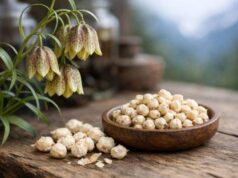
Fish mint, Houttuynia cordata, is one of the more unusual medicinal plants in common use today. It is eaten as a pungent leafy vegetable in parts of East and Southeast Asia, yet it also has a long traditional role in herbal medicine for inflammatory conditions, respiratory complaints, skin irritation, and urinary discomfort. Its unmistakable fishy aroma is part of its identity, and so is its chemistry. The plant contains volatile compounds, flavonoids, phenolic acids, and polysaccharides that have made it a frequent subject of modern laboratory research.
What makes fish mint especially interesting is the gap between tradition and evidence. It has a broad reputation for immune, antimicrobial, and detoxifying effects, but the strongest modern support still comes mainly from cell studies, animal models, and a small number of formulation-specific human trials. That does not make it unhelpful. It simply means the herb is best approached with precision. Fish mint may be valuable as a food, tea, decoction, or carefully formulated topical or mucosal product, but it should not be treated as a proven cure-all. A practical guide needs to explain both its promise and its limits.
Quick Summary
- Fish mint may offer anti-inflammatory, antimicrobial, and mucosal-supportive effects, but most strong claims still rely on preclinical research.
- Its best-known active groups include volatile oils, quercitrin, hyperoside, quercetin, chlorogenic acid, and polysaccharides.
- No standardized human dose exists, but traditional decoction use often falls around 15 to 30 g dried aerial parts daily.
- Concentrated extracts, fermented liquids, and injectable preparations are not equivalent to food use or mild tea.
- Pregnant or breastfeeding people, children, and anyone with liver, kidney, or allergy concerns should avoid self-prescribing strong forms.
Table of Contents
- What fish mint is and contains
- Does fish mint help inflammation
- Fish mint for lungs skin and urinary comfort
- How to use fish mint
- How much fish mint per day
- Side effects interactions and who should avoid it
- What the evidence actually says
What fish mint is and contains
Fish mint, Houttuynia cordata, is a perennial herb native to moist parts of East and Southeast Asia. Despite its common English name, it is not a true mint. It does not belong to the mint family at all. Botanically, it sits in the Saururaceae family, which immediately tells you that its flavor profile, chemistry, and medicinal tradition are different from herbs such as peppermint or spearmint. The “mint” part of its name reflects the way people use it as a fresh aromatic herb, not its true plant lineage.
The plant is widely known by regional names such as yu xing cao and dokudami, and it has a dual identity as both food and medicine. In some cuisines, the fresh leaves are eaten raw with salads, noodles, or grilled dishes. In herbal systems, the aerial parts are used to clear heat, support the lungs, ease swelling, and help with skin and urinary complaints. That food-medicine overlap is one of the reasons fish mint continues to draw so much attention.
Its chemistry helps explain that interest. Fish mint contains several groups of biologically active compounds:
- Volatile constituents, including compounds related to its distinctive odor, such as decanoyl acetaldehyde and its transformation product 2-undecanone
- Flavonoids, including quercitrin, hyperoside, rutin, and quercetin derivatives
- Phenolic acids, such as chlorogenic acid and related antioxidant compounds
- Polysaccharides, which are often discussed in relation to immune and barrier effects
- Alkaloids and aristolactam-related constituents, which are part of why safety questions remain important
- Fatty acids and minor phytochemicals, which likely add to the plant’s broader biological profile
From a practical perspective, the most important active groups are the volatile oils and the flavonoids. The volatile fraction contributes to the plant’s pungent smell and much of its antimicrobial and topical interest. The flavonoids and phenolic acids are more relevant to antioxidant, anti-inflammatory, and vascular or tissue-protective discussions. Polysaccharides have attracted attention because they may influence immune signaling and mucosal defense, though this work is still mostly preclinical.
Fish mint also changes with preparation. Fresh leaves smell stronger and may behave differently from dried herb. Heating can alter the volatile profile. Fermentation changes the chemical balance again. That is why a fresh salad herb, a dried decoction, a fermented liquid, and a standardized extract should never be treated as interchangeable.
A useful comparison is with cilantro as a strong-flavored culinary herb. Both can divide opinion at the table, both are used fresh, and both cross the line between food and traditional wellness use. Fish mint, however, is more pharmacologically ambitious and much less familiar to most Western readers.
The key point is this: fish mint is chemically rich, culturally important, and distinct from more familiar kitchen herbs. But its wide traditional range of use does not mean every modern claim is equally proven. Understanding what it contains is the first step toward using it intelligently.
Does fish mint help inflammation
Inflammation is the area where fish mint has the strongest overall plausibility. Traditional use points in that direction, and modern laboratory work supports it repeatedly. Extracts, flavonoids, volatile fractions, and isolated derivatives of Houttuynia cordata have shown anti-inflammatory effects in cell studies and animal models involving the lungs, skin, oral tissues, bowel, and immune signaling pathways. That sounds impressive, and scientifically it is. But the real question is whether those results translate into meaningful benefit for human use.
The cautious answer is yes, to a degree, but not as broadly or as confidently as marketing often suggests.
Fish mint appears most promising as an herb that may help reduce inflammatory signaling rather than as a direct disease-specific treatment. In laboratory settings, its extracts have been linked with reduced expression of inflammatory mediators such as TNF-alpha, IL-1 beta, IL-6, COX-2, and nitric oxide-related pathways. These are not small findings, because they give the plant a coherent mechanistic story. It is not just “traditional.” It is biologically active in ways researchers can measure.
That said, inflammation is a broad word. It covers everything from a mild sore throat to autoimmune disease to metabolic dysfunction. Fish mint should not be presented as though one herb can solve that whole spectrum. A more realistic interpretation is that it may have value in conditions where low-grade or localized inflammation is part of the picture, especially when used as a supportive herb rather than a primary therapy.
Potential benefit areas include:
- mild inflammatory irritation of the respiratory tract,
- topical redness or swelling,
- oral and mucosal irritation,
- low-grade digestive inflammation,
- and supportive use in traditional “heat” patterns.
This is also where fish mint’s reputation became amplified during viral outbreaks. Interest in the herb rose because of its reported antiviral and immune-related actions, especially in relation to coronaviruses and influenza models. The problem is that much of this work comes from in vitro and animal data. A compound that reduces viral replication in a lab dish is scientifically interesting, but it does not automatically become an evidence-based antiviral treatment for people.
That is why it helps to compare fish mint with herbs that also attract inflammation-focused attention, such as ginger for active compounds and inflammation support. Ginger has a broader and more mature human evidence base for everyday uses such as nausea and pain. Fish mint has compelling mechanisms, but less direct clinical confirmation.
So does fish mint help inflammation? Probably yes, especially at the level of supportive herbal action. But it is best used with measured expectations. It may assist the body’s response to inflammatory stress. It should not be framed as a proven stand-alone treatment for infection, autoimmune disease, or chronic inflammatory illness. That distinction keeps the herb useful and credible at the same time.
Fish mint for lungs skin and urinary comfort
If you look at how fish mint is traditionally used, three body areas show up repeatedly: the lungs, the skin, and the urinary tract. That pattern is one of the most practical ways to understand the herb. It is less a general tonic and more a targeted “heat-clearing” plant in traditional systems, especially where irritation, dampness, mild infection, or inflammatory swelling are involved.
For the lungs, fish mint has long been associated with cough, thick phlegm, lung heat, and even more serious respiratory conditions in classical East Asian practice. Modern research partly supports that interest. The herb has shown anti-inflammatory, antimicrobial, and immune-modulating effects in respiratory models, and some compounds appear to influence viral or bacterial activity in the laboratory. This does not prove that fish mint tea treats pneumonia or viral bronchitis in humans. It does suggest why the plant has persisted in respiratory traditions for centuries. In everyday terms, fish mint may be more credible as a supportive herb for irritated airways than as a self-treatment for serious infection.
Skin use is another notable area. Poultices, washes, and topical preparations have been used for boils, abscess-like swelling, heat rashes, itching, and inflammatory skin discomfort. Recent cosmetic and dermatologic interest has focused on its antimicrobial and anti-inflammatory potential, especially for acne-prone or reactive skin. Again, the evidence is encouraging but still largely early-stage. The herb makes more sense as a topical supportive ingredient than as a primary dermatologic therapy.
Urinary comfort is a quieter but important traditional use. Fish mint has been used where heat, burning, or inflammatory discomfort affects urination. Some traditional systems also describe it as mildly diuretic. This is a classic place where herbal language and modern language do not map perfectly. A herb that “promotes urination and clears heat” may not show up in modern medicine as a proven treatment for urinary infection. Fish mint may help some people feel more comfortable, but it should not delay assessment of fever, blood in the urine, flank pain, or recurrent urinary symptoms.
Oral and mucosal use sits between these categories. Fish mint has drawn attention in oral care, eye-drop formulations, and mucosal barrier research. That fits its broader profile as a plant that may calm irritated surfaces and influence microbial balance.
A practical summary of realistic uses looks like this:
- Lungs: supportive use for irritated, inflamed upper airways
- Skin: washes, compresses, or formulation-based topical support
- Urinary comfort: traditional short-term use for heat-type irritation
- Oral and mucosal care: possible support in specialized preparations
Readers familiar with mullein for traditional respiratory support may notice an important difference. Mullein is usually framed as soothing and demulcent. Fish mint is more often framed as cooling, clearing, and antimicrobial-leaning. That gives it a different herbal personality.
The key is not to dismiss these uses, but to place them properly. Fish mint may be quite useful where irritation and surface inflammation dominate. It should not be relied on when symptoms suggest a serious infection or a condition that needs diagnosis.
How to use fish mint
Fish mint can be used as food, tea, decoction, topical wash, fermented liquid, capsule, or professionally formulated mucosal product. The challenge is that these forms are not equally supported and they are not equally safe. The best use depends on what you are trying to achieve.
Fresh culinary use is often the most grounded place to start. In parts of Vietnam, China, Korea, Japan, and Northeast India, fish mint is eaten as a raw or lightly cooked herb. This use matters because it puts the plant in its most traditional and food-like context. A few leaves in a meal are very different from a concentrated extract taken daily. For readers who tolerate the distinctive taste, this is the lowest-intensity way to experience the herb.
Tea and decoction are the next step. Dried or fresh aerial parts can be simmered or steeped, depending on the tradition and the purpose. A light tea tends to be milder and more aromatic. A decoction is stronger, more bitter, and closer to traditional medicinal use. This is the form most often discussed for respiratory, urinary, and inflammatory support.
Topical use can also be practical. Washes, compresses, and diluted external preparations have been used for irritated skin, minor heat rash, or local discomfort. Here, fish mint behaves more like a traditional surface herb than a deep systemic remedy. The caution is that strong extracts or essential-oil-like fractions may irritate sensitive skin, so “natural” is not the same as “gentle.”
More specialized forms include:
- Fermented liquids
These are sold in some regions as functional wellness products. Their chemistry differs from the raw herb, and their label dose is product-specific. - Capsules and powders
These offer convenience, but product quality and concentration can vary widely. - Mucosal formulations
Eye drops, nasal preparations, and oral-care products have been studied in specific contexts, but these should not be improvised at home. - Injectable preparations
These belong to a very different risk category and should never be confused with food or tea.
One of the most useful rules is to match the form to the goal. If the aim is food-level wellness support, use the plant in meals. If the aim is a traditional internal herb, use a decoction under reasonable limits. If the aim is skin or oral comfort, use an appropriate external preparation rather than swallowing a strong extract for no clear reason.
Fish mint also pairs conceptually with other herbs depending on its use. For example, when respiratory irritation is part of the picture, some readers may compare its traditional role with elderflower for gentle upper-airway support. Fish mint is usually stronger, colder, and more pungent in its traditional logic.
The mistake most people make is assuming that because fish mint is edible, every concentrated form is automatically safe. It is not. The safest pattern is food first, decoction second, specialized formulations only when truly needed, and avoidance of high-potency forms without clear guidance.
How much fish mint per day
Fish mint does not have a well-established, universally accepted human dose in the way some standardized herbal products do. That means dosage should always be described in context. The “right” amount depends on whether you are eating the fresh herb as food, preparing a traditional decoction, using a fermented product, or applying a specialized formulation.
For traditional internal use, the most commonly cited framework is a decoction of the aerial parts. A reasonable traditional range is:
- Dried aerial parts: about 15 to 30 g per day
- Fresh herb: often about 30 to 60 g per day in decoction-style use
- Frequency: typically divided across one to three servings in a day
This range reflects traditional practice rather than modern dose-finding trials. That distinction matters. It is a customary herbal amount, not a clinically optimized one.
For food use, the amount is usually much smaller and more flexible. A handful of fresh leaves added to a meal is a culinary dose, not a medicinal dose. For many people, this is the most sensible starting point because it allows tolerance to be assessed before moving to stronger preparations.
For tea, some people use a lighter preparation than a formal decoction. In that setting, a smaller amount of dried herb may be enough, especially if the goal is gentle daily use rather than strong traditional treatment. A person who wants mild support might prefer a weaker tea over a dense boiled decoction.
Commercial fermented products add another layer. Some marketed preparations suggest ranges such as 5 to 15 mL twice daily, but those instructions are product-specific and should not be generalized to other forms. A fermented liquid, a tincture, and a decoction are chemically different.
A practical approach to dosing fish mint looks like this:
- start with the lowest effective culinary or tea amount,
- increase only if tolerance is clear,
- keep stronger use short-term unless supervised,
- and avoid mixing multiple concentrated forms at once.
Timing depends on the goal. Traditional use often places fish mint between meals or alongside formulas intended for acute patterns. Food use is naturally taken with meals. For urinary or respiratory support, short-term use is more rational than indefinite daily dosing.
Duration is also important. Because fish mint has limited direct human safety data and some high-dose toxicology concerns from animal work, long-term heavy use is harder to justify. A few days to two weeks of short-term use is a more cautious self-care window. If the herb seems necessary beyond that, it is worth asking whether the underlying problem needs a clearer diagnosis.
If digestive comfort is the main goal and fish mint feels too cold, bitter, or pungent, a gentler option like fennel for digestive support may be easier to tolerate.
The most honest dosage advice, then, is not a single bold number. It is a range with context: fish mint can be used traditionally in substantial decoction amounts, but modern evidence does not justify treating that range as universally safe or clinically proven. Conservative use remains the better choice.
Side effects interactions and who should avoid it
Fish mint is often described as an edible medicinal herb, and that description is true, but incomplete. Edibility does not eliminate safety concerns. In modest food amounts, many people tolerate it well. In stronger medicinal forms, the picture becomes more complicated.
The most common side effects are likely to be gastrointestinal:
- stomach discomfort,
- nausea,
- loose stools,
- excessive cooling or digestive weakness in sensitive users,
- and dislike or aversion strong enough to reduce appetite.
Because fish mint is traditionally considered a cooling herb, people who already run cold, have weak digestion, or feel worse with cooling foods may tolerate it poorly. This is not a modern biomedical category, but it is a practical observation that often matches experience.
Allergic reactions are possible, especially with repeated topical exposure or concentrated products. Skin irritation, itching, rash, or mouth irritation can occur. These problems are more likely when the herb is used externally in strong preparations or when the user is already sensitive to plant extracts.
A larger concern comes from concentrated and non-food forms. Injectable houttuynia preparations have been linked to serious adverse reactions, including hypersensitivity and anaphylactic shock. This matters even if most readers will never use an injection, because it illustrates an important principle: fish mint is not uniformly gentle across all delivery methods. A fresh leaf in a salad and an injectable pharmaceutical preparation do not belong in the same safety conversation.
High-dose extract use also deserves caution. Animal toxicity studies suggest that very large or prolonged doses may stress the liver and kidneys. In addition, fish mint contains aristolactam-related compounds, which keeps the long-term safety conversation open even though the herb is not the same as aristolochic-acid-containing plants.
People who should avoid self-prescribing medicinal doses include:
- pregnant people,
- breastfeeding people,
- children,
- people with liver or kidney disease,
- those with multiple allergies or prior reactions to herbal preparations,
- and anyone using several immunomodulating or anti-inflammatory supplements at once.
Interaction data in humans remain incomplete, but caution is sensible with:
- medicines metabolized through stressed liver pathways,
- other herbs used for infection or inflammation,
- and complex prescription regimens where side effects might be hard to interpret.
There is also one practical risk that deserves mention: fish mint is often marketed online as a strong antiviral or detox herb. That can tempt people to use it aggressively during serious illness. This is not wise. A plant with interesting immune and antimicrobial activity in the lab is still not a substitute for proper care during high fever, pneumonia, severe urinary symptoms, or rapidly worsening skin infection.
Compared with common topical antimicrobials such as tea tree in skin-focused preparations, fish mint has a broader traditional history but a less familiar safety profile for many readers. That alone is a good reason to be measured with it.
In short, fish mint is safest when used as a food or modest short-term herb, and riskiest when concentrated, prolonged, injected, or treated as though traditional reputation alone guarantees safety.
What the evidence actually says
Fish mint has a large reputation and a smaller human evidence base. That is the clearest evidence summary.
The herb is very well represented in preclinical research. Scientists have studied its volatile oils, flavonoids, phenolic acids, polysaccharides, and derived compounds in cell culture and animal models involving inflammation, respiratory injury, viral infection, bacterial growth, tumor biology, mucosal immunity, metabolic dysfunction, and skin irritation. This gives fish mint a deep bench of mechanistic data. It is not a vague folk herb with no measurable activity. It clearly does things in laboratory settings.
What comes next is where the enthusiasm should cool. Human data are much narrower and more formulation-specific. One of the better examples is a randomized controlled trial of houttuynia eye-drop atomization for meibomian gland dysfunction-related dry eye disease, where benefit was reported over placebo. That is useful evidence, but it applies to a very specific product, route, and condition. It does not prove that fish mint tea improves general inflammation or immunity.
Similarly, traditional use for lungs, skin, oral care, and urinary discomfort is credible and supported by history, but history is not the same as modern clinical confirmation. The herb’s antiviral fame is a good example. Fish mint has shown interesting activity against several viruses in vitro, including earlier coronavirus-related models, but this does not mean it is a clinically validated antiviral treatment for colds, flu, or COVID-related illness.
A balanced interpretation looks like this:
- Strongest evidence: chemical richness and broad preclinical bioactivity
- Moderate confidence: traditional food and medicinal use across East and Southeast Asia
- Limited but real human evidence: selected formulation-specific studies, especially in mucosal or topical contexts
- Weakest area: broad internal disease-treatment claims in humans
This is why the best role for fish mint today is usually as a supportive herb rather than a headline therapy. It can make sense in a broader wellness pattern, especially where food use, mild decoction use, or professionally formulated topical and mucosal products are concerned. It makes much less sense as an internet-promoted stand-alone answer to infection, immune imbalance, cancer, or chronic inflammation.
Readers comparing fish mint with better-studied immune herbs may find it helpful to think of it as a plant with stronger mechanistic promise than clinical proof. In that way, it differs from herbs such as andrographis for immune-support discussions, where human trial data are more central to the conversation.
So what does the evidence actually say? Fish mint is promising, pharmacologically interesting, and worthy of continued study. It is also not yet a fully proven modern therapeutic herb across the long list of claims often attached to it. Used as a food and a cautious traditional botanical, it makes sense. Used as a miracle extract, it does not.
References
- Houttuynia Cordata Thunb.: A comprehensive review of traditional applications, phytochemistry, pharmacology and safety 2024 (Review)
- Houttuynia cordata Thunb: An Ethnopharmacological Review 2021 (Review)
- The therapeutic potential of Houttuynia cordata: A current review 2022 (Review)
- Efficacy and Safety of Houttuynia Eye Drops Atomization Treatment for Meibomian Gland Dysfunction-Related Dry Eye Disease: A Randomized, Double-Blinded, Placebo-Controlled Clinical Trial 2020 (RCT)
- Acute and subacute toxicity evaluation of Houttuynia cordata ethanol extract and plasma metabolic profiling analysis in both male and female rats 2021
Disclaimer
This article is for educational purposes only and does not replace medical advice, diagnosis, or treatment. Fish mint is a traditionally important medicinal food plant, but most of its strongest modern claims are based on laboratory and animal research rather than broad human clinical evidence. Do not use fish mint as a substitute for treatment of pneumonia, serious urinary symptoms, chronic inflammatory disease, eye disease, or any worsening infection. Seek professional guidance before using concentrated extracts or strong preparations if you are pregnant, breastfeeding, taking prescription medicines, managing liver or kidney disease, or considering long-term use.
If this article helped you, please share it on Facebook, X, or your preferred platform.