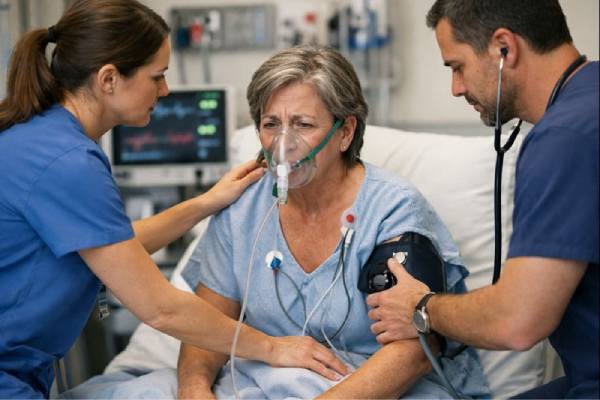
Flash pulmonary edema is a sudden, severe buildup of fluid in the lungs that can make breathing feel impossible within minutes to hours. It is not the same as “getting winded.” People often describe it as waking up gasping, coughing, and needing to sit upright immediately. The body is usually reacting to an abrupt strain on the heart and circulation—often a sharp spike in blood pressure, a sudden change in heart rhythm, or a valve problem that develops quickly.
Because it can escalate fast, flash pulmonary edema is treated as a medical emergency. The good news is that when it’s recognized early and treated aggressively, many people improve quickly. The most important step is knowing what it is, what triggers it, and what emergency teams do to stabilize you and prevent it from coming back.
Table of Contents
- What flash pulmonary edema is
- What causes it and who is at risk?
- Early symptoms, complications, and red flags
- How doctors diagnose it fast
- Treatments that work in the first hour
- Staying stable afterward: prevention and follow-up
What flash pulmonary edema is
Pulmonary edema means fluid has leaked into the tiny air sacs of the lungs, where oxygen normally passes into the blood. In flash pulmonary edema, that fluid buildup happens very quickly—often so fast that a person goes from “okay” to “in crisis” in a short window. Most cases are cardiogenic, meaning the trigger is a sudden problem on the heart side of the circulation rather than a primary lung infection.
Here’s the core mechanism in plain terms: the left side of the heart is supposed to accept blood from the lungs and then pump it forward to the body. If the left heart suddenly can’t keep up—or if pressure rises sharply—the pressure backs up into the lung blood vessels. Those vessels then push fluid out into lung tissue and air spaces. Once fluid reaches the air sacs, breathing becomes inefficient and the body’s stress response (adrenaline) turns on, which can further raise blood pressure and heart rate, creating a vicious cycle.
A common subtype is sometimes called SCAPE (sympathetic crashing acute pulmonary edema), where the body’s “fight-or-flight” surge is prominent. People arrive extremely short of breath, often drenched in sweat, with markedly high blood pressure. In SCAPE, fluid may be redistributed into the lungs quickly even before the body has accumulated a large extra volume of fluid. That distinction matters because treatment often focuses on rapidly lowering pressure and reducing afterload (the resistance the heart pumps against), not only “drying out” with diuretics.
Flash pulmonary edema is often mistaken for asthma, panic, or pneumonia because wheezing and anxiety are common. The difference is the speed, severity, and the typical need to sit upright immediately. It is also frequently recurrent when the underlying trigger—like uncontrolled hypertension, a rhythm problem, or renovascular disease—remains untreated.
What causes it and who is at risk?
Flash pulmonary edema is usually not “random.” In many people, it reflects a vulnerable cardiovascular system that reacts dramatically to a trigger. Causes often overlap, but they tend to fall into several practical buckets:
1) Sudden blood pressure surge (hypertensive crisis)
A rapid rise in systolic pressure can overwhelm the left ventricle and force fluid back toward the lungs. Triggers include missed blood pressure medications, severe stress, excess salt intake in sensitive individuals, stimulant use, or untreated sleep apnea. This is a classic setup for SCAPE.
2) Acute heart ischemia or heart attack
When the heart muscle is suddenly starved of oxygen, it can stiffen or weaken within minutes. Even without a large heart attack, ischemia can raise left-sided pressures enough to flood the lungs.
3) Valve problems that change quickly
A sudden leak of the mitral valve (acute mitral regurgitation) or severe aortic stenosis can trigger abrupt back-pressure into the lungs. These situations can be especially dangerous because they may not respond well to “routine” fluid removal alone.
4) Rhythm disturbances
Fast atrial fibrillation, atrial flutter, or other tachyarrhythmias reduce filling time and raise pressures. In some people, the episode begins after alcohol, illness, dehydration, or a missed medication.
5) Kidney-related drivers and fluid shifts
Kidneys regulate salt and water. When kidney function worsens, fluid and pressure can rise quickly. A key “flash” scenario is renal artery stenosis in a single functioning kidney or both kidneys (often discussed as Pickering syndrome). Blood pressure can swing sharply, and episodes may recur despite good day-to-day control.
6) Medication and lifestyle contributors
Common culprits include NSAIDs (they can cause salt/water retention and raise blood pressure), certain decongestants, stimulant drugs, and high sodium intake in susceptible patients. For people on dialysis, missed sessions or under-dialysis can lead to sudden overload.
Risk is higher if you have a history of heart failure, long-standing hypertension, coronary artery disease, chronic kidney disease, known valve disease, diabetes, or recurrent unexplained nighttime breathlessness. Many episodes happen at night because lying flat increases blood return to the heart, and sleep-related breathing issues can spike blood pressure.
Early symptoms, complications, and red flags
Flash pulmonary edema announces itself loudly—but the earliest signs can still be missed because they resemble common problems like bronchitis or anxiety. Recognizing the pattern helps you seek care before oxygen levels drop dangerously.
Typical symptoms
- Sudden, intense shortness of breath (often within minutes to a couple of hours)
- Needing to sit upright to breathe, sometimes immediately after lying down
- Cough, often with pink or frothy sputum
- Wheezing or “tight chest” that can mimic asthma
- Rapid heartbeat, pounding pulse, or palpitations
- Cold sweat, agitation, or a sense of doom (the body’s stress response)
- Markedly high blood pressure in many cases, though not always
Why it becomes dangerous quickly
When lung air sacs fill with fluid, oxygen transfer drops. The body responds by breathing faster and activating stress hormones that raise heart rate and blood pressure. That can worsen the leak of fluid and increase heart strain. Without treatment, this can progress to respiratory failure.
Complications clinicians worry about
- Respiratory failure needing ventilatory support
- Heart attack or worsening ischemia during the episode
- Dangerous arrhythmias (rapid atrial fibrillation, ventricular arrhythmias)
- Kidney injury from low oxygen, poor perfusion, or aggressive diuresis in fragile patients
- Stroke risk if atrial fibrillation is involved
- Recurrent episodes if the trigger (like renal artery stenosis or uncontrolled hypertension) remains
Red flags that warrant emergency care immediately
- Breathlessness at rest or inability to speak full sentences
- Blue or gray lips/fingertips, confusion, or severe drowsiness
- Chest pain with sweating, nausea, or fainting
- Pink/frothy sputum or persistent coughing with severe breathlessness
- Very high blood pressure with severe shortness of breath
- New palpitations plus dizziness or near-fainting
- A repeat episode after a recent hospital visit (recurrence signals an untreated driver)
If you suspect flash pulmonary edema, treat it like a fire, not a simmer. Call emergency services, sit upright with legs down if possible, and avoid exertion. Early noninvasive breathing support and rapid blood pressure control can prevent intubation and reduce heart damage.
How doctors diagnose it fast
Emergency teams focus on two goals: confirm pulmonary edema quickly and identify the trigger that changes treatment. Diagnosis is often clinical—based on how you look and breathe—supported by fast tests.
What clinicians look for right away
- Breathing rate, oxygen saturation, and work of breathing
- Blood pressure (very high pressure suggests SCAPE, but normal/low pressure can occur in advanced heart failure or valve emergencies)
- Crackles on lung exam, though wheezing can dominate
- Signs of fluid overload (leg swelling, jugular venous distension) that may or may not be present
Core tests and what they answer
- Chest X-ray: Can show fluid congestion, enlarged heart silhouette, or alternative causes like pneumonia. Early in “flash” cases, findings can lag behind symptoms, so a normal early film does not exclude it.
- Bedside lung ultrasound: Often detects fluid patterns quickly and can help distinguish pulmonary edema from asthma/COPD flare.
- ECG: Looks for ischemia, heart attack patterns, or arrhythmias such as atrial fibrillation.
- Blood tests: Commonly include troponin (heart injury), BNP/NT-proBNP (heart strain), kidney function, electrolytes, and sometimes blood gases if oxygenation is poor.
- Echocardiogram: Helps identify valve problems, pumping weakness, or stiff filling. It is especially important after stabilization or immediately if a valve catastrophe is suspected.
Sorting flash pulmonary edema from look-alikes
Clinicians must rapidly rule out:
- Severe asthma/COPD exacerbation (can wheeze; often has a different history and responds to bronchodilators)
- Pneumonia (typically slower onset, fever, localized findings)
- Pulmonary embolism (sudden breathlessness, but usually not frothy sputum; may have chest pain and risk factors)
- Anaphylaxis (hives, swelling, low blood pressure)
- Acute respiratory distress syndrome from infection or trauma
A key practical clue is the response to therapy. True cardiogenic flash pulmonary edema often improves dramatically with noninvasive positive pressure ventilation and vasodilators when blood pressure is high. Meanwhile, severe bronchospasm typically improves most with bronchodilators and steroids. Because overlap exists, emergency teams often treat in parallel until the picture clarifies.
Treatments that work in the first hour
The first hour is about oxygenation, reducing lung fluid pressure, and stopping the trigger. Treatment is tailored to blood pressure and suspected cause, but several strategies repeatedly prove lifesaving.
1) Positioning and oxygen strategy
Sitting upright reduces blood return to the heart and eases breathing. Supplemental oxygen is used if saturation is low, but the bigger game-changer is often positive pressure support.
2) Noninvasive ventilation (CPAP/BiPAP)
Positive airway pressure helps push fluid out of the air sacs and reduces the heart’s filling pressures. It can rapidly decrease the work of breathing and may prevent intubation. Teams monitor closely for vomiting risk, low consciousness, or instability—situations where invasive ventilation may be safer.
3) Rapid blood pressure control with nitrates (when pressure is high)
When systolic blood pressure is markedly elevated, nitrates are often front-line. They relax blood vessels, lower afterload, and reduce the pressure driving fluid into the lungs. In SCAPE-like presentations, clinicians may use higher-dose strategies under close monitoring to achieve rapid improvement while watching for hypotension and headache.
4) Diuretics (when volume overload is likely)
Loop diuretics (often IV) help the kidneys excrete salt and water. They are essential for many patients, especially those with clear overload, kidney-driven fluid retention, or missed dialysis. In pure “redistribution” SCAPE, diuretics may still be given, but symptom relief often depends more on rapid vasodilation and ventilation support.
5) Treat the underlying trigger
Examples of “trigger-first” actions include:
- Suspected heart attack: antiplatelet therapy and urgent cardiology evaluation
- Rapid atrial fibrillation: rate control, rhythm strategies when appropriate, and anticoagulation decisions
- Valve emergency: urgent echocardiography and surgical/catheter consultation
- Dialysis-related overload: urgent dialysis planning
- Renal artery stenosis with recurrent episodes: targeted imaging and specialist referral after stabilization
Treatments used selectively
- Morphine is no longer routine because it can depress breathing and blood pressure in unpredictable ways.
- Inotropes and vasopressors are reserved for low blood pressure or shock states, not typical hypertensive flash edema.
- Antibiotics are used only if infection is likely, not by default.
In many true flash episodes, you may feel “dramatically better” within 30–90 minutes once pressure and breathing mechanics are corrected—an improvement pattern that strongly supports the diagnosis.
Staying stable afterward: prevention and follow-up
After the crisis, prevention becomes the main job. Flash pulmonary edema is often a warning that a fixable driver is present—uncontrolled blood pressure, unrecognized ischemia, a valve issue, kidney-related hypertension, or a rhythm disorder.
Follow-up priorities in the days to weeks after discharge
- A clear plan for home blood pressure targets and medication timing
- A medication review for hidden contributors (NSAIDs, decongestants, stimulants, missed diuretics)
- An echocardiogram result you understand: pumping strength, valve status, and filling pressures
- Kidney function monitoring and electrolyte checks after medication changes
- A plan for ischemia evaluation if symptoms, ECG, or troponin suggested it
Day-to-day actions that reduce recurrence risk
- Track weight daily if you have heart failure or fluid issues; a rapid gain over 2–3 days is a meaningful signal.
- Keep sodium intake consistent and modest; sudden high-salt meals can trigger instability in sensitive patients.
- Take blood pressure at the same times daily for 1–2 weeks after an episode and share the log with your clinician.
- Avoid “as needed” NSAIDs unless your clinician says they are safe for you.
- If you are on dialysis, protect your schedule; missed sessions are a common path to rapid decompensation.
When specialist evaluation matters
Recurrent episodes—especially with very high blood pressure—should prompt clinicians to look for secondary causes, including renovascular disease. If renal artery stenosis is suspected (for example, recurrent flash edema, worsening kidney function after certain blood pressure medications, or difficult-to-control hypertension), targeted imaging and vascular or nephrology consultation may be appropriate.
When to seek urgent care again
- Any repeat episode of sudden severe breathlessness
- New chest pain, fainting, or neurologic symptoms
- Persistent oxygen saturation below your clinician’s threshold
- Fever with worsening breathlessness (infection can destabilize heart failure)
Many people reduce recurrence dramatically with a focused plan: tighter blood pressure control, optimized heart failure therapy when present, rhythm management, and treatment of specific structural causes. The most protective step is not willpower—it is structured follow-up that identifies the reason this happened in the first place.
References
- 2022 AHA/ACC/HFSA Guideline for the Management of Heart Failure: A Report of the American College of Cardiology/American Heart Association Joint Committee on Clinical Practice Guidelines 2022 (Guideline). ([PubMed][1])
- 2021 ESC Guidelines for the diagnosis and treatment of acute and chronic heart failure 2021 (Guideline). ([PubMed][2])
- Vasodilators for Acute Heart Failure – A Systematic Review with Meta-Analysis 2024 (Systematic Review). ([PubMed][3])
- Low-dose versus high-dose intravenous nitroglycerin in the treatment of sympathetic crashing acute pulmonary oedema: a systematic review and meta-analysis focusing on efficacy, safety and outcomes 2025 (Systematic Review). ([PMC][4])
- Revascularization for Renovascular Disease: A Scientific Statement From the American Heart Association 2022 (Scientific Statement). ([PubMed][5])
Disclaimer
This article is for educational purposes and does not replace medical advice, diagnosis, or treatment. Flash pulmonary edema can become life-threatening quickly and requires urgent evaluation to identify the cause and guide care. If you or someone else has severe shortness of breath, chest pain, fainting, confusion, bluish lips, or stroke-like symptoms, call emergency services immediately. For personalized guidance and medication decisions, consult a licensed clinician who can review your symptoms, vital signs, heart testing, and kidney function.
If this article helped, please share it on Facebook, X (formerly Twitter), or any platform you prefer, and follow us on social media. Your support by sharing helps our team keep producing high-quality, reliable health content.