Seeing flashes of light can be startling, especially when they appear without an obvious trigger. Many flashes are harmless and short-lived, but some are an early warning sign of a retinal tear or detachment—conditions where timing matters. Flashes happen when the retina is stimulated, either by light entering the eye or by mechanical traction inside the eye that the brain interprets as light. That means the same symptom can come from a benign vitreous change, a migraine aura, or a problem that threatens vision. The goal is not to panic, but to sort patterns quickly and safely. This article explains what flashes typically look like, the most common causes, and which accompanying symptoms raise risk. You will also learn what happens during an eye exam for flashes and how to protect your vision while you wait to be assessed.
Top Highlights
- Flashes with new floaters or a curtain-like shadow can signal a retinal tear or detachment and need urgent evaluation.
- Brief zigzag lights or shimmering patterns can be migraine aura, even without headache, but first-time episodes should still be checked.
- Posterior vitreous detachment is a common, age-related cause of flashes and floaters, especially after midlife.
- Eye trauma, high myopia, and recent eye surgery increase retinal risk when flashes occur.
- If flashes are new, document which eye is affected, timing, and associated vision changes, then seek prompt assessment.
Table of Contents
- What flashes of light usually mean
- Common benign causes including vitreous changes
- Retinal tear and detachment warning signs
- Migraine aura and neurologic causes
- Risk factors that change urgency
- What to do now and what an exam involves
What flashes of light usually mean
Flashes of light in vision are called photopsias. They happen when the retina—or the visual pathways that feed it—fires as if it has detected light, even when no external light source is responsible. This is why flashes can look like lightning streaks, brief arcs at the edge of vision, sparkles, or a camera-flash effect in the dark.
Two broad categories explain most flashes
- Mechanical stimulation inside the eye: The vitreous is the clear gel that fills the eye. As it ages, it can shrink and pull on the retina. The retina interprets that traction as light. This is the classic pattern of flashes from vitreous changes, especially posterior vitreous detachment.
- Electrical or vascular changes in the brain’s visual system: Migraine aura is a leading example. In this case, the phenomenon is not coming from retinal tugging but from the visual cortex or related pathways.
The difference matters because retinal traction can sometimes create a tear. A tear can allow fluid to slip under the retina, leading to detachment. In contrast, migraine aura is usually self-limited and not an eye emergency, but it can mimic retinal symptoms and may need evaluation, particularly when it is new or atypical.
What “typical” retinal flashes feel like
Retinal traction flashes often:
- Appear as brief, sharp, white or yellow streaks
- Occur more in the dark or when moving the eye
- Show up in the peripheral vision
- Affect one eye at a time
- Come in clusters over minutes to days, then fade over weeks
People commonly notice them at night when turning the head or shifting gaze because the dark background makes them easier to detect.
What “typical” migraine aura looks like
Migraine aura more often:
- Creates zigzags, shimmering lines, or a crescent that expands
- Evolves over 5 to 60 minutes rather than a split-second flash
- Can affect both eyes (often the same side of the visual field in both eyes)
- May occur with or without headache
If you are not sure whether one or both eyes are involved, cover one eye at a time during the episode. That simple test can provide valuable information for clinicians.
The safest approach is to treat new flashes as a symptom that deserves assessment. Many causes are benign, but the few that are serious are time-sensitive enough that it is worth getting the pattern sorted early.
Common benign causes including vitreous changes
The most common cause of new flashes in adults is a change in the vitreous gel. The vitreous is attached to the retina in several places. With aging, it becomes more liquid and can pull away from the retina. This process is often harmless, but it can produce symptoms that feel dramatic.
Posterior vitreous detachment
Posterior vitreous detachment (PVD) happens when the vitreous separates from the retina at the back of the eye. PVD is common with age and can happen sooner in people who are very nearsighted or who have had eye surgery.
Typical features:
- Flashes are brief and often peripheral
- New floaters may appear suddenly, sometimes described as “gnats,” “pepper,” or a ring-like floater
- Symptoms are usually in one eye
- The intensity often decreases over weeks
PVD itself is not a disease, but it is a situation where the retina should be checked because traction during separation can cause a tear in a minority of cases.
Vitreous syneresis and “normal” floaters
Even without a full PVD, the vitreous can develop strands and clumps as it liquefies. This can create floaters and occasional brief flashes. Many people notice these during bright daylight against a plain background, like a blue sky or a white wall.
Mechanical pressure and benign entoptic phenomena
Some flashes are caused by pressure on the eye or stimulation of the retina from non-pathologic sources:
- Rubbing the eyes can create flashes because it mechanically stimulates the retina
- Sudden head movement can cause brief visual sensations in some people
- Very bright light exposure can create afterimages that feel like flashing, especially in dark rooms afterward
These experiences are usually short-lived and linked to an obvious trigger. If flashes occur spontaneously without rubbing or bright light, they deserve more attention.
Dry eye and surface irritation
Dry eye does not typically cause true photopsias, but it can cause visual disturbances—flicker, blur, and light sensitivity—that people may describe as “flashing” or “sparkling.” If symptoms improve significantly with blinking or lubricating drops, surface issues may be contributing. Still, dryness should not be used to dismiss new, distinct flashes, especially if they are peripheral and sudden.
Medication and systemic factors
Certain medications and systemic issues can contribute to visual symptoms, but they are less common explanations for classic lightning-like photopsias. If flashes start soon after a medication change, it is worth mentioning, but a retinal evaluation is often still the first step if the flash pattern suggests traction.
Benign causes are common, but the reason clinicians take flashes seriously is that early retinal tears can look very similar to harmless vitreous events. The difference is usually made by examination, not by guesswork.
Retinal tear and detachment warning signs
Retinal tears and detachments are the most important conditions to rule out when someone reports new flashes. A tear means the retina has developed a break. A detachment means the retina has lifted away from the underlying tissue that supplies oxygen and nutrients. Detachment threatens vision, and the likelihood of preserving central vision is generally better when treated early.
How a tear can happen
During vitreous separation, traction can pull hard enough to rip the retina. If that tear allows fluid to pass under the retina, the retina can detach. This process can be slow or fast, and symptoms can evolve over hours to days.
Red-flag symptom combinations
Flashes alone can occur in benign PVD. The risk rises when flashes combine with any of the following:
- A sudden burst of new floaters (especially many small dots like pepper, or a new large floater that arrived abruptly)
- A “curtain,” shadow, or gray veil moving across part of the vision
- A missing area in side vision that does not clear with blinking
- Sudden decrease in sharp vision, especially if central vision is affected
- Flashes that are frequent, intense, and persistent, particularly after trauma
A classic description of vitreous bleeding from a tear is a sudden shower of dark floaters. People sometimes describe it as “soot,” “ash,” or “a swarm of insects.”
What the curtain symptom means
A curtain or shadow often reflects a detachment spreading across the retina. The location of the curtain can hint at where the detachment is occurring, but the key message is urgency. If you experience a new curtain-like shadow, it should be treated as an emergency.
Why waiting can be risky
Retinal tears can sometimes be treated with laser or freezing procedures that seal the break and prevent detachment. Once detachment occurs, treatment often involves more invasive surgery, and outcomes depend on whether the central retina (the macula) remains attached. Early evaluation provides the best chance to intervene before vision is affected.
What not to do
When flashes and floaters appear, people often look for reassurance online and delay care. Another common mistake is driving long distances at night if vision is changing. If you have a curtain symptom, major new floaters, or significant blur, arrange safer transport when possible.
The message is not that every flash is an emergency. It is that certain patterns—especially flashes plus new floaters, shadows, or vision loss—justify same-day evaluation because they can represent a narrow window where prevention is still possible.
Migraine aura and neurologic causes
Migraine aura is a common non-retinal cause of flashing lights and visual distortions. It can be frightening the first time because it may look like a shimmering zigzag, a crescent of flickering lights, or a patch of vision that becomes wavy or partially missing. Aura can occur with headache, without headache, or with headache that starts later.
How aura typically behaves
Migraine aura often:
- Develops gradually rather than instantly
- Changes shape or expands across the visual field
- Lasts 5 to 60 minutes
- Involves both eyes in a consistent part of the visual field (even if it feels like one eye at first)
- May be followed by headache, nausea, light sensitivity, or fatigue
A simple way to test: cover one eye, then the other. If the phenomenon remains in the same side of your visual field no matter which eye is covered, it likely originates from the brain rather than the retina.
Ocular migraine and retinal migraine
People often use “ocular migraine” to describe aura symptoms. However, true retinal migraine is uncommon and is characterized by transient visual loss or disturbance in one eye. Because the terms are often used loosely, new one-eye visual symptoms should not automatically be labeled migraine without evaluation.
Other neurologic considerations
Not all visual disturbances are migraine. Seek urgent assessment if flashing lights or vision changes are accompanied by:
- Weakness, numbness, difficulty speaking, facial droop, or imbalance
- New severe headache unlike prior headaches
- Confusion or loss of consciousness
- Vision loss that is persistent or severe
These symptoms raise concern for neurological events that need immediate medical attention.
Seizure-related visual symptoms
Occasionally, visual phenomena can be linked to seizure activity, typically with brief, repetitive visual flashes or patterns. This is not common, but it is one reason clinicians take the full context seriously—duration, progression, and associated symptoms.
When migraine can still overlap with eye issues
Having migraine does not protect you from retinal problems. If you have a history of aura but a new episode feels different—more one-sided in the eye, more like lightning, associated with new floaters, or paired with curtain symptoms—it should be evaluated as a possible retinal event until proven otherwise.
Migraine aura is usually benign in terms of eye structure, but it can mimic emergencies. The safest approach is to treat first-time aura-like symptoms, or significant changes in a known pattern, as a reason to be assessed rather than self-diagnosing.
Risk factors that change urgency
Two people can have similar flashes and face different levels of risk based on their eye history and personal risk factors. Knowing where you fit helps you act with the right urgency.
High myopia
People with high nearsightedness have longer eyes and thinner retinal tissue, which can increase the likelihood of retinal tears or detachment. If you have high myopia and develop new flashes or a sudden increase in floaters, it is wise to seek prompt evaluation.
Age and vitreous changes
Age increases the likelihood of PVD, which is a common cause of flashes. While PVD itself is usually benign, the period during which the vitreous is pulling away is exactly when tears can occur. In other words, the most common benign cause and the most important serious cause can overlap in the same event.
Prior eye surgery or procedures
Cataract surgery and other intraocular procedures can increase the chance of vitreous changes and retinal complications in some individuals. If you have had recent eye surgery and you notice flashes or floaters, mention the timing clearly when seeking care.
Eye trauma
A blow to the eye or head can trigger retinal traction, vitreous hemorrhage, or retinal tears. Flashes after trauma should be treated seriously, even if your eye looks normal externally.
History of retinal tear or detachment
If you have had a tear or detachment before, or if there is a strong family history, new flashes warrant urgent assessment. Risk can also be higher if you have certain peripheral retinal degenerations that predispose to tears.
Inflammation and systemic disease
Inflammatory eye conditions can cause floaters and light sensitivity. While these are not classic retinal traction flashes, inflammation can still cause significant symptoms and requires appropriate evaluation.
What “low-risk” looks like
Low-risk does not mean no-risk. But if you have occasional brief flashes only with eye rubbing or bright light exposure, no new floaters, no shadows, no vision loss, and no risk factors, the chance of a retinal emergency is lower. Even then, persistent or unexplained flashes should be checked.
A useful approach is to think of risk factors as volume knobs. The more knobs turned up—high myopia, trauma, surgery, past tear—the more urgent it becomes to get a same-day or next-day evaluation rather than waiting to see if it fades.
What to do now and what an exam involves
If you are experiencing flashes, the best next step is usually an eye exam that includes a careful look at the retina. The exam is often the only reliable way to distinguish benign vitreous changes from a tear.
What you can do immediately
Use a short checklist that makes evaluation more efficient:
- Note when flashes started and whether they are improving or worsening
- Identify whether one eye or both are affected (cover one eye at a time)
- Track associated symptoms: new floaters, a shower of dots, curtain/shadow, blur, pain, headache, nausea
- Record risk factors: high myopia, recent trauma, eye surgery, prior tear/detachment
- Avoid driving if your vision is compromised or if you have a curtain symptom
If you notice a curtain, significant vision loss, or a sudden shower of floaters, seek urgent care immediately rather than waiting.
What the eye exam typically includes
A clinician may:
- Check visual acuity and eye pressure
- Examine the front of the eye to look for inflammation or other causes
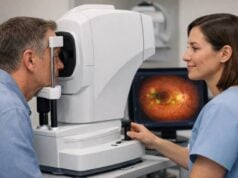
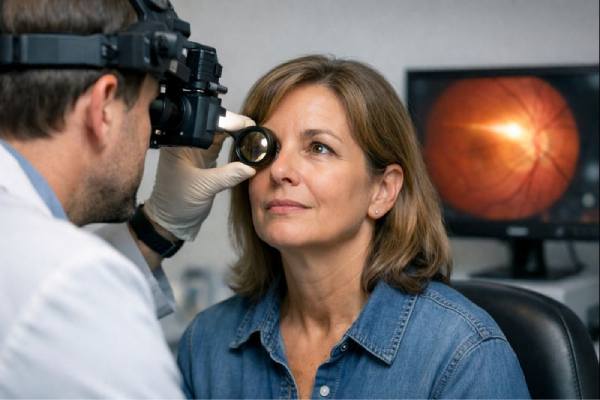
- Dilate your pupils and examine the vitreous and retina carefully
- Look for pigment or blood cells in the vitreous that can suggest a tear
- Use additional imaging or specialized retinal examination tools if needed
Dilation can blur vision for several hours. Plan for transportation if possible, especially if you drive.
Possible outcomes and what they mean
- Benign PVD without tear: you may be advised to monitor symptoms and return promptly if floaters increase or a shadow appears.
- Retinal tear: treatment may be recommended to seal the tear and prevent detachment.
- Retinal detachment: urgent treatment is usually needed to reattach the retina.
- Migraine or neurologic pattern: you may be guided toward headache management or neurologic evaluation, especially if episodes are new.
Follow-up matters even after a reassuring exam
A key point many people miss is that retinal tears can occasionally develop after the first visit, especially in the early period of vitreous separation. If you are told you have a PVD, take return precautions seriously. A “new shower of floaters” or a new shadow should trigger re-evaluation even if you were checked recently.
How to talk about symptoms clearly
Clinicians find these descriptions helpful:
- “Lightning streaks at the edge of vision in my right eye, mostly in the dark”
- “A new shower of black dots started today”
- “A gray curtain moved from the side toward the center”
- “Zigzag shimmering line that expanded over 20 minutes in both eyes”
Clear descriptions reduce delays and help the clinician prioritize the right tests.
Flashes can be benign, but they are one of the symptoms where a cautious approach is justified. Getting checked early is not overreacting—it is a way to protect sight from the few causes where timing makes a meaningful difference.
References
- Retinal Detachment Preferred Practice Pattern® – PubMed 2024 (Guideline)
- Posterior Vitreous Detachment, Retinal Breaks, and Lattice Degeneration Preferred Practice Pattern® – PubMed 2024 (Guideline)
- Retinal Detachment – StatPearls – NCBI Bookshelf 2024 (Clinical Review)
- Vitreous Floaters – StatPearls – NCBI Bookshelf 2024 (Clinical Review)
- Retinal migraine: a systematic review – PubMed 2021 (Systematic Review)
Disclaimer
This article is for general educational purposes and does not replace medical advice, diagnosis, or treatment. Flashes of light can be caused by benign vitreous changes, migraine aura, or serious retinal conditions. Seek urgent medical care if flashes are new and accompanied by a sudden increase in floaters, a curtain or shadow in your vision, significant vision loss, eye pain, marked light sensitivity, or neurological symptoms such as weakness, numbness, confusion, or trouble speaking. If you have high myopia, recent eye trauma, recent eye surgery, or a history of retinal tear or detachment, new flashes should be evaluated promptly even if symptoms seem mild.
If you found this article helpful, please consider sharing it on Facebook, X (formerly Twitter), or any platform you prefer.